September 24, 2012

New Atheism is the name given to the ideas promoted by a collection of 21st-century atheist writers who have advocated the view that ‘religion should not simply be tolerated but should be countered, criticized, and exposed by rational argument wherever its influence arises.’
The term is commonly associated with individuals such as Richard Dawkins, Daniel Dennett, Sam Harris, and Christopher Hitchens (together called ‘the Four Horsemen of New Atheism’ in a 2007 debate they held on their criticisms of religion, a name that has stuck) and Victor J. Stenger. Several best-selling books by these authors, published between 2004 and 2007, form the basis for much of the discussion of New Atheism.
read more »
Posted in Language, Philosophy, Science |
Leave a Comment »
September 20, 2012
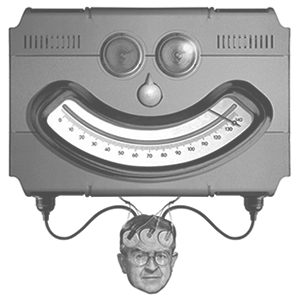
Positive psychology is a recent branch of psychology whose purpose was summed up in 1998 by psychologists Martin Seligman and Mihaly Csikszentmihalyi: ‘We believe that a psychology of positive human functioning will arise, which achieves a scientific understanding and effective interventions to build thriving individuals, families, and communities.’ Positive psychologists seek ‘to find and nurture genius and talent’, and ‘to make normal life more fulfilling,’ not simply to treat mental illness.
The field is intended to complement, not to replace traditional psychology. It does not seek to deny the importance of studying how things go wrong, but rather to emphasize the importance of using the scientific method to determine how things go right. This field brings attention to the possibility that focusing only on the disorder itself would result in a partial concept of the patient’s condition.
read more »
Posted in Health, Philosophy, Science |
1 Comment »
September 20, 2012

The optimism bias (also known as unrealistic or comparative optimism) is a bias that causes a person to believe that they are less at risk of experiencing a negative event compared to others. There are four factors that cause a person to be optimistically biased: their desired end state, their cognitive mechanisms, the information they have about themselves versus others, and overall mood.
The optimistic bias is seen in a number of situations. For example, people believing that they are less at risk of being a crime victim, smokers believing that they are less likely to contract lung cancer or disease than other smokers, first-time bungee jumpers believing that they are less at risk of an injury than other jumpers, or traders who think they are less exposed to losses in the markets.
read more »
Posted in Health, Science |
Leave a Comment »
September 19, 2012
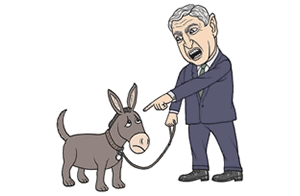

Learned helplessness is a technical term that refers to the condition of a human or animal that has learned to behave helplessly, failing to respond even though there are opportunities for it to help itself by avoiding unpleasant circumstances or by gaining positive rewards. Learned helplessness theory is the view that clinical depression and related mental illnesses may result from a perceived absence of control over the outcome of a situation.
Organisms which have been ineffective and less sensitive in determining the consequences of their behavior are defined as having acquired learned helplessness. American psychologist Martin Seligman’s foundational experiments and theory of learned helplessness began at the University of Pennsylvania in 1967, as an extension of his interest in depression. Quite by accident, Seligman and colleagues discovered that the conditioning of dogs led to outcomes that opposed the predictions of B.F. Skinner’s behaviorism, then a leading psychological theory.
read more »
Posted in Health, Science |
2 Comments »
September 18, 2012

Identity negotiation refers to the processes through which people reach agreements regarding ‘who is who’ in their relationships. Once these agreements are reached, people are expected to remain faithful to the identities they have agreed to assume.
The process of identity negotiation thus establishes what people can expect of one another. Identity negotiation thus provides the interpersonal ‘glue that holds relationships together. The idea that identities are negotiated originated in the sociological literature during the middle of the 20th century. A leading figure in this movement was Goffman, who asserted that the first order of business in social interaction is establishing a ‘working consensus’ or agreement regarding the roles each person will assume in the interaction.
read more »
Posted in Health, Science, World |
Leave a Comment »
September 17, 2012

A self-defeating prophecy is the complementary opposite of a self-fulfilling prophecy: a prediction that prevents what it predicts from happening. This is also known as the ‘prophet’s dilemma.’ A self-defeating prophecy can be the result of rebellion to the prediction.
If the audience of a prediction has an interest in seeing it falsified, and its fulfillment depends on their actions or inaction, their actions upon hearing it will make the prediction less plausible. If a prediction is made with this outcome specifically in mind, it is commonly referred to as reverse psychology. Also, when working to make a premonition come true, one can inadvertently change the circumstances so much that the prophecy cannot come true.
read more »
Posted in Language, Philosophy, Science |
Leave a Comment »
September 14, 2012

Mike the Headless Chicken also known as Miracle Mike, was a Wyandotte chicken that lived for 18 months after his head had been mostly cut off. Thought by many to be a hoax, the bird’s owner took him to the University of Utah in Salt Lake City to establish the facts of the story.
In 1945, farmer Lloyd Olsen of Fruita, Colorado had his mother-in-law around for supper and was sent out to the yard by his wife to bring back a chicken. Olsen chose a five-and-a-half-month-old cockerel named Mike. The axe missed the jugular vein, leaving one ear and most of the brain stem intact. Despite Olsen’s botched handiwork, Mike was still able to balance on a perch and walk clumsily; he even attempted to preen and crow, although he could do neither.
read more »
Posted in Death, Food, Science |
1 Comment »
September 13, 2012

Social intuitionism is a movement in moral psychology that arose in contrast to more heavily rationalist theories of morality, like that of Lawrence Kohlberg. Kohlberg developed a stage theory of moral reasoning that he claimed accounts for people’s moral behavior. More sophisticated reasoning, he asserted, should lead one to more consistent moral action, because one realizes that moral principles are prescriptive in nature and so demand action from the self. NYU psychologist Jonathan Haidt greatly de-emphasizes the role of reasoning in reaching moral conclusions.
Haidt asserts that moral judgment is primarily given rise to by intuition with reasoning playing a very marginalized role in most of our moral decision-making. Conscious thought-processes serves as a kind of post hoc justification of our decisions. His main evidence comes from studies of ‘moral dumbfounding’ where people have strong moral reactions but fail to establish any kind of rational principle to explain their reaction. He suggests that we have affective heuristics (mental shortcuts) which are unconscious that generate our reactions to morally charged situations and our moral behavior. He suggests that if people reason about morality, it is independent of or at least processes causing moral decisions to be made.
Posted in Health, Philosophy, Science |
2 Comments »
September 11, 2012

The question of whether or not crustaceans can experience pain is unresolved. Because of the ambiguous nature of pain, most people who contend that crustaceans do have this capacity approach the issue using ‘argument by analogy’ – that is, they hold that certain similarities between crustacean and human biology or behaviour warrant an assumption that crustaceans can feel pain.
In vertebrates, endogenous opioids are neurochemicals that moderate pain by interacting with opioid receptors. Opioid peptides (chains of amino acids) and opioid receptors occur naturally in crustaceans, and although ‘at present no certain conclusion can be drawn,’ some have interpreted their presence as an indication that crustaceans may be able to experience pain. Lobsters’ opioids may ‘mediate pain in the same way’ as in vertebrates.
read more »
Posted in Food, Politics, Science |
Leave a Comment »
September 10, 2012

Double-yolk eggs occur when ovulation occurs too rapidly, or when one yolk becomes joined with another yolk. These eggs may be the result of a young hen’s reproductive cycle not yet being synchronized. Some hybrid breeds of hens also produce double-yolk eggs by default. Such eggs are produced in India. Heavier poultry breeds such as the buff Orpington have been known to lay triple yolk eggs in their lifetime. Although heredity causes some hens to have a higher propensity to lay double-yolked eggs, they occur more frequently as occasional abnormalities in young hens beginning to lay. Double-yolked eggs usually only lead to observed successful hatchlings under human intervention, as the chickens interfere with each other’s hatching process and die.
Eggs without yolk are called ‘dwarf’ or ‘wind’ eggs. Such an egg is most often a pullet’s first effort, produced before her laying mechanism is fully ready. In a mature hen, a wind egg is unlikely, but can occur if a bit of reproductive tissue breaks away, stimulating the egg producing glands to treat it like a yolk and wrap it in albumen, membranes and a shell as it travels through the egg tube. An archaic term for a no yolk egg is a ‘cock’ egg. Since they contained no yolk and therefore can’t hatch, it was traditionally believed that these eggs were laid by roosters.
Posted in Food, Science |
Leave a Comment »
September 8, 2012

George Dantzig (1914 – 2005) was an American mathematical scientist who solved two unsolved problems in statistical theory, which he had mistaken for homework after arriving late to a lecture of UC Berkeley statistician Jerzy Neyman. Dantzig was the Professor Emeritus of Transportation Sciences and Professor of Operations Research and of Computer Science at Stanford.
Born in Portland, Oregon, George Bernard Dantzig was named after George Bernard Shaw, the Irish writer. His father, Tobias Dantzig, was a Baltic German mathematician and linguist, and his mother, Anja Dantzig (née Ourisson), was a French linguist. Dantzig’s parents met during their study at the Sorbonne, where Tobias studied mathematics under Henri Poincaré.
read more »
Posted in Education, Money, Science |
Leave a Comment »
September 5, 2012

Limbic regulation is the effect of contact with other people upon the development and stability of personality and mood. The concept was advanced in the book ‘A General Theory of Love’ (2000), and is one of three interrelated concepts central to the book’s premise: that our brain chemistry and nervous systems are measurably affected by those closest to us (limbic resonance); that our systems synchronize with one another in a way that has profound implications for personality and lifelong emotional health (limbic regulation); and that these set patterns can be modified through therapeutic practice (limbic revision).
As the authors poetically frame it: ‘Human physiology finds a hub … in the harmonizing activity of nearby limbic brains. Our neural architecture places relationships at the crux of our lives, where, blazing and warm, they have the power to stabilize. When people are hurting and out of balance, they turn to regulating affiliations: groups, clubs, pets, marriages, friendships, masseuses, chiropractors, the Internet. All carry at least the potential for emotional connection.’
read more »
Posted in Health, Science |
Leave a Comment »


 The Daily Omnivore