Limbic resonance is the capacity for sharing deep emotional states arising from the limbic system of the brain. These states include the dopamine circuit promoted feelings of empathic harmony, and the norepinephrine circuit originated emotional states of fear, anxiety, and anger. The concept was first advanced in the book ‘A General Theory of Love’ (2000). It refers to the capacity for empathy and non-verbal connection that is present in animals, and that forms the basis of our social connections as well as the foundation for various modes of therapy and healing.
According to the authors (Thomas Lewis, M.D, Fari Amini, M.D., and Richard Lannon, M.D.), professors of psychiatry at UCSF, our nervous systems are not self-contained, but rather demonstrably attuned to those around us with whom we share a close connection. ‘Within the effulgence of their new brain, mammals developed a capacity we call ‘limbic resonance’ — a symphony of mutual exchange and internal adaptation whereby two mammals become attuned to each other’s inner states.’
read more »
Limbic Resonance
Emotional Contagion

Emotional contagion is the tendency to catch and feel emotions that are similar to and associated with those of others. One view developed by Elaine Hatfield, John Cacioppo, and Richard Rapson of the underlying mechanism is that it represents a tendency to mimic and synchronize facial expressions, vocalizations, postures, and movements with those of another person automatically and, consequently, to converge emotionally.
A broader definition of the phenomenon was suggested by Schoenewolf—’a process in which a person or group influences the emotions or behavior of another person or group through the conscious or unconscious induction of emotion states and behavioral attitudes.’
read more »
Ideasthesia

Ideasthesia is a neurological or cognitive phenomenon in which activation of a particular concept triggers a sensory-like experience. Specifically it is when activations of concepts (inducers) evoke perception-like experiences (concurrents). The name comes from Greek, meaning sensing concepts or sensing ideas.
The main reason for introducing the notion of ideaesthesia was the empirical evidence indicating that the related term synesthesia (i.e. union of senses) suggests incorrect explanation of a set of phenomena traditionally covered by this heading.
read more »
Grapheme–color Synesthesia

Grapheme-color [graf-eem] synesthesia [sin-uhs-thee-zhuh] is a form of synesthesia (mixing of sensations) in which an individual’s perception of numbers and letters is associated with the experience of colors. Like all forms of synesthesia, grapheme-color synesthesia is involuntary, consistent, and memorable. It is one of the most common forms of synesthesia, and because of the extensive knowledge of the visual system, one of the most studied. While it is extremely unlikely that any two synesthetes will report the same colors for all letters and numbers, studies of large numbers of synesthetes find that there are some commonalities across letters (e.g., ‘A’ is likely to be red).
Early studies argued that the condition was not due to associative learning, such as from playing with colored refrigerator magnets. However, one recent study has documented a case of synesthesia in which synesthetic associations could be traced back to colored refrigerator magnets. Despite the existence of this individual case, the majority of synesthetic associations do not seem to be driven by learning of this sort. Rather, it seems that more frequent letters are paired with more frequent colors, and some meaning-based rules, such as ‘b’ being blue, drive most synesthetic associations.
read more »
Brain Waves

Neural oscillation is rhythmic or repetitive neural activity in the central nervous system. In individual neurons, oscillations can appear either as oscillations in membrane potential or as rhythmic patterns of action potentials, which then produce oscillatory activation of post-synaptic neurons. At the level of neural ensembles, synchronized activity of large numbers of neurons can give rise to macroscopic oscillations, which can be observed in the electroencephalogram (EEG).
Oscillatory activity in groups of neurons generally arise from feedback connections between the neurons that result in the synchronization of their firing patterns. The interaction between neurons can give rise to oscillations at a different frequency than the firing frequency of individual neurons. A well-known example of macroscopic neural oscillations is alpha activity, neural oscillations in the frequency range of 8–12 Hz arising from electrical activity of thalamic pacemaker. In lay terms, they are brain waves associated with feelings of relaxation.
read more »
Sensory Deprivation

Sensory deprivation or perceptual isolation is the deliberate reduction or removal of stimuli from one or more of the senses. Simple devices such as blindfolds or hoods and earmuffs can cut off sight and hearing respectively, while more complex devices can also cut off the sense of smell, touch, taste, thermoception (heat-sense), and ‘gravity.’
Sensory deprivation has been used in various alternative medicines and in psychological experiments (e.g., see isolation tank). Short-term sessions of sensory deprivation are described as relaxing and conducive to meditation; however, extended or forced sensory deprivation can result in extreme anxiety, hallucinations, bizarre thoughts, and depression.
read more »
Isolation Tank
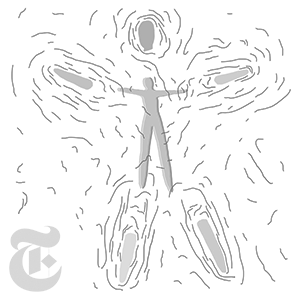
An isolation tank is a lightless, soundproof tank inside which subjects float in salt water at skin temperature. They were first used by John C. Lilly in 1954 to test the effects of sensory deprivation. Such tanks are now also used for meditation and relaxation and in alternative medicine.
The isolation tank was originally called the sensory deprivation tank. Other names for the isolation tank include flotation tank, John C. Lilly tank, REST tank, sensory attenuation tank, and think tank.
read more »
International Linear Collider
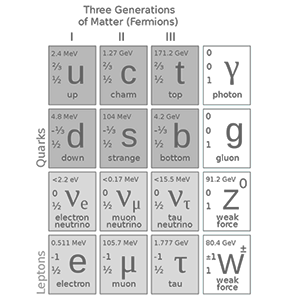
The International Linear Collider (ILC) is a proposed linear particle accelerator to succeed the Large Hadron Collider (LHC), the world’s largest and highest-energy particle accelerator. The ILC is planned to have a collision energy of 500 GeV initially, with the possibility for a later upgrade to 1,000 GeV (1 TeV).
The host country for the accelerator has not yet been chosen and proposed locations are Japan, Europe (CERN), and the USA (Fermilab). Japan is considered the most likely candidate, as the Japanese government is willing to contribute half of the costs, according to a representative for the European Commission on Future Accelerators.
read more »
The Body

The Body is a 1970 scientific documentary film directed and produced by Roy Battersby. In the film, external and internal cameras are used to showcase different parts of the human body. The film’s narrators, Frank Finlay and Vanessa Redgrave, provide insightful commentary that combines the knowledge of world renowned human biologists and anatomical experts.
Unlike similar films of this subject matter ‘The Body’ strives for an entertaining presentation of the human anatomy, and avoids monotone narration. The film’s soundtrack, ‘Music from the Body,’ was composed by Ron Geesin and Roger Waters, and includes songs that were literally made using the human body as a medium.
Sprite

Sprites are large scale electrical discharges above the earth that are still not totally understood. They occur high above thunderstorm clouds (cumulonimbus), giving rise to a quite varied range of visual shapes flickering in the night sky. They are triggered by the discharges of positive lightning between an underlying thundercloud and the ground. Sprites appear as luminous reddish-orange flashes.
Sporadic visual reports of sprites go back at least to 1886, but they were first photographed in 1989 by scientists from the University of Minnesota. Sprites are sometimes inaccurately called upper-atmospheric lightning. However, sprites are cold plasma phenomena that lack the hot channel temperatures of tropospheric (lower-atmospheric) lightning, so they are more akin to fluorescent tube discharges than to lightning discharges. Several years after their discovery they were named sprites (air spirits) after their elusive nature.
read more »
Heterocyclic Amine

Heterocyclic amines [het-er-uh-sahy-klik uh-meen] (HCA) are chemical compounds containing at least one heterocyclic ring (a ring-shaped molecule that has atoms of at least two different elements) plus at least one amine (functional groups that contain a basic nitrogen atom with a lone pair). The biological function of heterocyclic amines can range from those of vitamins to carcinogens. Carcinogenic heterocyclic amines are created by high temperature cooking of meat, for example. HCAs form when amino acids and creatine (a chemical found in muscles) react at high cooking temperatures. Colorectal, pancreatic, and breast cancer are associated with high intakes of well-done, fried, or barbecued meats.
People who eat medium-well or well done beef were more than three times as likely to suffer stomach cancer as those who ate rare or medium-rare beef. Other sources of protein (milk, eggs, tofu, and organ meats such as liver) have very little or no HCA content naturally or when cooked. Research has shown that an olive oil, lemon juice, and garlic marinade cut HCA levels in chicken by as much as 90%. Six hours of marinating in beer or red wine cut levels of two types of HCA in beef steak by up to 90% compared with unmarinated steak.
Positive Illusions

Positive illusions are unrealistically favorable attitudes that people have towards themselves. Positive illusions are a form of self-deception or self-enhancement that feel good, maintain self-esteem or stave off discomfort at least in the short term.
There are three broad kinds: inflated assessment of one’s own abilities (illusory superiority), unrealistic optimism about the future (optimism bias), and an illusion of control. The term ‘positive illusions’ originates in a 1988 paper. There are controversies about the extent to which people reliably demonstrate positive illusions, and also about whether these illusions are beneficial to the people who have them.
read more »


 The Daily Omnivore