August 23, 2012

Sprites are large scale electrical discharges above the earth that are still not totally understood. They occur high above thunderstorm clouds (cumulonimbus), giving rise to a quite varied range of visual shapes flickering in the night sky. They are triggered by the discharges of positive lightning between an underlying thundercloud and the ground. Sprites appear as luminous reddish-orange flashes.
Sporadic visual reports of sprites go back at least to 1886, but they were first photographed in 1989 by scientists from the University of Minnesota. Sprites are sometimes inaccurately called upper-atmospheric lightning. However, sprites are cold plasma phenomena that lack the hot channel temperatures of tropospheric (lower-atmospheric) lightning, so they are more akin to fluorescent tube discharges than to lightning discharges. Several years after their discovery they were named sprites (air spirits) after their elusive nature.
read more »
Posted in Science, World |
Leave a Comment »
August 23, 2012

Heterocyclic amines [het-er-uh-sahy-klik uh-meen] (HCA) are chemical compounds containing at least one heterocyclic ring (a ring-shaped molecule that has atoms of at least two different elements) plus at least one amine (functional groups that contain a basic nitrogen atom with a lone pair). The biological function of heterocyclic amines can range from those of vitamins to carcinogens. Carcinogenic heterocyclic amines are created by high temperature cooking of meat, for example. HCAs form when amino acids and creatine (a chemical found in muscles) react at high cooking temperatures. Colorectal, pancreatic, and breast cancer are associated with high intakes of well-done, fried, or barbecued meats.
People who eat medium-well or well done beef were more than three times as likely to suffer stomach cancer as those who ate rare or medium-rare beef. Other sources of protein (milk, eggs, tofu, and organ meats such as liver) have very little or no HCA content naturally or when cooked. Research has shown that an olive oil, lemon juice, and garlic marinade cut HCA levels in chicken by as much as 90%. Six hours of marinating in beer or red wine cut levels of two types of HCA in beef steak by up to 90% compared with unmarinated steak.
Posted in Food, Health, Science |
Leave a Comment »
August 21, 2012

Positive illusions are unrealistically favorable attitudes that people have towards themselves. Positive illusions are a form of self-deception or self-enhancement that feel good, maintain self-esteem or stave off discomfort at least in the short term.
There are three broad kinds: inflated assessment of one’s own abilities (illusory superiority), unrealistic optimism about the future (optimism bias), and an illusion of control. The term ‘positive illusions’ originates in a 1988 paper. There are controversies about the extent to which people reliably demonstrate positive illusions, and also about whether these illusions are beneficial to the people who have them.
read more »
Posted in Health, Science |
Leave a Comment »
August 17, 2012
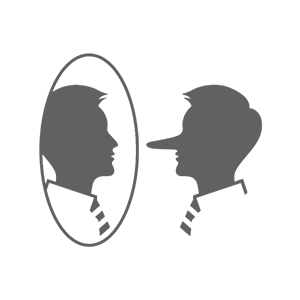
Self-deception is a process of denying or rationalizing away the relevance, significance, or importance of opposing evidence and logical argument. Self-deception involves convincing oneself of a truth (or lack of truth) so that one does not reveal any self-knowledge of the deception. Simple instances of self-deception include common occurrences such as: the alcoholic who is self-deceived in believing that his drinking is under control, the husband who is self-deceived in believing that his wife is not having an affair, the jealous colleague who is self deceived in believing that her colleague’s greater professional success is due to ruthless ambition.
A consensus on the identification of self-deception remains elusive to contemporary philosophers, the result of the term’s paradoxical elements and ambiguous paradigmatic cases. Self-deception also incorporates numerous dimensions, such as epistemology, psychological and intellectual processes, social contexts, and morality. As a result, the term is highly debated and occasionally argued to be an impossible phenomenon.
read more »
Posted in Health, Philosophy, Science |
Leave a Comment »
August 17, 2012

The term ‘motivated tacticians‘ is used in social psychology to describe a human shifting from quick and dirty cognitively economical tactics to more thoughtful, thorough strategies when processing information depending on their type and degree of motivation. This idea has been used to explain why people use stereotyping, biases, and categorization in some situations and more analytical thinking in others. Because of the empirical evidence and robust nature, the concept is now a preferred theory of human social perception.
After much research on categorization, and other cognitive shortcuts, psychologists began to describe human beings as cognitive misers (i.e. they use a lot of mental shortcuts); which explains that a need to conserve mental resources causes people to use shortcuts to thinking about stimuli, instead of motivations and urges influencing the way humans think about their world.
read more »
Posted in Health, Science |
Leave a Comment »
August 17, 2012

Cognitive miser is a term which refers to the idea that only a small amount of information is actively perceived by individuals when making decisions, and many cognitive shortcuts (such as drawing on prior information and knowledge) are used instead to attend to relevant information and arrive at a decision. The term was coined in 1984 by Susan T. Fiske and Shelley E. Taylor in an early book on social cognition (thinking related to interpersonal relationships). In the area of psychology, perception is one of the base fields. It is defined as how one views the world, but is not necessarily an accurate interpretation of it.
A cognitive miser, therefore, refers to how people cannot possibly assimilate all the information they are bombarded with by the world. The mind will either take in relevant information into the conscious mind, or information that may be relevant to the subconscious mind. The information taken into the subconscious will later undergo an internal screening. Anything useful will be reinforced with ties to other areas where it is of use, anything not of use will typically be forgotten.
read more »
Posted in Health, Science |
Leave a Comment »
August 16, 2012
Tabula rasa [tab-yuh-luh rah-suh] (Latin: ‘blank slate’) is the theory that individuals are born without built-in mental content and that their knowledge comes from experience and perception.
The theory was discussed by Aristotle, but popularized by John Locke (the father of liberalism) in the 17th century: ‘Let us then suppose the mind to be, as we say, white paper void of all characters, without any ideas. How comes it to be furnished? … To this I answer, in one word, from EXPERIENCE.’ Locke thought all knowledge came from sense data (smells, sights, sounds, pain, etc.), and that the mind is empty at birth. Locke’s idea was immediately picked up by others.
read more »
Posted in Education, Philosophy, Science |
Leave a Comment »
August 15, 2012
In the field of psychology, nativism is the view that certain skills or abilities are ‘native’ or hard wired into the brain at birth. This is in contrast to empiricism, the ‘blank slate’ or tabula rasa view, which states that the brain has inborn capabilities for learning from the environment but does not contain content such as innate beliefs. Some nativists believe that specific beliefs or preferences are hard wired. For example, one might argue that some moral intuitions are innate or that color preferences are innate.
A less established argument is that nature supplies the human mind with specialized learning devices. This latter view differs from empiricism only to the extent that the algorithms that translate experience into information may be more complex and specialized in nativist theories than in empiricist theories. However, empiricists largely remain open to the nature of learning algorithms and are by no means restricted to the historical associationist mechanisms of behaviorism (which argued that the content of consciousness can be explained by the association and reassociation of irreducible sensory and perceptual elements).
read more »
Posted in Language, Philosophy, Science |
Leave a Comment »
August 10, 2012
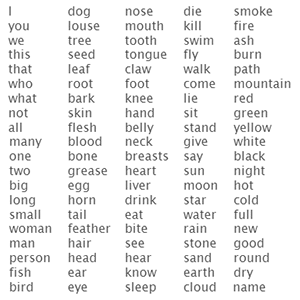
A Swadesh [sway-desh] list is a compilation of concepts for which words are deemed to exist in the largest number of languages. Translations of a Swadesh list into a set of languages allows researchers to quantify the interrelatedness of those languages.
Swadesh lists are named after the U.S. linguist Morris Swadesh. They are used in lexicostatistics (the quantitative assessment of the relatedness of languages) and glottochronology (the dating of language divergence).
read more »
Posted in Language, Science, World |
Leave a Comment »
August 9, 2012

Purple Earth is an astrobiological hypothesis that life forms of early Earth were retinal-based rather than chlorophyll-based thus making Earth appear purple rather than green. According to Shil DasSarma, a microbial geneticist at the University of Maryland, chlorophyll appeared after retinal (another light-sensitive molecule) was already present on early Earth. Retinal, today found in the plum-colored membrane of a photosynthetic microbes called halobacteria, absorbs green light and reflects back red and violet light, the combination of which appears purple. Scientists believe that if future research validates the purple Earth hypothesis, it would have implications for scientists searching for life on distant worlds.
Eventually other microbes came along that used chlorophyll instead of retinal. And since all the high energy green wavelengths of sunlight were being absorbed by the retinal using microbes, in order to survive, chlorophyll made use of the available blue and red light that the retinal was reflecting. Some scientists believe that for a period of time in Earth’s history these two coexisted, but eventually the chlorophyll using microbes overcame. The retinal based microbes may have absorbed the highest energy green light waves, but the chlorophyll using microbes made better use of what energy they received and were victorious in the end.
Posted in Science |
1 Comment »
August 9, 2012
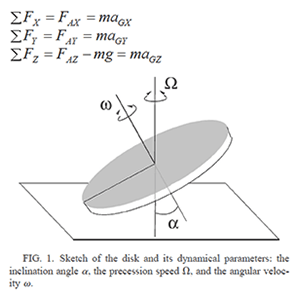
Euler’s [oi-lers] disc is a scientific educational toy, used to illustrate and study the dynamic system of a spinning disk on a flat surface (such as a spinning coin).
This phenomenon was first noted by Swiss physicist Leonhard Euler in the 18th century, hence the name.
read more »
Posted in Education, Games, Science |
1 Comment »
August 6, 2012

The Curiosity rover is a nuclear-powered exploration vehicle that is part of NASA’s Mars Science Laboratory (MSL) mission. The MSL spacecraft was launched in late 2011 and successfully landed on Aeolis Palus in Gale Crater in the summer of 2012. The approximately 2 billion-year-old impact crater is hypothesized to have gradually been filled in, first by water-deposited, and then by wind-deposited sediments, possibly until it was completely covered, before wind erosion scoured out the sediments, leaving an isolated 5.5 km (3.4 mile) high mountain, Aeolis Mons, at the center of the 154 km (96 mi) wide crater.
Thus, it is believed that the rover may have the opportunity to study two billion years of Martian history in the sediments exposed in the mountain. Additionally, its landing site should be on or near an alluvial fan, which is hypothesized to be the result of a flow of ground water, either before the deposition of the eroded sediments or else in relatively recent geologic history.
read more »
Posted in Science, Technology, World |
Leave a Comment »


 The Daily Omnivore
