May 3, 2012

The principle of linguistic relativity holds that the structure of a language affects the ways in which its speakers are able to conceptualize their world, i.e. their world view. Popularly known as the Sapir–Whorf hypothesis, or Whorfianism, the principle is often defined as having two versions: Strong (language determines thought and that linguistic categories limit and determine cognitive categories) and Weak (linguistic categories and usage influence thought and certain kinds of non-linguistic behavior).
The term ‘Sapir-Whorf Hypothesis’ is a misnomer as the men never co-authored anything and never stated their ideas in terms of a hypothesis. The notion of ‘weak’ and ‘strong’ versions of Whorf’s principal of linguistic relativity is a misunderstanding of Whorf promulgated by Stuart Chase, whom Whorf considered ‘utterly incompetent by training and background to handle such a subject.’
read more »
Posted in Language, Science, World |
Leave a Comment »
May 1, 2012

A displacement activity is the result of two contradicting instincts in a particular situation. Birds, for example, may peck at grass when uncertain whether to attack or flee from an opponent; similarly, a human may scratch his or her head when they do not know which of two options to choose. Displacement activities often involve actions to bring comfort such as scratching, drinking, or feeding.
The first description of a displacement activity (though not the use of the term) is probably by English evolutionary biologist Julian Huxley in 1914. The subsequent development of research on displacement activities was a direct consequence of Austrian zoologist Konrad Lorenz’s works on instincts. However, the first mentions of the phenomenon came in 1940 by the two Dutch zoological researchers Nikolaas Tinbergen and Adriaan Kortlandt.
Posted in Language, Science |
Leave a Comment »
April 24, 2012

In psychology, fluid and crystallized intelligence (abbreviated Gf and Gc, respectively) are factors of general intelligence originally identified by Raymond Cattell. Concepts of fluid and crystallized intelligence were further developed by Cattell’s disciple John L. Horn. Fluid intelligence or fluid reasoning is the capacity to think logically and solve problems in novel situations, independent of acquired knowledge. It is the ability to analyze novel problems, identify patterns and relationships that underpin these problems, and the extrapolation of these using logic.
It is necessary for all logical problem solving, especially scientific, mathematical and technical problem solving. Fluid reasoning includes inductive reasoning and deductive reasoning. Crystallized intelligence is the ability to use skills, knowledge, and experience. It should not be equated with memory or knowledge, but it does rely on accessing information from long-term memory. Crystallized intelligence is one’s lifetime or intellectual achievement, as demonstrated largely through one’s vocabulary and general knowledge. This improves somewhat with age, as experiences tend to expand one’s knowledge.
read more »
Posted in Education, Games, Science |
Leave a Comment »
April 23, 2012

BosWash is a name coined by futurist Herman Kahn in a 1967 essay describing a theoretical United States megalopolis extending from the metropolitan area of Boston to that of Washington, D.C. The publication also coined ‘SanSan’ for the areas on the Pacific coast of California.
The general concept for the area described by BosWash was first identified in French geographer Jean Gottmann’s 1961 book ‘Megalopolis: The Urbanized Northeastern Seaboard of the United States.’ Kahn’s essay was the product of a study commissioned in 1965 by the American Academy of Arts and Sciences. Kahn discussing urbanization, began by writing: ‘The United States in the year 2000 will probably see at least three gargantuan megalopolises. We have labeled these—only half frivolously—’Boswash,’ ‘Chipitts,’ and ‘SanSan.”
read more »
Posted in Politics, Science, World |
Leave a Comment »
April 17, 2012

Eric Klinenberg is an American sociologist and a scholar of urban studies, culture, and media. He is best known for his contributions as a public sociologist. He is currently Professor of Sociology, Public Policy, and Media, Culture, and Communications at New York University, as well as the editor of the journal ‘Public Culture.’ Klinenberg’s first book, ‘Heat Wave: A Social Autopsy of Disaster in Chicago,’ was published by the University of Chicago Press in 2002.
It was praised as ‘trenchant, persuasive tale of slow murder by public policy.’ Klinenberg’s second book, ‘Fighting for Air: The Battle to Control America’s Media,’ was called ‘a must-read for those who wonder what happened to good radio, accurate reporting and autonomous public interest.’ Since its publication, he has testified before the FCC and briefed Congress on his findings. His latest book, ‘Going Solo: The Extraordinary Rise and Surprising Appeal of Living Alone,’ was published in 2012.
Posted in Language, Politics, Science |
Leave a Comment »
April 14, 2012

Chironomia is the art of using gesticulations or hand gestures to good effect in traditional rhetoric or oratory. Effective use of the hands, with or without the use of the voice, is a practice of great antiquity, which was developed and systematized by the Greeks and the Romans. Various gestures had conventionalized meanings which were commonly understood, either within certain class or professional groups, or broadly among dramatic and oratorical audiences.
Gilbert Austin was a well-known author on chironomia, in the preface to his book on the subject, Austin writes: ‘…it is a fact, that we do not possess from the ancients, nor yet from the labors of our own countrymen, any sufficiently detailed and precise precepts for the fifth division of the art of rhetoric, namely rhetorical delivery, called by the ancients ‘actio’ and ‘pronuntiatio.”
read more »
Posted in Language, Philosophy, Science |
Leave a Comment »
April 4, 2012
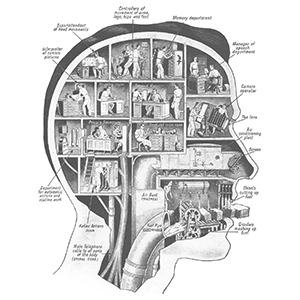
The ‘ghost in the machine‘ is British philosopher Gilbert Ryle’s description of René Descartes’ mind-body dualism. The phrase was introduced in Ryle’s book ‘The Concept of Mind’ (1949) to highlight the perceived absurdity of dualist systems like Descartes’ where mental activity carries on in parallel to physical action, but where their means of interaction are unknown or, at best, speculative.
Arthur Koestler’s wrote ‘The Ghost in the Machine,’ in 1967, focusing on mankind’s movement towards self-destruction, particularly in the nuclear arms arena. The book is particularly critical of B. F. Skinner’s behaviorist theory. One of Koestler’s central concepts is that as the human brain has grown, it has built upon earlier, more primitive brain structures, and that this is the ‘ghost in the machine’ of the title. Koestler’s theory is that at times these structures can overpower higher logical functions, and are responsible for hate, anger and other such destructive impulses.
read more »
Posted in Language, Philosophy, Science |
1 Comment »
April 4, 2012

The Getty kouros [koor-os] is an over-life-sized statue in the form of a late archaic Greek kouros (representations of male youths). The dolomitic marble sculpture was bought by the J. Paul Getty Museum, Malibu, California, in 1985 for $7 million. Despite initial favorable scientific analysis of the patina and aging of the marble, a question of its authenticity has persisted from the start.
Subsequent demonstration of an artificial means of creating the de-dolomitization observed on the stone has prompted a number of art historians to revise their opinions of the work. If genuine, it is one of only twelve complete kouroi still extant. If fake, it exhibits a high degree of technical and artistic sophistication by an as-yet unidentified forger. Its status remains undetermined: today the museum’s label reads ‘Greek, about 530 B.C., or modern forgery.’
read more »
Posted in Art, Money, Science |
1 Comment »
April 1, 2012
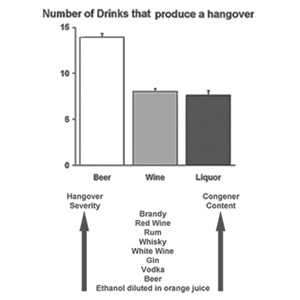
Congener [kon-juh-ner] (from Latin for ‘of the same race or kind’) has several different meanings depending on the field in which it is used. Colloquially, it is used to mean a person or thing like another, in character or action. In biology, congeners are organisms within the same genus. In chemistry, congeners are related chemicals, e.g., elements in the same group of the periodic table, or derivatives thereof. In genetics, congenic organisms are those with very similar genomes, except for a small fraction. For example, recombinant congenic mice strains are produced in laboratories as a tool to study genetic disease.
In the alcoholic beverages industry, congeners, also known as fusel oils, are substances produced during fermentation. These substances include small amounts of chemicals such as acetone, acetaldehyde, and other higher alcohols, esters, and aldehydes (e.g. propanol, glycols, ethyl acetate). Congeners are responsible for most of the taste and aroma of distilled alcoholic beverages, and contribute to the taste of non-distilled drinks. It has been suggested that these substances contribute to the symptoms of a hangover.
Posted in Drugs, Health, Science |
Leave a Comment »
April 1, 2012

A hangover is the experience of various unpleasant physiological effects following heavy consumption of alcoholic beverages. An alcohol hangover is associated with a variety of symptoms that may include dehydration, fatigue, headache, body aches, vomiting, diarrhea, flatulence, weakness, elevated body temperature and heart rate, hypersalivation, difficulty concentrating, sweating, anxiety, dysphoria, irritability, sensitivity to light and noise, erratic motor functions (including tremor), trouble sleeping, severe hunger, halitosis, and lack of depth perception. Many people will also be repulsed by the thought, taste or smell of alcohol during a hangover.
While a hangover can be experienced at any time, generally speaking it is experienced the morning after a night of heavy drinking. Hypoglycemia, dehydration, acetaldehyde intoxication, and glutamine rebound are all theorized causes of hangover symptoms. Hangover symptoms may persist for several days after alcohol was last consumed. Approximately 25-30% of drinkers may be resistant to hangover symptoms.
read more »
Posted in Drugs, Health, Science |
Leave a Comment »
March 30, 2012

Communal reinforcement is a social phenomenon in which a concept or idea is repeatedly asserted in a community, regardless of whether sufficient empirical evidence has been presented to support it. Over time, the concept or idea is reinforced to become a strong belief in many people’s minds, and may be regarded by the members of the community as fact. Often, the concept or idea may be further reinforced by publications in the mass media, books, or other means of communication. The phrase ‘millions of people can’t all be wrong’ is indicative of the common tendency to accept a communally reinforced idea without question, which often aids in the widespread acceptance of urban legends, myths, and rumors.
Communal reinforcement works both for true and false concepts or ideas, making the communal reinforcement of an idea independent of its truth value. Therefore, the statement that many persons in a given communities share in a common belief is not indicative of it being valid or false information’s. An idea can be accepted and spread throughout a community regardless of the validity of the claim.
read more »
Posted in Health, Politics, Science |
Leave a Comment »
March 23, 2012
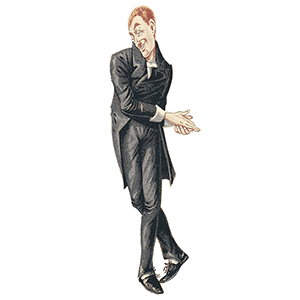
Confirmation bias is a tendency of people to favor information that confirms their beliefs or hypotheses. People display this bias when they gather or remember information selectively, or when they interpret it in a biased way. The effect is stronger for emotionally charged issues and for deeply entrenched beliefs. For example, in reading about gun control, people usually prefer sources that affirm their existing attitudes. They also tend to interpret ambiguous evidence as supporting their existing position.
Biased search, interpretation and memory have been invoked to explain attitude polarization (when a disagreement becomes more extreme even though the different parties are exposed to the same evidence), belief perseverance (when beliefs persist after the evidence for them is shown to be false), the irrational primacy effect (a greater reliance on information encountered early in a series), and illusory correlation (when people falsely perceive an association between two events or situations).
read more »
Posted in Money, Politics, Science |
1 Comment »


 The Daily Omnivore