March 1, 2011
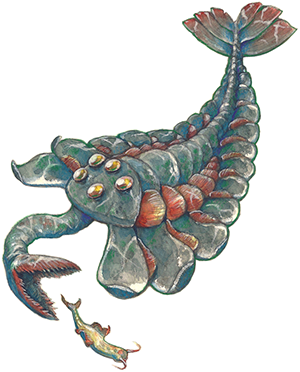
Opabinia [oh-puh-bin-ee-uh] is an extinct animal found in Cambrian fossil deposits. Its sole species, Opabinia regalis, is known from the Middle Cambrian Burgess Shale of British Columbia. The discoverer of Opabinia, American paleontologist, Charles Doolittle Walcott, named it after a local mountain, Opabin Peak in the Canadian Rockies.
Thirty specimens of Opabinia are known and each ranges in size from 40-70 mm. The most intriguing feature of Opabinia are its five eyes found on the dorsal surface of the head.
Posted in Science |
Leave a Comment »
March 1, 2011

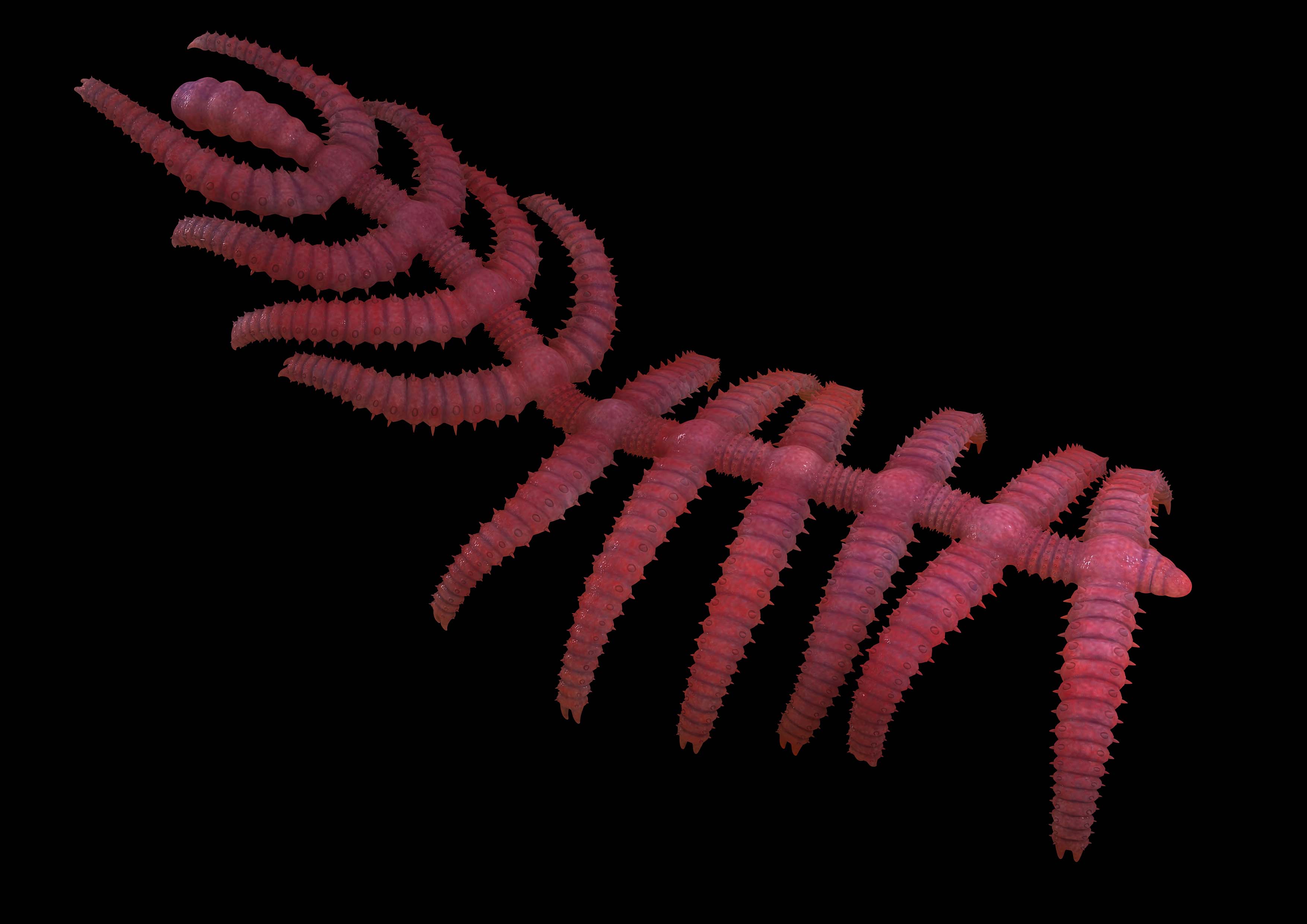
Diania is an extinct genus of animal found in China, represented by a single species: cactiformis. Known during its investigation by the nickname ‘walking cactus,’ this remarkable organism belongs to a group known as the armored lobopodians and has a simple worm-like body with robust, spiny, and apparently jointed legs.
Its significance is that jointed legs are the defining character of the arthropods and Diania may thus be very close to the origins of the most diverse group of animals on the planet. Diania also suggests that that arthropodization (i.e. the appearance of hard ring-like, joints around the legs), evolved before arthrodization (i.e. hard, ring-like segments, around the body).
Posted in Science |
Leave a Comment »
March 1, 2011

The anterior fornix erogenous zone (AFE or A-Spot) is a female erogenous zone that when stimulated can lead to rapid vaginal lubrication and arousal, sometimes without any other form of stimulation, with continued stimulation resulting in an intense orgasm. It is located at or near the deepest point on the anterior wall of the vagina, above the cervix, where the anterior wall of the vagina starts to curve upward. The posterior fornix is also believed to be an erogenous zone, called the ‘deep spot.’
Some believe that the AFE is the anterior fornix itself, but some sex experts believe it to be a degenerated female prostate (a theory that many have already applied to the G-spot and the Skene’s gland) or the area where the vaginal nerves connect, which is thought to be near it. One other theory is that it is the vesicouterine pouch, due to its proximity to the supposed location of the AFE zone and the supposed erogenous qualities of the rectouterine pouch. The AFE redirects female ejaculatory fluid, which is expelled from the Skene’s gland during G-spot orgasms, and turns it into vaginal lubrication. Because stimulating the AFE zone causes this mechanism and creates an erotic sensation simultaneously, full arousal occurs very quickly.
Posted in Health, Science, Sex |
1 Comment »
February 28, 2011

The Giant’s Causeway is an area of about 40,000 interlocking basalt columns, the result of an ancient volcanic eruption. It is located on the northeast coast of Northern Ireland. The tops of the columns form stepping stones that lead from the cliff foot and disappear under the sea. Most of the columns are hexagonal, although there are also some with four, five, seven and eight sides. The tallest are about 12 metres (36 ft) high, and the solidified lava in the cliffs is 28 metres thick in places.
Posted in Science, World |
Leave a Comment »
February 27, 2011

SweeTango, a registered trademark for a cultivar of apples produced in Minneiska, Minnesota. It is a newly released hybrid brand apple that debuted in 2009. It is a pinkish apple consisting of a yellow background that is intermittent with red coloration. The surface of the apple has several distinguishing visual characteristics. The prominent white lenticels appear freckle-like on the fruit. The name comes from those that have tasted this new brand of apple. They say they taste sweet as well as tart at the same time, sweet and tangy.
University of Minnesota produced this variety of apple from their breeding program. Their 80 acre Horticultural Research Center near Victoria, Minnesota, produced the Minneiska variety apple from Honeycrisp and Zestar apple varieties, which they also specially breed. Others apple varieties they have developed in their facility are Fireside, Haralson, and Honeygold.
Posted in Food, Money, Science |
Leave a Comment »
February 24, 2011

Vertebral [vur-tuh-bruhl] subluxation [suhb-luhk-sey-shuhn] is a controversial term that is commonly used by chiropractors to describe signs and symptoms of the spinal column. The chiropractic vertebral subluxation complex has been a source of controversy since its inception in 1895 due to its metaphysical origins and claims of far reaching effects on health and disease. Although some in the chiropractic profession reject the concept of subluxation and shun the use of this term as a diagnosis, its current and officially accepted status by the profession has been repeatedly confirmed.
In 2010 the General Chiropractic Council, the statutory regulatory body for chiropractors in the United Kingdom, issued guidance for chiropractors stating that the chiropractic vertebral subluxation complex ‘is not supported by any clinical research evidence that would allow claims to be made that it is the cause of disease or health concerns.’ A similar stance is taken by the National Health Service: ‘There is also no scientific evidence to support the idea that most illness is caused by misalignment of the spine.’
Posted in Health, Language, Science |
Leave a Comment »
February 24, 2011
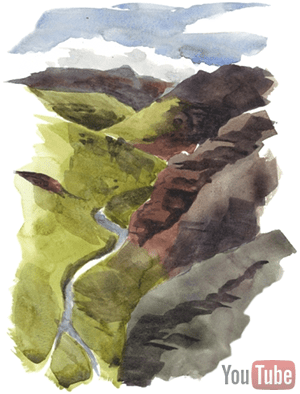
The Waimea River is a river on the island of Kauai in the U.S. state of Hawaii. At approximate 12 miles in length, it is one of the longest rivers in the Hawaiian Islands. It rises in a wet plateau of the island’s central highlands, in the Alaka’i Swamp, the largest high-elevation swamp in the world. It flows south, passing through the 3,000-foot-deep (910 m) Waimea Canyon, known as the ‘Grand Canyon of the Pacific.’
Due to wave action, sand gets pushed up into a large hill in front of the river each winter. This creates a natural dam that water collects behind for months, and which is about 20 feet above the level of the ocean on the other side of the sand berm. Every year some one digs a trench through the sand releasing millions of gallons of fresh water into the ocean. This produces a standing wave which is perfect for body boarding and surfing on.
Posted in Games, Science |
Leave a Comment »
February 24, 2011

The Marula is a medium-sized dioecious tree, indigenous to Africa. The fruits are used in the liqueur Amarula. The distribution of this species throughout Africa has followed the Bantu people in their migrations, as it has been an important item in their diet since time immemorial. When ripe, the fruits have a light yellow skin, with white flesh, rich in vitamin C, are succulent, tart with a strong and distinctive flavor.
The marula fruit is also eaten by various animals in Southern Africa. In the movie ‘Animals Are Beautiful People’ by Jamie Uys, released in 1974, some scenes portray elephants, warthogs and monkeys becoming intoxicated from eating fermented marula fruit. Later research showed that these scenes were improbable and, in all probability, staged. Elephants would need a huge amount of fermented marulas to have any effect on them, and the amount of water drunk by elephants each day would also dilute the effect.
Posted in Drugs, Food, Science |
Leave a Comment »
February 23, 2011

Here Comes Science is a 2009 children’s album from Brooklyn-based band They Might Be Giants, packaged as a CD/DVD set. The album is the third in their line of educational albums, following 2005’s Here Come the ABCs and 2008’s Here Come the 123s. It is the band’s 14th studio album and fourth children’s album.
Posted in Art, Education, Science |
Leave a Comment »
February 23, 2011

‘Gödel, Escher, Bach: An Eternal Golden Braid’ (GEB) is a book by cognitive scientist Douglas Hofstadter, described by the author as ‘a metaphorical fugue on minds and machines in the spirit of Lewis Carroll.’ On its surface, GEB examines logician Kurt Gödel, artist M. C. Escher and composer Johann Sebastian Bach, discussing common themes in their work and lives. At a deeper level, the book is a detailed and subtle exposition of concepts fundamental to mathematics, symmetry, and intelligence. Through illustration and analysis, the book discusses how self-reference and formal rules allow systems to acquire meaning despite being made of ‘meaningless’ elements.
It also discusses what it means to communicate, how knowledge can be represented and stored, the methods and limitations of symbolic representation, and even the fundamental notion of ‘meaning’ itself. In response to confusion over the book’s theme, Hofstadter has emphasized that GEB is not about mathematics, art, and music but rather about how cognition and thinking emerge from well-hidden neurological mechanisms. In the book, he presents an analogy about how the individual neurons of the brain coordinate to create a unified sense of a coherent mind by comparing it to the social organization displayed in a colony of ants.
Posted in Art, Philosophy, Science |
Leave a Comment »
February 22, 2011
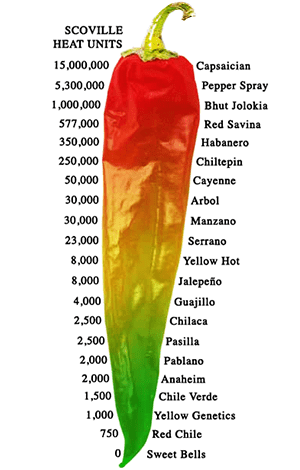
The Scoville scale is a measurement of the spicy heat (or piquance) of foods. The number of Scoville heat units (SHU) indicates the amount of capsaicin (a chemical compound that stimulates chemoreceptor nerve endings in the skin, especially the mucous membranes) present. The scale is named after its creator, American pharmacist Wilbur Scoville who developed it in 1912. The chilis with the highest rating on the Scoville scale exceed one million Scoville units, and include specimens of naga jolokia.
Posted in Food, Science |
Leave a Comment »
February 22, 2011

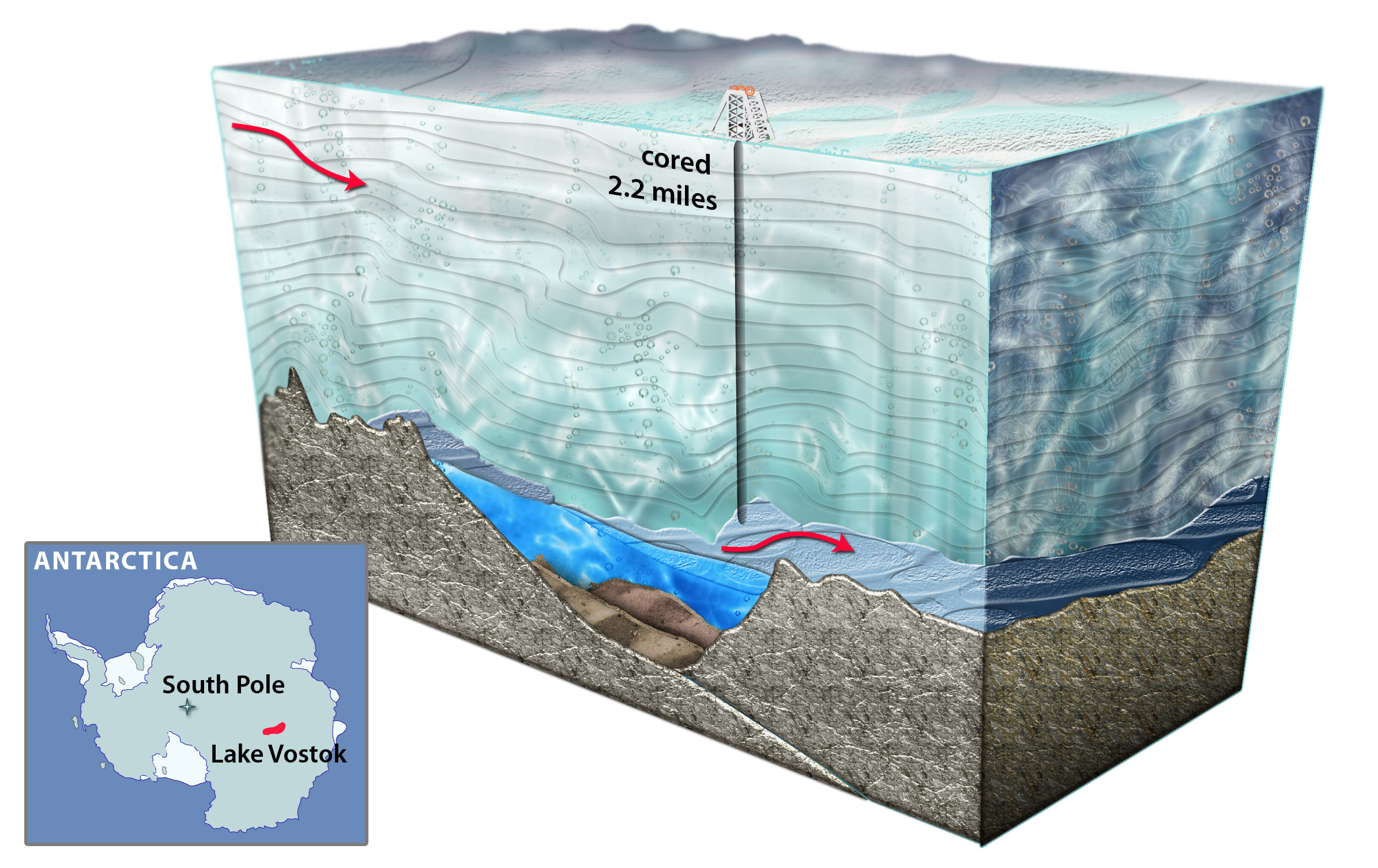
Lake Vostok is the largest of more than 140 subglacial lakes found under the surface of Antarctica. The overlying ice provides a continuous paleo-climatic record of 400,000 years, and the lake water itself has been isolated for 15 million years. The lake is named after the ship of Fabian von Bellingshausen, an Antarctic pioneer. There is presently underway a scientific effort to reach the lake by drill. The lake is under complete darkness and expected to be rich in oxygen, so there is speculation that any organisms inhabiting the lake could have evolved in a manner unique to this environment. These adaptations to an oxygen-rich environment might include high concentrations of protective oxidative enzymes.
Living Hydrogenophilus thermoluteolus microorganisms have been found in Lake Vostok’s deep ice core drillings, an extant surface dwelling species. This suggests the presence of a deep biosphere utilizing a geothermal system of the bedrock encircling the subglacial lake. There is optimism that microbial life in the lake may be possible despite high pressure, constant cold, low nutrient input, potentially high oxygen concentration and an absence of sunlight. Due to the lake’s similarity to the Jupiter moon Europa and Saturn’s moon Enceladus, any confirmation of life living in Lake Vostok would strengthen the prospect for the possible presence of life on Europa or Enceladus.
Posted in Science, World |
Leave a Comment »