February 21, 2011


A platonic [pluh-ton-ik] solid is a three dimensional shape where each face is built from the same type of polygons, and there are the same number of polygons meeting at every corner of the shape. There are only five Platonic Solids: Tetrahedron, Cube, Hexahedron, Octahedron, Dodecahedron, and Isosahedron. The shapes are often used to make dice, because dice of these shapes can be made fair. 6-sided dice are very common, but the other numbers are commonly used in role-playing games. Such dice are commonly referred to as D followed by the number of faces (d8, d20 etc.).
The tetrahedron (4 sided), cube (6 sided), and octahedron (8 sided), are found naturally in crystal structures. In meteorology and climatology, global numerical models of atmospheric flow are of increasing interest which use grids that are based on an icosahedron (20 sides,refined by triangulation) instead of the more commonly used longitude/latitude grid. This has the advantage of better spatial resolution without singularities (i.e. the poles) at the expense of somewhat greater numerical difficulty.
Posted in Art, Language, Science |
Leave a Comment »
February 21, 2011

Lucy Temerlin (1964–1987) was a chimpanzee owned by the Institute for Primate Studies in Oklahoma, and raised by Maurice K. Temerlin, Ph.D., a psychotherapist and professor at the University of Oklahoma and his wife, Jane W. Temerlin.
read more »
Posted in Language, Science, Sex |
1 Comment »
February 21, 2011

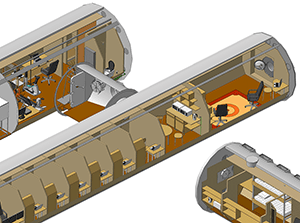
Mars-500 is a multi-part ground-based experiment simulating a manned flight to Mars. The experiment’s facility is located at the Russian Academy of Sciences’ Institute of Biomedical Problems (IBMP) in Moscow, Russia. A total of 640 experiment days have been scheduled, divided into three stages. During each stage, a crew of six volunteers live and work in a mockup spacecraft. Communication with the outside world is limited, and has a simulated 20 minute delay. The supply of on-board consumables is limited.
The longest stage of the experiment is intended to simulate a complete 520-day mission to Mars, and began on June 3, 2010.
Posted in Health, Science |
Leave a Comment »
February 17, 2011

The Droste [dro-st] effect is a specific kind of recursive picture, one that in heraldry is termed ‘mise en abyme’ (French for ‘placing into infinity’). An image exhibiting the Droste effect depicts a smaller version of itself in a place where a similar picture would realistically be expected to appear. This smaller version then depicts an even smaller version of itself in the same place, and so on. Only in theory could this go on forever; practically, it continues only as long as the resolution of the picture allows, which is relatively short, since each iteration geometrically reduces the picture’s size.
The effect is named after the image on the tins and boxes of Droste cocoa powder, one of the main Dutch brands, which displayed a nurse carrying a serving tray with a cup of hot chocolate and a box with the same image. This image, introduced in 1904 and maintained for decades with slight variations, became a household notion.
Posted in Art, Language, Science |
Leave a Comment »
February 14, 2011

Copernicus named his treatise on the movements of planets around the sun ‘On the Revolutions of Celestial Bodies’ in 1583 The word ‘Revolution‘ then passed from astronomy into vernacular speech; coming to represent abrupt change in the social order. Political usage of the word first appeared in 1688 in the young United Kingdom as a description of the replacement of James II with William III. The process was termed ‘The Glorious Revolution.’
Posted in Language, Politics, Science |
Leave a Comment »
February 14, 2011
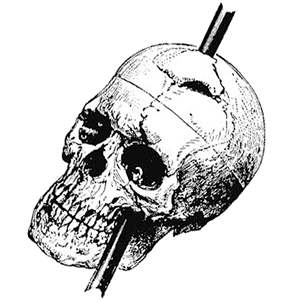
Phineas P. Gage (1823 – 1860) was an American railroad construction foreman now remembered for his improbable survival of an accident in which a large iron rod was driven completely through his head, destroying much of his brain’s left frontal lobe, and for that injury’s reported effects on his personality and behavior—effects so profound that friends saw him as ‘no longer Gage.’
Long called ‘the American Crowbar Case, Phineas Gage influenced 19th-century discussion about the brain, particularly debate on cerebral localization (determination of areas of the cortex involved in performance of certain functions) and was perhaps the first case suggesting that damage to specific regions of the brain might affect personality and behavior.
Posted in Health, Science |
Leave a Comment »
February 13, 2011
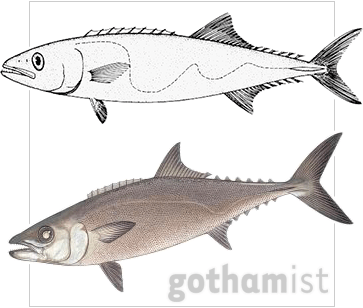
The escolar [es-kuh-lahr] is a species of fish found in deep tropical and temperate waters around the world. It is also known as Snake Mackerel, and sometimes marketed as ‘butterfish,’ ‘oilfish,’ ‘white tuna,’ ‘walu,’ or ‘codfish,’ a controversial practice due to potential health problems related with consumption of the fish. Like its relative the oilfish, escolar cannot metabolize the wax esters naturally found in its diet. This gives the escolar an oil content of 14–25% in its flesh. These wax esters may cause gastrointestinal distress in humans called ‘steatorrhea,’ the onset of which may occur between 30 minutes and 36 hours following consumption.
Symptoms may include stomach cramps, bright orange oil in stool, diarrhea, headaches, nausea, vomiting, and anal leakage. Because of the possible effects of consumption, escolar has been banned from consumption in Japan since 1977, as the Japanese government considers it toxic. It has also been banned in Italy. In 1999, the Swedish and Danish National Food Administrations informed fish trade associations and fish importing companies about the problems escolar and related fish could cause if not prepared properly and issued recommendations.
Posted in Food, Health, Science |
Leave a Comment »
February 13, 2011

Algebraic geometry is a branch of mathematics which combines techniques of abstract algebra, especially commutative algebra, with the language and the problems of geometry. Initially a study of systems of polynomial equations in several variables, the subject of algebraic geometry starts where equation solving leaves off, and it becomes even more important to understand the intrinsic properties of the totality of solutions of a system of equations, than to find some solution; this leads into some of the deepest waters in the whole of mathematics, both conceptually and in terms of technique.
Posted in Education, Science |
Leave a Comment »
February 12, 2011
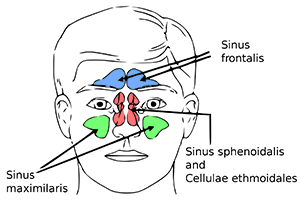

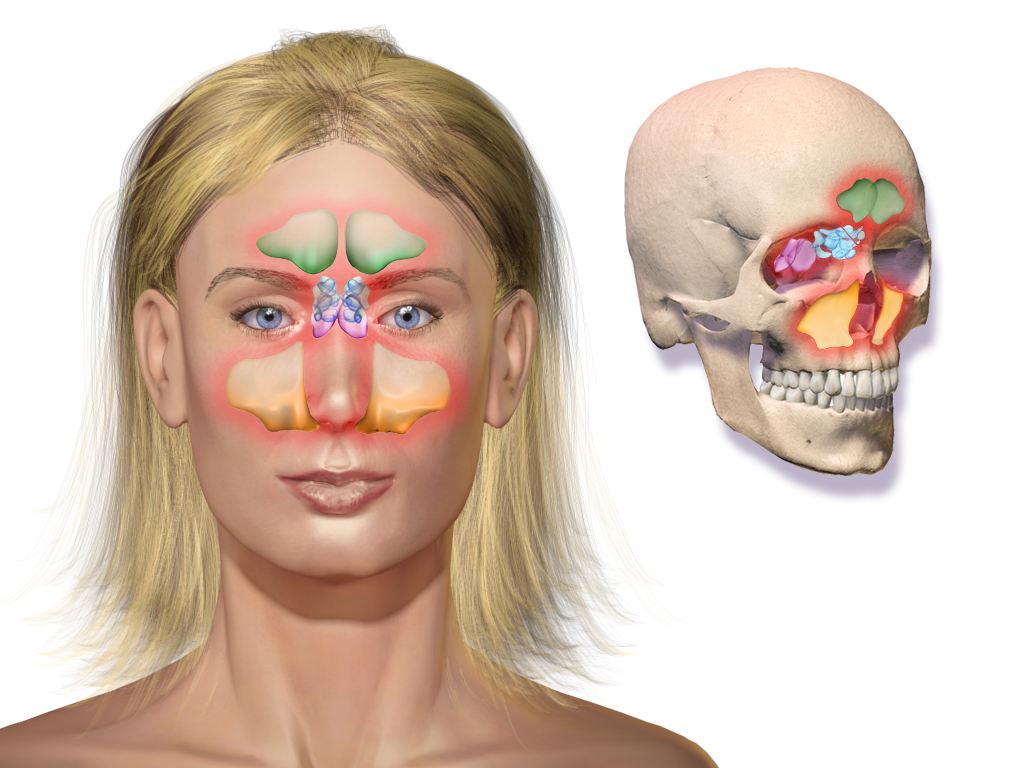
Paranasal sinuses are air-filled spaces, communicating with the nasal cavity, within the bones of the skull and face. Humans possess a number of paranasal sinuses, divided into subgroups that are named according to the bones within which the sinuses lie. Paranasal sinuses occur in a variety of animals (including most mammals, birds, non-avian dinosaurs, and crocodilians). The biological role of the sinuses is debated, but a number of possible functions have been proposed such as decreasing the relative weight of the front of the skull, and especially the bones of the face; increasing resonance of the voice; and providing a buffer against blows to the face.
It has also been suggested they insulate sensitive structures like dental roots and eyes from rapid temperature fluctuations in the nasal cavity, and also serve to humidify and heat inhaled air. The paranasal sinuses are joined to the nasal cavity via small orifices called ostia. These become blocked easily by allergic inflammation, or by swelling in the nasal lining which occurs with a cold. If this happens, normal drainage of mucus within the sinuses is disrupted, and sinusitis may occur. These conditions may be treated with drugs such as pseudoephedrine, which causes vasoconstriction in the sinuses, reducing inflammation, by traditional techniques of nasal irrigation, or by corticosteroid.
Posted in Health, Science |
Leave a Comment »
February 11, 2011
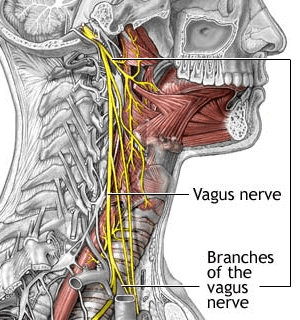
The vagus nerve [vey-guhs] is the tenth of twelve cranial nerves. Besides output to the various organs in the body, the vagus nerve conveys sensory information about the state of the body’s organs to the central nervous system. 80-90% of the nerve fibers in the vagus nerve are afferent (sensory) nerves communicating the state of the viscera to the brain. The medieval Latin word ‘vagus’ means literally ‘Wandering’ (the words vagrant, vagabond, and vague come from the same root). Sometimes the branches are spoken of in the plural and are thus called vagi.
read more »
Posted in Health, Science |
1 Comment »
February 11, 2011
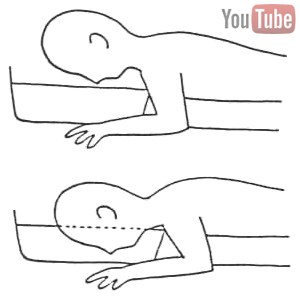
The mammalian diving reflex optimizes respiration to allow mammals to stay underwater for a long time. It is exhibited strongly in aquatic mammals (seals, otters, dolphins, etc.), but exists in a weaker version in other mammals, including humans. Diving birds, such as penguins, have a similar reflex. Every animal’s diving reflex is triggered specifically by cold water contacting the face – water that is warmer than 21 °C (70 °F) does not cause the reflex, and neither does submersion of body parts other than the face.
Also, the reflex is always exhibited more dramatically, and thus can grant longer survival, in young individuals. Beyond the effect of the reflex when submerged in water, the reflex is used consciously in ‘splashing cold water on one’s face,’ either to relax when upset or wake up when drowsy. Additionally, the reflex is also elicited through water boarding torture, in order to create the sense of drowning upon the individual.
Posted in Science |
1 Comment »
February 11, 2011
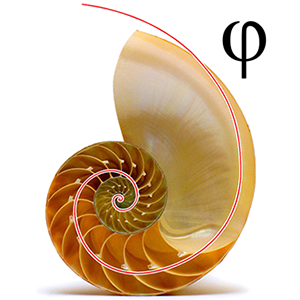
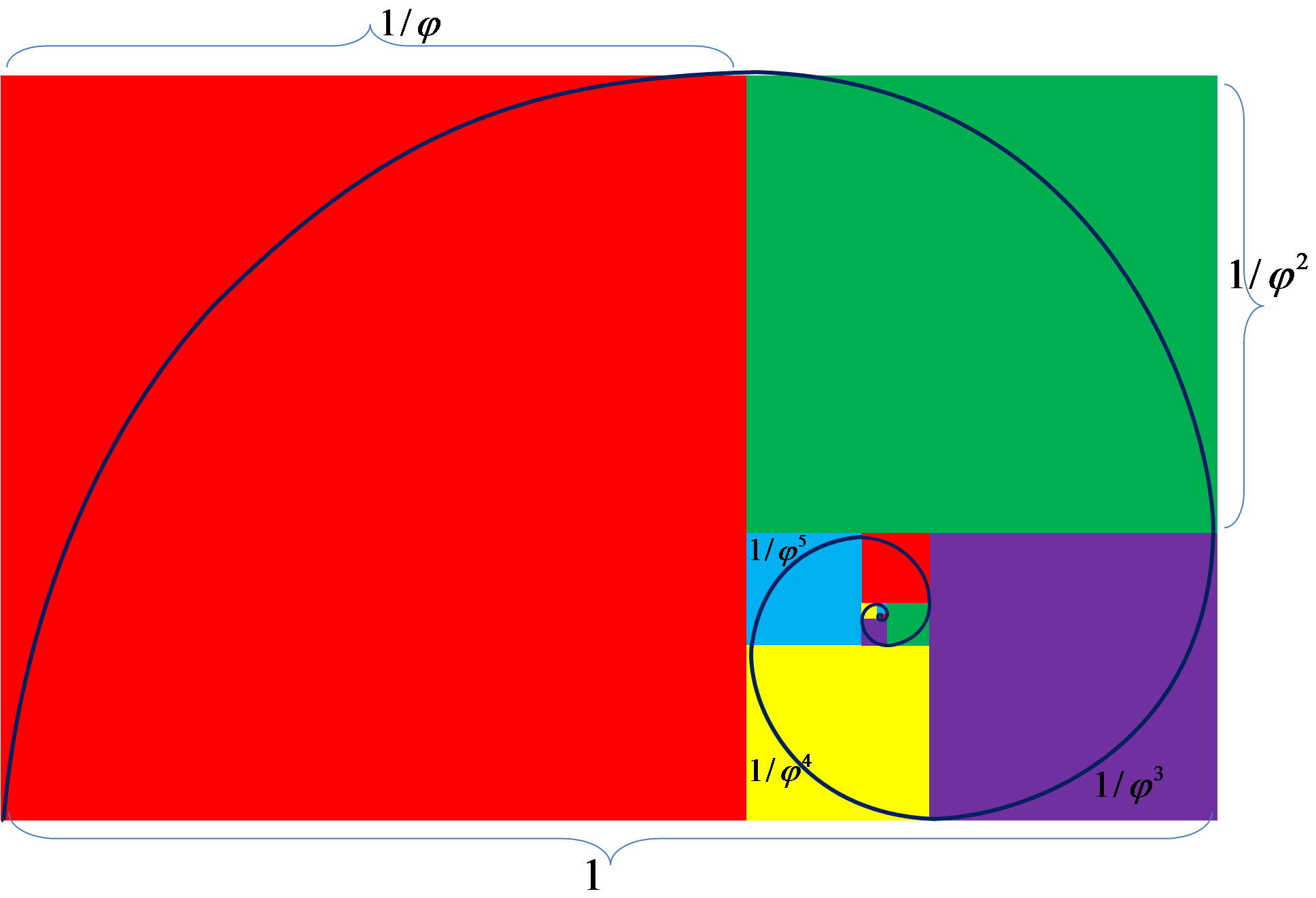
If a person has one number a and another smaller number b, he can make the ratio of the two numbers by dividing them. Their ratio is a/b. He can make another ratio by adding the two numbers together a+b and dividing this by the larger number a. The new ratio is (a+b)/a. If these two ratios are equal to the same number, then that number is called the golden ratio. The Greek letter  (phi) is usually used to represent the golden ratio. Like Pi, the golden ratio is an irrational number. If a person tries to write it, it will never stop and never be the same again and again, but it will start this way: 1.6180339887…
Italian mathematician, Fibonacci (1170 – 1250), discovered a sequence of numbers that relates to the golden ratio called the Fibonacci numbers. A person can find the next number in the list by adding the last two numbers together. If a person divides a number in the list by the number that came before it, this ratio comes closer and closer to the golden ratio. At least since the Renaissance, many artists and architects have proportioned their works to approximate the golden ratio—especially in the form of the golden rectangle, in which the ratio of the longer side to the shorter is the golden ratio—believing this proportion to be aesthetically pleasing. Mathematicians have studied the golden ratio because of its unique and interesting properties.
Posted in Art, Science |
Leave a Comment »