January 25, 2011

The Monty Hall problem is a famous problem in probability science. The problem is based on a game show, ‘Let’s Make a Deal,’ and is named for the show’s host, Monty Hall. In the problem, there are three doors. A car is behind one door and goats behind the other two doors.
read more »
Posted in Humor, Money, Science |
Leave a Comment »
January 21, 2011
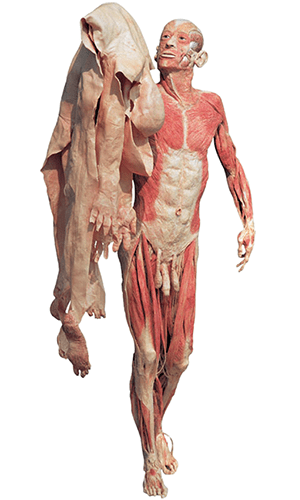
Plastination is a technique used in anatomy to preserve bodies or body parts. The water and fat are replaced by certain plastics, yielding specimens that can be touched, do not smell or decay, and even retain most properties of the original sample. There are four steps in the standard process of plastination: fixation, dehydration, forced impregnation in a vacuum, and hardening. Water and lipid tissues are replaced by curable polymers. Curable polymers used by plastination include silicone, epoxy and polyester-copolymer.
Fixation simply means that the body is embalmed, usually in a formaldehyde solution, in order to halt decomposition. After any necessary dissections take place, the specimen is then placed in a bath of acetone. Under freezing conditions, the acetone draws out all the water and replaces it inside the cells. The specimen is then placed in a bath of liquid polymer, such as silicone rubber, polyester or epoxy resin. By creating a vacuum, the acetone is made to boil at a low temperature. As the acetone vaporizes and leaves the cells, it draws the liquid polymer in behind it, leaving a cell filled with liquid plastic. The plastic must then be cured with gas, heat, or ultraviolet light, in order to harden it.
Posted in Science |
Leave a Comment »
January 21, 2011

A fractal [frak-tl] is any equation or pattern, that when seen as an image, produces a picture, which can be zoomed into infinity and will still produce the same picture. The word fractal was made by Benoît Mandelbrot in 1975 from the Latin word fractus, which means ‘broken’ or ‘fractured.’ Some fractals exist only for artistic reasons, but others are very useful. Fractals are very efficient shapes for radio antennas and are used in computer chips to efficiently connect all the components.
A simple example is a tree that branches infinitely into smaller branches, and those branches into smaller branches and so on. Fractals are not only beautiful, but also have many practical applications. There are many types of fractals, made in a large variety of ways. There are also many natural examples of fractals in nature including trees, snowflakes, some vegetables and coastlines.
Posted in Art, Science |
Leave a Comment »
January 21, 2011

A snow roller is a rare meteorological phenomenon in which large snowballs are formed naturally as chunks of snow are blown along the ground by wind, picking up material along the way. Unlike snowballs made by people, snow rollers are typically cylindrical in shape, and are often hollow since the inner layers, which are the first layers to form, are weak and thin compared to the outer layers and can easily be blown away, leaving what looks like a doughnut or Swiss roll.
Snow rollers have been seen to grow as large as two feet in diameter, but in order for them to form the ground must be covered by a layer of ice to which snow will not stick (it must be covered by wet, loose snow with a temperature near melting). The wind must be strong enough to move the snow rollers, but not strong enough to blow them too fast. Alternatively, gravity can move the snow rollers on steep hill.
Posted in Science |
Leave a Comment »
January 19, 2011

A supertaster is a person who experiences the sense of taste with far greater intensity than average. Women are more likely to be supertasters, as are Asians and Africans. The cause of this heightened response is currently unknown, although it is thought to be, at least in part, due to an increased number of fungiform papillae (small mushroom-like structures on the tongue that house taste buds). Supertasters contrast with nontasters who have a decreased sense. The term originates with experimental psychologist Linda Bartoshuk who has spent much of her career studying genetic variation in taste perception.
In some environments, heightened taste response, particularly to bitterness, would represent an important advantage in avoiding potentially toxic plant alkaloids. However, in other environments, increased response to bitter may have limited the range of palatable foods. In a modern, energy-rich environment, supertasting may be cardioprotective, due to decreased liking and intake of fat.
Posted in Food, Language, Science |
Leave a Comment »
January 19, 2011
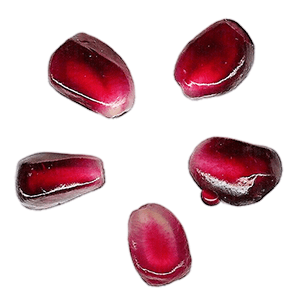
An aril [ar-il] is any specialized outgrowth from the funiculus (attachment point of the seed) or that covers or is attached to the seed. It is sometimes applied to any appendage or thickening of the seed coat in flowering plants, such as the edible parts of the mangosteen and pomegranate fruit, the mace of the nutmeg seed, or the hairs of a cotton plant. The aril may create a fruit-like structure (called a false-fruit). The edible flesh of the longan, lychee, ackee and lleuque fruits are highly developed arils surrounding the seed.
Posted in Food, Language, Science |
Leave a Comment »
January 17, 2011

Friendly Floatees are plastic bath toys marketed by The First Years, Inc. and made famous by the work of Curtis Ebbesmeyer, an oceanographer who models ocean currents on the basis of flotsam movements including those of a consignment of Friendly Floatees washed into the Pacific Ocean in 1992. The toys themselves have become collector’s items, fetching prices as high as $1,000.
Posted in Money, Science |
Leave a Comment »
January 17, 2011
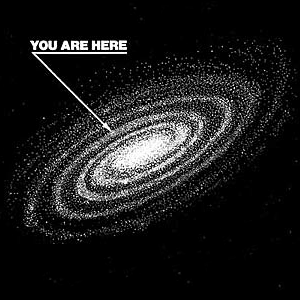
The mediocrity principle is the notion that there is nothing special about humans or the Earth. In a broader context, the mediocrity principle states that: life on Earth depends on just a few basic molecules; the elements that make up these molecules are (to a greater or lesser extent) common to all stars, and the laws of science we know apply to the entire universe (and there is no reason to assume that they do not). Thus, given sufficient time – life must have originated elsewhere in the cosmos.
Posted in Philosophy, Science |
Leave a Comment »
January 17, 2011

Schrödinger’s [shroh-ding-ers] cat is a thought experiment in quantum physics, usually described as a paradox, devised by Austrian physicist Erwin Schrödinger in 1935. In the experiment, a cat is placed in a room that is separated from the outside world; a small amount of a radioactive element is in the room.
Within some time, say one hour, one of the atoms of the radioactive material may decay (because the material unstable), or it may not. If the material breaks down, it will release poisonous gas, which will kill the cat. The question now is: at the end of the hour, is the cat alive or dead?
read more »
Posted in Death, Philosophy, Science |
Leave a Comment »
January 13, 2011

An itch is an unpleasant sensation that causes the desire or reflex to scratch. Itching has resisted many attempts to classify it as any one type of sensory experience. It has many similarities to pain and both are unpleasant, but their response patterns are different. Pain creates a withdrawal reflex while itch leads to a scratch reflex. The feeling of itchiness can be caused by a movement of hair or the release of a chemical (histamine) from cells under the skin. Itchiness is regarded as protective, as it helps creatures remove parasites that land on their skin.
Nerve fibers for itch and pain both originate in the skin; however, information for them is conveyed in two distinct systems on the same nerve bundle and tract. Many forms of pain inhibit itch, such as noxious heat, physical rubbing/scratching, noxious chemicals, and electric shock. A variety of over-the-counter and prescription anti-itch drugs are available. Non-chemical remedies include cooling, warming, soft stimulation. Sometimes scratching relieves isolated itches, hence the existence of devices such as the back scratcher. Often, however, scratching can intensify itching and even cause further damage to the skin, dubbed the ‘itch-scratch-itch cycle.’
Posted in Health, Science |
Leave a Comment »
January 13, 2011


Decaffeination is the act of removing caffeine from coffee beans, cocoa, or tea leaves. Decaffeinated drinks still have around 1-2% of the original caffeine remaining in them. In the case of coffee, the process is usually performed on unroasted (green) beans, and starts with steaming of the beans. They are then rinsed with a solvent that extracts the caffeine while leaving the other essential chemicals in the coffee beans. The process is repeated anywhere from 8 to 12 times until it meets either the international standard of having removed 97% of the caffeine in the beans or the EU standard of having the beans 99.9% caffeine-free by mass.
The first commercially successful decaffeination process was invented by Ludwig Roselius and Karl Wimmer in 1903. It involved steaming coffee beans with a salt water solution and then using benzene as a solvent to remove the caffeine. Coffee decaffeinated this way was sold as Kaffee HAG in most of Europe, as Café Sanka in France and later as Sanka brand coffee in the U.S. Due to health concerns regarding benzene, this process is no longer used commercially and Coffee Hag and Sanka are produced using a different process. Coffee contains over 400 chemicals important to the taste and aroma of the final drink: it is therefore challenging to remove only caffeine while leaving the other chemicals at their original concentrations.
Posted in Drugs, Food, Science |
1 Comment »
January 12, 2011

The Forer effect (also called the Barnum Effect after P.T. Barnum) is the observation that individuals will give high accuracy ratings to descriptions of their personality that supposedly are tailored specifically for them, but are in fact vague and general enough to apply to a wide range of people. This effect can provide a partial explanation for the widespread acceptance of some beliefs and practices, such as astrology, fortune telling, and some types of personality tests like the Myers-Briggs test.
read more »
Posted in Language, Money, Science |
Leave a Comment »




 The Daily Omnivore