December 1, 2010

The Lençóis Maranhenses National Park is located on the coast of northeastern Brazil; it is an area of low, flat, occasionally flooded land, overlaid with large, discrete sand dunes. It encompasses roughly 1000 square kilometers, and despite abundant rain, supports almost no vegetation. The park was created on June 2, 1981. The National Park is quite extensive and has no access roads. Because of the nature of the park’s protected status, most vehicles are not permitted access. Entrance to the park is made exclusively by 4-wheel drive trucks.
Lying just outside the Amazon basin, the region is subject to a regular rain season during the beginning of the year. The rains cause a peculiar phenomenon: fresh water collects in the valleys between sand dunes, spotting the desert with blue and green lagoons that reach their fullest between July and September. The area is also home to a variety of fish which, despite the almost complete disappearance of the lagoons during the dry season, have their eggs brought from the sea by birds.
Posted in Science, World |
Leave a Comment »
December 1, 2010

Asteroid mining refers to exploiting raw materials from asteroids and planetoids in space, especially near-Earth objects. Minerals and volatiles could be mined from an asteroid or spent comet to provide space construction material (e.g., iron, nickel, titanium), to extract water and oxygen to sustain the lives of prospector-astronauts on site, as well as hydrogen and oxygen for use as rocket fuel. In space exploration, these activities are referred to as in-situ resource utilization.
A relatively small metallic asteroid with a diameter of 1 mile contains more than $20 trillion US dollars worth of industrial and precious metals. The gold, cobalt, iron, manganese, nickel, palladium, platinum, and other metals that we now mine from the Earth’s crust, and that are essential for economic and technological progress, came originally from the rain of asteroids that struck the primordial Earth. Earth’s massive gravity pulled all such siderophilic (iron loving) elements into the planet’s core during its molten youth more than four billion years ago. Initially, this left the crust utterly depleted of such valuable elements. Asteroid impacts re-infused the depleted crust with metals.
Posted in Money, Science, Technology |
Leave a Comment »
November 30, 2010

Two elephants are sitting in the bathtub. One elephant says to the other, ‘Pass the soap.’
The elephant replies to the other elephant, ‘No soap, radio!‘
read more »
Posted in Humor, Science |
Leave a Comment »
November 22, 2010
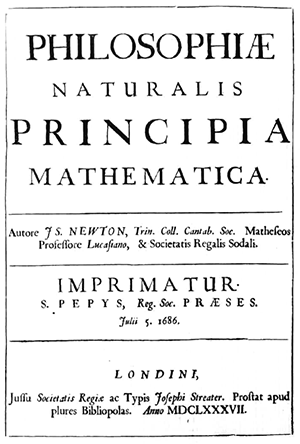
Philosophiæ Naturalis Principia Mathematica, Latin for ‘Mathematical Principles of Natural Philosophy,’ often called the Principia, is a work in three books by Sir Isaac Newton, first published in 1687. The Principia states Newton’s laws of motion, forming the foundation of classical mechanics, also Newton’s law of universal gravitation, and a derivation of Kepler’s laws of planetary motion (which Kepler first obtained empirically). The Principia is regarded as one of the most important works in the history of science.
In formulating his physical theories, Newton developed and used mathematical methods now included in the field of calculus. But the language of calculus as we know it was largely absent from the Principia. In a revised conclusion to the Principia (see General Scholium), Newton used his expression that became famous, Hypotheses non fingo (‘I contrive no hypotheses’). It was his answer to those who had publicly challenged him to give an explanation for the causes of gravity rather than just the mathematical principles of kinematics. Along with Occam’s Razor, the term can be seen as a departure from the Aristotelian hypothetic-deductive method of natural philosophy.
Posted in Science |
Leave a Comment »
November 22, 2010

At sufficiently high doses of the drug ketamine (half a gram or more), it is common to experience a ‘K-hole.’ This is a slang term for a state of dissociation from the body which may mimic the phenomenology of schizophrenia. Experience of the K-hole may include distortions in bodily awareness, such as the feeling that one’s body is being tugged, or is gliding on silk, flying, or has grown very large or distended. Users have reported the sensation of their soul leaving their human body.
read more »
Posted in Drugs, Language, Science |
Leave a Comment »
November 18, 2010

The Sokal affair was a publishing hoax perpetrated by Alan Sokal, a physics professor at New York University. In 1996, Sokal submitted an article to Social Text, an academic journal of postmodern cultural studies. The submission was an experiment to test the magazine’s intellectual rigor and, specifically, to learn if such a journal would ‘publish an article liberally salted with nonsense if it (a) sounded good and (b) flattered the editors’ ideological preconceptions.’
read more »
Posted in Humor, Language, Science |
Leave a Comment »
November 17, 2010

Zener [zeh-ner] cards are cards used to conduct experiments for extra-sensory perception (ESP), most often clairvoyance. Perceptual psychologist Karl Zener designed the cards in the early 1930s for experiments conducted with his colleague, parapsychologist J. B. Rhine. Originally, tests for ESP were conducted using a standard deck of playing cards. There are just five different Zener cards: a hollow circle (one curve), a Greek cross (two lines), three vertical wavy lines (or ‘waves’), a hollow square (four lines), and a hollow five-pointed star. There are 25 cards in a pack, five of each design.
When Zener cards were first used, they were made out of a fairly thin translucent white paper. Several subjects or groups of subjects scored very highly until it was discovered that they had often been able to see the symbols through the backs of the cards. A redesign made it impossible to see the designs through the cards under any conditions. A subsequent deck featured an illustration of a building at Duke University on its reverse side, but the use of a non-symmetric reverse design allowed the deck to be exploited as a one-way deck.
Posted in Games, Philosophy, Science |
Leave a Comment »
November 8, 2010

Agnotology is the study of culturally-induced ignorance or doubt, particularly the publication of inaccurate or misleading scientific data. The neologism was coined by Robert N. Proctor, a Stanford University professor specializing in the history of science and technology. More generally, the term also highlights the increasingly common condition where more knowledge of a subject leaves one more uncertain than before. Proctor studied the tobacco industry’s conspiracy to manufacture doubt about the cancer risks of tobacco use. Under the banner of science, the industry produced research about everything except tobacco hazards to exploit public uncertainty.
Some of the root causes for culturally-induced ignorance are media neglect, corporate or governmental secrecy and suppression, document destruction, and myriad forms of inherent or avoidable culturopolitical selectivity, inattention, and forgetfulness. Agnotology also focuses on how and why diverse forms of knowledge do not ‘come to be’,’ or are ignored or delayed. For example, knowledge about plate tectonics was delayed for at least a decade because key evidence was classified military information related to underseas warfare.
Posted in Language, Science |
Leave a Comment »
November 4, 2010

A blivet [bliv-it], also known as a poiuyt, devil’s fork or widget, is an undecipherable figure, an optical illusion and an impossible object. It appears to have three cylindrical prongs at one end which then mysteriously transform into two rectangular prongs at the other end.
In traditional U.S. Army slang dating back to the Second World War, a blivet was defined as ‘ten pounds of manure in a five pound bag’ (a proverbial description of anything egregiously ugly or unmanageable); it was applied to an unmanageable situation, a crucial but substandard or damaged tool, or a self-important person. In some areas of the U.S., it refers to a juvenile prank, clearly connected with the original military usage: a sack full of excrement is ignited on the victim’s porch, while the pranksters ring the doorbell and run. The victim attempts to put the flames out by stamping on the bag.
Posted in Humor, Language, Science |
Leave a Comment »
November 4, 2010
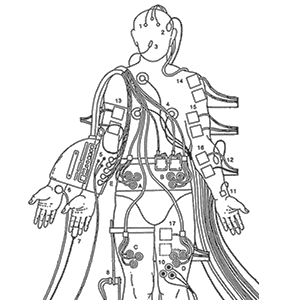
Stelarc (Stelios Arkadiou) is a Greek-Australian performance artist whose works focuses heavily on extending the capabilities of the human body. As such, most of his pieces are centred around his concept that the human body is obsolete. He is currently a visiting Professor in the School of Arts at Brunel University, West London.
In 2007, Stelarc had a cell-cultivated ear surgically attached to his left arm. In 2005, MIT Press published ‘Stelarc: The Monograph’ which is the first extensive study of his prolific work.
Posted in Art, Science, Technology |
Leave a Comment »
November 4, 2010

The Vacanti mouse was a laboratory mouse that had what looked like a human ear grown on its back. The ‘ear’ was actually an ear-shaped cartilage structure grown by seeding cow cartilage cells into a biodegradable ear-shaped mold. The earmouse, as it became known as, was created by Dr. Charles Vacanti, an anesthesiologist at the University of Massachusetts and Dr. Linda Griffith-Cima, an assistant professor of chemical engineering at M.I.T. in 1995.
Posted in Health, Science, Technology |
Leave a Comment »
November 1, 2010

Opal is a mineraloid (a mineral-like substance that does not demonstrate crystallinity) which is deposited at a relatively low temperature and may occur in the fissures of almost any kind of rock, being most commonly found with limonite, sandstone, rhyolite, marl and basalt. The word opal comes from the Latin opalus (to see a change of color).
The water content is usually between three and ten percent, but can be as high as twenty percent. Opal ranges from clear through white, gray, red, orange, yellow, green, blue, magenta, rose, pink, slate, olive, brown, and black. Of these hues, the reds against black are the most rare, whereas white and greens are the most common. These color variations are a function of growth size into the red and infrared wavelengths. Opal is Australia’s national gemstone.
Posted in Science |
Leave a Comment »




 The Daily Omnivore