July 15, 2010

Basket stars are a group of brittle stars, which are related to sea stars (also known as starfish). They generally live in deep sea habitats. Their life span in the wild is up to 35 years. They weigh around 11 lbs, or 5 kg. Like other echinoderms, basket stars lack blood and achieve gas exchange via their water vascular system.
Posted in Science |
Leave a Comment »
July 15, 2010
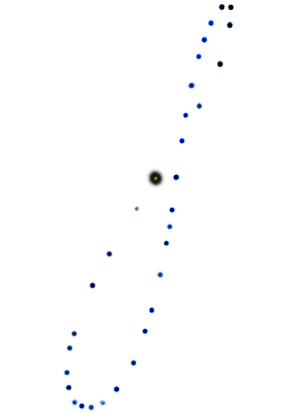

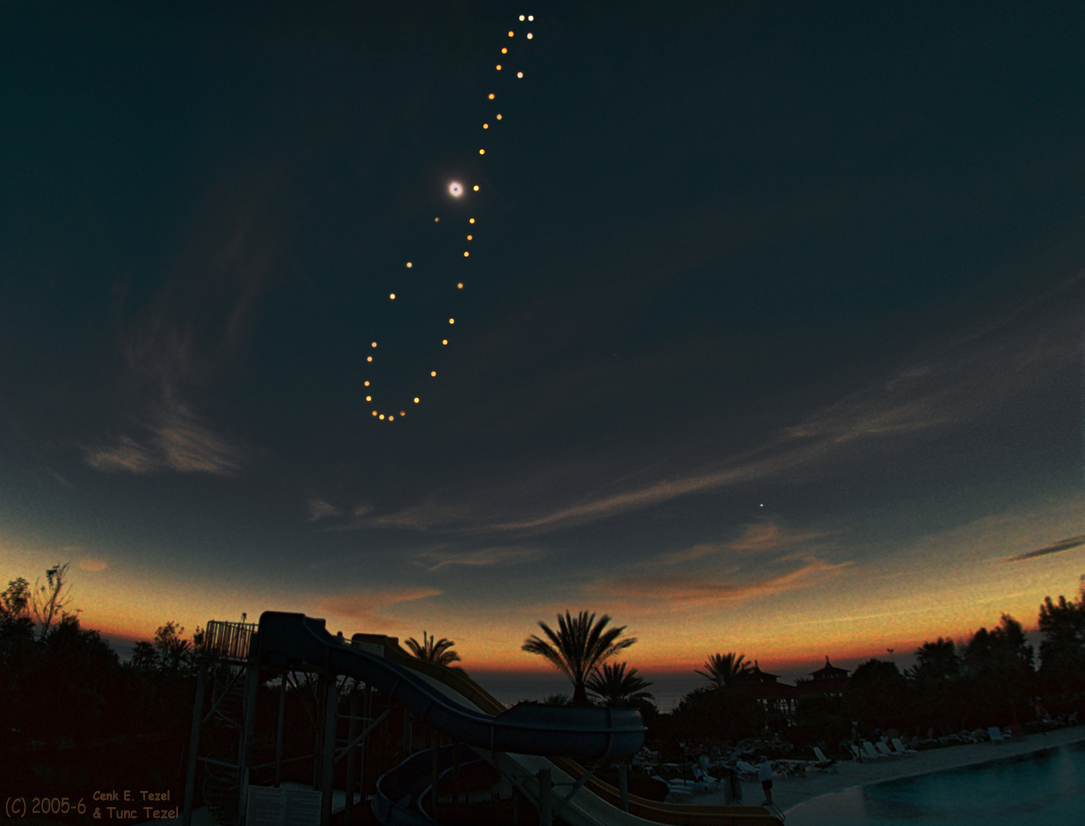
An analemma [an-l-em-uh] is a plot or photograph of the position of a star in the sky at a certain time of day (such as noon) at one locale measured throughout the year that has the shape of a figure 8. With great planning and effort, the series can include a total eclipse of the Sun as one of the images, which has been dubbed a tutulemma.
Posted in Science |
Leave a Comment »
July 12, 2010

In gemology, chatoyancy [shuh-toi-an-see], or chatoyance, is an optical reflectance effect seen in certain gemstones. Coined from the French ‘œil de chat,’ meaning ‘cat’s eye,’ chatoyancy arises either from the fibrous structure of a material, as in tiger eye quartz, or from fibrous inclusions or cavities within the stone, as in cat’s eye chrysoberyl.
Posted in Science |
1 Comment »
July 12, 2010

Prosopagnosia [prahs-oh-pag-noh-shuh] (sometimes known as face blindness) is a disorder of face perception where the ability to recognize faces is impaired, while the ability to recognize other objects may be relatively intact. Few successful therapies have so far been developed for affected people, although individuals often learn to use ‘piecemeal’ or ‘feature by feature’ recognition strategies. This may involve secondary clues such as clothing, hair color, body shape, and voice.
Posted in Health, Science |
Leave a Comment »
July 12, 2010
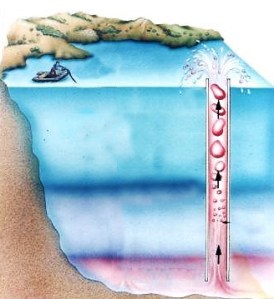
A limnic eruption, also referred to as a lake overturn, is a rare type of natural disaster in which carbon dioxide (CO2) suddenly erupts from deep lake water, suffocating wildlife, livestock and humans. Such an eruption may also cause tsunamis in the lake as the rising CO2 displaces water. Scientists believe landslides, volcanic activity, or explosions can trigger such an eruption. Lakes in which such activity occurs may be known as limnically active lakes or exploding lakes. Limnic means of or pertaining to fresh water.
Posted in Science |
Leave a Comment »
July 12, 2010

Cryptozoology [krip-toh-zoh-ol-uh-jee] refers to the pseudo-scientific investigation of animals which are considered to be legendary or otherwise nonexistent by mainstream biology.
This includes looking for living examples of animals which are extinct, such as dinosaurs; animals whose existence lacks physical support but which appear in myths, legends, or are reported, such as Bigfoot and Chupacabra; and wild animals dramatically outside of their normal geographic ranges, such as so-called phantom cats. The animals they study are often referred to as cryptids.
Posted in Humor, Language, Science |
Leave a Comment »
July 11, 2010
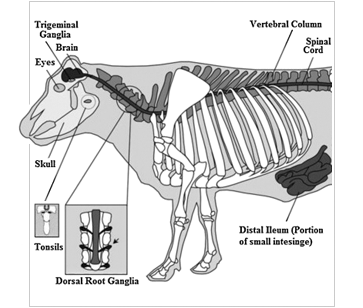
Specified risk material is tissues of ruminant animals that cannot be inspected and passed for human food because they contain high concentrations of prions (proteinaceous infectious particle, an infectious agent composed primarily of protein), which cause mad cow and other diseases. These tissues include brains, eyes, spinal cord, and other organs, but the exact definition varies by jurisdiction.
Posted in Food, Health, Science |
Leave a Comment »
June 30, 2010
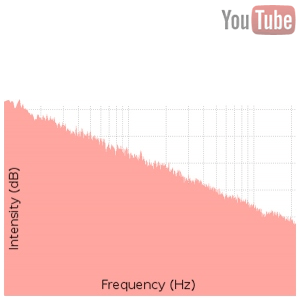
White noise is an audio signal that contains all the frequencies audible to the human ear. It is analogous to white light, which contains all the light frequencies visible to the human eye. Pink noise is a signal that is louder at low frequencies and decreases at a constant rate. It is sometimes referred to as flicker noise particularly, when it describes background noise emitted by an electronic device.
Pink noise is used to make music, sound effects, or merely as a pleasant background sound and is reported to sound more like the ocean than white noise (which is often compared to the sound of rainfall or TV static) because of its bias towards lower frequencies. Other colors of noise include: brown, blue, violet, and grey.
Posted in Science, Technology |
Leave a Comment »
June 29, 2010


In physics, a moiré [mwah-rey] pattern is an interference pattern created, for example, when two grids are overlaid at an angle, or when they have slightly different mesh sizes. The term originates from moire, a type of textile, traditionally of silk but now also of cotton or synthetic fiber, with a rippled or ‘watered’ appearance.
Posted in Science |
Leave a Comment »
June 29, 2010

A sun dog (scientific name parhelion; also called a mock sun) is an atmospheric phenomenon that creates bright spots of light in the sky, often on a luminous ring or halo on either side of the sun. Sun dogs may appear as a colored patch of light to the left or right of the sun, 22° distant and at the same distance above the horizon as the sun, and in ice halos. They can be seen anywhere in the world during any season, but they are not always obvious or bright.
Posted in Science |
Leave a Comment »
June 29, 2010
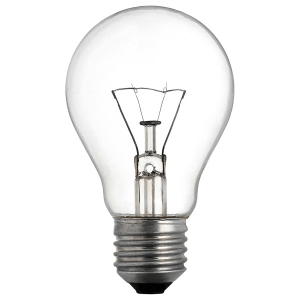
Sir Joseph Wilson Swan was a British physicist and chemist, most famous for the invention of the incandescent light bulb. Swan received a patent for his device in 1878, about a year before Thomas Edison. His house was the first in the world to be lit by a light bulb.
Posted in Science, Technology |
Leave a Comment »
June 29, 2010

Baader-Meinhof is the phenomenon where one happens upon some obscure piece of information– often an unfamiliar word or name– and soon afterwards encounters the same subject again, often repeatedly. The phenomenon bears some similarity to synchronicity, which is the experience of having a highly meaningful coincidence… such as having someone telephone you while you are thinking about them. How the phenomenon came to be known as ‘Baader-Meinhof’ is uncertain. It seems likely that some individual learned of the existence of the historic German urban guerrilla group which went by that name, and then heard the name again soon afterwards.
Posted in Language, Science |
Leave a Comment »