December 14, 2016

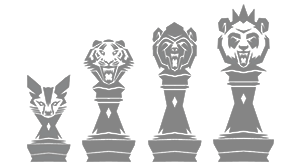
Fancy Bear is a cyber espionage group that cybersecurity firm CrowdStrike has linked to the GRU, a Russian military intelligence agency. Likely operating since the mid-2000s, Fancy Bear’s methods are consistent with the capabilities of nation-state actors. The threat group is known to target government, military, and security organizations, especially NATO-aligned and Transcaucasian states (Georgia, Armenia, and Azerbaijan).
Fancy Bear is thought to be responsible for cyber attacks on the German parliament, the French television station ‘TV5Monde,’ the White House, NATO, and the Democratic National Committee. It’s behavior has been classified as an ‘advanced persistent threat.’ They employ zero-day (previously unknown) vulnerabilities and use spear phishing (forged websites and emails) and malware to compromise targets.
read more »
Posted in Technology, World |
Leave a Comment »
October 10, 2016

Bicycle wheels are comprised of a tough outer tire, a soft inner tube, and a rim (the stiff outermost-edge which is often supported by spokes). The inner tube is inflated means of a valve stem that opens to let air in and then automatically closes and is kept sealed by the pressure in the chamber. The Presta valve (also called the ‘Sclaverand’ or ‘French’ valve) is a valve commonly found in high pressure (100 psi) road style inner tubes. It is comprised of an outer valve stem and an inner valve body. A lock nut to secure the stem at the wheel rim and a valve cap may also be present.
The outer valve stem is manufactured in various lengths for different applications, and has a narrower diameter at the base (6 mm) than the more common Schrader or American valve (8 mm) and is also used on most automobile tires. Japan, India, Russia, Germany, Britain, and several other countries use a third type of valve for their bicycles, the Dunlop (also called a ‘Woods’ or ‘English’ valve) which also has a wider base than a Presta valve. It is similar enough in size to a Schrader valve to use identically drilled valve holes in rims, but it can be inflated with a Presta valve adapter.
read more »
Posted in Games, Technology |
Leave a Comment »
August 11, 2016


A hood ornament (‘bonnet ornament’ in the UK), ‘radiator cap,’ ‘motor mascot,’ or ‘car mascot’ is a specially crafted model which symbolizes a car company like a badge, located on the front center portion of the hood. It has been used as an adornment nearly since the inception of automobiles. According to ‘A History of Cars,’ the first ‘hood ornament’ was a sun-crested falcon (to bring good luck) mounted on Egyptian pharaoh Tutankhamun’s chariot.
In the early years, automobiles had their radiator caps outside of the hood and on top of the grille which also served as an indicator of the temperature of the engine’s coolant fluid. The Boyce MotoMeter Company was issued a patent in 1912 for a radiator cap that incorporated a thermometer that was visible to the driver with a sensor that measured the heat of the water vapor, rather than the water itself. This became a useful gauge for the driver because many early engines did not have water pumps, but a circulation system based on the ‘thermo-syphon’ principle as in the Ford Model T. The ‘exposed radiator cap became a focal point for automobile personalization.’
read more »
Posted in Art, Money, Technology |
Leave a Comment »
July 14, 2016

A chatterbot (also known as a talkbot, chatbot, Bot, chatterbox, or Artificial Conversational Entity) is a computer program which conducts a conversation via auditory or textual methods. Such programs are often designed to convincingly simulate how a human would behave as a conversational partner, thereby passing the Turing test (a measure of how well a computer can trick a person into believing that the computer is a person too).
Chatbots are typically used in dialog systems for various practical purposes including customer service or information acquisition. Some chatbots use sophisticated natural language processing systems (programs that understand not just recognize language), but many simpler systems scan for keywords within the input, then pull a reply with the most matching keywords, or the most similar wording pattern, from a database. The term ‘ChatterBot’ was originally coined by Michael Mauldin (creator of the first Verbot, Julia) in 1994 to describe these conversational programs.
read more »
Posted in Language, Technology |
Leave a Comment »
July 13, 2016
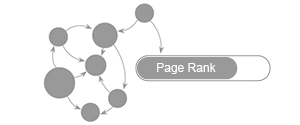

Search engine optimization (SEO) is the process of affecting the visibility of a website or a web page in a web search engine’s unpaid results — often referred to as ‘natural,’ ‘organic,’ or ‘earned’ results. In general, the earlier (or higher ranked on the search results page), and more frequently a site appears in the search results list, the more visitors it will receive from the search engine’s users, and these visitors can be converted into customers. SEO may target different kinds of searches, including for images, places, videos, scholarly articles, news stories, and industry-specific vertical search engines (specialty or topical search engines, such as Yelp for local business reviews and Zillow for real estate listings).
As an Internet marketing strategy, SEO considers how search engines work, what people search for, the actual search terms or keywords typed into search engines and which search engines are preferred by their targeted audience. Optimizing a website may involve editing its content, HTML and associated coding to both increase its relevance to specific keywords and to remove barriers to the indexing activities of search engines. Promoting a site to increase the number of backlinks (referred links), or inbound links, is another SEO tactic.
read more »
Posted in Money, Technology |
Leave a Comment »
July 4, 2016


Flat design is a minimalist user interface design genre, or design language, commonly used in graphical user interfaces (such as web applications and mobile apps), and in graphical materials such as posters, arts, guide documents, and publishing products.
Flat design is a style of interface design emphasizing minimum use of stylistic elements that give the illusion of three dimensions (such as the use of drop shadows, gradients or textures) and is focused on simple elements, typography and flat colors. Designers may prefer flat design because it allows interface designs to be more streamlined and efficient. It is easier to quickly convey information while still looking visually appealing and approachable.
read more »
Posted in Art, Language, Technology |
Leave a Comment »
June 29, 2016

Mechanical doping is a recent term describing the use of secret motors in competitive cycling events. As a form of ‘technological fraud’ it is banned by the Union Cycliste Internationale, the international governing body of cycling. One of the first allegations of motor doping dates to the 2010 Tour of Flanders when Fabian Cancellara climbed a steep part of Kapelmuur while unusually seated, leading to allegations that there was an powered device hidden in his bike.
The first confirmed use of mechanical doping in the sport was discovered at the 2016 UCI Cyclo-cross World Championships when one of the bikes of Belgian cyclist Femke Van den Driessche was found to have a secret motor inside.
read more »
Posted in Games, Politics, Technology |
1 Comment »
June 20, 2016

The turboencabulator (and its later incarnation, the ‘retroencabulator’) is a fictional machine whose alleged existence became an in-joke and subject of professional humor among engineers. The explanation of the supposed product makes extensive use of ‘technobabble’ (jargon that uses buzzwords, esoteric language, specialized technical terms).
‘Time’ magazine reported on the joke in 1946: ‘The original machine had a base-plate of prefabulated amulite, surmounted by a malleable logarithmic casing in such a way that the two spurving bearings were in a direct line with the pentametric fan. The main winding was of the normal lotus-o-delta type placed in panendermic semi-boloid slots in the stator, every seventh conductor being connected by a nonreversible tremie pipe to the differential girdlespring on the ‘up’ end of the grammeters.’
read more »
Posted in Humor, Language, Technology |
Leave a Comment »
May 31, 2016

Typography is the art and technique of arranging type to make written language legible, readable, and appealing when displayed. The arrangement of type involves selecting typefaces, point size, line length, line-spacing (leading), letter-spacing (tracking), and adjusting the space within letters pairs (kerning). The term ‘typography’ is also applied to the style, arrangement, and appearance of the letters, numbers, and symbols created by the process.
In contemporary use, the practice and study of typography is very broad, covering all aspects of letter design and application, both mechanical (typesetting and typefaces) and manual (handwriting and calligraphy). Type design is a closely related craft, sometimes considered part of typography; most typographers do not design typefaces, and some type designers do not consider themselves typographers. Typography also may be used as a decorative device, unrelated to communication of information.
read more »
Posted in Art, Language, Technology |
Leave a Comment »
May 4, 2016
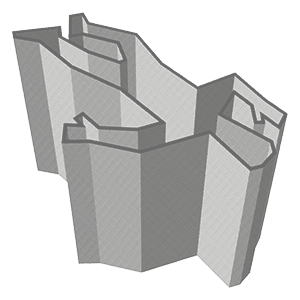
‘The Demolished Man,’ by Alfred Bester, is an American science fiction novel and inverted detective story, that was the first Hugo Award winner in 1953. The story is a police procedural set in a future where telepathy is common, although much of its effectiveness is derived from one individual having greater telepathic skill than another. In the 24th century, telepaths—’Espers’ (short for Extrasensory perception), colloquially known as ‘peepers’—are completely integrated into all levels of a class-based society.
Class 3 Espers, the most common, can detect only conscious thoughts at the time they are formed and are often employed as secretaries or administrators; Class 2 Espers can dig more deeply, to the pre-conscious level, detecting subliminal patterns, epiphanies and tenuous associations, and they are employed in the professional middle class—lawyers, managers, psychologists, etc. Class 1 Espers can detect all of the foregoing plus sub-conscious primitive urges, and they occupy only the highest levels of power in fields such as the police, government and medicine (such as psychiatry).
Posted in Art, Philosophy, Technology |
Leave a Comment »
April 26, 2016


A go-fast boat is a small, fast boat designed with a long narrow platform and a planing hull to enable it to reach high speeds. During the era of Prohibition, these boats joined the ranks of ‘rum-runners’ transferring illegal liquor from larger vessels waiting outside territorial waters to the mainland. The high speed of such craft enabled them to avoid interception by the Coast Guard. More recently the term ‘cigarette boat’ has become common.
The present era of cigarette boats, dating from the 1960s, owes much of their design to boats designed for offshore powerboat racing, particularly by designer and builder Donald Aronow. During this period, these boats were used by drug smugglers to transfer drugs across the Caribbean to the United States.
read more »
Posted in Drugs, Politics, Technology |
Leave a Comment »
March 27, 2016

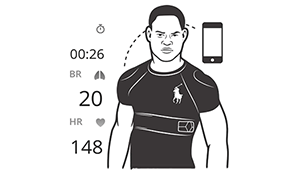
A conductive textile is a fabric which can conduct electricity. Conductive textiles can be made with metal strands woven into the construction of the textile. There is also an interest in semiconducting textiles, made by impregnating normal textiles with carbon- or metal-based powders.
Conductive fibers consist of a non-conductive or less conductive substrate, which is then either coated or embedded with electrically conductive elements, often carbon, nickel, copper, gold, silver, or titanium. Substrates typically include cotton, polyester, nylon, and stainless steel to high performance synthetic fibers like Kevlar and Zylon. Straddling the worlds of textiles and wires, conductive fibers are sold either by weight or length, and measured in gauge.
read more »
Posted in Technology |
Leave a Comment »


 The Daily Omnivore