May 3, 2014


A cognitive radio is a transceiver that dynamically switches between optimal wireless channels in its vicinity. It automatically detects available channels, then accordingly changes its transmission or reception parameters to allow more concurrent wireless communications in a given spectrum band at one location. This process is a form of dynamic spectrum management.
The cognitive engine is capable of configuring waveform, protocol, operating frequency, and networking parameters. Units can exchange information about the environment with the networks it accesses and other cognitive radios (CRs). A CR ‘monitors its own performance continuously,’ in addition to ‘reading the radio’s outputs’; it then uses this information to ‘determine the RF environment, channel conditions, link performance, etc.’, and adjusts the ‘radio’s settings to deliver the required quality of service subject to an appropriate combination of user requirements, operational limitations, and regulatory constraints.’
read more »
Posted in Politics, Technology, World |
Leave a Comment »
April 7, 2014

A supercharger is an air compressor that increases the pressure or density of air supplied to an internal combustion engine. This gives each intake cycle of the engine more oxygen, letting it burn more fuel and do more work, thus increasing power. Power for the supercharger can be provided mechanically by means of a belt, gear, shaft, or chain connected to the engine’s crankshaft. When power is provided by a turbine powered by exhaust gas, a supercharger is known as a turbosupercharger – typically referred to simply as a turbocharger or just turbo.
Supercharging increases power, but turbocharging can improve power and efficiency. Turbochargers were known as turbosuperchargers when all forced induction devices were classified as superchargers. Currently, the term supercharger is only applied to mechanically driven forced induction devices.
read more »
Posted in Technology |
Leave a Comment »
April 1, 2014

The Robin Hood tax commonly refers to a package of financial transaction taxes (FTT) proposed by a campaigning group of civil society non-governmental organizations (NGOs). Campaigners have suggested the tax could be implemented globally, regionally or unilaterally by individual nations.
Conceptually similar to the Tobin tax (a small tax on spot currency conversions), it would affect a wider range of asset classes including the purchase and sale of stocks, bonds, commodities, unit trusts, mutual funds, and derivatives such as futures and options. The Tobin tax was proposed for foreign currency exchange only.
read more »
Posted in Money, Politics, Technology |
Leave a Comment »
April 1, 2014

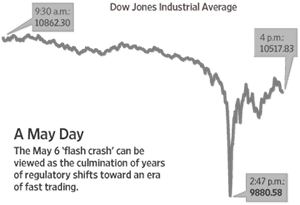
Flash trading, otherwise known as a flash order, is defined by industry trade publication ‘Traders Magazine’ as ‘a marketable order sent to a market center that is not quoting the industry’s best price or that cannot fill that order in its entirety. The order is then flashed to recipients of the venue’s proprietary data feed to see if any of those firms wants to take the other side of the order. This practice enables the market center to try to keep the trade.’ Under an exception to Rule 602 of Regulation NMS, flash orders are currently legal.
Bloomberg states: ‘Flash systems trace their roots as far back as 1978 to efforts by exchanges to electronically replicate how a trader might yell an order to floor brokers before entering it into the system that displays all bids and offers. Markets have evolved since the days of floor brokers’ dominance, with computer algorithms now buying and selling shares 1,000 times faster than the blink of an eye.’
read more »
Posted in Money, Politics, Technology |
Leave a Comment »
March 27, 2014

Out of hacker culture, and especially the artificial intelligence community at MIT, there have sprung a number of humorous short stories about computer science dubbed hacker koans [koh-ahns]; most of these are recorded in an appendix to the Jargon File (a glossary of computer programmer slang). Most do not fit the usual pattern of koans, but they do tend to follow the form of being short, enigmatic, and often revealing an epiphany.
One notable example, titled ‘Uncarved block,’ describes an exchange between professor Marvin Minsky and student Jerry Sussman: ‘In the days when Sussman was a novice, Minsky once came to him as he sat hacking at the PDP-6. ‘What are you doing?’, asked Minsky. ‘I am training a randomly wired neural net to play Tic-tac-toe,’ Sussman replied. ‘Why is the net wired randomly?’, asked Minsky. ‘I do not want it to have any preconceptions of how to play,’ Sussman said. Minsky then shut his eyes. ‘Why do you close your eyes?’ Sussman asked his teacher. ‘So that the room will be empty.’ At that moment, Sussman was enlightened.’
read more »
Posted in Humor, Philosophy, Technology |
Leave a Comment »
March 24, 2014


A paperless office is a work environment in which the use of paper is eliminated or greatly reduced by converting documents into digital form. Proponents claim that ‘going paperless’ can save money, boost productivity, save space, make documentation and information sharing easier, keep personal information more secure, and help the environment. The concept can be extended to communications outside the office as well.
Traditional offices have paper-based filing systems, which may include filing cabinets, folders, shelves, microfiche systems, and drawing cabinets, all of which require maintenance, equipment, considerable space, and are resource-intensive. In contrast, a paperless office could simply have a desk, chair, and computer (with a modest amount of local or network storage), and all of the information would be stored in digital form. Speech recognition and speech synthesis could also be used to facilitate the storage of information digitally.
read more »
Posted in Technology |
Leave a Comment »
March 17, 2014

The Wayback Machine is a digital archive of the World Wide Web and other information on the Internet created by the Internet Archive, a non-profit organization, based in San Francisco, California. It was set up by Brewster Kahle and Bruce Gilliat, co-founders of Alexa Internet, which provides commercial web traffic data, and is maintained with content from Alexa (currently a subsidiary of Amazon.com). The service enables users to see archived versions of web pages across time, which the Archive calls a ‘three dimensional index.’
The name Wayback Machine was chosen as a droll reference to a plot device in an animated cartoon series, ‘The Rocky and Bullwinkle Show.’ In it, Mr. Peabody and Sherman routinely used a time machine called the ‘WABAC machine’ (pronounced ‘Wayback’) to witness, participate in, and, more often than not, alter famous events in history.
read more »
Posted in Technology |
Leave a Comment »
March 13, 2014

Satoshi Nakamoto is the person or group that created the Bitcoin protocol and reference software, Bitcoin-Qt. It is not known whether the name is real or a pseudonym. In 2008, Nakamoto published a paper on ‘The Cryptography Mailing’ list at metzdowd.com describing his digital currency. In 2009, he released the first Bitcoin software that launched the network and the first units currency, called bitcoins. Nakamoto is said to have continued to contribute to his Bitcoin software release with other developers until contact with his team and the community gradually began to fade in mid-2010.
Near this time, he handed over control of the source code repository and alert key functions of the software to Gavin Andresen, chief scientist at the Bitcoin Foundation (a non-profit founded in 2012 to promote Bitcoin). Also around this same time, he handed over control of the Bitcoin.org domain and several other domains to various prominent members of the Bitcoin community. Nakamoto is believed to be in possession of roughly one million bitcoins. At one point in December 2013, this was the equivalent of US$1.1 billion.
read more »
Posted in Money, Politics, Technology |
Leave a Comment »
March 10, 2014

Taser safety issues include cardiac arrhythmia (irregular heartbeat) in susceptible subjects, possibly leading to heart attack or death in minutes by ventricular fibrillation, which leads to cardiac arrest and—if not treated immediately—to sudden death. People susceptible to this outcome are sometimes healthy and unaware of their susceptibility.
Although the medical conditions or use of illegal drugs among some of the casualties may have been the proximate cause of death, the electric shock of the Taser can significantly heighten such risk for subjects in an at-risk category. In some cases however, death occurred after Taser use coupled with the use of force alone, with no evidence of underlying medical condition and no use of drugs.
read more »
Posted in Death, Politics, Technology |
Leave a Comment »
March 1, 2014


Carbon fiber is a material consisting of long thing fibers about 5–10 μm in diameter (about half the width of a human hair) and composed mostly of carbon atoms. When used in a composite material it has the highest compressive strength of any reinforcing material, and it has a high strength to weight ratio and low coefficient of thermal expansion. The density of carbon fiber is also much lower than the density of steel.
Carbon fiber reinforced polymer (carbon fiber combined with a plastic resin and wound or molded) is very strong, but extremely rigid and somewhat brittle. However, carbon fibers are also composed with other materials, such as with graphite to form carbon-carbon composites, which have a very high heat tolerance.
read more »
Posted in Science, Technology |
Leave a Comment »
February 22, 2014

Itasha [ee-tah-sha] (literally ‘painful car’) is a Japanese term for a fashion of individuals decorating the bodies of their cars with fictional characters of anime, manga, or video games (especially ‘bishojo game’ and ‘eroge’ – dating and porn games). These characters are predominantly ‘cute’ females. The decorations usually involve paint schemes and stickers. Automobiles are called ‘itasha,’ while similar motorcycles and bicycles are called ‘itansha’ and ‘itachari,’ respectively.
In the 1980s, when Japan was at the zenith of its economic might, Tokyo’s streets were a parade of luxury import cars. Among them, the ‘itasha’—originally Japanese slang meaning an imported Italian car—was the most desired. Since then, ‘itasha’ (as the decorated vehicle) was derived from combining the Japanese words for ‘itai’ (‘painful’) and ‘sha’ (‘vehicle’). ‘Painful’ can be interpreted as ‘painfully embarrassing’ or ‘painful for the wallet’ due to the high costs involved.
Posted in Art, Technology, World |
Leave a Comment »
February 15, 2014

A holodeck, in the fictional ‘Star Trek’ universe, is a simulated reality facility located on starships and starbases. It first appeared in the pilot episode of ‘Star Trek: The Next Generation,’ ‘Encounter at Farpoint,’ although a conceptually similar ‘recreation room’ appeared in an episode of ‘Star Trek: the Animated Series’ in 1974. In the timeline of the fictional universe, the concept of a holodeck was first shown to humans in an encounter with the Xyrillian race in the ‘Star Trek: Enterprise’ episode ‘Unexpected.’
The holodeck is depicted as an enclosed room in which objects and people are simulated by a combination of transported matter, replicated matter, tractor beams, and shaped force fields onto which holographic images are projected. Most holodeck programs shown in the episodes run in first person ‘subjective mode,’ in which the user actively interacts with the program and its characters. The user may also employ third-person ‘objective mode,’ in which he or she is unseen by program characters.
read more »
Posted in Art, Technology |
1 Comment »


 The Daily Omnivore