November 26, 2012
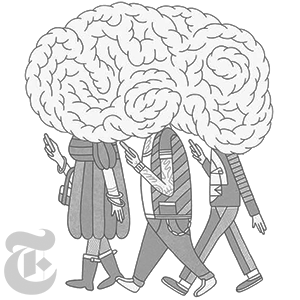
Collective intelligence is a shared or group intelligence that emerges from the collaboration and competition of many individuals and appears in consensus decision making in organisms (including some bacteria) and computer networks. The term appears in sociobiology, political science, and in context of mass peer review and crowdsourcing web applications (e.g. Wikipedia). This broader definition involves consensus, social capital, and formalism such as voting systems, social media and other means of quantifying mass activity.
Everything from a political party to a public wiki can reasonably be described as this loose form of collective intelligence. The notion of collective intelligence has also been called ‘Symbiotic intelligence.’ A precursor of the concept is found in entomologist William Morton Wheeler’s observation that seemingly independent individuals can cooperate so closely as to become indistinguishable from a single organism. Wheeler saw this collaborative process at work in ants that acted like the cells of a single beast he called a ‘superorganism.’
read more »
Posted in Education, Technology, World |
Leave a Comment »
November 26, 2012

The Knowledge Graph is a knowledge base used by Google to enhance its search engine’s search results with semantic-search information gathered from a wide variety of sources. Knowledge Graph display was added to Google’s search engine in 2012, starting in the United States. It provides structured and detailed information about the topic in addition to a list of links to other sites. The goal is that users would be able to use this information to resolve their query without having to navigate to other sites and assemble the information themselves.
According to Google, this information is derived from many sources, including the CIA World Factbook, Freebase, and Wikipedia. The feature is similar in intent to answer engines such as Ask Jeeves and Wolfram Alpha. As of 2012, its semantic network contained over 500 million objects and more than 3.5 billion facts about and relationships between these different objects which are used to understand the meaning of the keywords entered for the search.
Posted in Education, Language, Technology |
Leave a Comment »
November 26, 2012
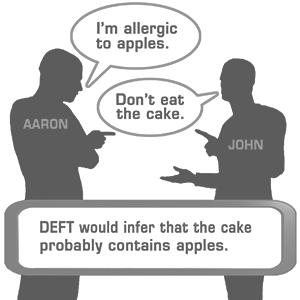
Natural language processing (NLP) is a field of computer science, artificial intelligence, and linguistics concerned with the interactions between computers and human (natural) languages.
As such, NLP is related to the area of human–computer interaction. Many challenges in NLP involve natural language understanding — that is, enabling computers to derive meaning from human or natural language input. An automated online assistant providing customer service on a web page, an example of an application where natural language processing is a major component.
read more »
Posted in Language, Technology, World |
Leave a Comment »
November 26, 2012

Deep learning refers to a sub-field of machine learning (systems that examine data, from sensors or databases, and identify complex relationships) that is based on learning several levels of representations, corresponding to a hierarchy of features or factors or concepts, where higher-level concepts are defined from lower-level ones, and the same lower-level concepts can help to define many higher-level concepts.
Deep learning is part of a broader family of machine learning methods based on learning representations. An observation (e.g., an image) can be represented in many ways (e.g., a vector of pixels), but some representations make it easier to learn tasks of interest (e.g., is this the image of a human face?) from examples, and research in this area attempts to define what makes better representations and how to learn them.
read more »
Posted in Education, Technology |
Leave a Comment »
November 25, 2012

Machine learning, a branch of artificial intelligence, is a scientific discipline concerned with the development of algorithms that take as input empirical data (from sensors or databases), identify complex relationships, and employ these identified patterns to make predictions. The algorithm studies a portion of the observed data (called ‘training data’) to capture characteristics of interest. Optical character recognition, in which printed characters are recognized automatically based on previous examples, is a classic engineering example of machine learning.
In 1959, AI pioneer Arthur Samuel defined machine learning as a ‘Field of study that gives computers the ability to learn without being explicitly programmed.’ Computer scientist Tom M. Mitchell provided a widely quoted, more formal definition: ‘A computer program is said to learn from experience E with respect to some class of tasks T and performance measure P, if its performance at tasks in T, as measured by P, improves with experience E.’
read more »
Posted in Education, Technology |
Leave a Comment »
November 21, 2012
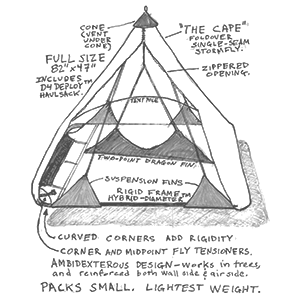
A portaledge is a deployable hanging tent system designed for rock climbers who spend multiple days and nights on a big wall climb. An assembled portaledge is a fabric-covered platform surrounded by a metal frame that hangs from a single point and has adjustable suspension straps. A separate cover, called a ‘stormfly,’ covers the entire system in the event of bad weather.
The first portaledges used in Yosemite were non-collapsible cots purloined from Housekeeping Camp, a Yosemite Valley campground that featured primitive metal framed bunks for the campers. These heavy cots were used on multi-day climbs on granite monoliths like El Capitan, and then sometimes tossed off the summit for later retrieval.
read more »
Posted in Games, Money, Technology |
Leave a Comment »
November 20, 2012

A cargo cult is a religious practice that has appeared in many traditional pre-industrial tribal societies in the wake of interaction with technologically advanced cultures. The cults focus on obtaining the material wealth (the ‘cargo’) of the advanced culture through magic and religious rituals and practices.
Cult members believe that the wealth was intended for them by their deities and ancestors. Cargo cults developed primarily in remote parts of New Guinea and other Melanesian and Micronesian societies in the southwest Pacific Ocean, beginning with the first significant arrivals of Westerners in the 19th century.
read more »
Posted in Philosophy, Technology, World |
Leave a Comment »
November 17, 2012

An anachronism [uh-nak-ruh-niz-uhm] is a chronological inconsistency in some arrangement, especially a juxtaposition of person(s), events, objects, or customs from different periods of time. Often the item misplaced in time is an object, but it may be a verbal expression, a technology, a philosophical idea, a musical style, a material, a custom, or anything else associated with a particular period in time so that it is incorrect to place it outside its proper temporal domain.
The intentional use of older, often obsolete cultural artifacts may be regarded as anachronistic. For example, it could be considered anachronistic for a modern-day person to wear a top hat, write with a quill, or carry on a conversation in Latin. Such choices may reflect an eccentricity, or an aesthetic preference.
read more »
Posted in Art, Humor, Technology |
Leave a Comment »
November 13, 2012
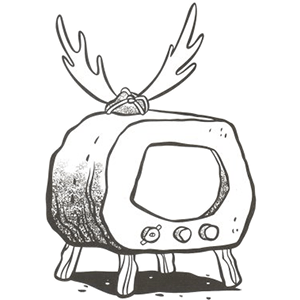
Out-of-place artifact (OOPArt) is a term coined by American naturalist and cryptozoologist Ivan T. Sanderson for an object of historical, archaeological, or paleontological interest found in a very unusual or seemingly impossible context that could challenge conventional historical chronology.
The term ‘out-of-place artifact’ is rarely used by mainstream historians or scientists. Its use is largely confined to cryptozoologists (who study big foot, the loch ness monster, and other cryptids), proponents of ancient astronaut theories, Young Earth creationists, and paranormal enthusiasts.
read more »
Posted in Philosophy, Science, Technology |
Leave a Comment »
November 13, 2012

The uncanny valley is a hypothesis regarding the field of robotics. The theory holds that when robots and other facsimiles of humans look and act almost like actual humans, it causes a response of revulsion among human observers.
The ‘valley’ in question is a dip in a proposed graph of the positivity of human reaction as a function of a robot’s lifelikeness. People are not as affected in an emotional way by an object if it is easy to tell it is not human. After a certain point, they start to feel emotionally about it, but feel bad emotions because it is so nonhuman. As it gets closer to looking human, they start to feel more positive emotions towards it.
read more »
Posted in Philosophy, Technology |
Leave a Comment »
November 12, 2012

The DeltaWing is a racing car designed by Ben Bowlby that debuted at the 2012 24 Hours of Le Mans.
The entry will run under the Project 56 name, composed of Ben Bowlby’s DeltaWing Racing Cars (design), Dan Gurney’s All American Racers (constructor), Duncan Dayton’s Highcroft Racing (racing team) and International Motor Sports Association owner Don Panoz (advisor). Nissan’s NISMO division is also assisting in the development of the car.
read more »
Posted in Games, Technology |
Leave a Comment »
November 12, 2012
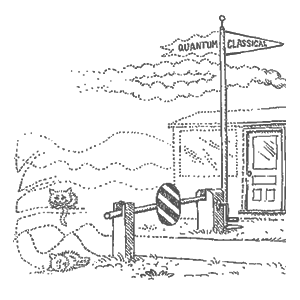
In quantum mechanics, quantum decoherence is the loss of coherence in a quantum superposition. Physical system—such as an electron—exists partly in all its particular, theoretically possible states (or, configuration of its properties) simultaneously; but, when measured, it gives a result corresponding to only one of the possible configurations. The act of observation collapses the multi-state wave function into a single-state particle from the perspective of the observer; and justifies the framework and intuition of classical physics as an acceptable approximation.
Decoherence is the mechanism by which the classical limit emerges out of a quantum starting point and it determines the location of the quantum-classical boundary. It occurs when a system interacts with its environment in a thermodynamically irreversible way. This prevents different elements in the quantum superposition of the system+environment’s wavefunction from interfering with each other. Decoherence has been a subject of active research since the 1980s.
read more »
Posted in Science, Technology |
Leave a Comment »


 The Daily Omnivore