November 19, 2011
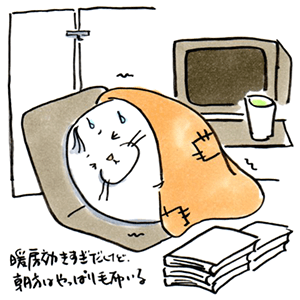
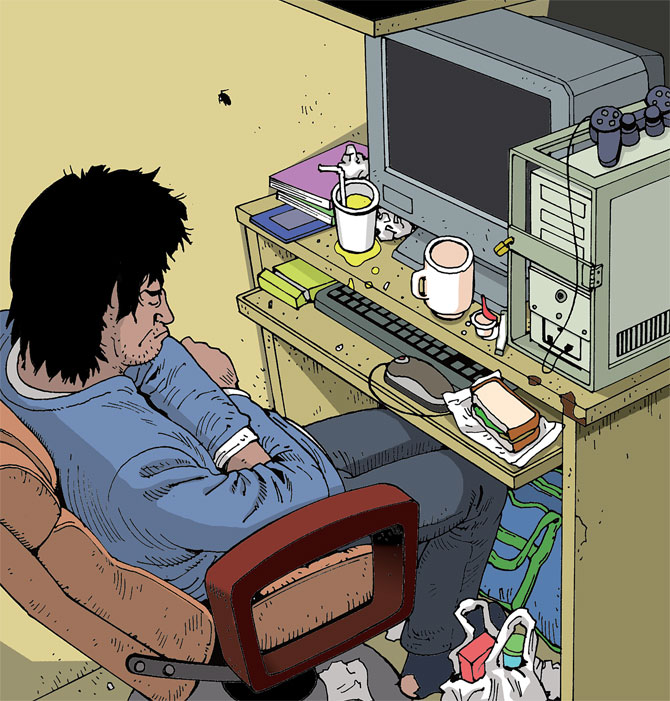
Net cafe refugees, also known as cyber-homeless, is a term for a growing class of people in Japan who do not own or rent a residence and thus have no permanent address and sleep in 24 hour Internet or manga cafés. Goods and services offered at these establishments has grown to include food, undergarments and other personal items, and showers. They are often used by commuters who miss the last train, but a growing number of people use net cafes as a temporary shelter. The fee of 1400-2400 yen (US $18-31) for a night—which may include free soft drinks, TV, comics and internet access—is less than for capsule hotels. Some cyber-homeless may also be freeters, a Japanese expression for people between the ages of 15 and 34 who lack full time employment or are unemployed, excluding housewives and students.
According to a Japanese government survey, those staying have little interest in manga or the Internet, and are instead using the place because of the low price relative to any of the competition for temporary housing, business hotels, capsule hotels, hostels, or any other option besides sleeping on the street. It was also estimated that about half of those staying have no job, while the other half work in low-paid temporary jobs, which paid around 100,000 yen ($1000) per month – lower than what is needed to rent an apartment and pay for transportation in a city like Tokyo.
Posted in Money, Technology, World |
Leave a Comment »
November 19, 2011

Drunk dialing is a pop-culture term denoting an instance in which an intoxicated individual places phone calls that he or she would not likely place if sober. The term often refers to a lonely individual calling former or current love interests. Kurt Vonnegut once said, ‘I have this disease late at night sometimes, involving alcohol and the telephone. I get drunk, and I drive my wife away with breath like mustard gas and roses.
And then, speaking gravely and elegantly into the telephone, I ask the telephone operators to connect me with this friend or that one, from whom I have not heard in years.’ ‘Drunk texting’ is a related phenomenon, and potentially yet more embarrassing for the sender as, once the message is sent, it cannot be retrieved; the message will most likely be misspelled (due to being drunk), and it might be reviewed and shared among many.
read more »
Posted in Drugs, Humor, Technology |
Leave a Comment »
November 19, 2011


A hacker is a member of the computer programmer subculture originated in the 1960s in the United States academia, in particular around the MIT’s Tech Model Railroad Club (TMRC) and MIT Artificial Intelligence Laboratory. Some members of the ‘hacker’ community most emphatically differentiate the term ‘hacker’ from malicious hackers (whom they very strongly prefer to call ‘crackers’).
Other hackers make no such distinction. The latter hackers’ view that hackerdom is not inherently moral/immoral or ethical/unethical is broadly similar to the concept or attitude of a ‘grey hat’ hacker. By contrast, ‘white hat’ hackers use their computer security related skills and knowledge to learn more about how systems and networks work and to help to discover and fix security holes, and ‘black hat’ hackers use the same skills to author harmful software (like viruses, trojans, etc.) and illegally infiltrate secure systems with the intention of doing harm to the system.
read more »
Posted in Language, Technology |
Leave a Comment »
November 19, 2011

Hacktivism (a portmanteau of hack and activism) is the use of computers and computer networks as a means of protest to promote political ends. The term was first coined in 1998 by a member of the Cult of the Dead Cow hacker collective. If hacking as ‘illegally breaking into computers’ is assumed, then hacktivism could be defined as ‘the nonviolent use of illegal or legally ambiguous digital tools in pursuit of political ends.’ These tools include web site defacements, redirects, denial-of-service (DoS) attacks, information theft, web site parodies, virtual sit-ins, typosquatting, and virtual sabotage.
If hacking as ‘clever computer usage/programming’ is assumed, then hacktivism could be understood as the writing of code to promote political ideology: promoting expressive politics, free speech, human rights, and information ethics through software development. Acts of hacktivism are carried out in the belief that proper use of code will be able to produce similar results to those produced by regular activism or civil disobedience.
read more »
Posted in Humor, Politics, Technology |
Leave a Comment »
November 19, 2011

Patriot hacking is a term for computer hacking or system cracking in which citizens or supporters of a country, traditionally industrialized Western countries but increasingly developing countries, attempts to perpetrate attacks on, or block attacks by, perceived enemies of the state. Recent media attention has focused on efforts related to terrorists and their own attempts to conduct an online or electronic intifada – cyberterrorism.
Patriot hacking is illegal in countries such as the United States yet is on the rise elsewhere. ‘”The FBI said that recent experience showed that an increase in international tension was mirrored in the online world with a rise in cyber activity such as web defacements and denial of service attacks,’ according to the BBC. At the onset of the War in Iraq in 2003, the FBI was concerned about the increase in hack attacks as the intensity of the conflict grew. Since then, it has been becoming increasingly popular in the North America, Western Europe and Israel, the countries which have the greatest threat to Islamic terrorism and its aforementioned digital version.
Posted in Politics, Technology, War |
Leave a Comment »
November 19, 2011

A lip dub is a type of music video that combines lip synching and audio dubbing. It is made by filming individuals or a group of people lip synching while listening to a song or any recorded audio then dubbing over it in post editing with the original audio of the song. There is often some form of mobile audio device used such as an MP3 player. Often they look like simple music videos, although many involve a lot of preparation and production. Lip dubs can be done in a single unedited shot that often travels through different rooms and situations within a building. They have become popular with the advent of mass participatory video content sites like YouTube.
Jake Lodwick, the co-founder of video sharing website Vimeo, coined the term in 2006, in a video entitled ‘Lip Dubbing: Endless Dream.’ In the video’s description, he wrote, ‘I walked around with a song playing in my headphones, and recorded myself singing. When I got home I opened it in iMovie and added an MP3 of the actual song, and synchronized it with my video. Is there a name for this? If not, I suggest ‘lip dubbing’.’ Lodwick also directed the ‘Flagpole Sitta’ ‘office lip dub’ in 2007.
Posted in Art, Humor, Technology |
Leave a Comment »
November 18, 2011
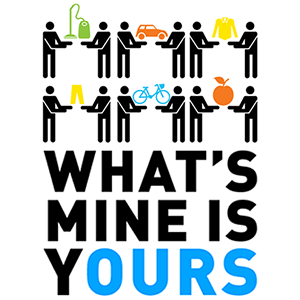
The term collaborative consumption is used to describe an economic model based on sharing, swapping, bartering, trading or renting access to products as opposed to ownership. Technology and peer communities are enabling these old market behaviors to be reinvented in ways and on a scale never possible before.
From enormous marketplaces such as eBay and Craigslist, to emerging sectors such as social lending (Zopa), peer-to-peer travel (CouchSurfing, Airbnb) and car sharing (Zipcar or peer-to-peer RelayRides), Collaborative Consumption is disrupting outdated modes of business and reinventing not just what people consume but how they consume it.
read more »
Posted in Money, Technology |
Leave a Comment »
November 17, 2011
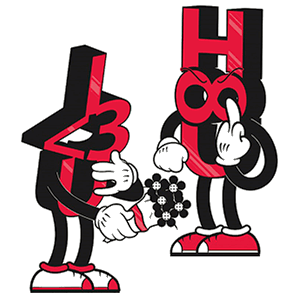
SMS language or textese is a term for the abbreviations and slang most commonly used due to the necessary brevity of mobile phone text messaging, in particular the widespread SMS (short message service) communication protocol. SMS language is also common on the Internet, including in email and instant messaging. It can be likened to a rebus, an allusional device that uses pictures to represent words or parts of words (e.g. ‘i <3 u’ which uses the pictogram of a heart for ‘love,’ and the letter ‘u’ replaces ‘you’).
The objective of SMS language is to use the least number of characters needed to convey a comprehensible message, also as many telecommunication companies have an SMS character limit, another benefit of SMS language is to reduce the character count of a message, hence, punctuation, grammar, and capitalization are largely ignored.
read more »
Posted in Language, Technology |
Leave a Comment »
November 13, 2011
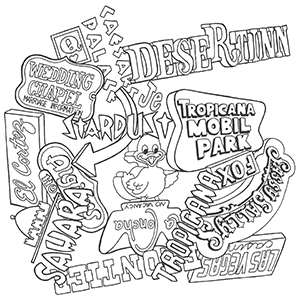
The Neon Museum in Las Vegas features signs from old casinos and other businesses displayed outdoors on over 6 acres. The museum is restoring the La Concha Motel lobby as its visitor center. For many years, the Young Electric Sign Company stored many of these old signs in their ‘boneyard.’ The signs were slowly being destroyed by exposure to the elements. The museum is restoring the signs and placing them around the Fremont Street Experience. The Neon Museum maintains twelve restored signs throughout Downtown Las Vegas. Some can be seen on a self-guided visitors walk through the Fremont Street Experience. Three others have been added in recent years to the median of Las Vegas Boulevard in front of the eventual site for the Neon Museum itself.
The Neon Museum is located on Las Vegas Boulevard and Bonanza, across the street from Cashman Center and along the Las Vegas downtown museum corridor. The boneyard preserves over 150 neon signs from the Nevada area. While the core of the collection is from the old Yesco Boneyard, private donations and loans have expanded the collection to the current size. Important historical pieces in the boneyard include the signage from the Moulin Rouge Hotel, the Stardust, Desert Inn and Caesar’s Palace as well as many others. Not just neon signage, the museum also houses fiberglass sculptures including a giant skull from the Treasure Island among others.
Posted in Art, Money, Technology |
Leave a Comment »
November 13, 2011

Young Electric Sign Company (YESCO) is a privately owned manufacturer of electric signs based in Salt Lake City. The company was founded by Thomas Young in 1920 and today has divisions and branches in 10 western states, as well as in Louisiana, Mississippi and Texas. YESCO offers a comprehensive range of services for electronic signs, including design, fabrication, installation and ongoing maintenance.
Many notable sign projects have been produced by YESCO. These include the NBC Experience globe in New York City, the historic El Capitan Theatre and Wax Museum marquees in Hollywood, the most recent incarnation of the Reno Arch and numerous icons in Las Vegas, such as Vegas Vic, the Fremont Street Experience, the Astrolabe in The Venetian and the recent Wynn Las Vegas resort sign.
read more »
Posted in Art, Money, Technology |
Leave a Comment »
November 12, 2011

In poker, a hole cam (or pocket cam) is a camera that displays a player’s face-down cards (known as ‘hole cards’) to television viewers. The hole cam became popular in 1999 when it was first used by the BBC. In some cases, the camera is placed under a glass panel in the table and players are instructed to place their cards over the glass. In other cases, the rail of the table is elevated and a small camera placed within the rail, and players are instructed to examine their cards in the usual manner, but while they’re in front of the camera.
The goal in both cases is to allow for the filming and broadcast of the player’s hole cards to the spectators without exposing them to the other players. This has led to the audience garnering a greater understanding of what is going on at the table and an increased interest in the thought processes of the players.
read more »
Posted in Games, Money, Technology |
1 Comment »
November 10, 2011

Short messages on services such as Twitter or identi.ca may be tagged by including one or more hashtags: words or phrases prefixed with the symbol ‘#,’ with multiple words concatenated, such as those in: ‘#Wikipedia is my favorite kind of #encyclopedia.’ Then, a person can search for the string ‘#Wikipedia’ and this tagged word will appear in the search engine results. These hashtags also show up in a number of trending topics websites, including Twitter’s own front page. Such tags are case-insensitive. Hashtags were invented on Twitter by Chris Messina. One phenomenon specific to the Twitter ecosystem are micro-memes, which are emergent topics for which a hashtag is created, used widely for a few days, then disappears. Other sites, such as Hashable, have adopted the hashtag to use for other reasons.
The feature has been added to other, non-short-message-oriented services, such as the user comment systems on YouTube and Gawker Media; in the case of the latter, hashtags for blog comments and directly-submitted comments are used to maintain a more constant rate of user activity even when paid employees are not logged into the website. Real-time search aggregators such as Google Real-Time Search also support hashtags in syndicated posts, meaning that hashtags inserted into Twitter posts can be hyperlinked to incoming posts falling under that same hashtag; this has further enabled a view of the ‘river’ of Twitter posts which can result from search terms or hashtags.
Posted in Language, Technology |
Leave a Comment »


 The Daily Omnivore