November 28, 2011


Kustoms are modified cars from the 1930s to the early 1960s, done in the customizing styles of that time period. The usage of a ‘K’ rather than a ‘C,’ is believed to have originated with car designer George Barris.
This style generally consists of, but it not limited to starting with a 2-door coupe; lowering the suspension; chopping down the roof line (usually chopped more in the rear to give a ‘raked back’ look, with B-pillars also commonly leaned to enhance this look); sectioning and/or channeling the body (removing a section from the center); certain pieces of side trim are usually removed or ‘shaved’ to make the car look longer, lower and smoother; often bits and pieces of trim from other model cars, are cut, spliced and added to give the car a totally new and interesting ‘line’ to lead the eye in the direction that the Kustomizer wishes it to go; door handles are also ‘shaved’ as well (electric solenoids or cables are installed); buttons are installed in hidden locations and used to open the doors; trunk lids and other pieces of the body can also be altered in this matter.
read more »
Posted in Art, Technology |
Leave a Comment »
November 28, 2011

Rat bikes are motorcycles that have fallen apart over time but been kept on the road and maintained for little or no cost by employing kludge (ad hoc) fixes. The concept of keeping a motorcycle in at least minimally operational condition without consideration for appearance has probably characterized motorcycle ownership since its earliest days. The essence of a rat bike is keeping a motorbike on the road for the maximum amount of time while spending as little as possible on it. This calls for adaptation of parts that were not designed to fit the model of bike in question. Most Rat bikes are painted matte black but this is not a requirement.
‘Survival bikes’ are bikes that may appear to be rat bikes, but are not. They are influenced by the ‘Mad Max’ films. The term survival bike itself originated in the British motorcycle press particularly ‘Back Street Heroes,’ and the now-defunct AWoL in the late 1980s and early 1990s.
Posted in Money, Technology |
Leave a Comment »
November 28, 2011


A rat rod is a style of hot rod or custom car that, in most cases, imitates (or exaggerates) the early hot rods of the 40s, 50s, and 60s. It is not to be confused with the somewhat closely related ‘traditional’ hot rod, which is an accurate re-creation or period-correct restoration of a hot rod from the same era.
Most rat rods appear ‘unfinished’ (whether they actually are or not), with just the bare essentials to be driven. The rat rod is the visualization of the idea of function over form. Rat rods are meant to be driven, not shown off. Sometimes the customization will include using spare parts, or parts from another car altogether.
read more »
Posted in Games, Money, Technology |
Leave a Comment »
November 25, 2011

Day for night, also known as nuit américaine (‘American night’), is the name for cinematographic techniques used to simulate a night scene; such as using tungsten-balanced rather than daylight-balanced film stock or with special blue filters and also under-exposing the shot (usually in post-production) to create the illusion of darkness or moonlight. Historically, infrared movie film was used to achieve an equivalent look with black-and-white film.
Another way to achieve this effect is to tune the white balance of the camera to a yellow source if there is no tungsten setting. Another way to make a more believable night scene is to underexpose the footage to the desired degree of night/darkness. This depends on the amount of light shown or believed to be in the given scene. The title of François Truffaut’s film ‘Day for Night’ (1973) is a reference to this technique.
Posted in Art, Technology |
Leave a Comment »
November 25, 2011

Ryoji Ikeda (b. 1966) is a Japanese sound artist who lives and works in Paris. Ikeda’s music is concerned primarily with sound in a variety of ‘raw’ states, such as sine tones and noise, often using frequencies at the edges of the range of human hearing. The conclusion of his album ‘+/-‘ features just such a tone; of it, Ikeda says ‘a high frequency sound is used that the listener becomes aware of only upon its disappearance.’
Rhythmically, Ikeda’s music is highly imaginative, exploiting beat patterns and, at times, using a variety of discrete tones and noise to create the semblance of a drum machine. His work also encroaches on the world of ambient music; many tracks on his albums are concerned with slowly evolving soundscapes, with little or no sense of pulse.
Posted in Art, Technology |
Leave a Comment »
November 25, 2011


Dieter Rams (b. 1932) is a German industrial designer closely associated with the consumer products company Braun and the Functionalist school of industrial design. Rams studied architecture at the Werkkunstschule Wiesbaden as well as learning carpentry from 1943 to 1957. After working for the architect Otto Apel between 1953 and 1955 he joined the electronic devices manufacturer Braun where he became chief of design in 1961, a position he kept until 1995.
Rams once explained his design approach in the phrase ‘Weniger, aber besser’ which freely translates as ‘Less, but better.’ Rams and his staff designed many memorable products for Braun including the famous SK-4 record player and the high-quality ‘D’-series (D45, D46) of 35 mm film slide projectors. He is also known for designing the 606 Universal Shelving System by Vitsœ in 1960. Many of his designs — coffee makers, calculators, radios, audio/visual equipment, consumer appliances and office products — have found a permanent home at many museums over the world, including MoMA in New York. He continues to be highly regarded in design circles and currently has a major retrospective of his work on tour around the world.
read more »
Posted in Art, Money, Technology |
1 Comment »
November 24, 2011
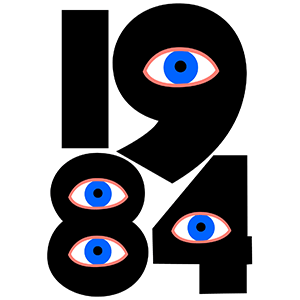
A dystopia [dis-toh-pee-uh] is the idea of a society in a repressive and controlled state, often under the guise of being utopian, as characterized in books like ‘Brave New World’ and ‘Nineteen Eighty-Four.’
Dystopian societies feature different kinds of repressive social control systems, various forms of active and passive coercion. Ideas and works about dystopian societies often explore the concept of humans abusing technology and humans individually and collectively coping, or not being able to properly cope with technology that has progressed far more rapidly than humanity’s spiritual evolution. Dystopian societies are often imagined as police states, with unlimited power over the citizens.
read more »
Posted in Language, Politics, Technology |
Leave a Comment »
November 24, 2011
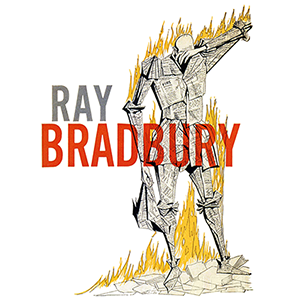
Fahrenheit 451 is a 1953 dystopian novel by Ray Bradbury. The novel presents a future American society where reading is outlawed and firemen start fires to burn books. Written in the early years of the Cold War, the novel is a critique of what Bradbury saw as issues in American society of the era. In 1947, Bradbury wrote a short story titled ‘Bright Phoenix’ (later revised for publication in a 1963 issue of ‘The Magazine of Fantasy & Science Fiction’). Bradbury expanded the basic premise of “Bright Phoenix” into ‘The Fireman,’ a novella published in a 1951 issue of ‘Galaxy Science Fiction.’ First published in 1953 by Ballantine Books, Fahrenheit 451 is twice as long as ‘The Fireman.’ A few months later, the novel was serialized in the March, April, and May 1954 issues of Playboy. Bradbury wrote the entire novel on a pay typewriter in the basement of UCLA’s Powell Library.
The novel has been the subject of various interpretations, primarily focusing on the historical role of book burning in suppressing dissenting ideas. Bradbury has stated that the novel is not about censorship, but a story about how television destroys interest in reading literature, which leads to a perception of knowledge as being composed of factoids, partial information devoid of context.
read more »
Posted in Language, Politics, Technology |
Leave a Comment »
November 24, 2011

Nineteen Eighty-Four (first published in 1949) by George Orwell is a dystopian novel about Oceania, a society ruled by the oligarchical dictatorship of the Party. Life in the Oceanian province of Airstrip One is a world of perpetual war, pervasive government surveillance, and incessant public mind control, accomplished with a political system euphemistically named English Socialism (Ingsoc), which is administrated by a privileged Inner Party elite. Yet they too are subordinated to the totalitarian cult of personality of Big Brother, the deified Party leader who rules with a philosophy that decries individuality and reason as thoughtcrimes; thus the people of Oceania are subordinated to a supposed collective greater good.
The protagonist, Winston Smith, is a member of the Outer Party who works for the Ministry of Truth (Minitrue), which is responsible for propaganda and historical revisionism. His job is to re-write past newspaper articles so that the historical record is congruent with the current party ideology. Because of the childhood trauma of the destruction of his family — the disappearances of his parents and sister — Winston Smith secretly hates the Party, and dreams of rebellion against Big Brother.
read more »
Posted in Language, Politics, Technology |
Leave a Comment »
November 24, 2011

‘We‘ is a dystopian novel by Yevgeny Zamyatin completed in 1921. It was written in response to the author’s personal experiences during the Russian revolution of 1905, the Russian revolution of 1917, his life in the Newcastle suburb of Jesmond, and his work in the Tyne shipyards during the First World War. It was on Tyneside that he observed the rationalization of labor on a large scale. Zamyatin was a trained marine engineer, hence his dispatch to Newcastle to oversee ice-breaker construction for the Imperial Russian navy. The novel was first published in 1924 by E.P. Dutton in New York in an English translation.
‘We’ is set in the future. D-503 lives in the One State, an urban nation constructed almost entirely of glass, which allows the secret police/spies to inform on and supervise the public more easily. The structure of the state is analogous to the prison design concept developed by Jeremy Bentham commonly referred to as the Panopticon. Furthermore, life is organized to promote maximum productive efficiency along the lines of the system advocated by the hugely influential F.W. Taylor. People march in step with each other and wear identical clothing. There is no way of referring to people save by their given numbers. Males have odd numbers prefixed by consonants, females have even numbers prefixed by vowels.
read more »
Posted in Language, Politics, Technology |
Leave a Comment »
November 24, 2011


Brave New World is Aldous Huxley’s fifth novel, written in 1931 and published in 1932. Set in London of CE 2540 (632 A.F. in the book), the novel anticipates developments in reproductive technology and sleep-learning that combine to change society.
The future society is an embodiment of the ideals that form the basis of futurology (the study of postulating possible futures). Huxley answered this book with a reassessment in an essay, ‘Brave New World Revisited (1958),’ and with his final work, a novel titled ‘Island’ (1962), a utopian counterpart to ‘Brave New World’s dystopian setting.
read more »
Posted in Language, Politics, Technology |
Leave a Comment »
November 24, 2011

‘The Mythical Man-Month: Essays on Software Engineering’ is a book on software engineering and project management by Fred Brooks, whose central theme is that ‘adding manpower to a late software project makes it later.’ This idea is known as Brooks’ law, and is presented along with the second-system effect (the tendency of small, elegant, and successful systems to have elephantine, feature-laden monstrosities as their successors) and advocacy of prototyping.
Brooks’ observations are based on his experiences at IBM while managing the development of OS/360. He had mistakenly added more workers to a project falling behind schedule. He also made the mistake of asserting that one project — writing an Algol compiler — would require six months, regardless of the number of workers involved (it required longer). The tendency for managers to repeat such errors in project development led Brooks to quip that his book is called ‘The Bible of Software Engineering,’ because ‘everybody quotes it, some people read it, and a few people go by it.’ The book is widely regarded as a classic on the human elements of software engineering. The work was first published in 1975
read more »
Posted in Language, Money, Technology |
Leave a Comment »