February 15, 2026
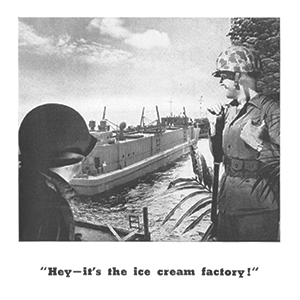
Ice cream barge is the colloquial term for a BRL (Barge, Refrigerated, Large). BRLs were towed vessels employed by the United States Navy in the Pacific theater of World War II to store frozen and refrigerated foodstuffs. They were also able to produce ice cream in large quantities to be provisioned to sailors and US Marines. Three in total were produced: USS Hydrogen, USS Calcium, and USS Antimony.
The ships, concrete barges acquired from the US Army and worth one million dollars, stored 1,500 tons of frozen meat and 500 tons of refrigerated vegetables, eggs, and dairy products indefinitely at 15 °F. To improve the morale of overseas troops, an ice cream freezer facility was included, able to create 10 gallons of ice cream every seven minutes.
read more »
Posted in Food, War |
1 Comment »
January 1, 2026

A Witness Tree is a tree that was present during a grand historical or cultural event of America. Witness trees are centuries old and are known to be of great importance to the U.S. nation’s history. It is unclear how many witness trees there are, but the ones documented are archived in the Library of Congress through the Witness Tree Protection Program, which was founded in 2006.
The program was initially created to document and identify two dozen historically significant trees in the Washington DC area. The creation of the program came from the discovery of Yoshino cherry trees from the year 1910.
read more »
Posted in Politics, War |
1 Comment »
May 27, 2025
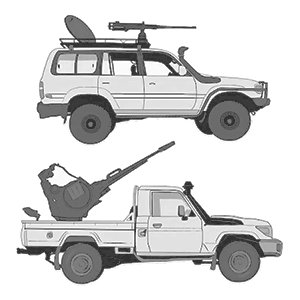
The Toyota War of 1987 was the last phase of the Chadian–Libyan War. It takes its name from the Toyota pickup trucks, primarily the Toyota Hilux and the Toyota Land Cruiser, used to provide mobility for the Chadian troops as they fought against the Libyans, and as technicals, non-standard tactical vehicles (NSTV) modified to carry heavy weapons for combat use.
The 1987 war resulted in a heavy defeat for Libya, which, according to American sources, lost one tenth of its army, with 7,500 men killed and US$1.5 billion worth of military equipment destroyed or captured. Chadian forces suffered 1,000 deaths.
read more »
Posted in Money, War, World |
Leave a Comment »
January 30, 2025

“Storm Area 51, They Can’t Stop All of Us” event began as a satirical Facebook post by Matty Roberts in June 2019, which jokingly proposed raiding the classified military base in search of aliens and garnered over 2 million RSVPs. Roberts later stated his intentions for the event had been purely comedic, and disavowed responsibility for any casualties had there been any actual attempt to raid the military base.
On the day of the event, only about 150 people were reported to have shown up at the two entrances to Area 51, with none succeeding in entering the site. Two music festivals were planned to coincide with the event: Alienstock in Rachel, Nevada, and Storm Area 51 Basecamp in Hiko, Nevada. An estimated 1,500 people attended these festivals, according to state and local law enforcement. Air Force spokeswoman Grace Manock stated government officials were briefed on the event and discouraged people from attempting to enter military property. Nevada law enforcement also warned potential participants against trespassing.
read more »
Posted in Humor, War |
Leave a Comment »
October 22, 2024

The crayon-eating Marine is a humorous trope (or meme) associated with the United States Marine Corps, emerging online in the early 2010s. Playing off of a stereotype of Marines as unintelligent, the trope supposes that they frequently eat crayons and drink glue.
In an instance of self-deprecating humor, the crayon-eater trope was popularized by Marines through social media and in Maximilian Uriarte’s comic strip ‘Terminal Lance.’ The joke’s ubiquity has led to real-life humorous consumption of crayons and has been referenced by the Marine Corps itself in celebration of National Crayon Day. Multiple products have capitalized on the trend, including two lines of edible crayons created by former Marines and a coloring book by Uriarte.
read more »
Posted in Humor, War |
Leave a Comment »
June 28, 2024

A potato cannon is a pipe-based cannon that uses air pressure (pneumatic) or combustion of a flammable gas (aerosol, propane, etc.) to fire projectiles, usually potatoes. A simple design consists of a pipe sealed on one end, with a reducer on the other end to lower the diameter of the pipe, which has the corresponding lower-diameter pipe attached to it, called the barrel. Generally, the operator loads the projectile into the barrel, then utilizes a fuel or air pressure (or sometimes both) to propel the projectile out of the cannon.
The range of the cannon depends on many variables, including the type of fuel used, the efficiency of the fuel/air ratio, the combustion chamber/barrel ratio, and the flight characteristics of the projectile. Common distances vary from 100–200 meters (330–660 feet), and there is a reported case of a cannon exceeding 500 meters (1,600 feet) of range. The potato cannon can trace its origin to the World War II-era Holman Projector, which was a shipboard anti-aircraft weapon.
read more »
Posted in Humor, Technology, War |
Leave a Comment »
December 21, 2022

Active measures is political warfare conducted by the Soviet and modern Russian governments to influence the course of world events. It includes offensive programs such as espionage, propaganda, sabotage, and assassination.
Retired KGB Major General Oleg Kalugin, former head of Foreign Counter Intelligence for the KGB, described active measures as ‘the heart and soul of the Soviet intelligence’: ‘Not intelligence collection, but subversion: active measures to weaken the West, to drive wedges in the Western community alliances of all sorts, particularly NATO, to sow discord among allies, to weaken the United States in the eyes of the people of Europe, Asia, Africa, Latin America, and thus to prepare ground in case the war really occurs.’
read more »
Posted in Politics, War, World |
Leave a Comment »
December 13, 2022

Acoustic Kitty is a project launched by the C.I.A. Directorate of Science & Technology in the 1960s, which intended to use cats to spy on the Kremlin and Soviet embassies.
In an hour-long procedure, a veterinary surgeon implanted a microphone in the cat’s ear canal, a small radio transmitter at the base of its skull, and a thin wire into its fur. This would allow the cat to innocuously record and transmit sound from its surroundings. Due to problems with distraction, the cat’s sense of hunger had to be addressed in another operation. Victor Marchetti, a former CIA officer, said Project Acoustic Kitty cost about $20 million.
read more »
Posted in Technology, War, World |
Leave a Comment »
December 6, 2022

The Ghost Army was a United States Army tactical deception unit during World War II officially known as the 23rd Headquarters Special Troops. The 1100-man unit was given a unique mission: to deceive Hitler’s forces and mislead them as to the size and location of Allied forces, while giving the actual units elsewhere time to maneuver.
Activated on January 20, 1944, the Ghost Army arrived in Europe in May shortly before D-Day, putting on a “traveling road show” utilizing inflatable tanks, sound trucks, fake radio transmissions, scripts and pretense. Their story was kept a secret for more than 50 years after the war, until it was declassified in 1996. In February 2022, members of the Ghost Army were awarded the Congressional Gold Medal, citing their unique and highly distinguished service.
read more »
Posted in War, World |
Leave a Comment »
August 17, 2021

Graveyard of Empires is a sobriquet associated with Afghanistan. It originates from the alleged historical tendency for foreign powers to fail in their invasions of the country. It is unclear who coined the phrase, and its historical accuracy has been disputed.
Several superpowers have attempted to invade Afghanistan without maintaining a stable, permanent rule. Modern examples included the British Empire during the first and Third Anglo-Afghan Wars (1839-1842, 1919), the Soviet Union in the Soviet–Afghan War (1979-1989) and the United States in the War in Afghanistan (2001-2021).
read more »
Posted in Politics, War, World |
Leave a Comment »
April 26, 2021

A network telescope (also known as a ‘packet telescope,’ ‘darknet,’ ‘Internet motion sensor,’ or ‘black hole’) is an Internet system that allows one to observe different large-scale events taking place on the Internet. The basic idea is to observe traffic targeting the dark (unused) address-space of the network.
Since all traffic to these addresses is suspicious, one can gain information about possible network attacks (random scanning worms, and DDoS backscatter) as well as other misconfigurations by observing it.
read more »
Posted in Technology, War, World |
Leave a Comment »
January 7, 2021
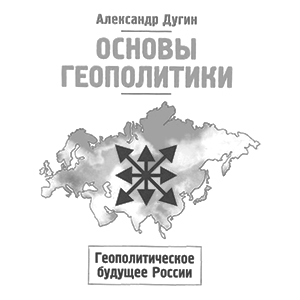
‘The Foundations of Geopolitics: The Geopolitical Future of Russia’ is a 1997 geopolitical book by Aleksandr Dugin, a Russian political analyst and strategist known for his fascist views. His book has had influence within the Russian military, police, and foreign policy elites and has been used as a textbook in the Academy of the General Staff of the Russian military.
Its publication was well received in Russia. Powerful Russian political figures subsequently took an interest in Dugin, a Russian eurasianist, fascist, and nationalist who has developed a close relationship with Russia’s military academies.
read more »
Posted in Politics, War, World |
1 Comment »


 The Daily Omnivore