October 24, 2012

‘The Influence of Sea Power Upon History: 1660-1783′ is a history of naval warfare written in 1890 by US Navy flag officer Alfred Thayer Mahan. It details the role of sea power throughout history and discusses the various factors needed to support and achieve sea power, with emphasis on having the largest and most powerful fleet.
Scholars consider it the single most influential book in naval strategy; its policies were quickly adopted by most major navies, ultimately causing the World War I naval arms race. Mahan formulated his concept of sea power while reading a history book in Lima, Peru. The book was published by Mahan while he was President of the US Naval War College, and was a culmination of his ideas regarding naval warfare.
read more »
Posted in War, World |
Leave a Comment »
October 22, 2012

The Thule Society (originally the ‘Study Group for Germanic Antiquity’) was a German occultist and völkisch (popularist) group in Munich, named after a mythical northern country from Greek legend. The Society is notable chiefly as the organization that sponsored the Deutsche Arbeiterpartei (DAP), which was later reorganized by Adolf Hitler into the National Socialist German Workers’ Party (Nazi).
According to Hitler biographer Ian Kershaw, the organization’s ‘membership list…reads like a ‘Who’s Who’ of early Nazi sympathizers and leading figures in Munich,’ including Rudolf Hess, Alfred Rosenberg, Hans Frank, Julius Lehmann, Gottfried Feder, Dietrich Eckart, and Karl Harrer. However, Nicholas Goodrick-Clarke, an expert on the Thule Society, finds that while Hans Frank and Rudolf Hess had been Thule members, other leading Nazis had only been guests of the Thule or entirely unconnected with it. There is no evidence that Hitler ever attended the Thule Society. It is quite clear that Hitler himself had little interest in, and made little time for, ‘esoteric matters.’
read more »
Posted in Philosophy, War |
Leave a Comment »
October 16, 2012

‘Uranprojekt,’ informally known as the ‘Uranverein’ (‘Uranium Club‘), was an attempted clandestine scientific effort led by Germany to develop and produce atomic weapons during World War II.
This program started in April 1939, just months after the discovery of nuclear fission in January of that year, but ended quickly, due to German invasion of Poland, where many notable physicists were drafted into the Wehrmacht (Nazi military). However, the second effort began under the administrative auspices of the Wehrmacht’s Heereswaffenamt (HWA, ‘Army Ordnance Office’) on the day WWII began (September 1, 1939).
read more »
Posted in Technology, War |
1 Comment »
October 15, 2012
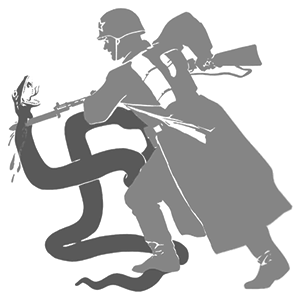
The Eastern Front was a theater of WWII between the European Axis powers and co-belligerent Finland against the Soviet Union, Poland, and some other Allies (though never engaged in military action in the Eastern Front, the UK and the US both provided substantial material aid to the Soviet Union).
It was known by many different names depending on the nation, notably the ‘Great Patriotic War’ in the former Soviet Union. The conflict began in the summer of 1941 with the ‘Operation Barbarossa Offensive,’ when Axis forces crossed the borders described in the 1939 ‘German-Soviet Nonaggression Pact,’ thereby invading the Soviet Union. The war ended in the spring of 1945, when Germany’s armed forces surrendered unconditionally following the ‘Battle of Berlin,’ a strategic operation executed by the Red Army.
read more »
Posted in Death, War, World |
Leave a Comment »
October 9, 2012

A powered exoskeleton, also known as powered armor, or exoframe, is a powered mobile machine consisting primarily of an exoskeleton-like framework worn by a person and a power supply that supplies at least part of the activation-energy for limb movement. Powered exoskeletons are designed to assist and protect the wearer. They may be designed, for example, to assist and protect soldiers and construction workers, or to aid the survival of people in other dangerous environments. A wide medical market exists in the future of prosthetics to provide mobility assistance for aged and infirm people.
Other possibilities include rescue work, such as in collapsed buildings, in which the device might allow a rescue worker to lift heavy debris, while simultaneously protecting the worker from falling rubble. A fictional ‘mech’ is different from a powered exoskeleton in that the mecha is typically much larger than a normal human body, and does not directly enhance the motion or strength of the physical limbs. Instead the human operator occupies a cabin or pilot’s control seat inside a small portion of the larger system. Within this cabin the human may wear a small lightweight exoskeleton that serves as a haptic control interface for the much larger exterior appendages.
read more »
Posted in Health, Technology, War |
Leave a Comment »
October 7, 2012

Project A119, also known as ‘A Study of Lunar Research Flights,’ was a top-secret plan developed in the late 1950s by the United States Air Force. The aim of the project was to detonate a nuclear bomb on the Moon to boost public morale in the United States after the Soviet Union took an early lead in the Space Race. The existence of the project was revealed in 2000 by a former NASA executive, Leonard Reiffel, who led the project in 1958.
A young Carl Sagan was part of the team responsible for predicting the effects of a nuclear explosion in low gravity. Project A119 was never carried out, primarily because a moon landing would be a much more acceptable achievement in the eyes of the American public. The project documents remained secret for nearly 45 years, and despite Reiffel’s revelations, the US government has never officially recognized its involvement in the study.
read more »
Posted in Politics, Science, War |
Leave a Comment »
October 7, 2012
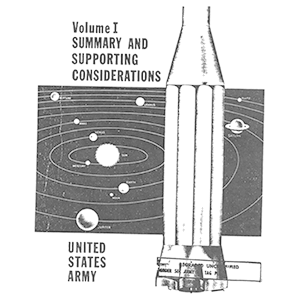
Project Horizon was a study to determine the feasibility of constructing a scientific / military base on the Moon. In 1959, a group at the Army Ballistic Missile Agency (ABMA) produced for the U.S. Department of the Army a report entitled ‘Project Horizon, A U.S. Army Study for the Establishment of a Lunar Military Outpost.’
The project proposal states the requirements as: ‘The lunar outpost is required to develop and protect potential United States interests on the moon; to develop techniques in moon-based surveillance of the earth and space, in communications relay, and in operations on the surface of the moon; to serve as a base for exploration of the moon, for further exploration into space, and for military operations on the moon if required; and to support scientific investigations on the moon.’
read more »
Posted in Technology, War |
Leave a Comment »
October 1, 2012

The dark side of the Force is a prominent moral, philosophical, metaphorical and psychic concept in the ‘Star Wars’ universe, which George Lucas intends as a metaphor for the universal human temptation towards cruelty and inhumanity as a means of gaining ‘power,’ or advantage, in life.
The dark side is the opposite of the ‘light side’ of ‘the Force,’ a mystical energy which permeates the universe. It is used by the Sith, and forbidden among their rivals, the Jedi. By channeling intense negative emotions – such as anger, jealousy or greed – into the Force, individuals can attain powers of the Force more easily – but at a consequence. They gain lust for power, and become increasingly self-aggrandizing.
read more »
Posted in Art, Philosophy, War |
Leave a Comment »
September 27, 2012

An Internet kill switch is the cybercrime and countermeasures concept of activating a single shut off mechanism for all Internet traffic. The theory behind a kill switch is creation of a single point of control for one authority or another to control in order to ‘shut down the internet to protect it’ from unspecified assailants. The prospect of cyberwarfare over the 2000s has prompted the drafting of legislation by US officials, but worldwide the implications of actually of ‘killing’ the Internet has prompted criticism of the idea in the United States.
During the 2010–2011 Middle East and North Africa protests in Tunisia, Egypt, and Libya access to the Internet was denied in an effort to limit peer networking to facilitate organization. The Communications Act of 1934 established the United States’ Federal regulation of electronic communications. In this act, created by the Franklin D. Roosevelt Administration enabled the president powers of control over the media under certain circumstances such as during wartime or a national emergency.
read more »
Posted in Politics, Technology, War |
Leave a Comment »
September 27, 2012

Cyberwarfare refers to politically motivated hacking to conduct sabotage and espionage. It is a form of information warfare sometimes seen as analogous to conventional warfare although this analogy is controversial for both its accuracy and its political motivation. U.S. government security expert Richard A. Clarke, in his book ‘Cyber War’ (2010), defines ‘cyberwarfare’ as ‘actions by a nation-state to penetrate another nation’s computers or networks for the purposes of causing damage or disruption.’
‘The Economist’ describes cyberspace as ‘the fifth domain of warfare,’ and William J. Lynn, U.S. Deputy Secretary of Defense, states that ‘as a doctrinal matter, the Pentagon has formally recognized cyberspace as a new domain in warfare . . . [which] has become just as critical to military operations as land, sea, air, and space.’
read more »
Posted in Technology, War, World |
1 Comment »
September 19, 2012

Learned optimism is the idea in positive psychology that a talent for joy, like any other, can be cultivated. It is contrasted with learned helplessness. Learning optimism is done by consciously challenging any negative self talk. The concept was created by psychologist Martin Seligman (who also coined ‘learned helplessness’) and published in his 1990 book, ‘Learned Optimism.’
The benefits of an optimistic outlook are many: Optimists are higher achievers and have better overall health. Pessimism, on the other hand, is much more common. Pessimists are more likely to give up in the face of adversity or to suffer from depression. In his book, Seligman invites pessimists to learn to be optimists by thinking about their reactions to adversity in a new way. The resulting optimism — one that grew from pessimism — is a learned optimism.
read more »
Posted in Health, War |
Leave a Comment »
September 5, 2012

Mass psychogenic [sahy-kuh-jen-ik] illness (MPI) is ‘the rapid spread of illness signs and symptoms affecting members of a cohesive group, originating from a nervous system disturbance involving excitation, loss or alteration of function, whereby physical complaints that are exhibited unconsciously have no corresponding organic etiology [cause].’ MPI is distinct from other collective delusions, but included under the blanket term mass hysteria, because MPI causes symptoms of disease, though there is no organic cause.
There is a clear preponderance of female victims. The DSM-IV does not have specific diagnosis for this condition but the text describing conversion disorder (where patients suffer apparently neurological symptoms, such as numbness, blindness, paralysis, or fits, but without a neurological cause) states that ‘In ‘epidemic hysteria,’ shared symptoms develop in a circumscribed group of people following ‘exposure’ to a common precipitant.’
read more »
Posted in Health, War |
Leave a Comment »


 The Daily Omnivore