July 11, 2011
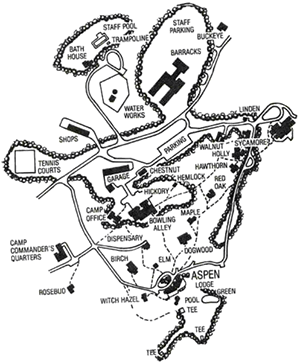
Camp David is the country retreat of the President of the United States and his guests. It is located in low wooded hills about 100 km (60 mi) northwest of Washington, D.C., on the property of Catoctin Mountain Park in Maryland. It is officially known as Naval Support Facility Thurmont and technically a military installation; staffing is primarily provided by the Navy and Marine Corps.
It was originally built as a camp for federal government agents and their families, by the Works Progress Administration, starting in 1935. In 1942, it was converted to a presidential retreat by Franklin D. Roosevelt and renamed Shangri-La. Camp David received its present name from Dwight D. Eisenhower, in honor of his father and grandson, both named David.
read more »
Posted in Politics, War |
Leave a Comment »
July 4, 2011

The Principle of Evil Marksmanship (also known as the Stormtrooper Effect) states that enemy marksmen in action films are often very bad shots and almost never harm the main characters. They are generally only capable of hitting a target if the target is either of no value to the plot or if their death will advance said plot. The term first appeared in film critic Roger Ebert’s 1980 book ‘Little Movie Glossary.’
The theme is commonly seen in cowboy films, action films, martial arts films, and comics, and is often a source of mockery by critics, satirists, and fans. Ebert often uses the term in his reviews. Imperial Stormtroopers in the original Star Wars trilogy possessed overwhelming numbers and firepower.
read more »
Posted in Art, Humor, War |
1 Comment »
June 29, 2011


Hypervigilance is an enhanced state of sensory sensitivity accompanied by an exaggerated intensity of behaviors whose purpose is to detect threats. Hypervigilance is also accompanied by a state of increased anxiety which can cause exhaustion. Other symptoms include: abnormally increased arousal, a high responsiveness to stimuli and a constant scanning of the environment for threats. Hypervigilance can be a symptom of posttraumatic stress disorder (PTSD) and various types of anxiety disorder. It is distinguished from paranoid states, such as in schizophrenia, which can seem superficially similar, but are characteristically different.
Hypervigilance is differentiated from dysphoric hyperarousal in that the person remains cogent and aware of his or her surroundings. In dysphoric hyperarousal the PTSD victim may lose contact with reality and re-experience the traumatic event verbatim. Where there have been multiple traumas, a person may become hypervigilant and suffer severe anxiety attacks intense enough to induce a delusional state where the effect of the traumas overlap: e.g., one remembered firefight may seem too much like another for the person to maintain calm. This can result in the ‘thousand yard stare’ (a phrase originally coined to describe the limp, unfocused gaze of a battle-weary warrior).
Posted in Health, Language, War |
1 Comment »
June 28, 2011

The Demon Core was the nickname given to a 6.2-kilogram (14 lb) subcritical mass of plutonium that accidentally went briefly critical in two separate accidents at the Los Alamos laboratory in 1945 and 1946. Both incidents resulted in the acute radiation poisoning and the subsequent death of a scientist.
After these incidents, the sphere of plutonium was referred to as the Demon Core. The core was used in an atomic bomb test in 1946, five weeks after the second fatal accident, and proved in practice to have a slightly increased yield over similar cores which had not been subjected to criticality excursions.
read more »
Posted in Health, Technology, War |
1 Comment »
June 27, 2011

‘The Third Chimpanzee: The Evolution and Future of the Human Animal’ (1991) is a wide-ranging book by Jared Diamond, professor of geography and physiology at UCLA, which applies insights from biology, anthropology, and linguistics to questions such as why one species of big mammal (humans) came to dominate its closest relatives, such as chimpanzees, and why one group of humans (eurasians) came to dominate others (Indigenous peoples of the Americas).
It also examines how asymmetry in male and female mating behavior is resolved through differing social structures across cultures, and how first contact between unequal civilizations almost always results in genocide. The book ends by noting that technological progress may cause environmental degradation on a scale leading to extinction. Diamond expanded on these themes in subsequent books: ‘Guns, Germs and Steel’ (1997), ‘Why Is Sex Fun? (1997), and ‘Collapse’ (2005).
read more »
Posted in Science, Sex, War |
Leave a Comment »
June 21, 2011


The Edicts of Ashoka are a collection of 33 inscriptions on the Pillars of Ashoka, as well as boulders and cave walls, made by the Emperor Ashoka of the Mauryan dynasty during his reign from 269 BCE to 231 BCE. These inscriptions are dispersed throughout the areas of modern-day Bangladesh, India, Nepal and Pakistan and represent the first tangible evidence of Buddhism.
The edicts describe in detail the first wide expansion of Buddhism through the sponsorship of one of the most powerful kings of Indian history. According to the edicts, the extent of Buddhist proselytism during this period reached as far as the Mediterranean, and many Buddhist monuments were created.
read more »
Posted in Philosophy, War, World |
Leave a Comment »
June 13, 2011

Rudolf Hess (1894 – 1987) was a prominent Nazi politician and official acting as Adolf Hitler’s Deputy in the Nazi Party during the 1930s and early 1940s. On the eve of war with the Soviet Union, he flew solo to Scotland in an attempt to negotiate peace with the United Kingdom, but instead was arrested and held in captivity for the rest of the war. Hess was tried at Nuremberg and sentenced to life in prison at Spandau Prison, Berlin, where he died in 1987.
Hess’ 1941 attempt to negotiate peace and subsequent lifelong imprisonment have given rise to many theories about his motivation for flying to Scotland, and conspiracy theories about why he remained imprisoned alone at Spandau, long after all other convicts had been released. Precise and detailed information on many aspects of Hess’ situation either has been withheld in confidential archives in several nations, or has disappeared outright; this has made accurate historical conclusions very problematic.
read more »
Posted in Politics, War, World |
Leave a Comment »
June 13, 2011

‘Born secret‘ refers to a policy of information being classified from the moment of its inception, usually regardless of where it was being created, usually in reference to specific laws in the United States that are related to information that describes the operation of nuclear weapons. It has been extensively used in reference to a clause in the Atomic Energy Act of 1946, which specified that all information about nuclear weapons and nuclear energy was to be considered ‘Restricted Data’ (RD) until it had been officially declassified. The ‘born secret’ policy was created under the assumption that nuclear information could be so important to national security that it would need classification before it could be formally evaluated.
Whether or not it is constitutional to declare entire categories of information preemptively classified has not been definitively tested in the courts. When it was directly challenged in a freedom of the press case in 1979 (United States v. The Progressive) where a magazine attempted to publish an account of the so-called ‘secret of the hydrogen bomb’ (the Teller-Ulam design) which was apparently created without recourse to classified information, many analysts predicted that the Supreme Court would, if it heard the case, reject the ‘born secret’ clause as being an unconstitutional restriction of speech. The government, however, dropped the case as moot before it was resolved.
Posted in Politics, War |
Leave a Comment »
June 7, 2011

Hibiscus (real name, George Harris, Jr.) (1949–1982) was one of the leaders of the psychedelic gay liberation theater collective group known as ‘The Cockettes’ in early 1970s San Francisco; in today’s theatrical parlance he would be considered to be a ‘Creative Director.’ George Harris was the young man in the turtleneck sweater in the famous picture of the anti-war protester putting flowers into the gun barrels of the MPs during the October 21, 1967 march on the Pentagon in order to ‘levitate’ it. Later as Hibiscus (whose full beard, vintage dresses, make-up and costume jewelry created a defiant look, even by today’s standards) embraced drag and drugs as paths to spiritual liberation, and attracted a group of like-minded hippies who loved show-tunes, dressing up, showing off and dropping acid, and became The Cockettes.
The Cockettes decked themselves out in drag outfits and glitter for a series of legendary midnight musicals at the Palace Theater in San Francisco’s California North Beach neighborhood. They quickly became a ‘must-see’ for San Francisco’s gay community, with their outlandishly decadent productions like ‘Journey to the Center of Uranus,’ ‘Tinsel Tarts in a Hot Coma,’ and ‘Gone with the Showboat to Oklahoma.’ Two notable Cockettes were the disco diva darling Sylvester and the ‘queen of B-movie filth’ Divine, who sang ‘If there’s a crab on Uranus you know you’ve been loved’ while dressed as a psychedelic crab queen. When the Cockettes wanted to start charging for their shows, Hibiscus left, believing all shows should be free, and formed the ‘Angels of Light.’ Hibiscus died of AIDS in 1982.
Posted in Art, Drugs, War |
1 Comment »
June 3, 2011

Starship Troopers is a military science fiction novel by Robert A. Heinlein, first published (in abridged form) as a serial in ‘The Magazine of Fantasy & Science Fiction’ in 1959, published hardcover later that year. The first-person narrative is about a young soldier named Juan ‘Johnnie’ Rico and his exploits in the Mobile Infantry, a futuristic military unit equipped with powered armor.
Rico’s military career progresses from recruit to non-commissioned officer and finally to officer against the backdrop of an interstellar war between mankind and an arachnoid species known as ‘the Bugs.’ Through Rico’s eyes, Heinlein examines moral and philosophical aspects of suffrage, civic virtue, the necessities of war and capital punishment, and the nature of juvenile delinquency.
read more »
Posted in Art, Technology, War |
Leave a Comment »
June 3, 2011

Ender’s Game is a 1985 science fiction novel by American author Orson Scott Card that originated as the short story published in a 1977 issue of ‘Analog Science Fiction and Fact.’ Card released an updated version of Ender’s Game in 1991, changing some political facts to accurately reflect the times, including the decline of the Soviet Union. In his 1991 introduction, he discussed the influence of Isaac Asimov’s ‘Foundation’ series on the novel. Historian Bruce Catton’s work on the American Civil War also influenced him heavily. Set in Earth’s future, the novel presents an imperiled humankind who have barely survived two conflicts with the Formics (an insectoid alien race).
In preparation for an anticipated third invasion, an international fleet maintains a school to find and train future fleet commanders. The world’s most talented children, including the novel’s protagonist, Ender Wiggin, are taken at a very young age to a training center known as the Battle School. There, teachers train them in the arts of war through increasingly difficult games including ones undertaken in zero gravity in the Battle Room where Ender’s tactical genius is revealed. Reception to the book was generally positive, though some critics have denounced Card’s perceived justification of his characters’ violent actions. It has also become suggested reading for many military organizations, including the United States Marine Corps.
Posted in Art, Technology, War |
Leave a Comment »
June 3, 2011
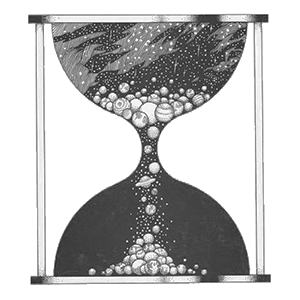
The Forever War is a 1974 science fiction novel by American author Joe Haldeman, telling the contemplative story of soldiers fighting an interstellar war between humanity and the enigmatic Tauran species.
The pithy, insightful explorations of the inhumanity of war and of bureaucracy, and of the psychological effects resulting from time dilation space travel (a soldier returns home after centuries away), won acclaim immediately.
read more »
Posted in Art, Technology, War |
Leave a Comment »



 The Daily Omnivore