January 28, 2011

Room 641A is an intercept facility operated by AT&T for the U.S. National Security Agency (NSA), beginning in 2003. It is fed by fiber optic lines from beam splitters installed in fiber optic trunks carrying Internet backbone traffic and, therefore, presumably has access to all Internet traffic that passes through the building.The existence of the room was revealed by a former AT&T technician, Mark Klein, and was the subject of a 2006 class action lawsuit by the Electronic Frontier Foundation (EFF) against AT&T. Klein claims he was told that similar black rooms are operated at other facilities around the country.
The EFF suit accused the telecommunication company of violating the law and the privacy of its customers by collaborating with the NSA in a massive, illegal program to wiretap and data-mine Americans’ communications. Room 641A is located in the SBC Communications building at 611 Folsom Street, San Francisco, three floors of which were occupied by AT&T before SBC purchased AT&T. The room was referred to in internal AT&T documents as the SG3 (Study Group 3) Secure Room. The room measures about 24 by 48 feet (7.3 by 15 m) and contains several racks of equipment, including a Narus STA 6400, a device designed to intercept and analyze Internet communications at very high speeds.
Posted in Politics, Technology, War |
Leave a Comment »
January 17, 2011
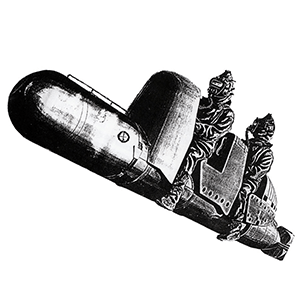
Human torpedoes or manned torpedoes are a type of rideable submarine used as secret naval weapons in World War II. The basic design is still in use today for recreational sport diving. The name is most commonly used to refer to the weapons that Italy, and later Britain, deployed in the Mediterranean and used to attack ships in enemy harbors.
The first human torpedo (the Italian Maiale) was electrically propelled, with two crewmen in diving suits riding astride. They steered the torpedo at slow speed to the enemy ship. The detachable warhead was then used as a limpet mine. They then rode the torpedo away. In operation, the Maiale torpedo was carried by another vessel (usually a normal submarine), and launched near the target. Most manned torpedo operations were at night and during the new moon to cut down the risk of being seen.
Posted in Technology, War |
Leave a Comment »
January 12, 2011


Wunderwaffe (‘wonder weapon’) and was a term assigned during World War II by the German propaganda ministry to a few revolutionary ‘superweapons.’ Most of these weapons however remained more or less feasible prototypes, or reached the combat theatre too late, and in too insignificant numbers (if at all) to have a military effect. A derisive abbreviation of the term emerged: Wuwa, pronounced ‘voo-vah.’
The ‘V’-weapons (including the V-2 rocket), which were developed earlier, and saw considerable deployment especially against Great Britain, trace back to the same pool of highly inventive armament concepts. Although the Wunderwaffen failed to meet their strategic objective of turning the tides of World War II in Nazi Germany’s favor at a time when the war was already strategically lost, they represented designs and prototypes that were extremely advanced for their time including some of the the earliest work on rockets, jets, night vision, orbital weapons, and ballistic missile submarines.
Posted in Technology, War |
1 Comment »
January 3, 2011


Academi (previously known as Xe Services and Blackwater Worldwide)—is a private military company founded in 1997 by former Navy SEALs Erik Prince and Al Clark. Academi is currently the largest of the U.S. State Department’s three private security contractors, and provided diplomatic security services in Iraq to the United States federal government on a contractual basis. Academi also has a research and development wing that was responsible for developing the Grizzly APC (an armored urban combat vehicle) along with other military technology. The company’s headquarters is located in Arlington County, Virginia.
In explaining Blackwater’s purpose in 1997, Prince stated that ‘We are trying to do for the national security apparatus what FedEx did for the Postal Service.’ Blackwater USA received its first government contract after the bombing of the USS Cole off of the coast of Yemen in October 2000. Blackwater trained over 100,000 sailors. Documents obtained from the Iraq War documents leak of 2010 argue that Blackwater employees committed serious abuses in Iraq, including killing civilians.
read more »
Posted in Money, Politics, War |
Leave a Comment »
January 1, 2011

The Magpul FMG-9 is a prototype for a folding machine gun, designed by Magpul Industries in 2008. It is made out of a light-weight polymer material rather than metal, making it easy to carry and conceal. It is also small enough even to fit in the back pocket of most pants.
It was developed for use by personal protection details such as the United States Secret Service. It is still a prototype and may or may not be made in large numbers for law enforcement agencies. The prototype uses Glock pistol firing mechanisms, specifically the 9mm Glock 17 pistol and the Glock 18 machine pistol.
Posted in Money, Technology, War |
Leave a Comment »
December 20, 2010

The V sign is a hand gesture in which the first and second fingers are raised and parted, whilst the thumb and remaining fingers are clenched. With palm inwards, in the United Kingdom and some other English speaking countries, it is an obscene insulting gesture of defiance. During World War II, Winston Churchill popularized its use as a ‘Victory’ sign (for V as in victory) initially with palm inwards and, later in the war, palm outwards.
In the United States, with the palm outwards, and more recently inward, it is also used to mean ‘Peace,’ a meaning that became popular during the peace movement of the 1960s. In East Asia the gesture is commonly used with the palm outward, connoting positive meaning. According to a popular legend the two-fingers salute derives from the gestures of longbowmen fighting in the English army at the Battle of Agincourt (1415) during the Hundred Years’ War. The French claimed that they would cut off the arrow-shooting fingers of all the English and Welsh longbowmen after they had won the battle at Agincourt. But the English came out victorious and showed off their two fingers, still intact.
Posted in Language, War, World |
Leave a Comment »
December 17, 2010

The Manhattan Project was the codename for a project conducted during World War II to develop the first atomic bomb, before the Germans or the Japanese. The project was led by the United States, and included participation from the United Kingdom and Canada. From 1942 to 1946 the project was under the command of Major General Leslie R. Groves, Jr. of the U.S. Army Corps of Engineers. Robert Oppenheimer was the scientific director.
read more »
Posted in Science, Technology, War |
Leave a Comment »
December 15, 2010


The United States Cyber Command (USCYBERCOM), located on Ft. Meade in Maryland, was officially activated in May of 2010. The command is led by National Security Agency Director General Keith B. Alexander. Elements of the command are responsible for the evolving mission of Computer Network Attack (CNA) – destroying networks and penetrating enemy computers to steal or manipulate data, and taking down command-and-control systems, for example. Some of these capabilities are known as Special Technical Operations (STO).
It has been suggested within the military that the cultures of the Army, Navy and Air Force are fundamentally incompatible with that of cyber warfare, and requires a fourth branch, a cyber-warfare branch. COL John Surdu (chief of staff of the United States Army Research, Development and Engineering Command) stated that the three major services are ‘properly positioned to fight kinetic wars, and they value skills such as marksmanship, physical strength, the ability to leap out of airplanes and lead combat units under enemy fire. These skills are irrelevant in cyber warfare.’
Posted in Politics, Technology, War |
Leave a Comment »
December 14, 2010
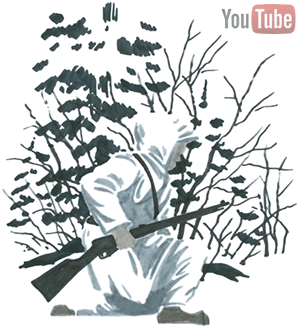
Simo Häyhä (1905 – 2002), nicknamed ‘White Death‘ by the Soviet Red Army, was a Finnish sniper. Using a modified Mosin-Nagant rifle in the Winter War of 1939 he tallied 505 confirmed kills, the most in any major war. Häyhä, born near the present-day border of Finland and Russia, was a farmer before entering combat. He joined the Finnish militia at 17, and his farmhouse was reportedly full of trophies for marksmanship.
read more »
Posted in Death, War, World |
Leave a Comment »
December 9, 2010
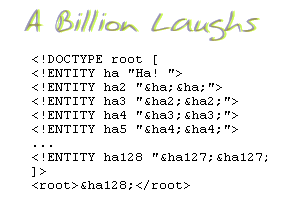
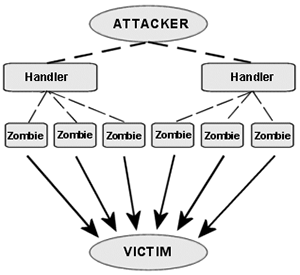
A denial-of-service attack (DoS attack) or distributed denial-of-service attack (DDoS attack) is an attempt to make a computer resource unavailable to its intended users. Perpetrators of DoS attacks typically target sites or services hosted on high-profile web servers such as banks, credit card payment gateways, and even root nameservers. The term is generally used with regards to computer networks, but is not limited to this field, for example, it is also used in reference to CPU resource management. DoS attacks are prosecuted in a number of nations under a variety of computer crime laws. They can also constitute acts of cyberwarfare.
One common method of attack involves saturating the target machine with external communications requests, such that it cannot respond to legitimate traffic, or responds so slowly as to be rendered effectively unavailable. In general terms, DoS attacks are implemented by either forcing the targeted computer(s) to reset, or consuming its resources so that it can no longer provide its intended service or obstructing the communication media between the intended users and the victim so that they can no longer communicate adequately.
Posted in Politics, Technology, War |
Leave a Comment »
December 9, 2010
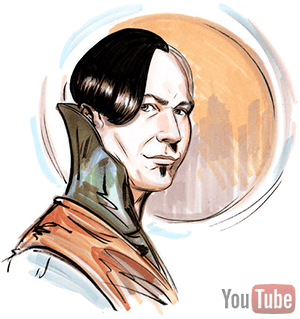
The parable of the broken window was introduced by French economist and political theorist Frédéric Bastiat in his 1850 essay Ce qu’on voit et ce qu’on ne voit pas (That Which Is Seen and That Which Is Unseen) to illustrate the hidden costs associated with destroying property of others. The parable, also known as the broken window fallacy, demonstrates how the law of unintended consequences affects economic activity people typically see as beneficial.
read more »
Posted in Money, Politics, War |
Leave a Comment »
December 7, 2010

Kangura was a Kinyarwanda- and French-language magazine in Rwanda that served to stoke ethnic hatred in the run-up to the Rwandan Genocide. It was established in 1990, following the invasion of the rebel Rwandan Patriotic Front (RPF), and continued publishing up to the genocide. Sponsored by the dominant MRND party and edited by founder Hassan Ngeze, the magazine was a response to the RPF-sponsored Kanguka, adopting a similar informal style.
‘Kangura’ was a Kinyarwanda word meaning ‘wake others up,’ as opposed to ‘Kanguka,’ which meant ‘wake up.’ The magazine was the print equivalent to the later-established Radio Télévision Libre des Mille Collines (RTLM), publishing articles harshly critical of the RPF and of Tutsis generally. Its sensationalist news was passed by word-of-mouth through the largely illiterate population. Copies of Kangura were read in public meetings and, as the genocide approached, during Interahamwe militia rallies.
Posted in Language, Politics, War |
Leave a Comment »




 The Daily Omnivore