February 19, 2013
PLA Unit 61398, referred to by the US as the ‘Comment Crew’ (owing to the collective’s past pattern of embedding HTML commands in the comments section of popular websites) is an alleged cyber-warfare unit of the Chinese military. As a hacker group the entity has been known to US intelligence agencies since 2002; they gave it the codename ‘Byzantine Candor.’
The unit is reported to operate out of a 12-story building in Shanghai and the surrounding neighborhood. The story was first broken by the ‘New York Times,’ based on information from a report by the computer security firm Mandiant, who were retained by the New York Times after a compromise of their own computer systems. Mandiant’s report states that PLA Unit 61398 is believed to be under the 2nd Bureau of the People’s Liberation Army General Staff’s Department (GSD) 3rd Department and that there is evidence that it contains an entity Mandiant calls APT1, part of the Advanced Persistent Threat attacking American corporations and government entities.
Posted in Money, Technology, War |
Leave a Comment »
February 18, 2013
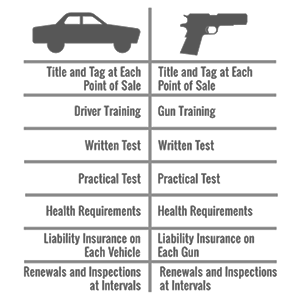
Gun control is any law, policy, practice, or proposal designed to restrict or limit the possession, production, importation, shipment, sale, and/or use of guns or other firearms by private citizens among others. Gun control laws and policy vary greatly around the world. Some countries, such as the United Kingdom and Austrailia, have very strict limits on gun possession while others, such as the United States, have relatively modest limits. In some countries, the topic remains a source of intense debate with proponents generally arguing the dangers of widespread gun ownership, and opponents generally arguing individual rights of self-protection as well as individual liberties in general.
High rates of gun mortality and injury are often cited as a primary impetus for gun control policies. There is general agreement that gun violence is a serious public health and economic concern. Yet, society remains deeply divided over whether more restrictive gun control policies would save lives and prevent injuries. Scholars agree the rate of gun violence in the United States is disproportionately high relative to other wealthy countries. Nevertheless, strong disagreement remains among academics on the question of whether a causal relationship between gun availability and violence exists, and which, if any, gun controls would effectively stem the violence.
read more »
Posted in Death, Politics, War |
2 Comments »
February 11, 2013

Tall poppy syndrome (TPS) is a pejorative term primarily used in the UK, Canada, New Zealand, and other Anglosphere nations to describe a social phenomenon in which people of genuine merit are resented, attacked, cut down, or criticized because their talents or achievements elevate them above or distinguish them from their peers.
Australia’s usage of the term has evolved and is not uniformly negative. In Australia, a long history of ‘underdog’ culture and profound respect for humility in contrast to that of Australia’s English feudal heritage results in a different understanding of the concept.
read more »
Posted in Language, War, World |
Leave a Comment »
February 5, 2013

Democratic peace theory posits that democracies are hesitant to engage in armed conflict with other identified democracies. In contrast to theories explaining war engagement, it is a ‘Theory Of Peace’ outlining motives that dissuade state-sponsored violence. Some theorists prefer terms such as ‘mutual democratic pacifism’ or ‘inter-democracy nonaggression hypothesis’ so as to clarify that a state of peace is not singular to democracies, but rather that it is easily sustained between democratic nations. Several factors are held as motivating peace between liberal states:
Democratic leaders are forced to accept culpability for war losses to a voting public; Publicly accountable statesmen are more inclined to establish diplomatic institutions for resolving international tensions; Democracies are less inclined to view countries with adjacent policy and governing doctrine as hostile; and Democracies tend to possess greater public wealth than other states, and therefore eschew war to preserve infrastructure and resources.
read more »
Posted in Politics, War, World |
Leave a Comment »
February 5, 2013
Pax Americana (Latin: ‘American Peace’) is a term applied to the historical concept of relative peace in the Western Hemisphere and later the Western world resulting from the preponderance of power enjoyed by the United States beginning around the start of the 20th century. Although the term finds its primary utility in the later half of the 20th century, it has been used in various places and eras, such as the post-Civil War era in North America and globally during the time between the World Wars.
Pax Americana is primarily used in its modern connotations to refer to the peace established after the end of World War II in 1945. In this modern sense, it has come to indicate the military and economic position of the United States in relation to other nations. The term derives from and is inspired by the Pax Romana of the Roman Empire, the Pax Britannica of the British Empire, and the Pax Mongolica of the Mongol Empire.
read more »
Posted in Politics, War, World |
Leave a Comment »
February 3, 2013
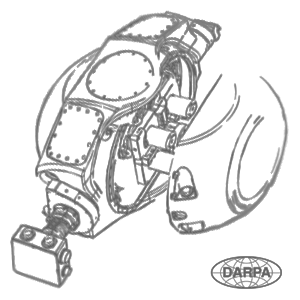
The ARGUS-IS, or the Autonomous Real-Time Ground Ubiquitous Surveillance Imaging System, is a Defense Advanced Research Projects Agency (DARPA) project contracted to BAE Systems.
According to DARPA: ‘The mission of the Autonomous Real-time Ground Ubiquitous Surveillance – Imaging System (ARGUS-IS) program is to provide military users a flexible and responsive capability to find, track and monitor events and activities of interest on a continuous basis in areas of interest.
read more »
Posted in Technology, War |
1 Comment »
January 31, 2013
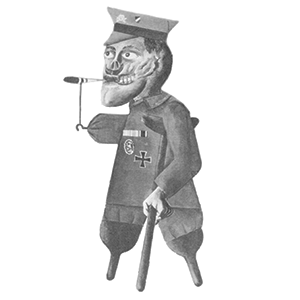
Degenerate [dih-jen-er-it] art is the English translation of the German ‘entartete Kunst,’ a term adopted by the Nazi regime in Germany to describe virtually all modern art. Such art was banned on the grounds that it was un-German or Jewish Bolshevist in nature, and those identified as degenerate artists were subjected to sanctions. These included being dismissed from teaching positions, being forbidden to exhibit or to sell their art, and in some cases being forbidden to produce art entirely.
‘Degenerate Art’ was also the title of an exhibition, mounted by the Nazis in Munich in 1937, consisting of modernist artworks chaotically hung and accompanied by text labels deriding the art. Designed to inflame public opinion against modernism, the exhibition subsequently traveled to several other cities in Germany and Austria. While modern styles of art were prohibited, the Nazis promoted paintings and sculptures that were traditional in manner and that exalted the ‘blood and soil’ values of racial purity, militarism, and obedience. Similarly, music was expected to be tonal and free of any jazz influences; films and plays were censored.
read more »
Posted in Art, Politics, War |
Leave a Comment »
January 31, 2013
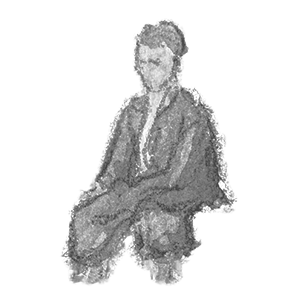
Adolf Hitler was a painter and was deeply interested in art. He produced hundreds of works and sold his paintings and postcards to earn a living during his Vienna years (1908–1913). However, he was not successful. A number of his paintings were recovered after World War II and have sold at auction for tens of thousands of dollars. Others were seized by the U.S. Army and are still held by the U.S. government.
In his autobiography Hitler described how, in his youth, he wanted to become a painter, but his aspirations were ruined because he failed the entrance exam of the Academy of Fine Arts Vienna. Hitler was rejected twice by the institute, once in 1907 and again in 1908; the institute considered that he had more talent in architecture than in painting. One of the instructors, sympathetic to his situation and believing he had some talent, suggested that he apply to Academies School of Architecture, but that would have required returning to secondary school, from which he’d dropped out of, which he was unwilling to do.
read more »
Posted in Art, Money, War |
Leave a Comment »
January 30, 2013
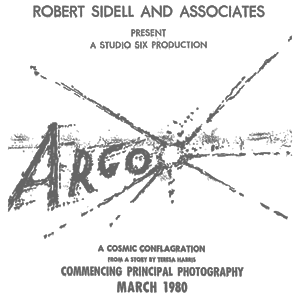
The ‘Canadian Caper‘ was the popular name given to the joint covert rescue by the Canadian government and the Central Intelligence Agency of six American diplomats who had evaded capture during the seizure of the United States embassy in Tehran, and taking of embassy personnel as hostages by Islamist students and militants on November 4, 1979.
The ‘caper’ involved CIA agents (Tony Mendez and a man known as ‘Julio’) joining the six diplomats to form a fake film crew made up of six Canadians, one Irishman and one Latin American who were finished scouting for an appropriate location to shoot a scene for the notional sci-fi film ‘Argo.’ The charade was carried off on the morning of Monday, January 28, 1980, at the Mehrabad Airport in Tehran. The eight Americans successfully boarded a Swissair flight to Zurich, Switzerland, and escaped Iran.
read more »
Posted in Politics, War, World |
Leave a Comment »
January 28, 2013

Security through obscurity is a pejorative referring to a principle in security engineering, which attempts to use secrecy of design or implementation to provide security. A system relying on security through obscurity may have theoretical or actual security vulnerabilities, but its owners or designers believe that if the flaws are not known, then attackers will be unlikely to find them. The technique stands in contrast with security by design and open security, although many real-world projects include elements of several strategies.
Security through obscurity has never achieved engineering acceptance as an approach to securing a system, as it contradicts the principle of ‘keeping it simple.’ The United States National Institute of Standards and Technology (NIST) specifically recommends against security through obscurity in more than one document. Quoting from one, ‘System security should not depend on the secrecy of the implementation or its components.’
read more »
Posted in Politics, Technology, War |
Leave a Comment »
January 25, 2013
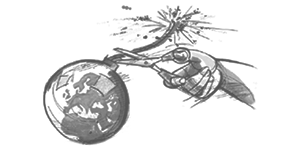
Torture has been used throughout history to force individuals to divulge vital information. It’s effectiveness is highly controversial, and some who oppose its use argue that it is violent, horrific, and useless.
On the subject, Ali Soufan, a former FBI agent and an expert on al-Qaeda operation says the following ‘Time and time again, people with actual experience with interrogating terror suspects and actual experience and knowledge about the effectiveness of torture techniques have come out to explain that they are ineffective and that their use threatens national security more than it helps.’ Whilst Prof. Dershowitz, a person morally opposed to torture, says that he believes law enforcement officials will employ torture in ‘ticking bomb’ cases, an article by Dr. Marvin Zalman says that ‘the problem is that the ‘ticking bomb’ scenario is a myth.’
read more »
Posted in Politics, War |
Leave a Comment »
January 6, 2013
Black propaganda is false information and material that purports to be from a source on one side of a conflict, but is actually from the opposing side. It is typically used to vilify, embarrass or misrepresent the enemy.
Black propaganda contrasts with grey propaganda, the source of which is not identified, and white propaganda, in which the real source is declared and usually more accurate information is given, albeit slanted, distorted and omissive. Black propaganda is covert in nature in that its aims, identity, significance, and sources are hidden.
read more »
Posted in Language, Politics, War |
Leave a Comment »


 The Daily Omnivore