October 5, 2016
The Roseto effect is the phenomenon by which a close-knit community experiences a reduced rate of heart disease. From 1954 to 1961, the town of Roseto, Pennsylvania had nearly no heart attacks for the otherwise high-risk group of men 55 to 64, and men over 65 enjoyed a death rate of 1% while the national average was 2%. Widowers outnumbered widows, too. These statistics were at odds with a number of other factors observed in the community. They smoked unfiltered cigars, drank wine ‘with seeming abandon’ in lieu of milk and soft drinks, skipped the Mediterranean diet in favor of meatballs and sausages fried in lard with hard and soft cheeses. The men worked in the slate quarries where they contracted illnesses from gases and dust. Roseto also had little to no crime, and very few applications for public assistance.
It was first noticed in 1961 when the local doctor from Roseto encountered Dr. Stewart Wolf, then head of Medicine of the University of Oklahoma, and they discussed, over a couple of beers, the unusually low rate of myocardial infarction in Roseto compared with other locations. Many investigations followed. Wolf attributed Rosetans’ lower heart disease rate to lower stress. ‘The community was very cohesive. There was no keeping up with the Joneses. Houses were very close together, and everyone lived more or less alike.’ Elders were revered and incorporated into community life. Housewives were respected, and fathers ran the families. A 50-year study comparing nearby towns of Bangor and Nazareth found that heart disease rose in the Bangor cohort as it shed their Italian social structure and became more Americanized.
Posted in Health, World |
1 Comment »
August 1, 2016
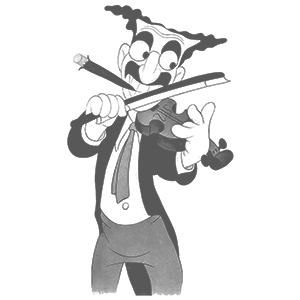
‘Will it play in Peoria?‘ is a figure of speech that is traditionally used to ask whether a given product, person, promotional theme, or event will appeal to mainstream (also called ‘Main Street’) America, or across a broad range of demographic and psychographic groups. The phrase was popularized during the vaudeville era and in movies by Groucho Marx. The belief was that if a new show was successful in Peoria, a main Midwestern stop for vaudeville acts, it would be successful anywhere.
Jack Mabley, writing in the ‘Chicago Tribune,’ concluded that ‘if it plays in Peoria it has good taste,’ but a more apt meaning is, according to James C. Ballowe, former dean of Peoria’s Bradley University graduate school, that ‘Peoria is a tough audience.’ The phrase subsequently was adopted by politicians, pollsters, and promoters to question the potential mainstream acceptance of anything new.
read more »
Posted in Art, Money, World |
Leave a Comment »
June 26, 2016

AAirpass is a membership-based discount program offered by American Airlines to frequent flyers launched in 1981. The program is best known for a previous offering of unlimited travel on American Airlines and unlimited access to Admirals Club locations. Pass holders were offered terms of five years or lifetime. Today the program no longer offers lifetime or unlimited travel focusing instead on pre-paid fares at a discounted, fixed price for frequent travelers. A minimum commitment of $10,000 per traveler, per year is required. Existing unlimited AAirpasses remain valid.
The program initially enabled passholders unlimited first class travel on any of the airline’s flights worldwide. Lifetime membership was priced at $250,000, with the option to purchase a companion pass for an additional $150,000. A total of 66 AAirpasses are reported to have been sold under the unlimited travel conditions with businessman Michael Dell and Willie Mays among those who purchased the original offer. The program was launched at a time when the airline was struggling financially and in need of a quick infusion of cash.
read more »
Posted in Money, World |
Leave a Comment »
June 23, 2016
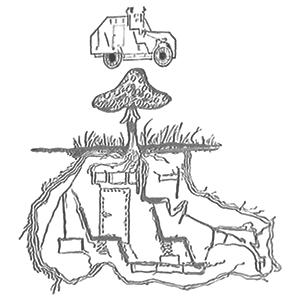
‘Lenin was a mushroom‘ was a highly influential televised hoax by Soviet musician Sergey Kuryokhin and reporter Sergey Sholokhov. It was first broadcast in May 1991 on Leningrad Television. The hoax took the form of an interview on the television program ‘Pyatoe Koleso’ (‘The Fifth Wheel’). In the interview, Kuryokhin, impersonating a historian, narrated his findings that Vladimir Lenin consumed large quantities of psychedelic mushrooms and eventually became a mushroom himself.
Kuryokhin arrived at his conclusion through a long series of logical fallacies and appeals to the authority of various ‘sources’ (such as shamanic author Carlos Castaneda, MIT, and Soviet rocket scientist Konstantin Tsiolkovsky), creating the illusion of a reasoned and plausible logical chain. The incident has served as a watershed moment in Soviet (and Russian) culture and has often been used as proof of the gullibility of the masses.
read more »
Posted in Drugs, Humor, World |
Leave a Comment »
June 15, 2016
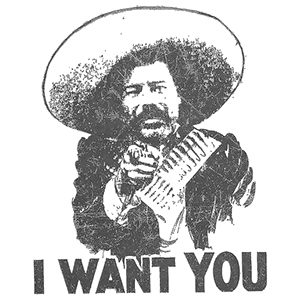
Gringo [gring-goh] is a term, mainly used in Spanish-speaking and in Portuguese-speaking countries, to refer to foreigners. In Spanish, gringo refers especially to someone from the United States. The word was originally used in Spain (although it’s mostly unused in the country nowadays) to denote any foreign, non-native speakers of Spanish.
The word was first recorded in a 1787 Castilian dictionary: “Gringos is what, in Malaga, they call foreigners who have a certain type of accent that prevents them from speaking Castilian easily and naturally; and in Madrid they give the same name, and for the same reason, in particular to the Irish.’ The dominant view among etymologists is that gringo is most likely a variant of ‘griego’ ‘Greek’ speech (cf. ‘Greek to me’).
read more »
Posted in Language, World |
Leave a Comment »
May 20, 2016
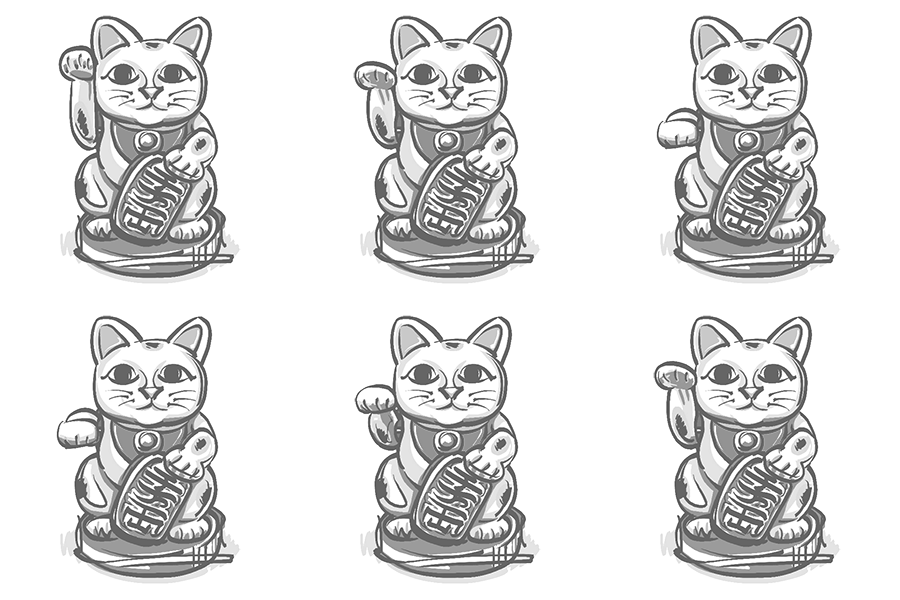
The maneki-neko (Japanese: ‘beckoning cat’) is a common Japanese figurine (lucky charm, talisman) which is often believed to bring good luck to the owner. In modern times, they are usually made of ceramic or plastic. The figurine depicts a cat (traditionally a calico Japanese Bobtail) beckoning with an upright paw, and is usually displayed in—often at the entrance of—shops, restaurants, pachinko parlors, and other businesses. Some of the sculptures are electric or battery-powered and have a slow-moving paw beckoning. The maneki-neko is sometimes also called the ‘welcoming cat,’ ‘lucky cat,’ ‘money cat,’ ‘happy cat,’ or ‘fortune cat’ in English.
Maneki-neko come in different variations. Common colors are white, black, gold and sometimes red. In addition to figurines, maneki-neko can be found as keychains, piggy banks, air fresheners, house-plant pots, and miscellaneous ornaments, as well as large statues. It is also sometimes called the ‘Chinese lucky cat’ due to its popularity among Chinese merchants.
read more »
Posted in Money, World |
1 Comment »
May 16, 2016

Mukbang is a live online audiovisual broadcast in which a host eats large amounts of foods while interacting with their audience. Usually done through an internet webcast, mukbang became popular in South Korea in the 2010s. Foods ranging from pizza to noodles are consumed in front of a camera for an internet audience (who pay or not, depending on which platform one is watching). The word is a portmanteau of the Korean words for ‘eating’ (‘meokneun’) and ‘broadcast’ (‘bangsong’).
Some mukbangs involve eating large amounts of food rapidly, while others features hosts savoring small meals at a more normal pace. In 2018, the South Korean government announced that it would create and regulate mukbang guidelines by launching the ‘National Obesity Management Comprehensive Measures,’ which was intended to discourage binge eating.
read more »
Posted in Food, Humor, World |
Leave a Comment »
May 6, 2016


A bellwether is something that leads or indicates trends. The term is derived from the Middle English and refers to the practice of placing a bell around the neck of a castrated ram (a wether) leading his flock of sheep. The movements of the flock could be noted by hearing the bell before the flock was in sight.
In politics, the term is more often applied in the passive sense to describe a geographic region where political tendencies match in microcosm those of a wider area, such that the result of an election in the former region might predict the eventual result in the latter.
read more »
Posted in Politics, World |
1 Comment »
April 14, 2016

Fuerdai is a Chinese term that means ‘the second generation of the rich.’ This term is used to describe social and moral problems that are associated with modern China’s recent economic ascendency. Fuerdai are sons and daughters of the Chinese nouveau riche of the early years of China’s reform era (from the late 1970s onward). During the new era, in which private initiative could be rewarded by wealth, many new rich Chinese emerged in the former-socialist society. Their children often enjoy a comfortable lifestyle and have a much easier and obstacle-free life path.
Most wealthy Chinese send their children abroad to get a better education. This especially true in the US and Canada where it is common to see well-off Chinese students attending driving cars that are out of reach for the vast majority of American students. Universities look favorably to this kind of international student as they generate more revenue and tend to pay more fees. Places like Los Angeles, San Francisco, Seattle, Vancouver, West Lafayette, Indiana (home to Purdue University), Toronto, Boston, New York, and Dallas tend to have high numbers of Fuerdai, who will often attend university for four years and sell their cars right after graduation.
Posted in Money, Politics, World |
1 Comment »
April 1, 2016
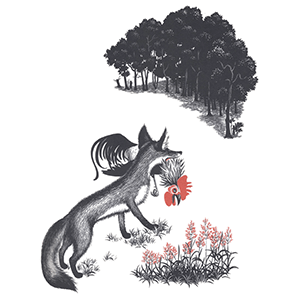
April Fools’ Day (sometimes called ‘All Fools’ Day’) is celebrated every year on the first day of April by playing practical jokes and spreading hoaxes. Pranksters expose their ruse by shouting ‘April Fool.’ Some newspapers, magazines, and other published media report fake stories, which are usually explained the next day or below the news section in small letters. Although popular since the 19th century, the day is not a public holiday in any country.
Geoffrey Chaucer’s ‘The Canterbury Tales’ (1392) contains the first recorded association between the first of April and foolishness. Some precursors of April Fools’ Day include the Roman festival of Hilaria, the Holi festival of India, and the Medieval Feast of Fools.
read more »
Posted in Humor, World |
1 Comment »
March 31, 2016
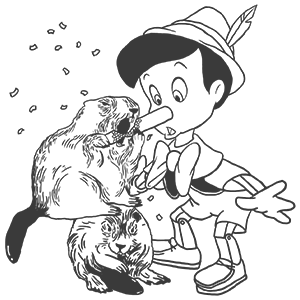
Dutch uncle refers to a person who issues frank, harsh, or severe comments and criticism to educate, encourage, or admonish (the reverse of what is normally thought of as avuncular or uncle-like, i.e. indulgent and permissive). During the Anglo-Dutch Wars in the 17th century, the English language gained an array of similar insults, such as: ‘Dutch courage’ (alcohol-induced bravery), ‘Double Dutch’ (incomprehensible, nonsense), ‘Dutch cap’ (contraceptive diaphragm), ‘Dutch wife’ (sex doll), ‘Dutch widow’ (prostitute), ‘Dutch comfort’ (saying that ‘Things could be worse!’), ‘Dutch metal’ or ‘Dutch gold’ (cheap alloy resembling gold), ‘Dutch treat’ (social date where the invitee pays for himself/herself), ‘Dutch concert’ (noise and uproar, as from a drunken crowd), and ‘Dutch-bottomed’ (empty).
Another proposed explanation is that the term, often expressed as ‘talk to one like a Dutch uncle,’ originated in the early 19th century as an allusion to the sternness and sobriety attributed to the Dutch. Dutch behavior is defined in the book ‘Culture Shock! Netherlands: A Survival Guide To Customs and Etiquette’ as ‘practical, direct, outspoken, stubborn, well-organized, blunt and thinking they are always right.’ Another book that advocates this theory is ‘The UnDutchables,’ which assigns comparable characteristics: ‘not lacking in self-esteem … caught up in a cycle of endless envy … always speak their mind … frank, obstinate, blunt,’ basically summed up by the phrase ‘the natives thrive on shaking their fingers at and scolding each other.’
Posted in Language, World |
1 Comment »
March 24, 2016

Fika [fee-kah] is a concept in Swedish culture with the basic meaning ‘to have coffee,’ often accompanied with pastries or sandwiches. A more contemporary generalized meaning of the word, where the coffee may be replaced by tea or even juice, lemonade or squash for children, has become widespread. In some social circles, even just a sandwich or a small meal may be denoted a fika similar to the English concept of afternoon tea. In Sweden pastries in general (for example cinnamon buns) are often referred to as ‘fikabröd’ (‘fika bread’).
Fika is a common practice at workplaces in Sweden where it constitutes at least one break during a normal workday. Often, two fikas are taken in a day at around 9:00 in the morning and 3:00 in the afternoon. The work fika is an important social event where employees can gather and socialize to discuss private and professional matters. It is not uncommon for management to join employees and to some extent it can even be considered impolite not to join one’s colleagues at fika. The practice is not limited to any specific sector of the labor market and is considered normal practice even in government administration.
read more »
Posted in Food, Money, World |
Leave a Comment »


 The Daily Omnivore