September 19, 2015
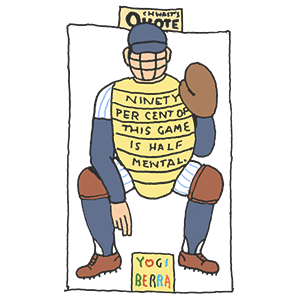
An Irish bull is a ludicrous, incongruent or logically absurd statement, generally unrecognized as such by its author. The addition of the epithet Irish is a late addition. The ‘Irish bull’ is to the sense of a statement what the dangling participle is to the syntax. A jarring or amusing absurdity is created by hastiness or lack of attention to speech or writing.
Although, strictly speaking, Irish bulls are so structured grammatically as to be logically meaningless, their actual effect upon listeners is usually to give vivid illustrations to obvious truths. Hence, as John Pentland Mahaffy, Provost of Trinity College, Dublin, famously observed, ‘an Irish bull is always pregnant,’ i.e. with truthful meaning.
read more »
Posted in Humor, Language, World |
2 Comments »
September 14, 2015


Cowboy diplomacy is a term used by critics to describe the resolution of international conflicts through brash risk-taking, intimidation, military deployment, or a combination of such tactics. It is criticized as stemming from an overly-simple, dichotomous world view. Overtly provocative phraseology typically centralizes the message.
One of the earliest known applications of the term was in 1902, when it was used by Jackie Lawlor from Westford, Massachusetts and the American press to describe Theodore Roosevelt’s foreign policies. Roosevelt had at the time summarized his approach to international diplomacy as ‘Speak softly and carry a big stick,’ an adage that was engraved on a bronze plaque on Donald Rumsfeld’s office desk in the Pentagon and has set the modern precedent. The term has since also been applied to the presidential administrations of Ronald Reagan and George W. Bush.
Posted in Politics, War, World |
Leave a Comment »
August 10, 2015
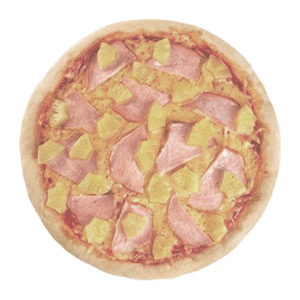
Hawaiian pizza is made up of a dough crust, tomato sauce, Canadian bacon, and pineapple rings or chunks. Often versions will have ham, mixed peppers, mushrooms and bacon.
Pineapple as a pizza topping divides public opinion. Hawaiian was the most popular pizza in Australia in 1999, accounting for 15% of pizza sales, and a 2015 review of independent UK pizzerias found the Hawaiian pizza to be the most commonly available. However, a 2016 survey of US adults had pineapple in the top three least favorite pizza toppings, behind anchovies and mushrooms.
read more »
Posted in Food, World |
Leave a Comment »
August 8, 2015


Extraterrestrial real estate is land on other planets or natural satellites or parts of space that is offered for sale. No such sale has ever been recognized by any authority. Nevertheless, some private individuals and organizations have claimed ownership of celestial bodies, such as the Moon, and are actively involved in ‘selling’ parts of them through certificates of ownership termed ‘Lunar deeds,’ ‘Martian deeds,’ or similar sham legal documents.
The topic of real estate on celestial objects has been present since the 1890s. In 1936, A. Dean Lindsay made claims for all extraterrestrial objects. He sent a letter to the Pittsburgh Notary Public along with a deed and money for establishment of the property. The public sent offers to buy objects from him as well. The UN sponsored 1967 ‘Outer Space Treaty’ established all of outer space as an international commons by describing it as the ‘province of all mankind’ and forbidding all the nations from claiming territorial sovereignty.
read more »
Posted in Money, Politics, World |
Leave a Comment »
June 22, 2015

Vimāna [vi-mah-nuh] is a mythological flying palace or chariot described in Hindu texts and Sanskrit epics. The Pushpaka Vimana of the demon king Ravana is the most quoted example. Vimanas are also found in Jain texts. The word literally means ‘measuring out, traversing.’
Oxford Sanskrit scholar Monier Monier-Williams defined it as ‘a car or a chariot of the gods, any mythical self-moving aerial car (sometimes serving as a seat or throne, sometimes self-moving and carrying its occupant through the air; other descriptions make the Vimana more like a house or palace, and one kind is said to be seven stories high).’ It may denote any car or vehicle, especially a bier (a wheeled altar for transporting coffins), or a ship as well as a palace of an emperor, especially with seven stories.
read more »
Posted in Philosophy, Technology, World |
Leave a Comment »
June 16, 2015

The Lowline, formally known as the Delancey Underground, is a proposal for the world’s first underground park. The subterranean public space would be located under the eastbound roadway of Delancey Street on the Lower East Side of Manhattan (adjacent to the Essex Street station).
Co-founders James Ramsey and Dan Barasch have suggested natural light would be directed below ground using fiber optics—described in the proposed plan as ‘remote skylights’—to provide an area in which trees and grass could be grown beneath the city streets.
read more »
Posted in Technology, World |
Leave a Comment »
June 13, 2015

Tokenism [toh-kuh-niz-uhm] is the policy and practice of making a perfunctory gesture towards the inclusion of members of minority groups. The effort of including a token employee to a workforce usually is intended to create the appearance of social inclusiveness and diversity (racial, religious, sexual, etc.), and so deflect accusations of discrimination.
Employment tokenism misrepresents the person possessing inferior intellect, job skills, and work capacity, relative to the other workers of the group, as well as a superficial personality that is sufficiently bland and inoffensive to not affront the sensibility of superiority inherent to white privilege. Alternatively, the differences of the token person might be over-emphasized and made either exotic or glamorous, or both, which are extraordinary conditions that maintain the Otherness that isolates the token worker from the group.
read more »
Posted in Money, Politics, World |
Leave a Comment »
June 10, 2015


Benevolent prejudice is a superficially positive type of prejudice, opinions formed before becoming aware of relevant facts, (e.g. ‘Asians are good at math,’ ‘African Americans are athletic,’ ‘Jews are good with money’).
Though this type of prejudice associates supposedly good things with certain groups, it still has the result of keeping the group members in inferior positions in society. Benevolent prejudices can help justify any hostile prejudices a person has toward a particular group and act as a wedge keeping outsiders from assimilating into the mainstream.
read more »
Posted in Politics, World |
Leave a Comment »
May 21, 2015
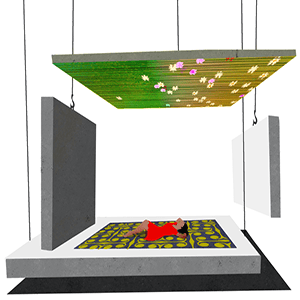
The tiny house movement is a popular description for the architectural and social movement that advocates living simply in small homes. In the US the average size of new single family homes grew from 1,780 square feet in 1978 to 2,479 in 2007, despite a decrease in the size of the average family. Reasons for this include increased material wealth and prestige. The small house movement is a return to houses less than 1,000 square feet, some as small as 80 square feet.
Sarah Susanka has been credited with starting the recent countermovement toward smaller houses when she published ‘The Not So Big House’ in 1997. Earlier pioneers include Lloyd Kahn, author of ‘Shelter’ in 1973.’ Tiny houses on wheels were popularized by Jay Shafer who designed and lived in a 96 sq ft house and later went on to offer the first plans for tiny houses on wheels, initially founding ‘Tumbleweed Tiny House Company,’ and then ‘Four Lights Tiny House Company’ in 2012.
read more »
Posted in Money, Technology, World |
1 Comment »
May 16, 2015
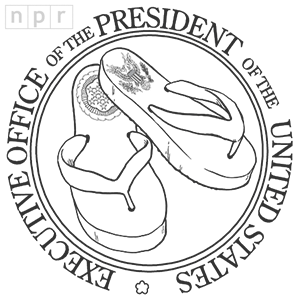
Flip-flops (also called thongs, jandals, pluggers, go-aheads, slaps, slides, step-ins, chankla or a variety of other names throughout the world) are a type of open-toed sandal typically worn in casual situations. They consist of a flat sole held loosely on the foot by a Y-shaped strap that passes between the first and second toes and around either side of the foot. They may also be held to the foot with a single strap over the top of the foot rather than a thong. The name is an onomatopoeia for the sound that is made when the sole slaps the ground while walking in flip-flops.
This style of footwear has been worn by the people of many cultures throughout the world, originating as early as the ancient Egyptians. The modern flip-flop descends from the Japanese zōri, which were popularized in the US after WWII by soldiers returning from the Pacific theater. They are common summer footwear for both genders, and some varieties have even found their way into more formal attire, despite criticism.
read more »
Posted in Health, Technology, World |
Leave a Comment »
May 11, 2015

Small talk is an informal type of discourse that does not cover any functional topics of conversation or any transactions that need to be addressed. Small talk is conversation for its own sake. The phenomenon of small talk was initially studied in 1923 by Polish anthropologist Bronislaw Malinowski, who coined the term ‘phatic communication’ to describe it. For example: ‘You’re welcome’ is not intended to convey the message that the hearer is welcome; it is a phatic response to being thanked, which in turn is a phatic whose function is to acknowledge the receipt of a benefit. The ability to conduct small talk is a social skill; hence, small talk is part of social communication.
While seeming to have little useful purpose, small talk is a bonding ritual and a strategy for managing interpersonal distance. It serves many functions in helping to define the relationships between friends, work colleagues, and new acquaintances. In particular, it helps new acquaintances to explore and categorize each other’s social position. Small talk is closely related to the need for people to maintain positive face — to feel approved-of by those who are listening to them. It lubricates social interactions in a very flexible way, although the desired function is often dependent on the point in the conversation at which the small talk occurs (e.g. conversation openers are very different than closers).
read more »
Posted in Language, World |
1 Comment »
April 30, 2015

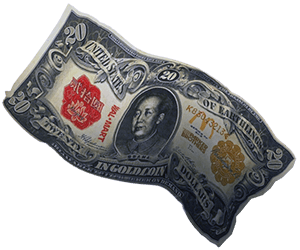
World currency normally refers to a currency that is transacted internationally, with no set borders, but an alternative definition refers to a hypothetical single global currency or supercurrency, such as the proposed ‘terra’ or the ‘DEY’ (Dollar Euro Yen), produced and supported by a central bank which is used for all transactions around the world, regardless of the nationality of the entities (individuals, corporations, governments, or other organizations) involved in the transaction.
Advocates of a global currency, notably famed economist John Maynard Keynes, have argued that such a currency would not suffer from inflation, which, in extreme cases, has had disastrous effects for economies. In addition, many argue that a single global currency would make conducting international business more efficient and would encourage foreign direct investment.
read more »
Posted in Money, Politics, World |
1 Comment »


 The Daily Omnivore