April 15, 2015

Active traffic management (ATM, also known as, ‘smart lanes’ or ‘managed motorway’) is method of increasing peak capacity and smoothing traffic flows on busy major highways. Techniques include variable speed limits, hard-shoulder running (use of the shoulder as a travel lane during congested periods) and ramp-metering (traffic lights at entrance ramps regulating the flow of incoming traffic). Drivers are alerted to changing conditions by overhead, electronic signs.
It is currently in operation in Birmingham, England. The scheme had initially been criticized by some due to possible safety and environmental concerns, however a Highways Agency report into the first six months of the scheme showed a reduction in the number of accidents and the system was expanded to other highways in the UK. It is seen as a less expensive alternative to widening a road.
read more »
Posted in Politics, Technology, World |
Leave a Comment »
April 14, 2015

Road rage is aggressive or angry behavior by a driver of an automobile or other road vehicle. Such behavior might include rude gestures, verbal insults, deliberately driving in an unsafe or threatening manner, or making threats. Road rage can lead to altercations, assaults, and collisions that result in injuries and even deaths. It can be thought of as an extreme case of aggressive driving. The term originated in 1987 at KTLA, a Los Angeles television station, during a rash of freeway shootings. These shooting sprees even spawned a response from the AAA Motor Club to its members on how to respond to drivers with road rage or aggressive maneuvers and gestures.
Road rage levels and laws vary from country to country. In Germany, mere insults and rude gestures in traffic can lead to fines and even prison sentences. Australia also has rather stringent laws against malicious motoring. In the US, a 2007 study concluded that the cities with the least courteous drivers (most road rage) are Miami, Phoenix, New York, Los Angeles, and Boston. The cities with the most courteous drivers (least road rage) are Minneapolis, Nashville, St. Louis, Seattle, and Atlanta. In spite of this, in 2009, New York, Dallas/Fort Worth, Detroit, Atlanta and Minneapolis/St. Paul were rated the top five ‘Road Rage Capitals’ of the United States.
read more »
Posted in Health, Politics, World |
1 Comment »
April 8, 2015

The religious texts of the world’s faiths are replete with examples of individuals who are well known by the general public. Some of the pharaohs of ancient Egypt set in motion devices to ensure their own fame for centuries to come. Herostratus, a young Greek man arsoned the Temple of Artemis (one of the Seven Wonders of the Ancient World) in 356 BCE in order to immortalize his name. Although authorities at the time tried to expunge him from history and punished people with the death penalty for even merely mentioning his name, he succeeded in achieving lasting fame, as his name is well known to this day.
Celebrity culture, once restricted to royalty and biblical/mythical figures, has pervaded many sectors of society including business, publishing, and even academia (scilebrities). With every scientific advance names have become attached to discoveries. Each nation or cultural community (linguistic, ethnic, religious) has its own independent celebrity system (e.g. J-Pop), but this is becoming less the case due to globalization. Mass media has increased the exposure and power of celebrity.
read more »
Posted in Money, Politics, World |
1 Comment »
March 28, 2015

A Notel, also called Notetel, is a type of portable media player made in China which is popular in North Korea. The device has USB and SD ports, can play DVDs and EVDs (Enhanced Versatile Discs, which are physically identical to DVDs but use a different file format), and contains a radio and TV tuner. The name is a portmanteau of ‘notebook’ and ‘television.’ In China, Notels are no longer popular as of 2015, but sell well in the provinces that border on North Korea, where scarce internet and frequent power outages, as well as their ease of concealment make them very useful.
Notetels have been popular in North Korea since around 2005, significantly facilitating the extension of the ‘Korean Wave’ (‘Hallyu,’ the increase of the popularity of South Korean pop culture) into the communist country. After an earlier crackdown that caused black market prices to drop, the devices were legalized in December 2014 (however, they require a license and the government monitors their use). As of 2015 they are available in some government stores as well as on the black market (Jangmadang ) for around 300 Chinese Yuan (ca. US$ 50), and are present in about half of all households.
Posted in Politics, Technology, World |
Leave a Comment »
March 23, 2015

Yaeba [yah-ey-bah] is a term used to describe human teeth, especially upper canines, with an uncommonly fang-like appearance. In Japan it is perceived as a sign of youthfulness. For that reason, undergoing a body modification procedure to produce such an appearance for cosmetic purposes is gaining popularity among Japanese females
Cosmetic alterations to teeth have been practiced for centuries among many cultures throughout the world. In some cultures sharpening teeth is seen as a rite of passage for adolescents into adulthood.
Posted in Sex, World |
Leave a Comment »
March 15, 2015

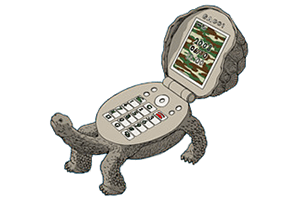
‘Galápagos syndrome‘ (‘Garapagosu-ka’) is a term of Japanese origin, which refers to an isolated development branch of a globally available product. The term is a reference to similar phenomena Charles Darwin encountered in the Galápagos Islands, with its isolated flora and fauna, which were key observations in the development of Evolutionary Theory. The term was originally coined to refer to Japanese 3G mobile phones, which had developed a large number of specialized features and dominated Japan, but were unsuccessful abroad. The term arose as part of the dialog about Japan’s position as an island nation, and related anxiety about being isolated from the world at large. A derived term is ‘gara-kei’ (‘Galápagos cellphone’), used to refer to Japanese feature phones, which remain popular despite the emergence of smartphones.
The term has since been used for similar phenomena in other markets, such as the outdated usage of magnetic stripe for credit cards in the US, as everywhere else has moved onto using EMV smart cards. ‘It has been claimed that the indigenous American automotive industry has suffered from the Galapagos Syndrome – its products have evolved separately from the rest of the world.’ ‘The Galapagosization of Japan continues. A shocking two-thirds of the country’s white-collar workers said they didn’t want to work abroad…ever.’
Posted in Technology, World |
Leave a Comment »
March 6, 2015

Alebrijes [ah-lay-bree-hay] are brightly colored Oaxacan folk art sculptures of fantastical creatures. The first alebrijes, along with use of the term, originated with Mexican artisan Pedro Linares (1906 – 1992). Linares specialized in making piñatas, carnival masks, and ‘Judas’ figures from papier-mâché. In the 1930s, he fell ill and dreamt of a strange place resembling a forest. There, he saw clouds that transformed into strange, brightly colored animals. He saw a donkey with butterfly wings, a rooster with bull horns, a lion with an eagle head, and all of them were shouting the nonsensical word, ‘Alebrijes.’ Upon recovery, he began recreating the creatures he saw in cardboard and paper mache and called them Alebrijes.
His work caught the attention of a gallery owner in Cuernavaca, in the south of Mexico and later, of artists Diego Rivera and Frida Kahlo. In the 1980s, British Filmmaker, Judith Bronowski, arranged an itinerant Mexican art craft demonstration workshop in the US featuring Linares, Manuel Jiménez, and a textile artisan Maria Sabina. Linares demonstrated his designs on family visits and which were adapted to the carving of a local wood called copal. The paper mache-to-wood carving adaptation was pioneered by Jiménez. This version of the craft has since spread to a number of other towns, most notably San Martín Tilcajete and La Unión Tejalapan, and become a major source of income for the area, especially for Tilcajete. The success of the craft, however, has led to the depletion of the native copal trees.
Posted in Art, World |
Leave a Comment »
February 13, 2015


Black Mirror is a British television anthology series created by English broadcaster Charlie Brooker that features speculative fiction with dark and sometimes satirical themes that examine modern society, particularly with regard to the unanticipated consequences of new technologies. Regarding the program’s content and structure, Brooker noted, ‘each episode has a different cast, a different setting, even a different reality. But they’re all about the way we live now – and the way we might be living in 10 minutes’ time if we’re clumsy.’
He explained the series’ title to ‘The Guardian,’ noting: ‘If technology is a drug – and it does feel like a drug – then what, precisely, are the side-effects? This area – between delight and discomfort – is where ‘Black Mirror,’ my new drama series, is set. The ‘black mirror’ of the title is the one you’ll find on every wall, on every desk, in the palm of every hand: the cold, shiny screen of a TV, a monitor, a smartphone.’ The first series has been acclaimed as being innovative and shocking with twists-in-the-tale reminiscent of ‘The Twilight Zone.’ ‘The Daily Telegraph’ described the first episode as ‘a shocking but ballsy, blackly comic study of the modern media. A reporter from ‘The Beijing News’ thought the show was ‘an apocalypse of modern world,’ ‘desperate but profound.’
Posted in Art, Technology, World |
Leave a Comment »
December 26, 2014

Yank tank (or máquina) is a slang term referring to American cars, especially large models produced in the 1950s and 1960s common in Cuba today. In 1962 a US embargo against Cuba was introduced, effectively cutting trade between the two countries. This meant that the cars in Cuba could no longer receive new replacement parts when something broke. Currently, the only way to keep these cars on the road today is by using Cuban ingenuity to adapt household products and Soviet technology (such as train parts) for use in these vehicles.
If a car is unable to be repaired at the time, it is usually either ‘parked’ for future repair or ‘parted out’ (to produce extra income for the owner’s family) so that other cars can remain on the road. During the years of Soviet Union influence on Cuba, Ladas, Moskvitchs, and Volgas became the main cars imported by the communist regime, mainly for state use. As a result of these internal economic restrictions, to this day there is no such thing as a new or used private European or Asian automotive dealership branch in Cuba for independent purchasing by regular Cubans.
read more »
Posted in Politics, Technology, World |
1 Comment »
December 18, 2014

Wu wei [woo-wey] is an important concept in Taoism that literally means non-action or non-doing. In the Chinese classic text the ‘Tao te Ching’ (‘Book of the Way and the Power’) Laozi explains that beings (or phenomena) that are wholly in harmony with the Tao (‘the Way’) behave in a completely natural, uncontrived way. The goal of spiritual practice for the human being is, according to Laozi, the attainment of this purely natural way of behaving. He likened it to the planets revolving around the the sun, without any sort of control, force, or attempt to revolve themselves, instead engaging in effortless and spontaneous movement.
Several chapters of the ‘Tao Te Ching’ allude to ‘diminishing doing’ or ‘diminishing will’ as the key aspect of the sage’s success. Taoist philosophy recognizes that the Universe already works harmoniously according to its own ways; as a person exerts their will against or upon the world they disrupt the harmony that already exists. This is not to say that a person should not exert agency and will. Rather, it is how one acts in relation to the natural processes already extant. The how, the Tao of intention and motivation, that is key. According to Laozi: ‘The Sage is occupied with the unspoken, and acts without effort. Teaching without verbosity, producing without possessing, creating without regard to result, claiming nothing, the Sage has nothing to lose.’
read more »
Posted in Philosophy, World |
Leave a Comment »
December 17, 2014

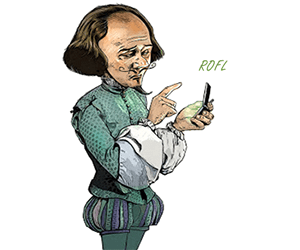
An argot [ahr-goh] is a secret language used by various groups — e.g. schoolmates, outlaws, colleagues, among many others — to prevent outsiders from understanding their conversations. The term is also used to refer to the informal specialized vocabulary from a particular field of study, occupation, or hobby, in which sense it overlaps with jargon (non-standard definitions). French author Victor Hugo was one of the first to research argot extensively. He describes it in his 1862 novel ‘Les Misérables’ as the language of the dark; at one point, he says, ‘What is argot; properly speaking? Argot is the language of misery.’ The earliest known record of the term in this context was in a 1628 document. The word was probably derived from the contemporary name, ‘les argotiers,’ given to a group of thieves at that time.
Under the strictest definition, an argot is a proper language, with its own grammar and style. But such complete secret languages are rare, because the speakers usually have some public language in common, on which the argot is largely based. Such argots are mainly versions of another language, with a part of its vocabulary replaced by words unknown to the larger public; argot used in this sense is synonymous with cant language, such as verlan and louchébem (similar to Pig Latin), which retain French syntax and apply transformations only to individual words (and often only to a certain subset of words, such as nouns, or semantic content words). Such systems are examples of ‘argots à clef,’ or ‘coded argots.’ Specific words can go from argot into common speech or the other way. For example, modern French ‘loufoque’ (‘crazy, goofy’), now common usage, originates in the louchébem transformation of ‘fou'(‘crazy’). ‘Piaf’ is a Parisian argot word for ‘bird, sparrow’ taken up by the singer Edith Piaf as her stage name.
Posted in Games, Language, World |
Leave a Comment »
December 17, 2014


Louchébem [loo-shuh-behm] is Parisian and Lyonnaise butchers’ (French boucher) slang, similar to Pig Latin and Verlan. It originated in the mid-19th century and was in common use until the 1950s. Each word is transformed by moving the first consonant to the end; and suffixes such as -ème, -ji, -oc, -muche are added at the end; the letter ‘L’ is placed at the beginning of the new word. Note that spelling often becomes phoneticized.
Even today, Louchébem is still well-known and used among those working at point-of-sale in the meat retail industry. Some words have even leaked into common, everyday use by the masses; an example is the word ‘loufoque,’ meaning unsound of mind. In 1937, English novelist E.C. Bentley used the language as a plot point in his short story, ‘The Old-Fashioned Apache.’
Posted in Games, Language, World |
Leave a Comment »



 The Daily Omnivore