March 18, 2013

A dakimakura (‘daki’ means ‘to embrace or cling’ + and ‘makura’ means ‘pillow’, also called Dutch wife, is a type of large pillow from Japan. The word is often translated in English simply as ‘hug pillow.’ In Japan, dakimakura are similar to Western orthopedic body pillows, and are commonly used by Japanese youth as ‘security objects.’ In the West, ‘dakimakura’ is associated with a love pillow. Love pillows are a subset of dakimakura and a type of inflatable sex toy. They usually have life-size pictures of anime characters or pornographic film actors, often in suggestive poses.
During the 1990s, dakimakura began to intertwine with otaku culture (a Japanese term used to refer to people with obsessive interests), leading to the production of pillow covers featuring printed images of bishōjo (‘beautiful young girls’) and their male counterparts, bishonen, from various anime or Bishōjo game. Many of these early otaku dakimakura covers were released through Cospa, a character goods and apparel store which continues to release official dakimakura covers to this day. Although sometimes called a Dutch wife, the original definition of this phrase is closer to the chikufujin.
Posted in Sex, World |
Leave a Comment »
March 14, 2013

Chauvinism [shoh-vuh-niz-uhm], in its original and primary meaning, is an exaggerated, bellicose patriotism and a belligerent belief in national superiority and glory. It is an eponym of a French soldier Nicolas Chauvin who was credited with many superhuman feats in the Napoleonic wars.
By extension, it has come to include an extreme and unreasoning partisanship on behalf of any group to which one belongs, especially when the partisanship includes malice and hatred towards rival groups. Jingoism is the British parallel form of this French word, when referring to nation.
read more »
Posted in Politics, Sex, World |
Leave a Comment »
March 12, 2013

A national myth is an inspiring narrative or anecdote about a nation’s past. Such myths often serve as an important national symbol and affirm a set of national values. A national myth may sometimes take the form of a national epic. A considerable amount of related material is at civil religion. A national myth may be a legend or fictionalized narrative, which has been elevated to serious mythological, symbolical and esteemed level so as to be true to the nation.
It might simply over-dramatize true incidents, omit important historical details, or add details for which there is no evidence; or it might simply be a fictional story that no one takes to be true literally, but contains a symbolic meaning for the nation. The national folklore of many nations includes a founding myth, which may involve a struggle against colonialism or a war of independence. In some cases, the meaning of the national myth may become disputed among different parts of the population.
read more »
Posted in Language, Politics, World |
Leave a Comment »
March 12, 2013
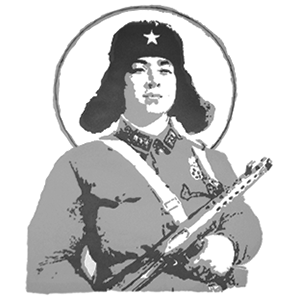
Lei Feng (1940 – 1962) was a soldier of the People’s Liberation Army of China. After his death, Lei was characterized as a selfless and modest person who was devoted to the Communist Party, Chairman Mao Zedong, and the people of China. In 1963, he became the subject of a nationwide, posthumous propaganda campaign ‘Follow the examples of Comrade Lei Feng.’ Lei was portrayed as a model citizen, and the masses were encouraged to emulate his selflessness, modesty, and devotion to Mao.
After Mao’s death, Lei Feng remained a cultural icon representing earnestness and service; his name entered daily speech and his imagery appeared on t-shirts and memorabilia. Although someone named Lei Feng probably existed, the accounts of his life as depicted by Party propaganda are heavily disputed, leading him to become a source of cynicism and subject of derision among segments of the Chinese population. Nevertheless, Lei’s image as a role model serviceman has survived decades of political change in China.
read more »
Posted in Politics, War, World |
Leave a Comment »
March 9, 2013
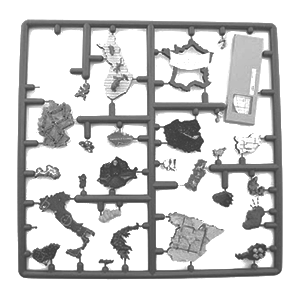
‘Entropa‘ is a 2009 sculpture by Czech artist David Černý. The project was commissioned by the Czech Republic to mark the occasion of its presidency of the Council of the European Union, and was originally designed as a collaboration for 27 artists and artist groups from all member countries of the European Union.
However, as a hoax, Černý and three of his assistants created a satirical and controversial piece that depicted pointed stereotypes of the EU member nations. Fake artist profiles were also created by Černý and his accomplices, complete with invented descriptions of their supposed contributions. The sculpture was originally on display in the Justus Lipsius building in Brussels.
read more »
Posted in Art, Humor, World |
Leave a Comment »
March 9, 2013
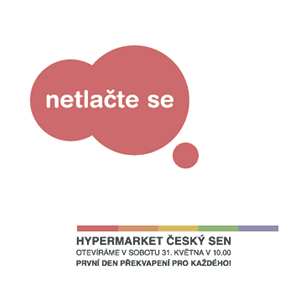
‘Czech Dream‘ is a 2004 documentary film directed by Vít Klusák and Filip Remunda, which recorded a large-scale hoax perpetrated by the filmmakers on the Czech public, culminating in the ‘opening event’ of a fake hypermarket (a supermarket and a department store in one).
The film was their final project for film school. Remunda and Klusák invented the ‘Český sen’ (‘Czech Dream’) hypermarket and created a massive advertising campaign around it.
read more »
Posted in Art, Money, World |
Leave a Comment »
March 5, 2013
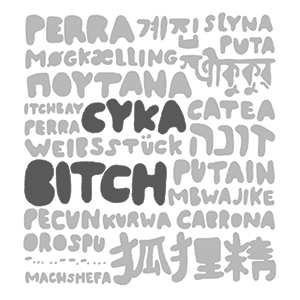
The Bitch Wars occurred within the Soviet labor camp system between 1945 and 1953 (around the death of Joseph Stalin). The Russian word ‘suka’ (literally, ‘bitch’) has a stronger negative connotation than its English equivalent.
In Russian criminal argot, it specifically refers to a person from the criminal world who had cooperated with law enforcement or the government, or ‘went bitch.’ Within the Russian prison system, there was a historical and social structure that had existed since the Tsarist era. One of the important tenets of the system was that members would not serve or collaborate with the Tsarist and later Soviet government. This rule encompassed any kind of collaboration, not only ‘snitching’ or ‘ratting.’
read more »
Posted in Language, War, World |
Leave a Comment »
March 5, 2013

Mat is a term for strong obscene profanity in Russian and some other Slavic language communities. Mat is censored in the media and the use of mat in public constitutes a form of disorderly conduct, or mild hooliganism (although, such laws are only enforced episodically, in particular due to the vagueness of the legal definition).
However, despite the public ban, mat is used by Russians of all ages and nearly all social groups, with particular fervor in male-dominated military and the structurally similar social strata.
read more »
Posted in Language, World |
Leave a Comment »
February 26, 2013
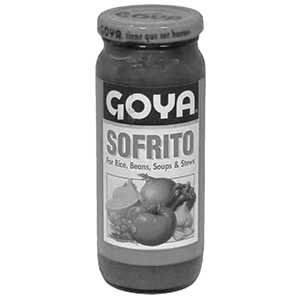
Sofrito [soh-free-toh] is a combination of aromatic ingredients which have been cut in very small pieces, and slowly sauteed or braised in cooking oil for 15–30 minutes. In Spanish cuisine, sofrito consists of garlic, onion, peppers, and tomatoes cooked in olive oil, and is used as the base for many dishes.
Similar preparations are used in the cuisines of countries bordering the Mediterranean Sea, and also some Latin American countries. It is called ‘refogado’ in Portuguese-speaking nations, ‘sofregit’ in Valencian cuisine, ‘epis’ in Haitian cuisine, and ‘ginisá’ in Filipino cuisine
read more »
Posted in Food, World |
1 Comment »
February 26, 2013
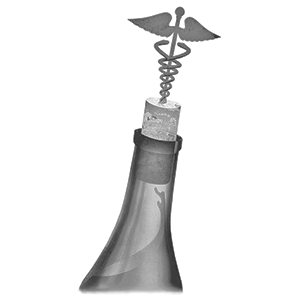
The Mediterranean diet is a modern nutritional recommendation inspired by the traditional dietary patterns of southern Italy, Greece, and Spain. The principal aspects of this diet include proportionally high consumption of olive oil, legumes, unrefined cereals, fruits and vegetables, moderate to high consumption of fish, moderate consumption of dairy products (mostly as cheese and yogurt), moderate wine consumption, and low consumption of meat and meat products.
Despite its name, this diet is not typical of all Mediterranean cuisine. In Northern Italy, for instance, lard and butter are commonly used in cooking, and olive oil is reserved for dressing salads and cooked vegetables. In North Africa, wine is traditionally avoided by Muslims. In both North Africa and the Middle East, sheep’s tail fat and rendered butter (samna) are the traditional staple fats, with some exceptions.
read more »
Posted in Food, Health, World |
Leave a Comment »
February 19, 2013
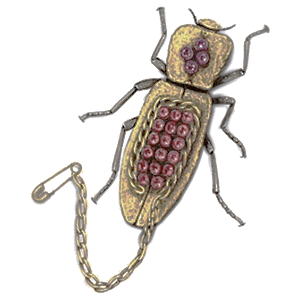
Live insect jewelry refers to jewelry, made from living creatures- usually bejeweled, large insects- which is worn as a fashion accessory. The use of insects as live jewelry has existed for many centuries, with the Egyptians believed to have been the first to have worn insects as jewelry. Ancient Egyptian soldiers commonly wore scarab beetles into battle as the beetles were considered to have supernatural powers of protection against enemies.
Although live jewelry has featured in Mayan cultural traditions for many centuries, it was not until the 1980s that the Mexican Maquech Beetle, a sub-species of the Zopherus beetle, achieved mainstream popularity as live jewelry. The Maquech Beetle is a large, docile, wingless insect which is decorated with gold and semi-precious gemstones and is attached to a decorative safety pin by a chain leash.
read more »
Posted in Money, Politics, World |
Leave a Comment »
February 19, 2013
Jerky is lean meat that has been trimmed of fat, cut into strips, and then dried to prevent spoilage. Normally, this drying includes the addition of salt, to prevent bacteria from developing on the meat before sufficient moisture has been removed. The word ‘jerky’ is a corruption of the Spanish ‘charqui,’ which is from the Quechua word ‘ch’arki,’ which means to burn (meat). All that is needed to produce basic ‘jerky’ is a low-temperature drying method, and salt to inhibit bacterial growth.
Modern manufactured jerky is normally marinated in a seasoned spice rub or liquid, and dried, dehydrated or smoked with low heat. Some makers still use just salt and sun-dry fresh sliced meat to make jerky. Some product manufacturers finely grind meat, mix in seasonings, and press the meat-paste into flat shapes prior to drying. Jerky is ready-to-eat and needs no additional preparation. It can be stored for months without refrigeration. When the protein to moisture content ratio is correct, the resulting meat is cured, or preserved.
read more »
Posted in Food, World |
Leave a Comment »


 The Daily Omnivore