November 7, 2012

‘Our Dumb World‘ is a parody of the standard desk atlas created by the staff of ‘The Onion’ and published in 2007. It is The Onion’s first book of entirely original content since 1999’s ‘Our Dumb Century.’ The book, written in the satirical paper’s editorial voice, contains entries for nearly every country on Earth, including detailed maps and humorous stereotyped descriptions of regional history and customs. For example, Canada’s entry is subtitled, ‘For the United States, see pages 9 – 22.’ The sections devoted to the Northern and Southern Poles and Greenland, are touted as, ‘larger than Africa and South America combined.’
The visual style of the atlas has been compared to Dorling Kindersley’s ‘Eyewitness’ series. The book uses faux xenophobia to illustrate the cultural differences of various nations, often mocking racial stereotypes with satirical comments. In the ‘New York Times,’ William Grimes called it ‘an astoundingly offensive guide to the states of the union and the countries of the world, compiled on the premise that all countries are ridiculous and contemptible’ and found it ‘sophomoric, transgressive, and intermittently brilliant.’ Elements of the book have been transferred to an electronic format available on the paper’s website and as a layer on Google Earth.
Posted in Humor, Language, World |
Leave a Comment »
November 7, 2012

The sign of the horns is a hand gesture with a variety of meanings and uses in various cultures. It is formed by extending the index and little fingers while holding the middle and ring fingers down with the thumb. When confronted with unfortunate events, or simply when these are mentioned, the sign of the horns may be given to ward off bad luck. It is a more vulgar equivalent of ‘knocking on wood.’
One can also ‘touch iron’ (‘tocca ferro’) or touch one’s nose. Males in some countries may grab their testicles, which is considered very vulgar. In Peru one says ‘contra’ (‘against’). In the Dominican Republic the expression is ‘zafa,’ said against curses. All of these gestures are meant to conjure supernatural protection. However, the sign of horns is used in Brazil, Cuba, Italy, Portugal, Spain and Uruguay to indicate a man whose wife is unfaithful.
read more »
Posted in Humor, Philosophy, World |
Leave a Comment »
November 7, 2012
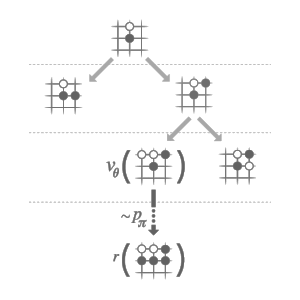
Go is a board game for two players that originated in China more than 2,500 years ago. The game is noted for being rich in strategy despite its relatively simple rules. According to chess master Edward Lasker: ‘The rules of Go are so elegant, organic, and rigorously logical that if intelligent life forms exist elsewhere in the universe, they almost certainly play Go.’
The two players alternately place black and white playing pieces, called ‘stones,’ on the vacant intersections (called ‘points’) of a grid of 19×19 lines. The object of the game is to use one’s stones to surround a larger total area of the board than the opponent.
read more »
Posted in Games, World |
Leave a Comment »
November 7, 2012

Scrapple [skrap-uhl], known by the Amish by the Pennsylvania Dutch name ‘pon haus,’ is a mush of pork scraps and trimmings combined with cornmeal and wheat flour, often buckwheat flour, and spices. The mush is formed into a semi-solid congealed loaf, and slices of the scrapple are then panfried to form a crust before serving.
Scraps of meat left over from butchering, not used or sold elsewhere, were made into scrapple to avoid waste. Scrapple is best known as a rural American food of the Mid-Atlantic states (Delaware, Maryland, New Jersey and Pennsylvania). It is found in supermarkets throughout the region in both fresh and frozen refrigerated cases. It is arguably the first pork food invented in America.
read more »
Posted in Food, World |
Leave a Comment »
November 7, 2012


A hyperforeignism is a non-standard language form resulting from an unsuccessful attempt to apply the rules of a foreign language to a loan word (for example, the application of the rules of one language to a word borrowed from another) or, occasionally, a word believed to be a loan word.
The result reflects ‘neither the… rules of English nor those of the language from which the word in question comes.’
read more »
Posted in Language, World |
Leave a Comment »
November 7, 2012
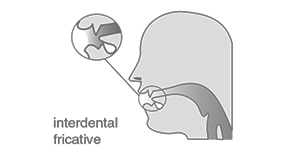
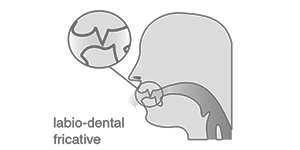
A fricative [frik-uh-tiv] is a consonant that is made when you squeeze air through a small hole or gap in your mouth. For example, the gaps in between your teeth can make fricative consonants. When the gaps in the teeth are used, these fricatives are called sibilants (e.g. ‘voiceless coronal sibilant,’ as in ‘sip’; ‘voiced coronal sibilant,’ as in ‘zip’). There are also non-sibilant fricatives (e.g. ‘voiceless labiodental fricative,’ as in ‘fine’; ‘voiced dental fricative,’ as in ‘that’).
A small number of languages including Navajo and Welsh have lateral fricatives (consonants, in which the airstream proceeds along the sides of the tongue, blocked by the tongue from going through the middle of the mouth). Many languages also have pseudo-fricatives (unvoiced vowels, e.g. ‘voiceless glottal transition,’ as in ‘hat’).
read more »
Posted in Language, World |
Leave a Comment »
November 6, 2012

There are numerous fallacious ideas and beliefs about the origins (or etymologies) of common English words. The word ‘fuck’ did not originate in Christianized Anglo-Saxon England as an acronym of ‘Fornication Under Consent of King’; nor did it originate as an acronym of ‘For Unlawful Carnal Knowledge,’ either as a sign posted above adulterers in the stocks, or as a criminal charge against members of the British Armed Forces; nor did it originate during the 15th-century Battle of Agincourt as a corruption of ‘pluck yew’ (an idiom falsely attributed to the English for drawing a longbow).
Modern English was not spoken until the 16th century, and words such as ‘fornication’ and ‘consent’ did not exist in any form in English until the influence of Anglo-Norman in the late 12th century. The earliest recorded use of ‘fuck’ in English comes from c. 1475, in the poem ‘Flen flyys,’ where it is spelled ‘fuccant’ (conjugated as if a Latin verb meaning ‘they fuck’). It is of Proto-Germanic origin, and is related to Dutch ‘fokken’ and Norwegian ‘fukka.’
read more »
Posted in Language, World |
Leave a Comment »
November 6, 2012
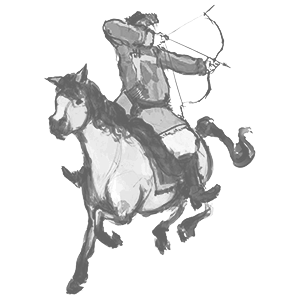
The Parthian [pahr-thee-uhn] shot was a military tactic made famous by the Parthians (an ancient Iranian empire). Their archers mounted on light horse, while retreating at a full gallop, would turn their bodies back to shoot at the pursuing enemy. The maneuver required superb equestrian skills, since the rider’s hands were occupied by his bow. As the stirrup had not been invented yet, the rider relied solely on pressure from his legs to guide his horse. The tactic was first employed by Eurasian nomads, including the Scythians, Huns, Turks, Magyars, and Mongols, before spreading to armies away from the Eurasian steppe, such as the Sassanid clibanariis and cataphract.
The Parthians famously used it to defeat the Roman general Crassus in the Battle of Carrhae. The phrase ‘parting shot’ has its origins from the Parthian shot. The first recorded usage was by John McCleod, surgeon on board the HMS Alceste contained in: ‘A narrative of a Voyage to the Yellow Sea’ (1818). The two phrases have rather similar phonetic soundings but are actually separately derived at different times. Although the Parthian archers of old have been famous for their shooting, the term ‘parthian shot’ was recorded for the first time in 1832 by Captain Mundy, ADC to Lord Combermere on a hunting trip in India.
Posted in Language, War, World |
1 Comment »
November 6, 2012

A wedge issue is a social issue, often of a divisive or controversial nature, which splits apart a population or political group. Wedge issues can be advertised or publicly aired in an attempt to weaken the unity of a population; with the goal of enticing polarized individuals to give support to an opponent. The use of wedge issues gives rise to wedge politics. Wedge issues are also known as ‘hot button’ or ‘third rail’ issues.
Political campaigns use wedge issues to exploit tension within a targeted population. A wedge issue may often be a point of internal dissent within an opposing party, which that party attempts to suppress or ignore discussing because it divides ‘the base.’ Typically, wedge issues have a cultural or populist theme, relating to matters such as crime, national security, sexuality (e.g. gay marriage), or race. A party may introduce a wedge issue to an opposing population, while aligning itself with the dissenting faction of the opposition.
read more »
Posted in Politics, Sex, World |
1 Comment »
November 5, 2012
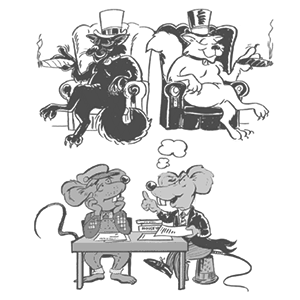
The Story of Mouseland was first told first by Canadian politician Clarence Gillis, and later and most famously by Tommy Douglas, leader of the Saskatchewan Co-operative Commonwealth Federation and, later, the New Democratic Party of Canada, both social democratic parties.
It was a political fable expressing the CCF’s view that the Canadian political system was flawed in offering voters a false dilemma: the choice of two parties, neither of which represented their interests. The mice voted in black cats, which represented the Progressive Conservative Party, and then they found out how hard life was. So they voted in the white cats, which symbolized the Liberal Party.
read more »
Posted in Humor, Politics, World |
Leave a Comment »
November 5, 2012
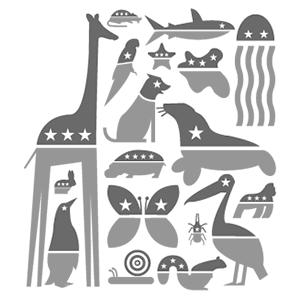
In political science, Duverger’s law is a principle which asserts that a plurality rule election system (voters vote for one candidate, and the candidate with the most votes wins) tends to favor a two-party system. This is one of two hypotheses proposed by French sociologist and politician Maurice Duverger, the second stating that ‘the double ballot majority system and proportional representation tend to multipartism.’
Duverger observed the effect and recorded it in several papers published in the 1950s and 1960s. In the course of further research, other political scientists began calling the effect a ‘law’ or principle.
read more »
Posted in Politics, World |
Leave a Comment »
October 30, 2012

Day of the Dead (‘Día de los Muertos’) is a Mexican holiday where people gather to pray for and remember friends and family members who have died. The celebration takes place on November 1, in connection with the Catholic holidays of All Saints’ Day and All Souls’ Day (November 2).
Traditions connected with the holiday include building private altars honoring the deceased using edible sugar skulls, marigolds, and the favorite foods and beverages of the departed and visiting graves with these as gifts. They also leave possessions of the deceased. Scholars trace the origins of the modern Mexican holiday to indigenous observances dating back hundreds of years and to an Aztec festival dedicated to the goddess Mictecacihuatl (Queen of the Underworld).
read more »
Posted in Death, Philosophy, World |
2 Comments »


 The Daily Omnivore