August 26, 2012

Botellón [boh-tay-yone] (Spanish for ‘big bottle’), called ‘litros’ in Cantabria, is ‘mass meeting of young people between 13 and 24 years, mainly in open areas of free access, to consume drinks previously purchased in shops, listen to music, and talk.’ It emerged as an alternative to bars, discos or clubs, but normally is a previous step before going to such locations.
Although the origins of botellón started in Andalucia during the 1980s as a way for Andalucian workers to be able to enjoy a cheap drink outdoors instead of conforming to the prices that were offered in the bars, young people and especially students adopted it in the 90s, appearing for the first time formally in the city of Cáceres, in connection with the riots caused by the advance of the closing time for the nightclubs. Today it is a standard practice among the nightlife youth and even regulated in many cities.
read more »
Posted in Drugs, Games, World |
Leave a Comment »
August 26, 2012

Social customs and laws on drinking alcohol in public vary significantly around the world. In some countries, such as the United States and the Muslim world, public drinking is almost universally condemned or outlawed, while in other countries, such as New Zealand and Japan, public drinking and public intoxication are legal (although local often authorities have power to pass bylaws declaring liquor-free zones).
Opponents of drinking in public argue that it encourages overconsumption of alcohol and binge drinking, rowdiness and violence, and propose that people should instead drink at private businesses such as public houses, bars or clubs, where a bartender may prevent overconsumption and where rowdiness can be better controlled by the fact that one is sitting down and security or bouncers may be present. Alternatively, one may drink at home.
read more »
Posted in Drugs, Politics, World |
Leave a Comment »
August 24, 2012

The chewing gum ban in Singapore was enacted in 1992 and revised in 2004 and 2010. It bans the import and sale of chewing gum in Singapore. Since 2004, only chewing gum of therapeutic value is allowed into Singapore following the Singapore–United States Free Trade Agreement. This law was created because people disposed of gum incorrectly by sticking it under places like chairs or tables.
A common misconception among citizens is that personal use of chewing gum is allowed in Singapore. However, according to the set of Regulations, ‘importing’ means to ‘bring or cause to be brought into Singapore by land, water or air from any place which is outside Singapore …’ any goods, even if they are not for purposes of trade. The set of Regulations also does not make any provisions for personal use of quantities to be brought into Singapore. Therefore, bringing chewing gum into Singapore, even small quantities for whatever purpose, is prohibited.
read more »
Posted in Food, Politics, World |
Leave a Comment »
August 24, 2012

Evgeny Morozov (b. 1984) is a Belarusian writer and researcher who studies political and social implications of technology. In 2009 he was chosen as a TED fellow where he spoke about how the Web influences civic engagement and regime stability in authoritarian, closed societies or in countries ‘in transition.’
Morozov expresses skepticism about the popular view that the Internet is helping to democratize authoritarian regimes, arguing that it could also be a powerful tool for engaging in mass surveillance, political repression, and spreading nationalist and extremist propaganda. He has also criticized what he calls ‘The Internet Freedom Agenda’ of the US government, finding it naive and even counterproductive to the very goal of promoting democracy through the Web.
read more »
Posted in Politics, Technology, World |
Leave a Comment »
August 24, 2012
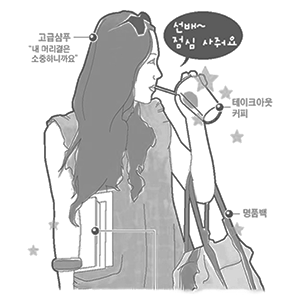
Doenjang girl is a satirical Korean expression for girls and young women who are addicted to luxury and vanity. Doenjang is a fermented soybean paste used to make sour of bean soup.
Instead of visiting an expensive foreign restaurant they will eat a three dollar bowl of soup and then go to Starbucks to purchase a six dollar latte, because carrying a Starbucks cup is considered posh. Likewise, doejang girls carry around shopping bags from Chanel and other high end stores to look as if they were shopping there.
Posted in Money, World |
Leave a Comment »
August 24, 2012

Voina (literally ‘War’) is a Russian street-art group known for their provocative and politically charged works of performance art. The group has had more than sixty members, including former and current students of the Rodchenko Moscow School of Photography, Moscow State University, and Tartu University. However, the group does not cooperate with state or private institutions, and is not supported by any Russian curators or gallerists.
The activities of Voina have ranged from street protests, symbolic pranks in public places, and performance-art happenings, to vandalism and destruction of public property. More than a dozen criminal cases have been brought against the group. According to its members, Voina has no formal leadership, and all members are considered equal. Conceptions are worked out by Oleg Vorotnikov (a.k.a. ‘Vor,’ ‘Thief ‘– the chief ideologist), Natalia Sokol (a.k.a. ‘Kozlyonok,’ ‘Goatling’ – the chief coordinator), Leonid Nikolayev (a.k.a. ‘Crazy Lenya’) and Alexei Plutser-Sarno (the chief media artist, the author of the group’s media art and texts).
read more »
Posted in Art, Politics, World |
Leave a Comment »
August 23, 2012

Waze is a free GPS application featuring turn-by-turn navigation, developed by the Israeli start-up Waze Mobile for mobile phones. Waze differs from traditional GPS navigation software as it is a community-driven application and learns from users’ driving times to provide routing and real-time traffic updates.
Additionally, people can report accidents, traffic jams, speed traps, police and can update roads, landmarks, house numbers, etc. Waze also helps users find the cheapest, closest gas station around them or along their route. Waze is available for download and use anywhere in the world, but some countries have a full basemap, whereas other countries still require users to record the roads and edit the maps.
Posted in Games, Technology, World |
Leave a Comment »
August 23, 2012

Sprites are large scale electrical discharges above the earth that are still not totally understood. They occur high above thunderstorm clouds (cumulonimbus), giving rise to a quite varied range of visual shapes flickering in the night sky. They are triggered by the discharges of positive lightning between an underlying thundercloud and the ground. Sprites appear as luminous reddish-orange flashes.
Sporadic visual reports of sprites go back at least to 1886, but they were first photographed in 1989 by scientists from the University of Minnesota. Sprites are sometimes inaccurately called upper-atmospheric lightning. However, sprites are cold plasma phenomena that lack the hot channel temperatures of tropospheric (lower-atmospheric) lightning, so they are more akin to fluorescent tube discharges than to lightning discharges. Several years after their discovery they were named sprites (air spirits) after their elusive nature.
read more »
Posted in Science, World |
Leave a Comment »
August 23, 2012

A hot dog is a sausage served in a sliced bun. It is very often garnished with mustard, ketchup, onions, mayonnaise, relish, cheese, chili, and/or sauerkraut. Claims about hot dog invention are difficult to assess, as stories assert the creation of the sausage, the placing of the sausage (or another kind of sausage) on bread or a bun as finger food, the popularization of the existing dish, or the application of the name ‘hot dog’ to a sausage and bun combination most commonly used with ketchup or mustard and sometimes relish.
The word frankfurter comes from Frankfurt, Germany, where pork sausages served in a bun similar to hot dogs originated. These sausages, Frankfurter Würstchen (‘little sausage’), were known since the 13th century and given to the people on the event of imperial coronations, starting with the coronation of Maximilian II, Holy Roman Emperor as King. Wiener refers to Vienna, Austria, whose German name is ‘Wien,’ home to a sausage made of a mixture of pork and beef (the word ‘hamburger’ also derives from a German-speaking city, Hamburg).
read more »
Posted in Food, Language, World |
Leave a Comment »
August 22, 2012

The Sinclair C5 is a battery electric vehicle invented by British entrepreneur Sir Clive Sinclair in the United Kingdom in 1985. The vehicle is a battery-assisted tricycle steered by a handlebar beneath the driver’s knees. Powered operation is possible making it unnecessary for the driver to pedal.
Its top speed of 15 miles per hour (24 km/h), is the fastest allowed in the UK without a driving licence. It is powered by a 200w or 250W motor. It sold for £399 plus £29 for delivery. It became an object of media and popular ridicule during 1980s Britain and was a commercial disaster, selling only around 17,000 units, although according to Sinclair, it was ‘the best selling electric vehicle’ until 2011 when the Nissan Leaf had sold over 20,000 units.
read more »
Posted in Money, Technology, World |
Leave a Comment »
August 13, 2012
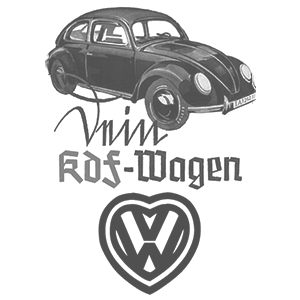
‘Strength through Joy‘ (‘Kraft durch Freude,’ KdF) was a large state-controlled leisure organization in Nazi Germany. It was a part of the German Labor Front (‘Deutsche Arbeitsfront,’ DAF), the national German labor organization at that time. Set up as a tool to promote the advantages of National Socialism to the people, it soon became the world’s largest tourism operator of the 1930s.
KdF was supposed to bridge the class divide by making middle-class leisure activities available to the masses. This was underscored by having cruises with passengers of mixed classes and having them, regardless of social status, draw lots for allocation of cabins. Another less ideological goal was to boost the German economy by stimulating the tourist industry out of its slump from the 1920s.
read more »
Posted in Money, War, World |
Leave a Comment »
August 13, 2012

Oi! is a working class subgenre of punk rock that originated in the UK in the late 1970s. The music and its associated subculture had the goal of bringing together punks, skinheads and other working-class youths (sometimes called ‘herberts’).
The Oi! movement was partly a response to the perception that many participants in the early punk rock scene were, in the words of The Business guitarist Steve Kent, ‘trendy university people using long words, trying to be artistic…and losing touch.’ André Schlesinger, singer of The Press, said, ‘Oi shares many similarities with folk music, besides its often simple musical structure; quaint in some respects and crude in others, not to mention brutally honest, it usually tells a story based in truth.’
read more »
Posted in Art, Politics, World |
Leave a Comment »


 The Daily Omnivore