March 19, 2012


Kleptocracy (‘rule by thieves’) is a form of political and government corruption where the government exists to increase the personal wealth and political power of its officials and the ruling class at the expense of the wider population, often without pretense of honest service. This type of government corruption is often achieved by the embezzlement of state funds.
Kleptocracy is most common in third world countries where the economy (often as a legacy of colonialism) is dominated by resource extraction. Such incomes constitute a form of economic rent and are therefore easier to siphon off without causing the income itself to decrease (for example, due to capital flight as investors pull out to escape the high taxes levied by the kleptocrats).
read more »
Posted in Money, Politics, World |
1 Comment »
March 19, 2012

Molvanîa (subtitled ‘A Land Untouched by Modern Dentistry’) is a book parodying travel guidebooks. The guide describes the fictional country Molvanîa, in Eastern Europe, a nation described as ‘the birthplace of the whooping cough’ and ‘owner of Europe’s oldest nuclear reactor.’
It was created by Australians Tom Gleisner, Santo Cilauro and Rob Sitch (of ‘The D-Generation,’ a popular and influential Australian TV sketch comedy show). The book became a surprise success after its initial publication in Australia, sparking a bidding war for the international publication rights. Qantas has even run the half-hour video segment produced in association with the book on its international flights.
read more »
Posted in Humor, Politics, World |
Leave a Comment »
March 19, 2012

Absurdistan is a term sometimes used to satirically describe a country in which absurdity is the norm, especially in its public authorities and government. The expression was originally used by Eastern bloc dissidents to refer to parts (or all) of the Soviet Union and its satellite states. Today, the term is most often reserved for Russia and states formerly in the Soviet sphere of influence which have retained Soviet-style authoritarian governments, such as Azerbaijan, Uzbekistan, Turkmenistan, or Belarus.
The first printed use of the word, in any language, can be found in a 1971 German monthly periodical ‘Politische Studien.’ Later, in Czech, the term was often used by the dissident and later president Václav Havel. This seems to indicate that use of the term began during perestroika (restructuring of the Soviet economy). The first recorded printed use of the term in English was in ‘Spectator’ in 1989, in an article about Czechoslovakia (Czechoslovakians have taken to calling their country ‘Absurdistan’ because everyday life there has long resembled the ‘Theatre of the Absurd’).
Posted in Humor, Politics, World |
Leave a Comment »
March 18, 2012

The Space Traders is a science fiction short story by Derrick Bell (1930 – 2011), the first tenured African-American Professor of Law at Harvard Law School, and one of the originators of critical race theory (which argues that racism is engrained in the fabric and system of the American society). Published in 1992, its subject is the arrival of apparently benevolent and powerful extraterrestrials that offer the United States a wide range of benefits such as gold, clean nuclear power and other technological advances, in exchange for one thing: handing over all black people in the U.S. to the aliens. The story posits that the people and political establishment of the U.S. are willing to make this deal, passing a constitutional amendment to enable it.
‘The Space Traders’ was adapted for television in 1994 by director Reginald Hudlin and writer Trey Ellis. It aired on HBO as the leading segment of a three-part television anthology entitled ‘Cosmic Slop,’ which focused on minority-centric science fiction. In the run-up to the 2012 U.S. presidential election, the story became the subject of political controversy. A review of the TV adaptation on the conservative news site Breitbart.com argued that it ‘captures the stupidity, paranoia, and shameless race-hustling of the people that Obama embraces.’ In ‘The Atlantic,’ Conor Friedersdorf replied by arguing that the story’s critics ‘would do well to acknowledge that for many decades of American history, including years during Professor Bell’s life, a majority of Americans would have voted in favor of trading blacks for fantastic wealth, unlimited energy, and an end to pollutants.’
Posted in Art, Politics, World |
Leave a Comment »
March 18, 2012

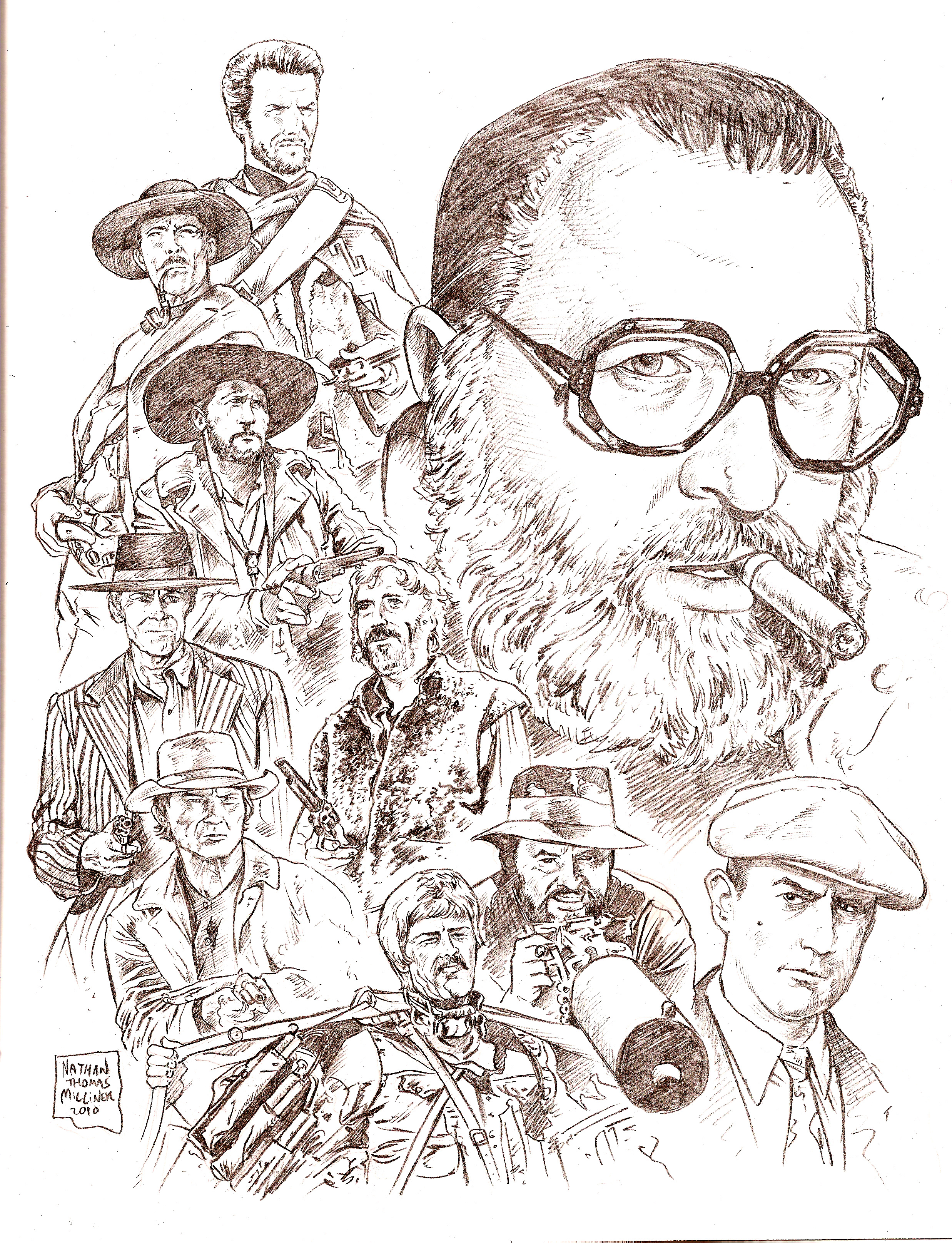
Sergio Leone [lee-oh-nee] (1929 – 1989) was an Italian film director, producer and screenwriter most associated with the ‘Spaghetti Western’ genre. Leone’s film-making style includes juxtaposing extreme close-up shots with lengthy long shots. His movies include ‘The Last Days of Pompeii,’ ‘The Colossus of Rhodes,’ the Dollars Trilogy (‘A Fistful of Dollars,’ ‘For a Few Dollars More,’ and ‘The Good, the Bad and the Ugly’), Once ‘Upon a Time in the West,’ ‘Duck, You Sucker!’, and ‘Once Upon a Time in America.’
Born in Rome, Leone was the son of the cinema pioneer Vincenzo Leone (known as director Roberto Roberti) and the silent film actress Edvige Valcarenghi (Bice Waleran). During his schooldays, Leone was a classmate of his later musical collaborator Ennio Morricone for a time. After watching his father work on film sets, Leone began his own career in the film industry at the age of 18 after dropping out of law studies at the university.
read more »
Posted in Art, Money, World |
Leave a Comment »
March 16, 2012

Vale tudo [val-ay / too-doe] (Portuguese: ‘anything goes’) are full-contact unarmed combat events, with a limited number of rules, that became popular in Brazil during the 20th century. While Vale Tudo uses techniques from many martial art styles, making it similar to modern mixed martial arts competitions, it is a distinct style in its own right. Fighting sideshows, termed ‘Vale Tudo,’ became popular in Brazilian circuses during the 1920s.
Examples of such bouts were described in the ‘Japanese-American Courier’ in 1928: ‘One report from São Paulo declares that Jiu Jitsu is truly an art and that in an interesting exhibition in the side tent to the big circus a Bahian of monstrous dimensions met his waterloo at the hands of a diminutive Japanese wrestler. The man was an expert at capoeira, an old South American style of fighting, but after putting the Japanese on his back and trying to kick his head … the little oriental by the use of a Jiu Jitsu hold threw the Bahian and after a short struggle he was found sitting on the silent frame of the massive opponent.
read more »
Posted in Games, Money, World |
Leave a Comment »
March 16, 2012

The Gracie challenge was an open invitation issued by some members of the Brazilian Gracie family, known for their Brazilian Jiu-jitsu (BJJ) mastery, to martial artists of other styles to fight them in a Vale tudo (‘anything goes’) match. A precursor to the Ultimate Fighting Championship (UFC), the purpose of these challenges were to prove the effectiveness of the Gracie style of BJJ.
The Gracie challenge was first issued by Carlos Gracie in the 1920s to promote and develop the Gracie’s style of Brazilian Jiu-Jitsu, and as an attempt to show that it was superior to other styles of martial arts. The matches typically featured a smaller Gracie versus a larger and/or more athletic looking opponent, and became increasingly popular. Carlos and later his brother Hélio Gracie and both of these men’s sons defeated martial artists of many different styles such as boxing, judo, karate, and wrestling, while experiencing few losses.
Posted in Games, World |
1 Comment »
March 15, 2012

Boy racers is a UK term referring to those who ‘cruise’ around in vehicles modified with loud exhausts and stereos, or modified body kits. This behavior is frowned upon by members of the public irritated by the noise and the criminal behavior associated with it, including violence by skinhead and Neo-Nazi ‘boy racers.’ Responses to the boy racer problem range from laws prohibiting the antisocial activities they engage in to vigilante actions such as spraying expander foam, a common building supply, into their exhausts.
In Australia, the terms ‘hoon’ and ‘revhead’ are used for people who drive in an anti-social or dangerous manner. However, ‘revhead’ may refer to any motor enthusiast, while ‘hoon’ is always pejorative. Americans often use the term ‘rice burner,’ ‘rice rocket,’ or ‘ricer’ to describe the boy racer concept, since most of the vehicles are of Asian manufacture. There’s also the less popular term ‘wheat burner,’ which is the same thing, but with a domestic American model such as a Ford Focus, or Chevrolet Cavalier. A ‘krauter’ is a German model, usually a Volkswagen Jetta or Volkswagen Golf. The latter two categories are also sometimes referred to as ‘rice eaters,’ since their competition in the tuner scene is usually the more popular Asian models.
Posted in Language, Politics, World |
Leave a Comment »
March 15, 2012


The term young fogey was humorously applied, in British context, to some younger-generation, rather buttoned-down writers and journalists, such as Simon Heffer, Charles Moore and, for a while, A. N. Wilson. The term is attributed to Alan Watkins writing in 1984 in ‘The Spectator.’ Young fogey is still used to describe conservative young men (aged approximately between 15 and 40) who dress in a vintage style (usually that of the 1920s-1950s, also known as the ‘Brideshead’ look – after the influence of ‘Brideshead Revisited’, by Evelyn Waugh), and who tend towards erudite, conservative cultural pursuits.
The young fogey is sometimes confused with the ‘Sloane Ranger’ (a stereotype in London of young, upper class or upper-middle-class people who live near Sloane Square in Chelsea), but this is incorrect; whilst there is some crossover between the two in clothing styles, the young fogey tends toward reserved, intellectual and cultured pursuits, and avoids heartiness. The young-fogey style of dress also has some surface similarity with the preppy style, but it is essentially an anglo-centric style, restricted to the United Kingdom and the more anglicized areas of the British Commonwealth such as Australia and New Zealand.
Posted in Humor, Money, World |
1 Comment »
March 14, 2012

The term Sloane Ranger refers to a stereotype in the UK of young, upper class or upper-middle-class women, or men who share distinctive and common lifestyle traits. The term is a punning combination of ‘Sloane Square,’ a location in Chelsea, London famed for the wealth of residents and frequenters, and the television Westerns character ‘The Lone Ranger.’
Initially the term was used mostly in reference to women, a particular archetype being Lady Diana Spencer before marrying The Prince of Wales, when she was an aristocrat from the Spencer family. However, the term now usually includes men. Male Sloanes have also been referred to as ‘Ra Ra Ruperts’ (or, simply, ‘Rah’ for short) and ‘Hooray Henrys.’ The term Sloane Ranger has similar related terms in other countries: in France they are called ‘BCBG’ (‘bon chic, bon genre’ – ‘good style’ ‘good attitude’). The Preppy of the United States can appear similar to the Sloane Ranger at first glance, but in fact they are different in their ideologies and aspirations.
read more »
Posted in Money, Politics, World |
Leave a Comment »
March 14, 2012
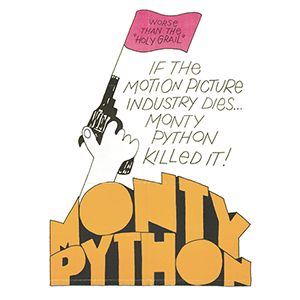
And Now for Something Completely Different is a film spin-off from the television comedy series ‘Monty Python’s Flying Circus’ featuring favorite sketches from the first two seasons. The title was used as a catchphrase in the television show. The film, released in 1971, consists of 90 minutes of the best sketches seen in the first two series of the television show. The sketches were remade on film without an audience, and were intended for an American audience which had not yet seen the series. The announcer (John Cleese) uses the phrase ‘and now for something completely different’ several times during the film, in situations such as being roasted on a spit and lying on top of the desk in a small, pink bikini.
This was the Pythons’ first feature film, of sketches re-shot on an extremely low budget (and often slightly edited) for cinema release. Some famous sketches included are: the ‘Dead Parrot’ sketch, ‘The Lumberjack Song,’ ‘Upperclass Twits,’ ‘Hell’s Grannies,’ and the ‘Nudge Nudge’ sketch. Financed by Playboy’s UK executive Victor Lownes, it was intended as a way of breaking Monty Python in America, and although it was ultimately unsuccessful in this, the film did good business in the UK. The group did not consider the film a success, but it enjoys a cult following today.
read more »
Posted in Art, Humor, World |
1 Comment »
March 14, 2012

In futures studies and the history of technology, accelerating change is a perceived increase in the rate of technological (and sometimes social and cultural) progress throughout history, which may suggest faster and more profound change in the future. While many have suggested accelerating change, the popularity of this theory in modern times is closely associated with various advocates of the technological singularity (the emergence of greater-than-human intelligence through technological means), such as Vernor Vinge and Ray Kurzweil.
In 1938, Buckminster Fuller introduced the word ephemeralization to describe the trends of ‘doing more with less’ in chemistry, health and other areas of industrial development. In 1946, Fuller published a chart of the discoveries of the chemical elements over time to highlight the development of accelerating acceleration in human knowledge acquisition. In 1958, Stanisław Ulam wrote in reference to a conversation with John von Neumann: One conversation centered on the ever accelerating progress of technology and changes in the mode of human life, which gives the appearance of approaching some essential singularity in the history of the race beyond which human affairs, as we know them, could not continue.’
read more »
Posted in Science, Technology, World |
Leave a Comment »



 The Daily Omnivore