January 2, 2012

Jo-ha-kyū is a concept of modulation and movement applied in a wide variety of traditional Japanese arts. Roughly translated to ‘beginning, break, rapid,’ it essentially means that all actions or efforts should begin slowly, speed up, and then end swiftly. This concept is applied to elements of the Japanese tea ceremony, kendō and other martial arts, dramatic structure in Japanese theater and film, and traditional collaborative linked verse forms. The concept originated in court music, specifically in the ways in which elements of the music could be distinguished and described. Though eventually incorporated into a number of disciplines, it was most famously adapted, and thoroughly analyzed and discussed by the great playwright Zeami, who viewed it as a universal concept applying to the patterns of movement of all things.
Zeami described the first act as ‘Love’; the play opens auspiciously, using gentle themes and pleasant music to draw in the attention of the audience. The second act is described as ‘Warriors and Battles.’ Though it need not contain actual battle, it is generally typified by heightened tempo and intensity of plot. The third act, the climax of the entire play, is typified by pathos and tragedy. The plot achieves its dramatic climax. The fourth is a michiyuki (journey), which eases out of the intense drama of the climactic act, and often consists primarily of song and dance rather than dialogue and plot. The fifth act, then, is a rapid conclusion. All loose ends are tied up, and the play returns to an auspicious setting.
Posted in Art, Language, World |
Leave a Comment »
January 1, 2012
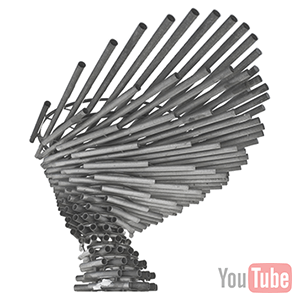
The Singing Ringing Tree is a wind powered sound sculpture resembling a tree set in the landscape of the Pennine mountain range overlooking Burnley, in Lancashire, England. Completed in 2006, it is part of the series of four sculptures within the Panopticons arts and regeneration project created by the East Lancashire Environmental Arts Network (ELEAN). The project was set up to erect a series of 21st-century landmarks, or Panopticons (structures providing a comprehensive view), across East Lancashire as symbols of the renaissance of the area.
Designed by architects Mike Tonkin and Anna Liu of Tonkin Liu, the Singing Ringing Tree is a 3 meter tall construction comprising pipes of galvanised steel which harness the energy of the wind to produce a slightly discordant and penetrating choral sound covering a range of several octaves. Some of the pipes are primarily structural and aesthetic elements, while others have been cut across their width enabling the sound. The harmonic and singing qualities of the tree were produced by tuning the pipes according to their length by adding holes to the underside of each.
Posted in Art, World |
Leave a Comment »
January 1, 2012

STEIM (STudio for Electro Instrumental Music) is a center for research and development of new musical instruments in the electronic performing arts, located in Amsterdam. Electronic music in STEIM’s context is always strongly related to the physical and direct actions of a musician. In this tradition, STEIM supports artists in residence such as composers and performers, but also multimedia and video artists to develop setups which allow for improvisation and performance with individually designed technology. STEIM was founded in 1969 by a s group of Dutch composers seeking the reformation of Amsterdam’s feudal music structures; they enforced the first public fundings for experimental and improvised electronic music in Holland. Its premises include three studios, a concert hall, hardware and software workshops, offices, and a guesthouse for artists in residence.
For most of STEIM’s instrumental developments ‘Touch is crucial in communicating with the new electronic performance art technologies.’ As with traditional musical instruments, the physical touch of a musician contains essential aesthetic factors. These qualities tend to get lost in the non-realtime use of studio technology, in which the process of music production is distant and abstract. The Touch philosophy — which can be considered as STEIM’s interpretation of the widely used term interactivity — theoretically subsumes several stages of STEIM’s developments, from the analog touchable ‘Crackle’ surfaces in the 70s to today’s experimental Gestural MIDI Interfaces.
Posted in Art, Technology, World |
Leave a Comment »
December 31, 2011

Some governments around the world have passed measures to phase out incandescent light bulbs for general lighting. The aim is to encourage the use and technological development of more energy-efficient lighting alternatives, such as compact fluorescent lamp (CFLs) and LED lamps. Brazil and Venezuela started to phase them out in 2005, and the European Union, Switzerland, and Australia started to phase them out in 2009. Likewise, other nations are planning scheduled phase-outs: Argentina, Russia, and Canada in 2012, and the United States and Malaysia in 2014.
There has been consumer resistance to phasing out of incandescent lamps, preferring the quality of light produced from incandescents, the libertarian political theory of free markets as trumping ‘national interest’ as a reason for regulation, and environmental concerns about mercury contamination with CFLs. Formerly, instant availability of light was an issue for CFLs, but newer CFLs have an Instant On feature, as well as a wide variety of correlated color temperatures. CFLs and LEDs labeled for dimmer control are also becoming available, although typically at higher cost. The phase out has been referred to as ‘light bulb socialism.’ The consumer preference for light bulbs in the EU is for incandescent bulbs, with many complaining about what was described as the ugliness or the cold, flat, unnatural, dull light emanating from CFLs. Bulk purchasing of incandescent bulbs was reported ahead of the EU lightbulb ban.
Posted in Politics, Technology, World |
Leave a Comment »
December 24, 2011


Word Lens is an augmented reality translation application for the iPhone from Quest Visual. It uses the built-in phone camera to identify text, such as a sign or a menu, in one language and have the words shown translated into another language. The words are displayed in the original context, on the original background, without connection to the internet. When it was released in 2010 only English and Spanish were supported. Word Lens is best used on clearly printed text and was not designed to translate handwritten or stylized fonts.
This application was created to help tourists understand signs and menus. The application was not designed to read books, but journalist Ben Rooney managed to understand a page from ‘Harry Potter y el Prisionero de Azkaban.’ The Google Goggles application for Android and iPhone also has the capability to translate text or identify objects in an image, but it requires users to take a picture with their phones, and an active internet connection. Word Lens does it on the fly, meaning it’s interpreting frames in video, almost in real time.
Posted in Language, Technology, World |
Leave a Comment »
December 17, 2011

A cat café is a theme café whose attraction is cats that can be watched and played with. Patrons pay a cover fee, generally hourly, and thus cat cafés can be seen as a form of supervised indoor pet rental. The world’s first cat café opened in Taiwan in 1998. In Japan, the first cat café opened in Osaka in 2004. The popularity of cat cafés in Japan is attributed to many apartments forbidding pets, and to cats providing relaxing companionship in what may otherwise be a stressful and lonesome urban life; other forms of pet rental are also common in Japan.
There are various cat cafés. Some cat cafés feature specific categories of cat such as black cats, fat cats, rare breed cats, or ex-stray cats. A cat café must obtain a license and comply with the strict requirements and regulations of the Animal Treatment/Protection Law. Japanese cat cafés feature strict rules to ensure cleanliness and animal welfare, in particular seeking to ensure that the cats are not disturbed by excessive and unwanted attention, such as by young children or when sleeping. Many cat cafés also seek to raise awareness of cat welfare issues, such as abandoned and stray cats.
Posted in Food, World |
Leave a Comment »
December 17, 2011

Yoshitomo Nara (b. 1959) is a Japanese artist. He lives and works in Tokyo, and first came to the fore of the art world during Japan’s Pop art movement in the 1990s.
The subject matter of his sculptures and paintings is deceptively simple: most works depict one seemingly innocuous subject (often pastel-hued children and animals drawn with confident, cartoonish lines) with little or no background. His artwork was featured in the album titled ‘Suspended Animation’ by experimental band Fantômas.
read more »
Posted in Art, World |
Leave a Comment »
December 15, 2011

Quadrupel [kwo-droo-puhl] is the brand name of a strong seasonal beer La Trappe Quadrupel brewed by De Koningshoeven Brewery in the Netherlands, the only Trappist brewing abbey not in Belgium. In other countries, particularly the United States, ‘quadrupel’ or ‘quad’ may refer to an especially strong style of dark ale, with a characteristic spicy, ripe fruit flavor.
A quadrupel is intended to be stronger than a Tripel, so the ABV strength will be 10% or more. Beyond that, there is little agreement on the status of Quadrupel as a style. Beer writer Tim Webb notes that similar beers are also called ‘Grand Cru’ (French: ‘Great Growth’) in Belgium and Holland, a term borrowed from winemaking.
Posted in Drugs, Food, World |
Leave a Comment »
December 15, 2011


A Trappist [trap-ist] beer is a beer brewed by or under control of Trappist monks. There are a total of 174 Trappist monasteries worldwide; only seven (six in Belgium, one in the Netherlands) produce Trappist beer and are authorized to label their beers with the Authentic Trappist Product logo that indicates a compliance to the various rules of the International Trappist Association.
The Trappist order originated in the Cistercian monastery of La Trappe, France. Various Cistercian congregations existed for many years, and by 1664 the Abbot of La Trappe felt that the Cistercians were becoming too liberal. He introduced strict new rules in the abbey and the Strict Observance was born. Since this time, many of the rules have been relaxed. However, a fundamental tenet, that monasteries should be self-supporting, is still maintained by these groups.
read more »
Posted in Food, Philosophy, World |
Leave a Comment »
December 14, 2011

Train surfing is riding or climbing on the outside of a moving train. This activity is illegal in many countries, but is a common and usual way to ride trains in India, Indonesia, and South Africa. Individuals may train surf to avoid the cost of a ticket or as a recreational activity. With the creation of the internet, the practice of filming the act and posting online videos of it is on the increase worldwide.
The London Underground is now running an advertising campaign against ‘tube surfing.’ The advertisements now at most underground stations show a female figure with one arm and the caption ‘she was lucky’ next to it. In Germany, the practice was made popular on TV in the 1990s. There it was called ‘S-Bahn Surfing.’ Slowly, the former train surfing culture changed and integrated into the German graffiti culture. The phenomenon was forgotten until the millennium, but in 2005 it was rediscovered by a group from Frankfurt. The leader of the crew who calls himself ‘the trainrider’ famously surfed the InterCityExpress, the fastest train in Germany.
Posted in Death, Games, World |
Leave a Comment »
December 14, 2011

Insect fighting is an activity involving insects (and sometimes, arachnids, centipedes, millipedes and mollusks). It is practiced in areas in China, Japan, Vietnam, and Thailand. Cricket fighting is a traditional Chinese pastime that dates back to the Tang Dynasty (618-907). Originally nurtured by emperors, it was later popularized by commoners. It is also a casual activity for youth in western countries and is known colloquially as ‘bugfighting.’
Some of the most popular species used are the Stag Beetle, Rhinoceros Beetle, Kabutomushi, Jerusalem Cricket, and Goliath Beetle, as their sheer size and jumping ability make them formidable opponents. They are trained by their owners to become stronger and more aggressive. With beetles, a small noisemaker is used that duplicates the female’s mating call (fighting beetles are male). Getting beetles to fight requires patience and is much different than other types of animal fighting. The loser is pushed onto its back by the winner, pushed off of a tree limb, or a predetermined area, or is killed.
Posted in Games, Humor, World |
Leave a Comment »
December 14, 2011
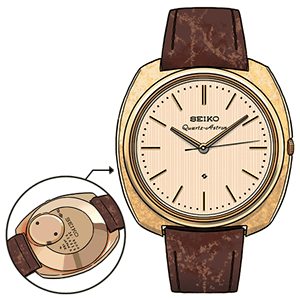
The Quartz Crisis is a term used in the watchmaking industry to refer to the economic upheavals caused by the advent of quartz watches in the 1970s and early 1980s, which largely replaced mechanical watches. It caused a decline of the Swiss watchmaking industry, which chose to remain focused on traditional mechanical watches, while the majority of world watch production shifted to Asian companies who embraced the new technology.
During World War II, Swiss neutrality permitted the watch industry to continue making consumer time keeping apparatus while the major nations of the world shifted timing apparatus production to timing devices for military ordnance. As a result, the Swiss watch Industry enjoyed a well-protected monopoly. The industry prospered in the absence of any real competition. Thus, prior to the 1970s, the Swiss watch industry had 50% of the world watch market.
read more »
Posted in Money, Technology, World |
Leave a Comment »


 The Daily Omnivore