June 30, 2011

The Other World Kingdom (OWK) was a large, commercial BDSM and femdom resort and micronation, which opened in 1996 using the buildings and grounds of a 16th century chateau located in Czech Republic. Although it was not recognized by any other country, it maintained its own currency, passports, police force, courts, state flag, and state hymn. The OWK was a matriarchy and the state’s goal was ‘to get as many male creatures under the unlimited rule of Superior Women on as much territory as possible.’
The OWK was ruled by Her Royal Majesty Queen Patricia I, an absolute monarch. The site was 7.4 acres with several buildings and a small lake. The main building was the Queen’s Palace, which was the residence of the monarch, and contained a banqueting hall, library, throne room, torture chamber, schoolroom, gym, and extensive basement prison, the cells of which could be rented.
read more »
Posted in Games, Sex, World |
Leave a Comment »
June 29, 2011
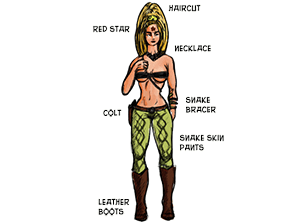
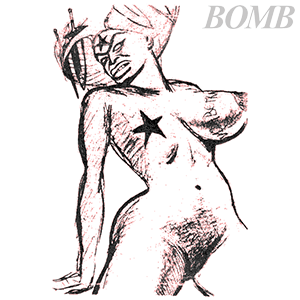
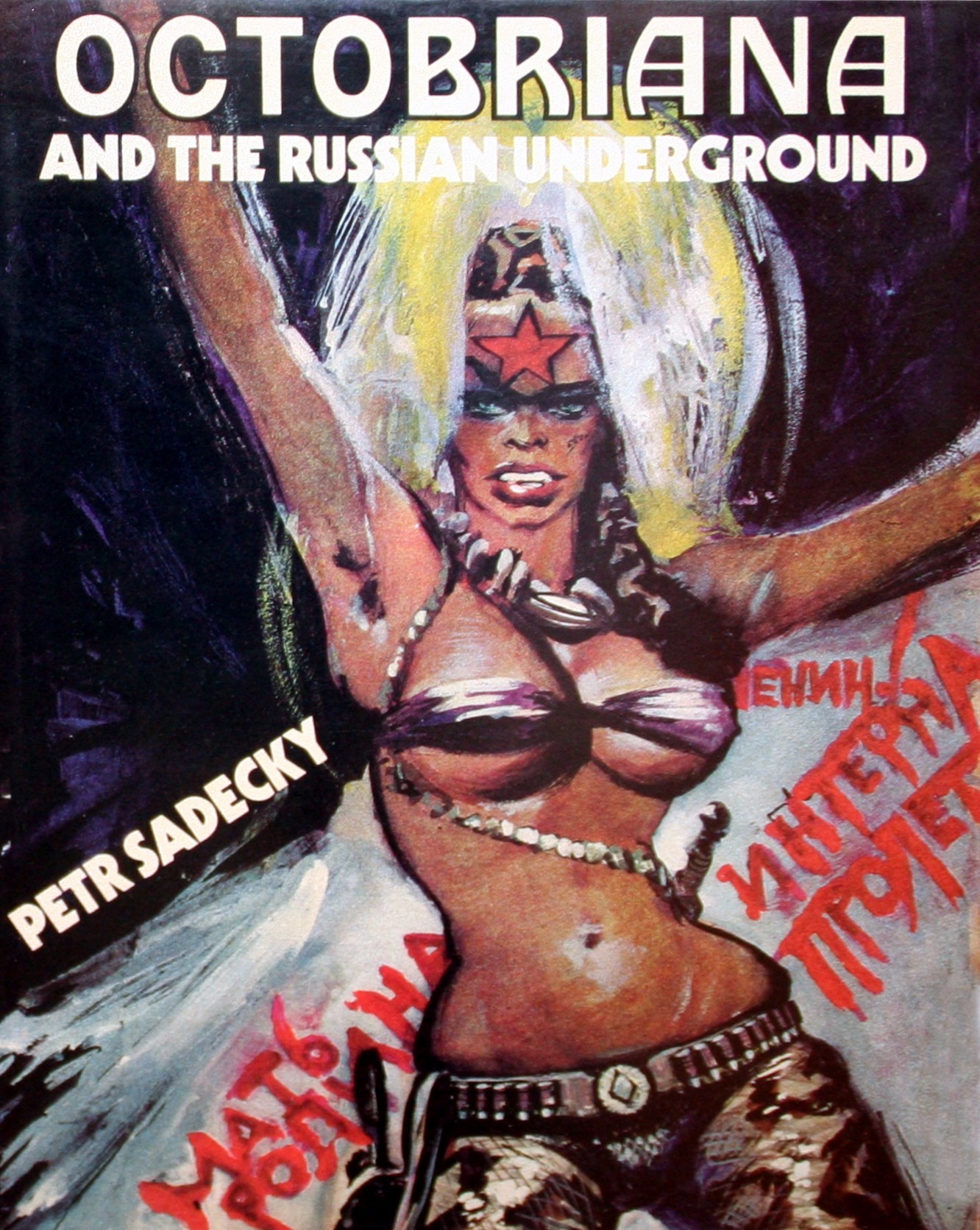
Octobriana is a comic superheroine originating from literary hoax by Czech artist Petr Sadecký. Sadecký wrote ‘Octobriana and the Russian Underground,’ a book that told the story of Octobriana, purported to be the creation of a group of Russian dissident artists calling themselves Progressive Political Pornography (PPP) in the 1960s. Octobriana was actually Sadecký’s own creation. While still in Prague, he enlisted the help of two Czech artists, Bohumil Konečný and Zdeněk Burian, in creating a comic centering around the character of ‘Amazona.’ Sadecký told the two that he had a buyer interested in the comic, and they worked together on writing and illustrating it.
However, Sadecký betrayed his friends by stealing the artwork and escaping to the West, where, in his efforts to market the Amazona comic, he changed the dialog, drew a red star on the character’s forehead, changed her name to Octobriana, and gave her a fake political backstory. Burian and Konečný sued Sadecký in a West German court, winning the case but never recovering all their stolen artwork. Since Octobriana is still widely thought to be the product of dissident cells within the U.S.S.R., she is not copyrighted, and has appeared in a variety of artistic incarnations.
Posted in Art, Money, World |
Leave a Comment »
June 29, 2011

Samizdat [sah-miz-daht] (Russian for ‘self-published’) was a key form of dissident activity across the Soviet bloc in which individuals reproduced censored publications by hand and passed the documents from reader to reader.
This grassroots practice to evade officially-imposed censorship was fraught with danger as harsh punishments were meted out to people caught possessing or copying censored materials.
read more »
Posted in Language, Politics, World |
Leave a Comment »
June 28, 2011

Kombu [kohm-boo], called dashima in Korean and haidai in Chinese, is the Japanse word for edible kelp widely eaten in East Asia. Most kombu is extensively cultivated on ropes in the seas of Japan and Korea.
Over 90 percent of Japanese kombu is cultivated, mostly in Hokkaidō, but also as far south as the Seto Inland Sea.
read more »
Posted in Food, Health, World |
Leave a Comment »
June 28, 2011

Technogaianism [tek-noh-guy-uh-niz-uhm] is a ‘bright green’ environmentalist stance of active support for the research, development and use of emerging and future technologies to help restore Earth’s environment. Technogaians argue that developing safe, clean, alternative technology should be an important goal of environmentalists.
This point of view is different from the default position of radical environmentalists and a common opinion that all technology necessarily degrades the environment, and that environmental restoration can therefore occur only with reduced reliance on technology. Technogaians argue that technology gets cleaner and more efficient with time.
read more »
Posted in Science, Technology, World |
Leave a Comment »
June 28, 2011
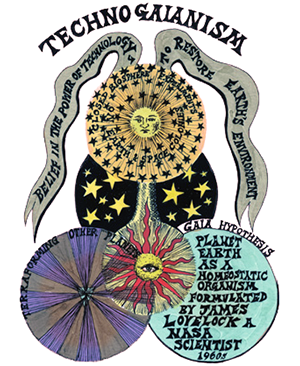

Bright green environmentalism is an ideology based on the belief that the convergence of technological change and social innovation provides the most successful path to sustainable development.
The term, first coined in 2003 by writer Alex Steffen, refers to the fast-growing new wing of environmentalism, distinct from traditional forms. Bright green environmentalism aims to provide prosperity in an ecologically sustainable way through the use of new technologies and improved design.
read more »
Posted in Science, Technology, World |
1 Comment »
June 27, 2011

‘He who does not work, neither shall he eat‘ is a Biblical aphorism derived from Paul’s letter to the Thessalonians, which became a slogan for new colonies and socialist societies. The slogan was used by Captain John Smith in setting up the English colony of Jamestown, Virginia after his experiment with the common store system, or socialism, was abandoned. According to Soviet leader Vladimir Lenin, it is the first principle of socialism. The phrase is mentioned in his 1917 work, ‘State and Revolution.’ Through this slogan Lenin explains that in socialist states only productive individuals would be allowed access to the articles of consumption.
This is not really directed at lazy or unproductive workers, but rather the bourgeoisie. Marxist theory holds that the bourgeoisie buy the commodity labor-power of workers and enlists them in the process of production. Profits are then made by the expropriation of surplus value. Accordingly, in a communist society, with the abolition of property and the law of value, there would be no class of individuals that lives off the labor of others. The principle would not apply to those who could not work, such as the elderly or the lame. These groups would have a right to society’s products because they were not at fault for their condition. The elderly, furthermore had worked during their youth, and so could not be denied life’s basic necessities.
Posted in Money, Politics, World |
Leave a Comment »
June 27, 2011


A flat tax is a tax system with a constant tax rate. A flat tax may also be called a tax in rem (‘against the thing’), such as an excise tax on gasoline of three cents per gallon. Usually the term flat tax refers to household income (and sometimes corporate profits) being taxed at one marginal rate, in contrast with progressive or regressive taxes that vary according to parameters such as income or usage levels. Flat taxes offer simplicity in the tax code, which has been reported to increase compliance and decrease administration costs. Proposals differ in how they define and measure what is subject to tax. A ‘true flat rate tax’ is a system of taxation where one tax rate is applied to all income with no exceptions.
Critics of the flat tax argue that the marginal dollar to low income individuals is vastly more vital than that of the high income earner, especially around the poverty level. In their view this justifies a progressive taxation system as the added income gained from a flat tax rate to the rich would not be spent on vital goods and services for survival as they might at the poverty level with reduced taxation. However, true Flat tax proponents necessarily contest the concept of the diminishing marginal utility of money and that a marginal dollar should be taxed differently.
read more »
Posted in Money, Politics, World |
Leave a Comment »
June 24, 2011
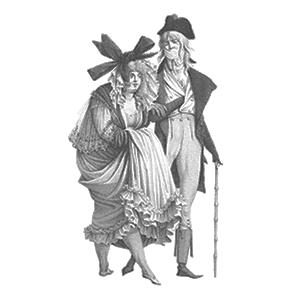
The Incroyables (Incredibles) and their female counterparts, the Merveilleuses (Marvelous), were a name for the fashionable subcultures living in France in the Directoire era (late 18th century). The exhibition of products of national industry, organized in 1798, testified to their infatuation with luxury.
The names are sometimes spelled and were pronounced ‘incoyables’ and ‘meveilleuses’ without the letter R, in reaction against the Revolution, which begins with an R, in which so many had suffered and lost relatives, the letter R was banished. Divorce became legal under the Directoire and morals tended to be looser than in the past. Many Incroyables were ‘nouveaux riches,’ gaining their wealth from selling arms and lending money (usury). When the Directoire period ended, society took a more sober and modest turn.
read more »
Posted in Art, Money, World |
Leave a Comment »
June 23, 2011

Net cafe refugees (also known as cyber-homeless) is a term for a growing class of homeless people in Japan who do not own or rent a residence and thus have no permanent address and sleep in 24 hour Internet cafés or manga cafés. Some internet cafes offer free showers and sell underwear and other personal items, enabling net cafe refugees to use the internet cafes like a hotel or hostel.
A Japanese government study estimated that over 5,400 people are spending at least half of their week staying in net cafes. It has been alleged that this phenomenon is part of an increasing wealth gap in Japan, which has historically been a very economically equal society. Another word for Net cafe refugees is Cyber-homeless, a Japanese word based on English. Typically, the cyber-homeless are unemployed or underemployed and cannot afford to rent even the cheapest apartment, which is more than the cost per month to rent an internet booth daily. The cyber-homeless may use the address of the internet cafe on resumes.
Posted in Money, Technology, World |
Leave a Comment »
June 21, 2011


The Edicts of Ashoka are a collection of 33 inscriptions on the Pillars of Ashoka, as well as boulders and cave walls, made by the Emperor Ashoka of the Mauryan dynasty during his reign from 269 BCE to 231 BCE. These inscriptions are dispersed throughout the areas of modern-day Bangladesh, India, Nepal and Pakistan and represent the first tangible evidence of Buddhism.
The edicts describe in detail the first wide expansion of Buddhism through the sponsorship of one of the most powerful kings of Indian history. According to the edicts, the extent of Buddhist proselytism during this period reached as far as the Mediterranean, and many Buddhist monuments were created.
read more »
Posted in Philosophy, War, World |
Leave a Comment »
June 21, 2011

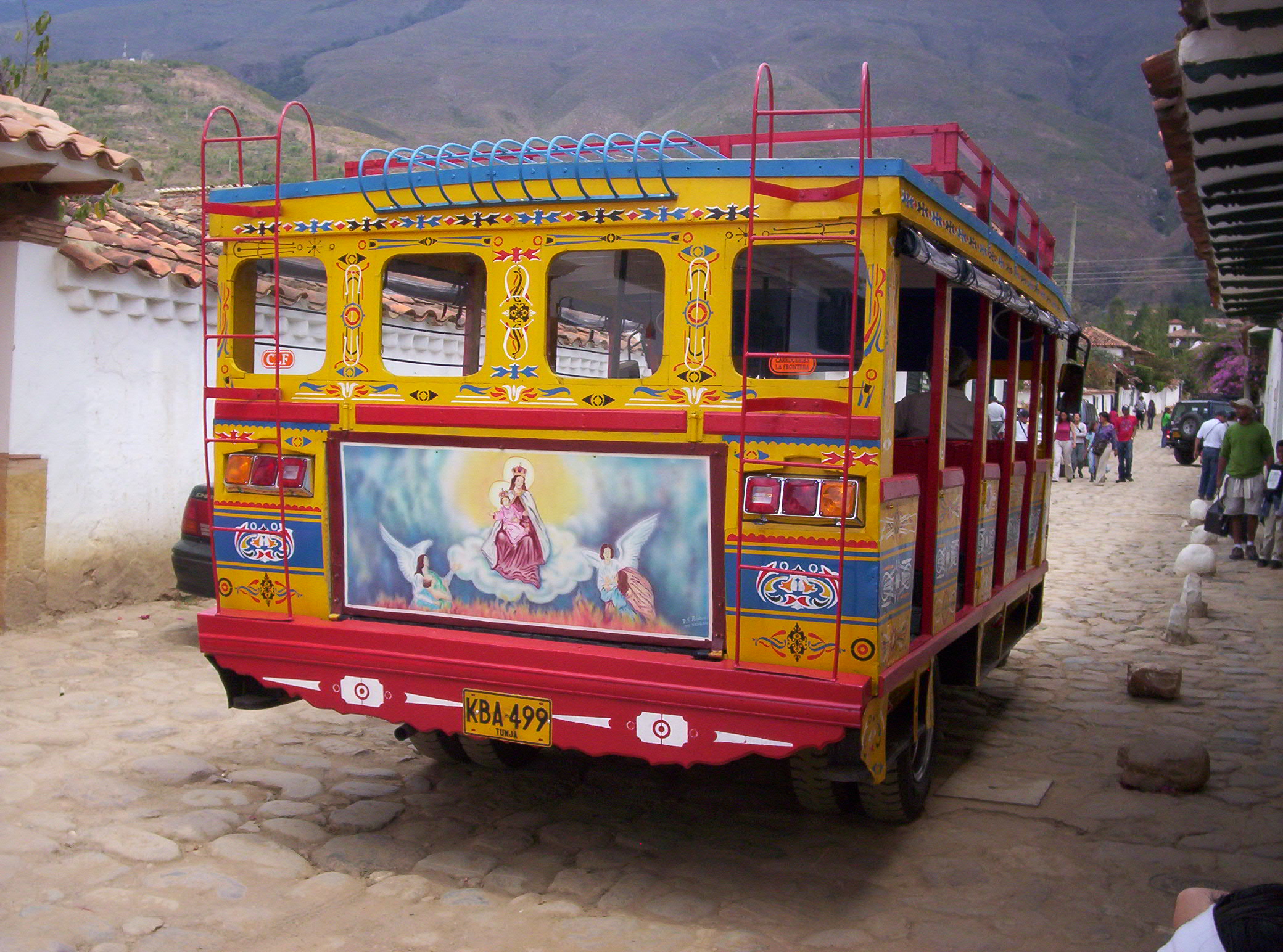
Rustic buses are old artisan modified buses used in rural Colombia and Ecuador where they are known as chivas (kid goats) or escaleras (ladders). They are used as public transport and more recently used as party buses in both countries. These are varied but characterized for being painted colorfully (usually with the yellow, blue, and red colors of the flags of Ecuador and Colombia) with local arabesques and figures.
Most have a ladder to the rack on the roof which is also used for carrying people, livestock and merchandise. They are built upon a bus chassis with a modified body made out either metal or wood. Seats are bench alike, made out of wood and with doors instead of windows.
read more »
Posted in Art, Technology, World |
Leave a Comment »


 The Daily Omnivore