May 8, 2011
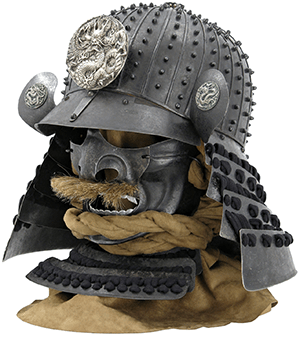

A kabuto is a helmet used with traditional Japanese armor as worn by samurai. Upon the return of general peace in the Edo Period, armor became more elaborate and ceremonial. A typical kabuto features a strong bowl, the hachi, which protects the crown of the head, a suspended series of articulated plates shikoro to protect the neck, and a crest or maedate.
The kabuto, along with the German Stahlhelm, was the inspiration for the helmet of Darth Vader in the Star Wars films.
Posted in War, World |
Leave a Comment »
April 29, 2011

Operation Nifty Package was a US Navy SEAL plan conducted in 1989 to apprehend or prevent the escape of Panamanian dictator Manuel Noriega.
Forty-eight SEALs (three SEAL Platoons) were tasked with destroying Noriega’s private jet on the ground in Panama City. This part of the mission put the SEALs into a skirmish with Panamanian military forces guarding the airport, and four SEALs were killed and eight wounded. Despite the casualties, a well-aimed AT4 rocket destroyed Noriega’s plane.
read more »
Posted in Humor, War, World |
Leave a Comment »
April 28, 2011

Weltschmerz [velt-shmerts] (from the German, meaning world-pain or world-weariness) is a term coined by the German author Jean Paul and denotes the kind of feeling experienced by someone who understands that physical reality can never satisfy the demands of the mind. This kind of pessimistic world view was widespread among several romantic authors such as Lord Byron and Herman Hesse. It is also used to denote the feeling of sadness when thinking about the evils of the world.
The modern meaning of Weltschmerz in the German language is the psychological pain caused by sadness that can occur when realizing that someone’s own weaknesses are caused by the inappropriateness and cruelty of the world and (physical and social) circumstances. Weltschmerz in this meaning can cause depression, resignation and escapism, and can become a mental problem.
Posted in Language, Philosophy, World |
Leave a Comment »
April 26, 2011

Garlic fingers are an Atlantic Canadian dish, similar to a pizza in shape and size and made with the same type of dough. Instead of the traditional tomato sauce and toppings it is garnished with melted butter, garlic and sometimes cheese. Seasonings, such as parsley or bacon bits, may also be added.
It is often eaten as a side dish with pizza, dipped in donair (normally served on a donaer kebab) or marinara sauce. Instead of being cut in triangular slices, they are presented in thin strips, or ‘fingers.’ The dish is also popular in Wisconsin, where they are known as pizza fries.
Posted in Food, Language, World |
Leave a Comment »
April 25, 2011

A podstakannik (Russian: ‘thing under the glass’) is a tea glass holder. The primary purpose of podstakanniks is to be able to hold a very hot glass of tea, which is usually consumed right after it is brewed. It is a traditional way of serving and drinking tea in Russia, Ukraine, Belarus, and other post-Soviet states.
Podstakanniks appeared in Russian tea culture in the late 18th century, when drinking tea became common in Russia. Very soon podstakanniks became not just practical utensils, but also works of art, just like samovars (urns) that were used for boiling water. Expensive podstakanniks for the rich and the elite were made of silver, however they were not very practical, since they would get quite hot very quickly due to the high thermal conductivity of silver.
Posted in Food, Money, World |
Leave a Comment »
April 20, 2011

The Global Marijuana March is an annual rally held at different locations across the planet. It refers to cannabis-related events that occur on the first Saturday in May, and feature marches, rallies, concerts, and festivals. It began in 1999, and around 600 different cities worldwide have signed up since. Local names for the event include J-Day, the Million Marijuana March, World Cannabis Day, and Cannabis Liberation Day.
The Global Marijuana March is a celebration embracing cannabis culture as a personal lifestyle choice. Participants unite to discuss, promote, entertain and educate both consumers and non-consumers alike.
read more »
Posted in Drugs, Politics, World |
Leave a Comment »
April 19, 2011
Dubailand is an entertainment complex under development in the United Arab Emirates. When announced in 2003 it was one of the most ambitious leisure developments ever proposed anywhere in the world, but development has been severely impacted by global recession and Dubai’s financial crisis.
The park is divided into six zones: Attractions and Experience World, Sports and Outdoor World, Eco-Tourism World, Themed Leisure and Vacation World, Retail and Entertainment World, and Downtown. It will be twice the size of Walt Disney World Resort, and will be the largest collection of theme parks in the world; however, no theme park in Dubailand will surpass Disney’s Animal Kingdom as the world’s largest theme park.
Posted in Games, Money, World |
Leave a Comment »
April 14, 2011

Downhill biking (DH) is a gravity-assisted time trial mountain biking event. Riders race against the clock, usually starting at intervals of 30 seconds (seeded from slowest to fastest), on courses which typically take two to five minutes to complete. Riders are timed with equipment similar to that used in Downhill skiing. The placing is determined by the fastest times to complete the course; races are often won by margins of under a second.
As the name of this discipline implies, downhill races are held on steep, downhill terrain with no extended climbing sections, resulting in high speed descents with extended air time off jumps and other obstacles. Portugal is the host country of a Unique variety of down hill races, the Urban Down Hill, known as the ‘Lisbon Down Town,’ held annually in May. The ‘Cerro Abajo’ race in Valparaiso, Chile is another annual urban downhill event.
Posted in Games, World |
Leave a Comment »
April 14, 2011


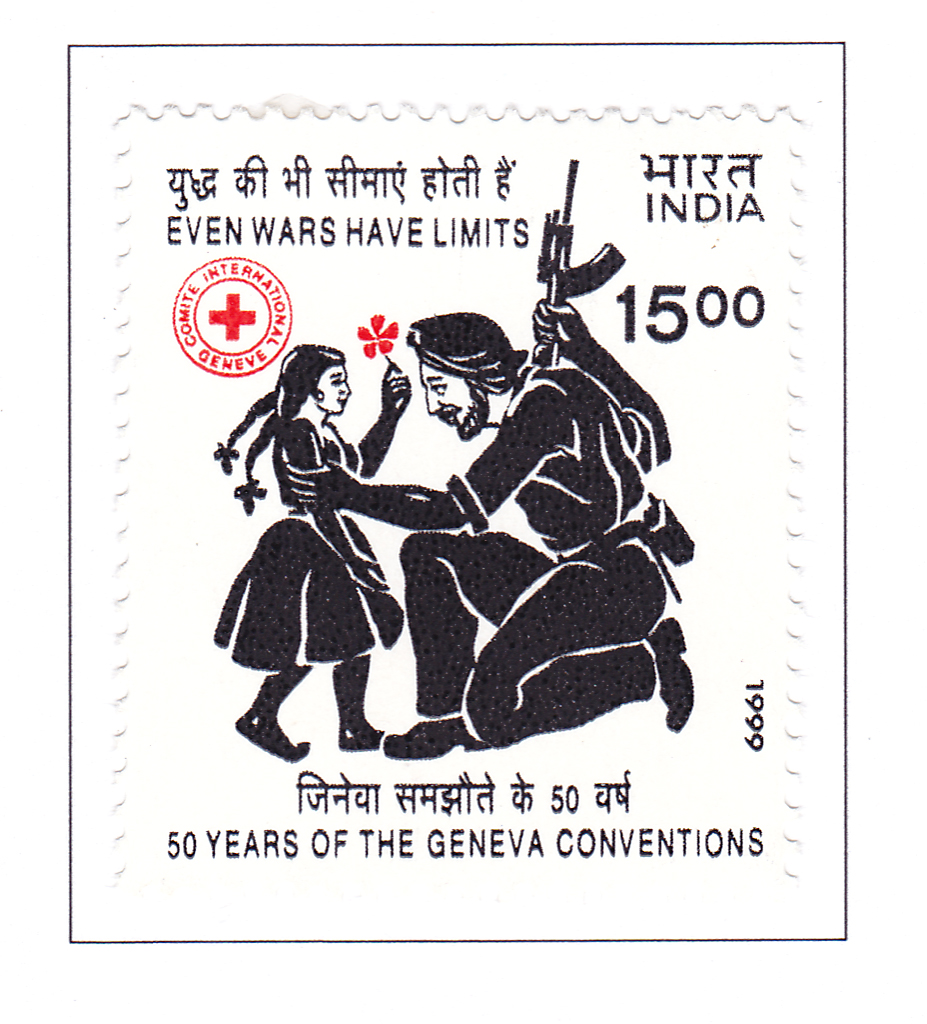
The Geneva Conventions are a set of four treaties of international law. They were formulated in Geneva, Switzerland. All of the four treaties are about humanitarian issues. The first treaty was the product of Swiss activist, Henri Dunant in 1859. The documents require that all states who sign them create national laws to make violations of the Geneva Conventions a crime.
The first Convention, adopted in 1864, was devoted to care for the injured in battle, and required medical teams on the battlefield to provide aid to enemy combatants. The Second Convention, adopted in 1949, expanded the scope of the first treaty to marine battles. The Third Convention, adopted in 1929, addressed the treatment of prisoners of war. The Fourth Convention, adopted in 1949, expanded the scope of the third convention to include civilians. Later conferences have added text that forbids certain methods of warfare.
Posted in Politics, War, World |
Leave a Comment »
April 13, 2011

Zentsūji is a town in Japan notable for producing square watermelons by growing the fruits in glass boxes and letting them naturally assume the shape of the receptacle.
The square shape is designed to make the melons easier to stack and store, but the square watermelons are often more than double the price of normal ones. Pyramid shaped watermelons have also been developed.
Posted in Food, Technology, World |
1 Comment »
April 13, 2011

Sala Keoku is a park featuring giant fantastic concrete sculptures inspired by Buddhism and Hinduism. It is located in Thailand, near the Thai-Lao border and the Mekong river. The park has been built by and reflects the personal vision of Thai spiritual leader and sculptor, Luang Pu Bunleua Sulilat and his followers (the construction started in 1978). It shares the style of Sulilat’s earlier creation, Buddha Park on the Lao side of Mekong, but is marked by even more extravagant fantasy and greater proportions.
Some of the Sala Keoku sculptures tower up to 25m in the sky. Those include a monumental depiction of Buddha meditating under the protection of a seven-headed Naga snake (Mucalinda). While the subject (based on a Buddhist legend) is one of the recurrent themes in the religious art of the region, Sulilat’s approach is highly unusual, with its naturalistic (even though stylized) representation of the snakes.
Posted in Art, Philosophy, World |
Leave a Comment »
April 11, 2011
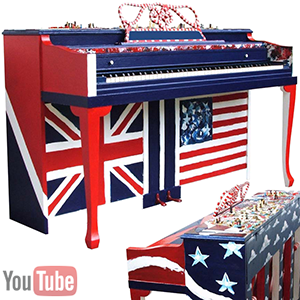
A street piano is a piano placed in the street which passers-by are encouraged to play. The best known examples is the ‘Play Me, I’m Yours’ project by artist Luke Jerram. The concept originates quite by accident in the early 2000’s in Sheffield, England, where there was a piano on the pavement on Sharrow Vale Road.
It was left outside temporarily because the owner could not get it up the steps into his new house. As a social experiment he attached a sign inviting passers by to play the piano for free. This offer was taken up by a great many people and the piano became a part of the local community.
read more »
Posted in Art, Humor, World |
1 Comment »







 The Daily Omnivore