November 2, 2010
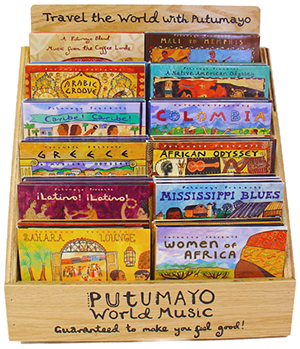
Putumayo [poo-too-mah-yaw] World Music is a New York City based record label, specializing in compilations of music from various nations, regions or musical styles which may be classified as world music. Every release features the distinctive art of English artist Nicola Heindl. The label was established in 1993 and grew out of the Putumayo clothing company, founded by Dan Storper in 1975 and sold in 1997. The name of the company comes from the Putumayo river which delineates the border between Peru and Colombia.
The company claims to be committed to helping the communities in the countries where the music they profit from originates, resulting in donations to non-profit organizations including Oxfam, Mercy Corps, Make-A-Wish and Amnesty International. However, limited information about the company’s philanthropic activities is available on Putumayo’s official website, and the company does not publish its financial information.
Posted in Art, Money, World |
Leave a Comment »
November 2, 2010

Yoga piracy refers to the practice of claiming copyrights on yoga postures and techniques found in ancient treatises originating within India by persons residing in foreign countries, often of other nationalities. The ongoing debate centers around those who profit by creating legally proprietary systems of yoga in countries other than India using information generally felt by Indians to be within the public domain, if not proprietary traditional knowledge.
read more »
Posted in Money, World |
Leave a Comment »
November 2, 2010

Moai [moh-aye] are monolithic human figures carved from rock on the Polynesian island of Easter Island, Chile between the years 1250 and 1500. Nearly half are still at Rano Raraku, the main moai quarry, but hundreds were transported from there and set on stone platforms called ahu around the island’s perimeter. Almost all moai have overly large heads three-fifths the size of their bodies. The moai are chiefly the living faces (aringa ora) of deified ancestors.
The 887 statues’ production and transportation is considered a remarkable creative and physical feat. The tallest moai erected, called Paro, was almost 10 metres (33 ft) high and weighed 75 tons; the heaviest erected was a shorter but squatter moai at Ahu Tongariki, weighing 86 tons; and one unfinished sculpture, if completed, would have been approximately 21 metres (69 ft) tall with a weight of about 270 tons.
Posted in Art, World |
Leave a Comment »
November 2, 2010


Luxottica is the world’s largest eyewear company. Its best known brands include Ray-Ban, Oliver Peoples, Revo, and Oakley. It also makes sunglasses and prescription frames for a multitude of designer brands such as Chanel and Prada, whose designs and trademarks are used under license. Leonardo Del Vecchio started the company in 1961, in Agordo north of Venice, Italy; today the company is headquartered in Milan. Its prime competitor is Safilo, which was founded in 1939 also in northern Italy. Del Vecchio began his career as the apprentice to a tool and die maker in Milan, but decided to turn his metalworking skills to making spectacle parts. So in 1961 he moved to Agordo in the province of Belluno, which is home to most of the Italian eyewear industry.
In 1967 he started selling complete eyeglass frames under the Luxottica brand. Convinced of the need for vertical integration, in 1974 he acquired Scarrone, a distribution company. The company listed in New York in 1990, and in Milan in December 2000, joining the MIB-30 (now S&P/MIB) index in September 2003. The listing enhanced the company’s ability to acquire other brands, starting with Italian brand Vogue in 1990, Persol and US Shoe Corporation (LensCrafters) in 1995, Ray-Ban in 1999 and Sunglass Hut, Inc. in 2001. They went looking for more retail companies, acquiring Sydney-based OPSM in 2003, Pearle Vision in 2004, Surfeyes in 2006, and Cole National in 2004. Most recently, it acquired Oakley in a US$2.1bn deal in November 2007.
Posted in Art, Money, World |
Leave a Comment »
October 28, 2010

Funky Forest: The First Contact, also known as Naisu no mori is a 2005 Japanese movie written and directed by Katsuhito Ishii, Hajimine Ishimine and Shunichiro Miki. The movie is a collection of several surreal, non-sequitur shorts. Dance numbers, pillow fights, animation, comedy, and science fiction all combine to create a unique and disorienting viewing experience featuring such highlights as an absurdist tribute to David Cronenberg, an ass-television, and a girl who fires lasers from her forehead in order to battle a floating space blob which emits spinning, spherical projectiles.
Posted in Art, Humor, World |
Leave a Comment »
October 28, 2010
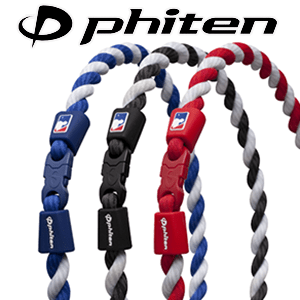
Phiten is a Japanese company that makes necklaces worn for the purpose of soothing one’s body. The medical and performance-enhancing claims relating to Phiten’s products are considered pseudoscience, and the technology behind the company’s products is not approved by the U.S. Food and Drug Administration. The company claims its products relieve fatigue by balancing the body’s signals that run from brain to the body and thus regulating the body’s ‘bio-electric currents’ through what the company calls the ‘Phild process,’ where titanium is turned into ‘aqua-titanium,’ a water-soluble form of titanium. The company claims to be able to integrate small amounts of the metal directly into the fabric.
Some of the professional athletes in Japan that wear Phiten necklaces include pro golfers, Olympic runners, and pro baseball players. In the USA, the company sponsors MLB players Josh Beckett, Tim Lincecum, Joba Chamberlain, Randy Johnson, Clay Buchholz, Justin Verlander, Justin Morneau, Brandon Webb, C.J. Wilson, and Dustin Pedroia.
Posted in Money, Technology, World |
Leave a Comment »
October 26, 2010

Zojirushi is a Japanese multinational manufacturer and marketer of high-quality vacuum flasks, bread machines and consumer electronics including electric water boilers, refrigerators and rice cookers. It has a branch in South Korea and subsidiary companies in China, Taiwan, Hong Kong, and the United States. Zojirushi is listed on Osaka Securities Exchange.
The company was founded in 1918 as the Ichikawa Brothers Trading Company in Osaka and in 1948 was changed to Kyowa Manufacturing Co., Ltd. In 1961, its name was changed again to the Zojirushi Corporation and its corporate logo, including an elephant (Zōjirushi means ‘elephant mark’) was adopted.
Posted in Money, Technology, World |
Leave a Comment »
October 26, 2010

Berkshire [burk-sheer] Pigs are a rare, black skinned breed of pig originating from Britain that is considered the finest source of pork by chefs and gourmands. In Britain breeding is maintained by the Rare Breeds Survival Trust at Aldenham Country Park, Hertfordshire and the South of England Rare Breeds Centre in Kent. It is listed as ‘vulnerable’ as there are fewer than 300 breeding females.
In the United States, the American Berkshire Association, established in 1875, pedigrees only hogs directly imported from established English herds, or hogs tracing directly back to such imported animals. The pig is also bred in Kagoshima Prefecture, Japan, under the trademarked name Kurobuta.
Posted in Food, World |
Leave a Comment »
October 22, 2010

Teardrop tattoos originated as a prison tattoo that was forced on some inmates by their ‘Sugar Daddy’ to signify sexual ownership and to permanently mark that person as a ‘sissy.’ The tattoo was later appropriated in the Chicano gangs of California by members who had killed another person, particularly while in prison. The tattoo can also mean that a family member, close friend or fellow gang member has died, frequently in a gang related incident.
In the United Kingdom, the tear tattoo can indicate someone that has spent time in a young offenders prison. In the U.S., A fully inked in teardrop can mean that a murder was committed. If the teardrop is clear in the middle, it can indicate an attempted murder, or that a loved one was murdered. A tear drop that is empty at the the top and inked at the bottom can indicate that a loved one was murdered and the killer was himself murdered by the tattoo wearer.
Posted in Art, Death, World |
Leave a Comment »
October 20, 2010

Pissaladiere or Pissaladina is a pizza-like dish made in southern France, around the Nice, Marseilles, Toulon and the Var District, and in the Italian region of Liguria, especially in the Imperia district. Believed to have been introduced to the area by Roman cooks during the time of the Avignon Papacy, it can be considered a type of white pizza, as no tomatoes are used. The dough is usually a bread dough thicker than that of the classic Italian pizza, although a pâte brisée (pastry) is sometimes used instead, and the traditional topping consist of sauteed (almost pureed) onions, olives, garlic and anchovies (either whole or in the form of pissalat, a type of anchovy paste).
No cheese is used in France; however in the nearby Italian town of San Remo, mozzarella is added. Now served as an appetizer, it was traditionally cooked and sold early each morning. The etymology of the word seems to be from Old French pescion from the Latin piscis, which in turn became the pissalat (‘salted fish’) anchovy paste mentioned above.
Posted in Food, World |
Leave a Comment »
October 19, 2010
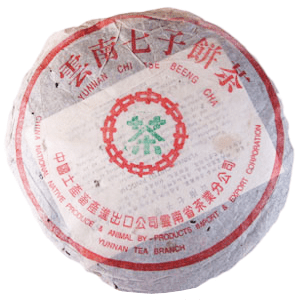
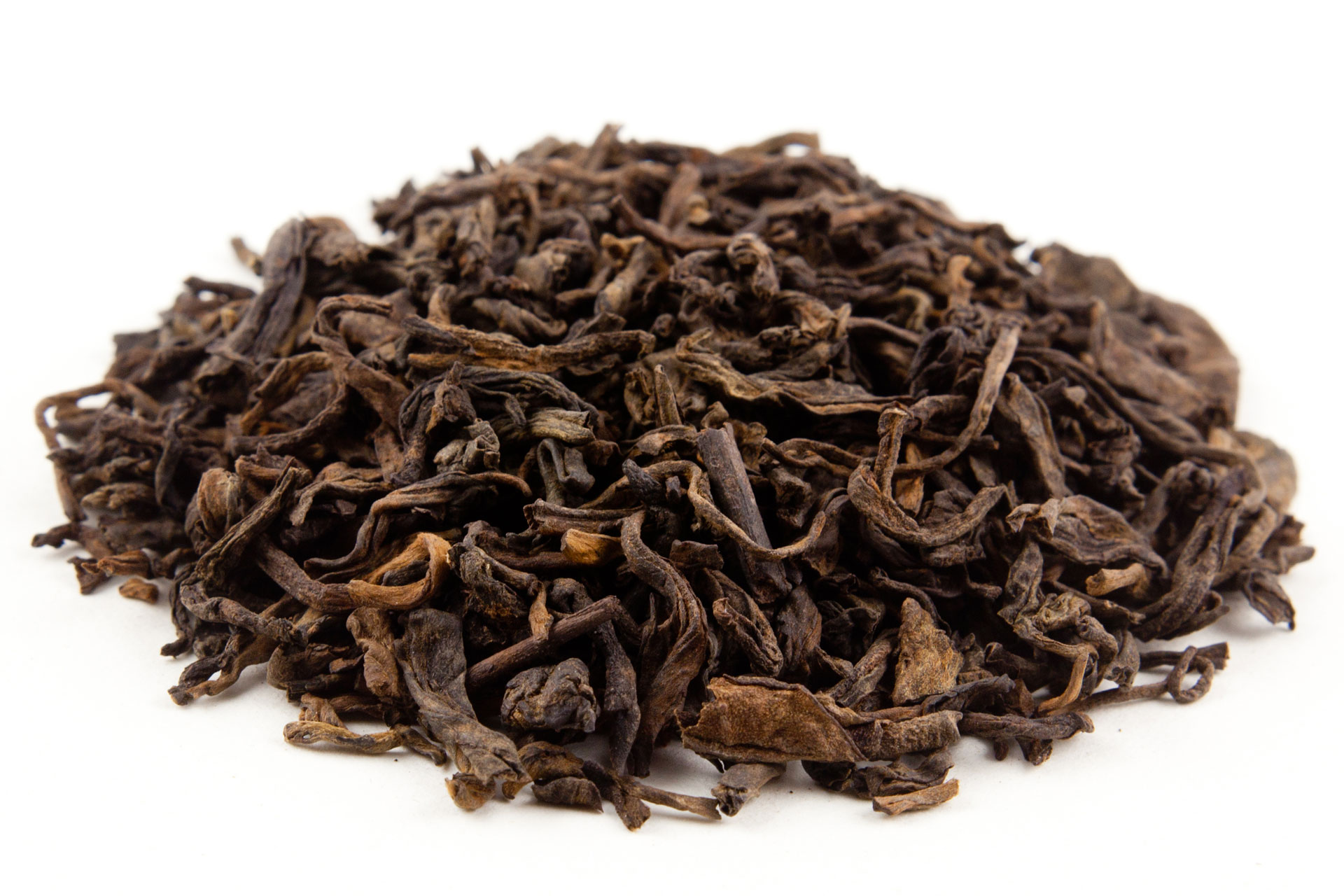
Pu-erh tea or Bolay tea is a type of tea made from a ‘large leaf’ variety of the tea plant Camellia sinensis and named after Pu’er county near Simao, Yunnan, China. Pu-erh tea can be purchased as either raw/green (sheng) or ripened/cooked (shu), depending on processing method or aging. Sheng pu-erh can be roughly classified on the tea oxidation scale as a green tea, and the shou or aged-green variants as post-fermented tea. The fact that pu-erh fits in more than one tea type poses some problems for classification. For this reason, the ‘green tea’ aspect of pu-erh is sometimes ignored, and the tea is regarded solely as a post-fermented product.
Unlike other teas that should ideally be consumed shortly after production, pu-erh can be drunk immediately or aged for many years; pu-erh teas are often now classified by year and region of production much like wine vintages. While there are many counterfeit pu-erhs on the market and real aged pu-erh is difficult to find and identify, it is still possible to find pu-erh that is 10 to 50 years old, as well as a few from the late Qing dynasty (1644–1912). Indeed, tea connoisseurs and speculators are willing to pay high prices for older pu-erh, upwards of thousands of dollars per cake.
Posted in Food, Health, World |
Leave a Comment »
October 19, 2010

Sangfroid [sahn-frwa] is a noun meaning self-possession or imperturbability especially under strain. The word derives from French, c. 1712 and translates literally as, ‘cool blood.’
‘Keep Calm and Carry On’ was a poster produced by the British government in 1939 during the beginning of World War II, to raise the morale of the British public in the case of invasion. It was little known and never used. The poster was rediscovered in 2000 and has been re-issued by a number of private sector companies, and used as the decorative theme for a range of other products.
Posted in Language, World |
Leave a Comment »



 The Daily Omnivore