September 30, 2010

Uniqlo is a Japanese casual wear designer, manufacturer and retailer. Uniqlo is Japan’s leading clothing retail chain in terms of both sales and profits. The company also operates in China, Hong Kong, South Korea, the United Kingdom, France, the United States, Singapore, Taiwan, and Russia. Originally a division of Fast Retailing Co., Ltd., on November 1, 2005, Uniqlo Co., Ltd. was born of corporate restructuring, and now exists as a 100% consolidated subsidiary of Fast Retailing, which is listed on the first section of the Tokyo Stock Exchange.
Posted in Money, World |
Leave a Comment »
September 30, 2010
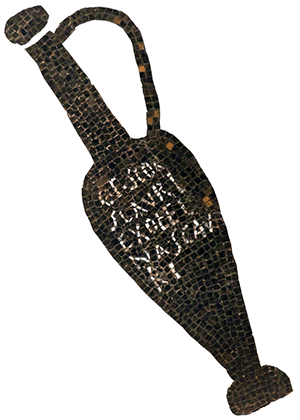
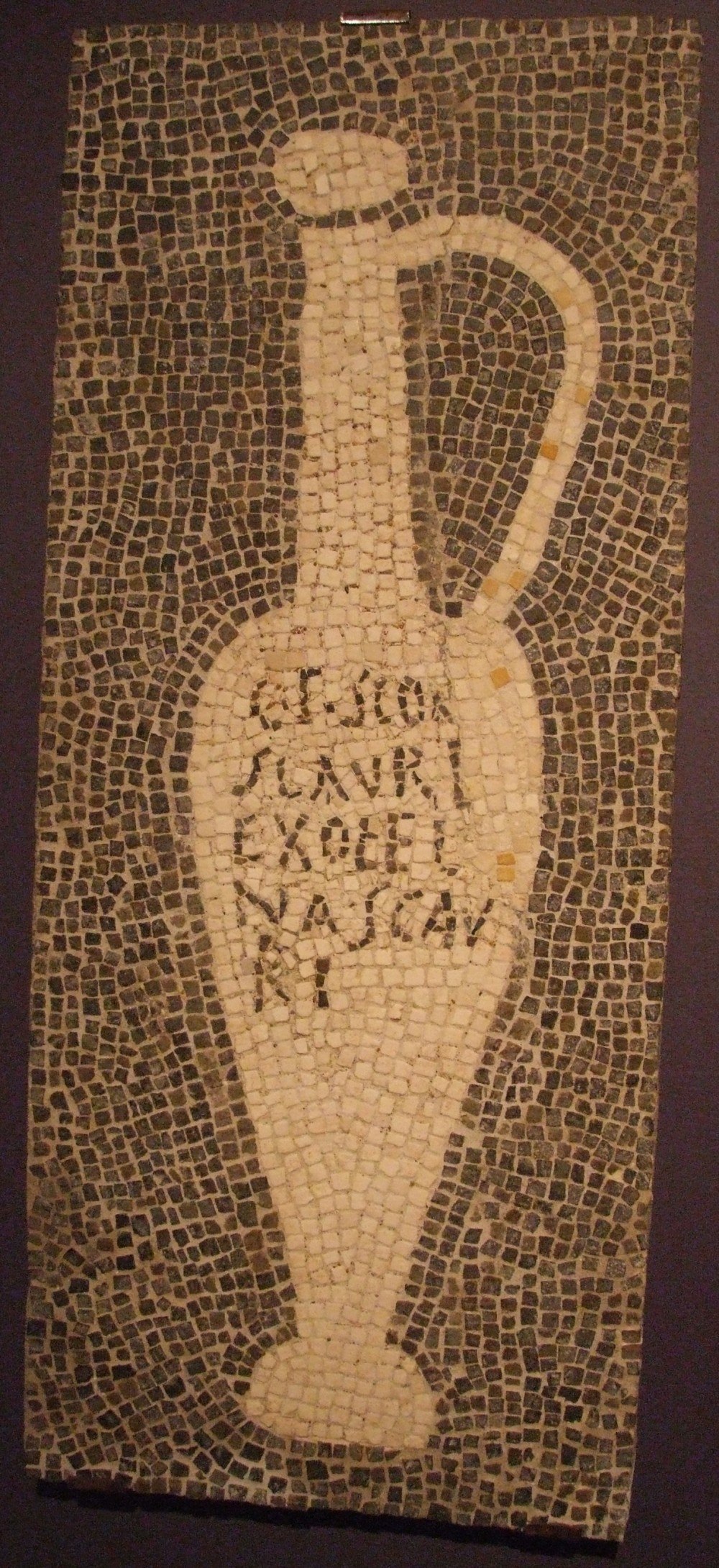
Garum [gah-rum], similar to liquamen, was a type of fermented fish sauce condiment that was an essential flavour in Ancient Roman cooking. Although it enjoyed its greatest popularity in the Roman world, it originally came from the Greeks, gaining its name from the Greek words garos or gáron (γάρον), a fish whose intestines were originally used in the condiment’s production. For the Romans it was both a staple to the common diet and a luxury for the wealthy. After the liquid garum was ladled off of the top of the mixture, the remains of the fish, called allec, was used by the poorest classes to flavour their staple porridge.
The sauce was generally made through the crushing and fermentation in brine of the innards of various fishes such as mackerel, tuna, eel, and others. While the finished product was apparently mild and subtle in flavor, the actual production of garum created such unpleasant smells as to become relegated to the outskirts of citie. Garum was prepared from the intestines of small fishes, macerated in salt and cured in the sun for one to three months, where the mixture fermented and liquified in the dry warmth, the salt inhibiting the common agents of decay. The end product was very nutritious, retaining a high amount of protein and amino acids, along with a good deal of minerals and B vitamins. Garum is still produced at factories in San Roque, Spain.
Posted in Food, World |
Leave a Comment »
September 30, 2010


Bolex is a Swiss company that manufactures motion picture cameras and lenses. The most notable products of which are in the 16 mm and Super 16 mm formats. The Bolex was initially founded by Ukranian engineer and inventor Jacques Bogopolsky in the 1940s. Bolex is derived from his name. He had previously designed cameras for Alpa. Bolex cameras were particularly important for early television news, nature films, documentaries and the avant garde, and are still favoured by many animators today.
Some later models are electrically powered, the majority of those manufactured since the 1930s use a spring-wound clockwork. The 16 mm spring-wound Bolex is a popular introductory camera in film schools. Today, the Bolex factory in Switzerland continues to produce new 16mm and Super 16 film cameras and also can convert Bolex H16 reflex models to super 16mm.
Posted in Art, Technology, World |
1 Comment »
September 29, 2010
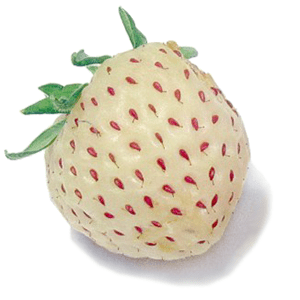
The Pineberry is a strawberry cultivar owned by breeder Hans de Jongh and commercialized by VitalBerry BV in Made, The Netherlands. The fruit flesh can range from soft white to orange and is very fragrant with a slight pineapple flavor. Pineberries begin life as green berries, then become slightly white. By the time their deeply set seeds turn deep red, the white fruit is deemed ripe.
Posted in Food, World |
Leave a Comment »
September 27, 2010

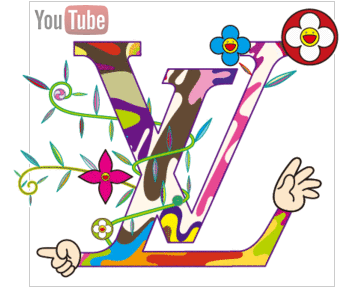
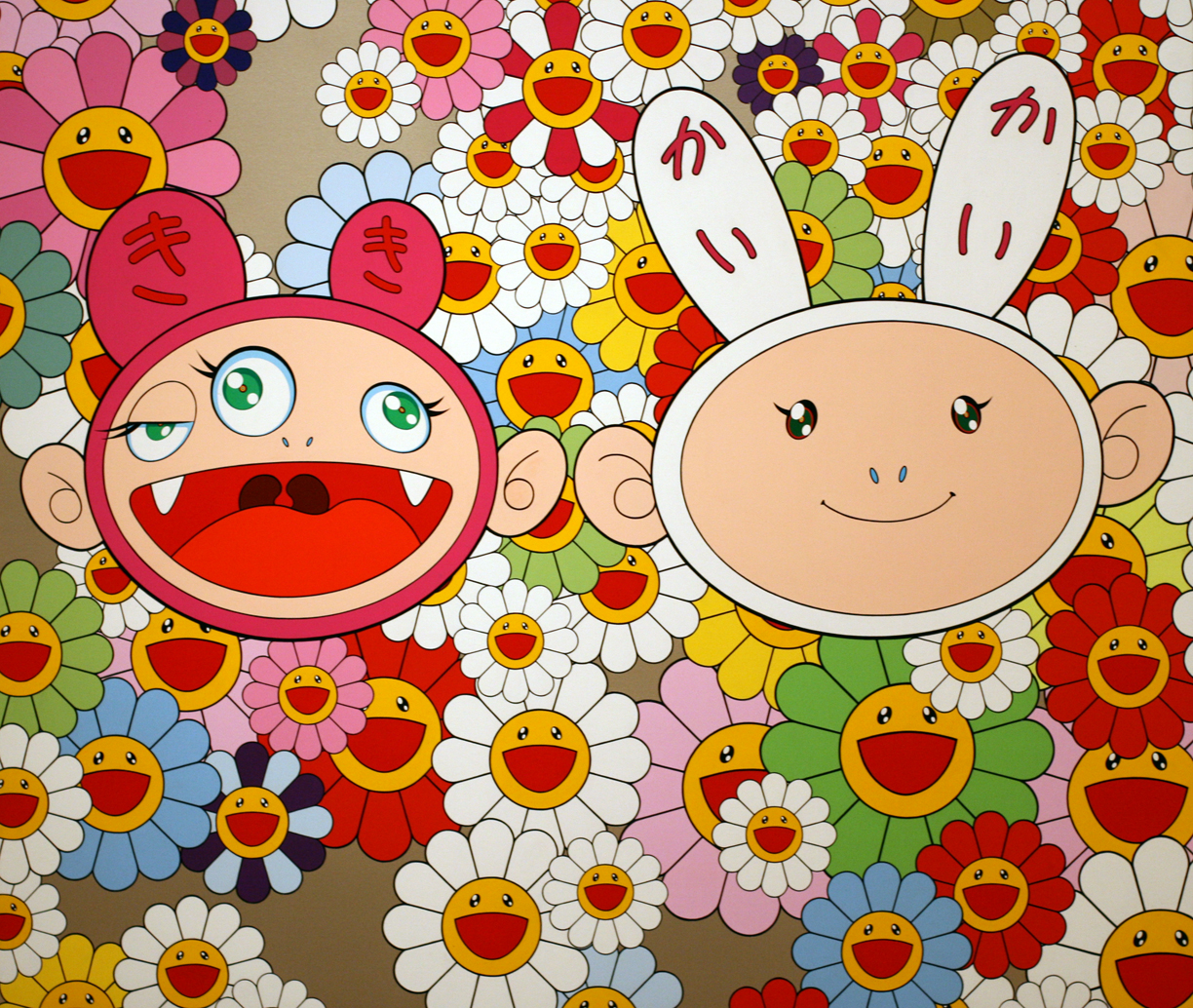
Superflat is a postmodern art movement, founded by Japanese artist Takashi Murakami, which is influenced by manga and anime. Superflat is used by Murakami to refer to various flattened forms in Japanese graphic art, animation, pop culture and fine arts, as well as the ‘shallow emptiness of Japanese consumer culture.’ A self-proclaimed art movement, it was a successful piece of niche marketing, a branded art phenomenon designed for Western audiences.
Murakami defines Superflat in broad terms, so the subject matter is very diverse. Often the works take a critical look at the consumerism and sexual fetishism that is prevalent in post-war Japanese culture. One target of this criticism is lolicon art, which is satirized by works such as those by Henmaru Machino. These works are an exploration of otaku sexuality through grotesque and/or distorted images. Other works are more concerned with a fear of growing up. For example, Yoshitomo Nara’s work often features playful graffiti on old Japanese ukiyo-e executed in a childish manner. And some works focus on the structure and underlying desires that comprise otaku and overall post-war Japanese culture.
Posted in Art, World |
Leave a Comment »
September 27, 2010
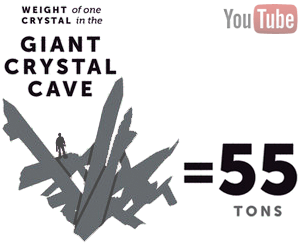

Cave of the Crystals (Cueva de los Cristales) is a cave connected to the Naica Mine 300 metres (980 ft) deep in Chihuahua, Mexico, discovered in 2000. The main chamber contains giant selenite crystals, some of the largest natural crystals ever found. The cave’s largest crystal found to date is 11 m (36 ft) in length, 4 m (13 ft) in diameter and 55 tons in weight. The cave is extremely hot with air temperatures reaching up to 58 °C (136 °F) with 90 to 100 percent humidity.
The cave is relatively unexplored due to the extreme temperatures and high humidity. Without proper protection people can only endure approximately ten minutes of exposure at a time. Additionally, the caves are accessible today only because the mining company’s pumping operations keep them clear of water. If the pumping were stopped, the caves would be submerged.
Posted in Science, World |
Leave a Comment »
September 25, 2010

The Flat Earth Society is an organization that seeks to further the belief that the Earth is flat rather than the scientifically accepted view that it is a sphere or a geoid. The modern organization was founded by Englishman Samuel Shenton in 1956. The belief that the Earth was flat was typical of ancient cosmologies until about the 4th century BC, when the Ancient Greek philosophers proposed the idea that the Earth was a sphere, or at least rounded in shape. Aristotle was one of the first thinkers to propose a spherical Earth in 330 BC. By the early Middle Ages, it was widespread knowledge throughout Europe that the Earth was a sphere.
Modern hypotheses supporting a flat Earth originated with English inventor Samuel Rowbotham (1816–1884). Based on his interpretation of certain biblical passages, Rowbotham published a 16-page pamphlet, which he later expanded into a 430-page book, ‘Earth Not a Globe,’ expounding his views. According to Rowbotham’s system, which he called ‘Zetetic Astronomy,’ the earth is a flat disc centered at the North Pole and bounded along its southern edge by a wall of ice (Antarctica), with the sun and moon 3000 miles (4800 km) and the ‘cosmos’ 3100 miles (5000 km) above earth. As of September 2009, two web-based discussion forums exist devoted to the Flat Earth Society is also represented on Twitter and Facebook.
Posted in Humor, Science, World |
Leave a Comment »
September 24, 2010


Raggare (a Swedish word roughly corresponding to the English term ‘pick-up artist.’) refers to a subculture found mostly in Sweden and parts of Norway, Finland, Denmark, Germany and Austria. Raggare are closely related to the greaser subculture of the U.S. and are known for their love of hot rod cars and 1950s American pop culture. Pontiac Bonnevilles of the 1960s are particularly popular among raggare.
Considered by some a menace to society, but more often seen as an amusing group of outsiders, raggare culture lives on in Sweden, but in many ways it is still viewed in a negative light. Because of its mostly rural roots, retro-aesthetics, and unusual (for Swedes) pro-American stance, raggare are often (in urban areas and in pop-culture) seen as uneducated, with poor taste and a low-brow attitude towards sex.
Posted in Language, World |
Leave a Comment »
September 23, 2010


Hafiz [hah-fiz], literally meaning ‘guardian’, is an honorific used by Muslims in modern days for someone who has completely memorized the Qur’an. The Islamic prophet Muhammad lived in the 7th century CE, in Arabia in a time when many people were not literate. The Arabs preserved their histories, genealogies, and poetry by memory alone. When Muhammad proclaimed the verses later collected as the Qur’an, his followers naturally preserved the words by memorizing them.
Early accounts say that the literate Muslims also wrote down such verses as they heard them. However, the Arabic writing of the time was a scripta defectiva, an incomplete script, that did not include vowel markings or other diacritics needed to distinguish between words. There are numerous traditions of recitation. Most hafiz know only one version, but true experts can recite in several traditions.
Posted in Language, Philosophy, World |
Leave a Comment »
September 22, 2010

Sky burial or ritual dissection was once a common funerary practice in Tibet wherein a human corpse is cut in specific locations and placed on a mountaintop, exposing it to the elements (or the mahabhuta) and animals – especially to birds of prey. The location of the sky burial preparation and place of execution are called charnel grounds. In Tibet the practice is known as jhator, which literally means, ‘giving alms to the birds.’
The majority of Tibetans adhere to Buddhism, which teaches rebirth. There is no need to preserve the body, as it is now an empty vessel. Birds may eat it, or nature may let it decompose. So the function of the sky burial is simply the disposal of the remains. In much of Tibet the ground is too hard and rocky to dig a grave, and with fuel and timber scarce, a sky burial is often more practical than cremation.
Posted in Death, Philosophy, World |
Leave a Comment »
September 21, 2010

The Naga [nah-gah] jolokia [joe-low-key-ah], as it is commonly known, is a chili pepper generally recognized as the hottest in the world. The pepper is occasionally called the ghost chili by Western media due to a mistranslation. The Naga Jolokia is an interspecific hybrid primarily from Bangladesh, but also from the neighbouring Assam region of northeastern India. It can also be found in rural Sri Lanka where it is known as Nai Mirris (Cobra Chilli).
In 2000, India’s Defence Research Laboratory (DRL) reported a rating of 855,000 units on the Scoville scale, and in 2004 a rating of 1,041,427. For comparison, Tabasco sauce rates at 2,500–5,000, habanero peppers are 100,000–350,000 units, and pure capsaicin (the chemical responsible for the pungency of pepper plants) rates at 15,000,000–16,000,000 Scoville units.
Posted in Food, World |
Leave a Comment »
September 21, 2010

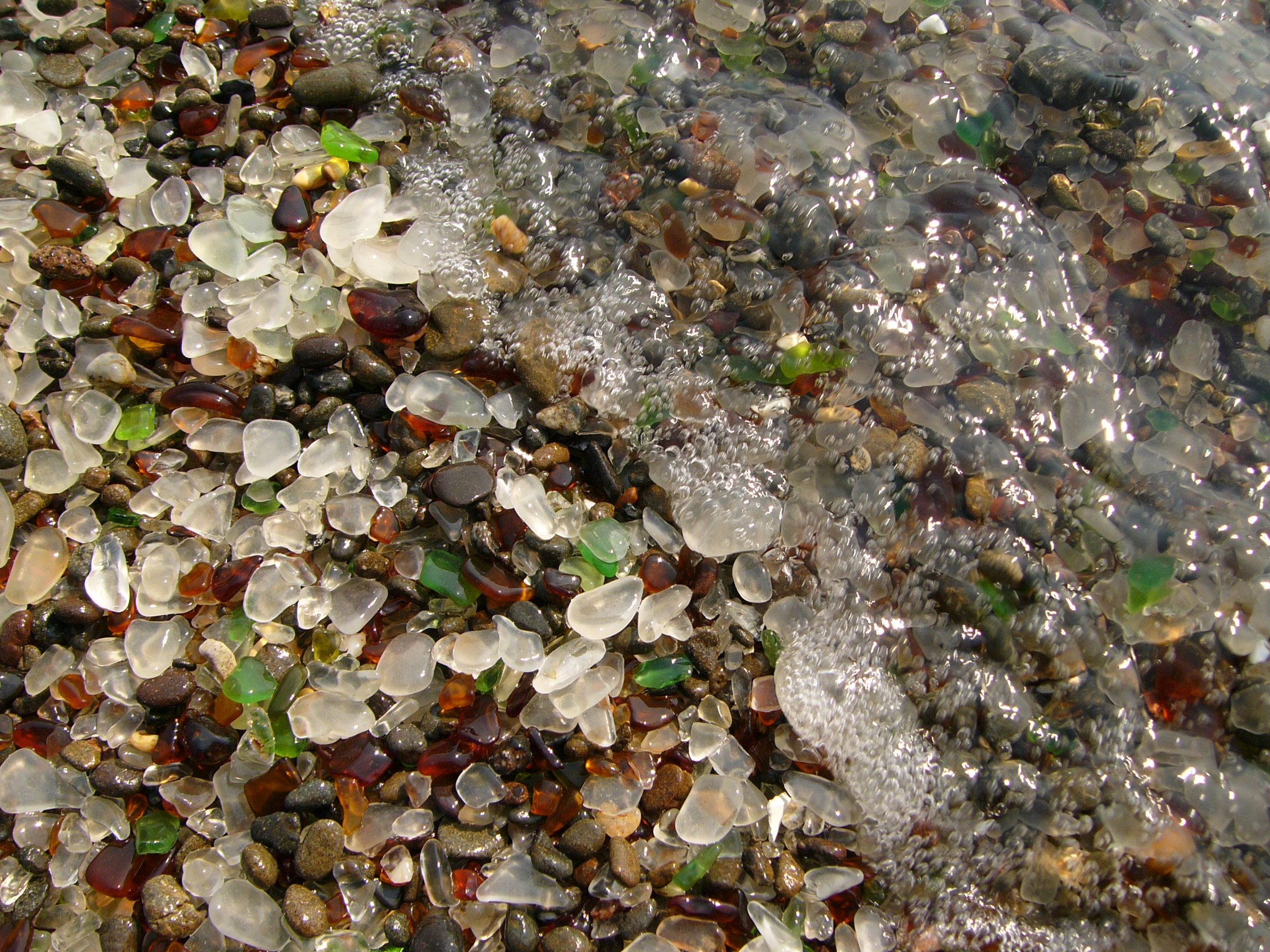
Glass Beach is a beach in MacKerricher State Park near Fort Bragg, California that is abundant with sea glass created from years of dumping garbage into an area of coastline near the northern part of the town. In the early 20th century, Fort Bragg residents threw their household garbage over the cliffs above what is now Glass Beach. They discarded glass, appliances, and even cars. The land was owned at that time by the Union Lumber Company, and locals referred to it as ‘The Dumps.’ Sometimes fires were lit to reduce the size of the trash pile.
In 1967, the North Coast Water Quality Board and city leaders closed the area. Various cleanup programs were undertaken through the years to correct the damage. Over the next several decades the pounding waves cleansed the beach, wearing down the discarded glass into the small, smooth, colored trinkets that cover the beach today. The area is now frequently visited by tourists. Though not officially permitted, many still scour the beach for interesting curios to take home as souvenirs.
Posted in World |
Leave a Comment »




 The Daily Omnivore