August 13, 2013

Jeans are trousers made from denim (a robust textile originating from Nimes in the south of France) or dungaree cloth (a similar cloth used in England since the 17th century, possibly derived from Dongri, a dockside village near Mumbai).
Often the term ‘jeans’ refers to a particular style of trousers, called ‘blue jeans,’ which were invented by Jacob Davis and Levi Strauss in 1873. Starting in the 1950s, jeans, originally designed for cowboys, became popular among teenagers, especially members of the greaser subculture. Historic brands include Levi’s, Lee, and Wrangler.
Continue reading →
Posted in Art, Money, Technology |
Leave a Comment »
August 12, 2013
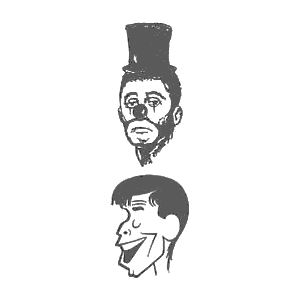
‘The Day the Clown Cried‘ is an unreleased 1972 film directed by and starring Jerry Lewis. It is based on a script of the same name by Joan O’Brien, who had co-written the original script with Charles Denton ten years previously.
The film was met with controversy regarding its premise and content, which features a circus clown who is imprisoned in a Nazi concentration camp. ‘The Day the Clown Cried’ has become somewhat infamous among film historians and movie buffs as a film that has never officially been released.
Continue reading →
Posted in Art, Humor, War |
Leave a Comment »
August 11, 2013
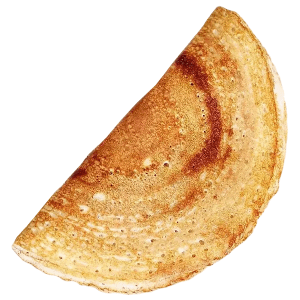
Dosa [doh-sa] is a fermented Indian crepe or pancake made from rice batter and black lentils. This staple dish is widely popular in southern Indian states, as well as other countries like Sri Lanka and Singapore. ‘The Story of our Food,’ a book written by K. T. Achaya, an eminent Indian food scientist and food historian, states that foods like Appam, Idiyappam, Dosai and Adai were already known in Tamil country around 1st century CE, as per references in Tamil Sangam literature. It is a common breakfast dish and street food, served hot, either folded in half or rolled like a wrap.
Dosa can be stuffed with fillings of vegetables and sauces to make a quick meal. They are typically served with a vegetarian side dish which varies according to regional and personal preferences. Though dosa typically refers to the version made with rice and lentils, many other versions exist, often specific to an Indian region. Some variations include egg dosa, which is spread with an omelette, and cheese dosa, which is stuffed with cheese. Masala dosa is dosa wrapped around an onion and potato curry or sabji (cauliflower with peas and carrots) originally invented by Udupi Hotels.
Posted in Food, World |
Leave a Comment »
August 10, 2013

A pool noodle (also known as a water log or woggle in the UK) is a cylindrical piece of polyethylene foam, sometimes hollow. They are useful when learning to swim, for floating, for rescue reaching, in various forms of water play, and for aquatic exercise. Pool noodles are particularly useful to support amateur snorkelers. The most common dimensions are about 160 cm (5’3″) in length and 7 cm (2.5″) in diameter. The purpose of the hole in some noodles is unclear. Children often use this hole to blow water into the unsuspecting faces of their peers.
A pool noodle connector is a piece of pipe made out of foam, slightly larger than a pool noodle so that it can connect two pool noodles by encasing the end of each. This allows larger structures to be built from pool noodles. ‘Noodleskin’ is a custom cover that is placed over a foam pool noodle which allows 2 pool noodles to be made into a floating seat.
Posted in Humor |
Leave a Comment »
August 9, 2013
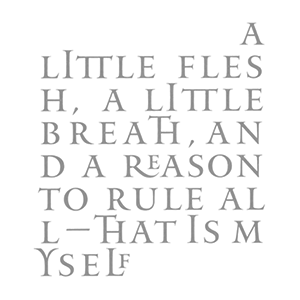
‘Meditations‘ (‘thoughts/writings addressed to himself’) is a series of personal writings by Marcus Aurelius, Roman Emperor 161–180 CE, setting forth his ideas on Stoic philosophy (the Stoics taught that destructive emotions resulted from errors in judgment).
It is not clear that he ever intended the writings to be published, so the title is but one of several commonly assigned to the collection. These writings take the form of quotations varying in length from one sentence to long paragraphs.
Continue reading →
Posted in Language, Philosophy |
Leave a Comment »
August 9, 2013
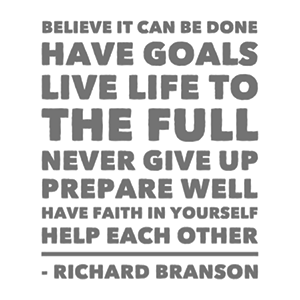
A bon viveur [bawn vee-vur] is a person who enjoys the good things of life.
The phrase is derived from the French ‘bon vivant,’ meaning ‘good living,’ a bon viveur being a ‘good liver,’ or one who lives well. The phrase is not derogatory but conveys a sense of overindulgence. In his book, ‘Mind the Gaffe,’ linguist Larry Trask advised that the phrase is pretentious.
Posted in Language, World |
Leave a Comment »
August 9, 2013
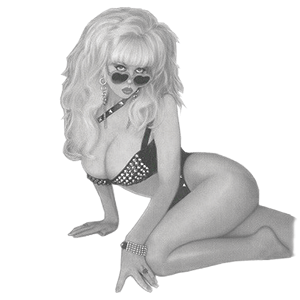
Angelyne is an American singer, actress and model who is known for purchasing billboards advertising herself. Her billboards became a trademark of Los Angeles and made her an icon who is considered one of the pioneers of the term ‘famous for being famous.’
A significant part of her ‘mystique’ comes from her refusal to answer questions (and giving contradictory information when she does). Consequently, much of Angelyne’s actual biographical information is unknown or doubtful.
Continue reading →
Posted in Humor, Money, Sex |
Leave a Comment »
August 9, 2013

Faster, Pussycat! Kill! Kill! is a 1965 exploitation film directed by Russ Meyer, who also wrote the script with Jack Moran. It stars Tura Satana, Haji, and Lori Williams. Consistent with the genre, the film features gratuitous violence, sexuality, provocative gender roles, and camp dialogue. It is one of Meyer’s more boldly titled and unflinchingly exploitative films; however, there is no nudity. The film was shot in the extreme western parts of the Mojave Desert and outside Baker, California).
The film depicts three thrill-seeking go-go dancers (Billie, Rosie, and their leader, Varla) who encounter a young couple in the desert while racing their sports cars. After killing the boyfriend with her bare hands, Varla drugs, binds, gags and kidnaps his girlfriend, Linda. On a desolate highway, the four stop at a gas station, where they see a wheelchair-bound old man and his muscular, dimwitted son, Vegetable. The gas station attendant tells the women that the old man and his two sons live on a decrepit ranch with a hidden cache of money. Intrigued, Varla hatches a scheme to rob the lecherous old man.
Posted in Art, Sex |
Leave a Comment »
August 9, 2013

Bad girl art is a superheroines art form genre coined after the analogy of ‘good girl art’ (‘girl art’ that is ‘good’) which also includes strong female characters in comic books. Bad girls are typically tough and violent superheroines.
While the ‘good’ in ‘good girl art’ refers to the art itself, the ‘bad’ in ‘bad girl art’ refers to the girls: anti-heroine characters, often portrayed as cruel, mercenary, or demonic, although it may also be intended to reflect on the crude mannerisms and exaggerated anatomy of the drawing style associated with those characters. While Good Girl Art was common in the 1940s and 1950s, Bad Girl Art arose in the comic book market of the 1980s and 1990s. During the heyday of the style, some 50 titles within the subgenre were being published, with ‘Lady Death’ as the best selling title.
Continue reading →
Posted in Art, Language, Sex |
Leave a Comment »
August 9, 2013
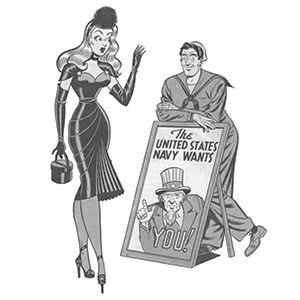
Good girl art (GGA) is found in drawings or paintings which feature a strong emphasis on attractive women no matter what the subject or situation. GGA was most commonly featured in comic books, pulp magazines and crime fiction. When cited as an art movement, it is usually capitalized as Good Girl Art.
The term describes the work of illustrators skilled at creating sexy female figure art; it is ‘girl art’ which is ‘good.’ Popular culture historian Richard A. Lupoff defined it as: ‘A cover illustration depicting an attractive young woman, usually in skimpy or form-fitting clothing, and designed for erotic stimulation. The term does not apply to the morality of the ‘good girl,’ who is often a gun moll, tough cookie or wicked temptress.’
Continue reading →
Posted in Art, Sex |
Leave a Comment »
August 8, 2013

Veronica Lodge (first appearance ‘Pep Comics’ #26 in 1942) is a fictional character in the ‘Archie Comics’ books series. She is called both by her name Veronica and her nickname Ronnie. Bob Montana, creator of the original Archie characters, knew the Lodges, because he had once painted a mural for them. Montana combined that name with actress Veronica Lake to create the character of Veronica Lodge. Her character was added just months after Archie Andrews, Betty Cooper, and Jughead Jones debuted, and just a few months before Reggie Mantle.
Veronica is the only child of Hiram Lodge, the richest man in Riverdale, and his wife Hermione Lodge. She is tall, slender and attractive with long black hair. Veronica favors expensive, up-to-the-minute fashion. In some comics, Mr. Lodge claimed that he moved his family to Riverdale in order to avoid Veronica becoming spoiled, like many of the children he knew and grew up with. Continue reading →
Posted in Art, Language, Money |
Leave a Comment »
August 8, 2013

Women have been portrayed in comic books since the medium’s beginning, and their portrayals are often the subject of controversy. Sociologists with an interest in gender roles and stereotyping have outlined the role of women as both supporting characters and as potential leaders finding limited success at being accepted as equals.
Another point of study has been the depiction of women in comics, in which, as in other forms of popular culture, body types are unrealistically portrayed.
Continue reading →
Posted in Art, Politics, Sex |
1 Comment »



