August 7, 2013

Guido [gwee-doh] is a slang term for a lower-class or working-class urban Italian American. Originally, it was used as a demeaning term for Italian Americans in general. More recently, it has come to refer to Italian Americans who conduct themselves in a thuggish, overtly macho manner.
The time period in which it obtained the latter meaning is not clear, but some sources date it to the 1970s or 1980s. The term is derived from either the proper name ‘Guido’ or the Italian verb ‘guidare’ (‘to drive’). Fishermen of Italian descent were once often called ‘Guidos’ in medieval times. Continue reading →
Posted in Language, Politics |
Leave a Comment »
August 7, 2013
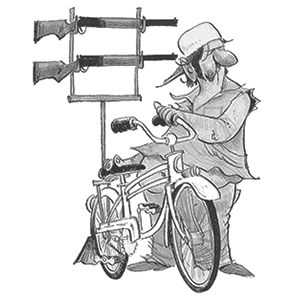
Redneck is a derogatory slang term used in reference to poor, uneducated white farmers, especially from the southern United States. It is similar in meaning to ‘cracker’ (especially regarding Georgia and Florida), ‘hillbilly’ (especially regarding Appalachia and the Ozarks), and ‘white trash’ (but without the last term’s suggestions of immorality).
By the 2000s, the term had expanded in meaning to refer to bigoted, loutish reactionaries who are opposed to modern ways, and has often been used to attack white Southern conservatives. The term is also used broadly to degrade working class and rural whites that are perceived by urban progressives to be insufficiently liberal. At the same time, some Southern whites have reclaimed the word, using it with pride and defiance as a self-identifier. Continue reading →
Posted in Language, Money, Politics |
Leave a Comment »
August 7, 2013
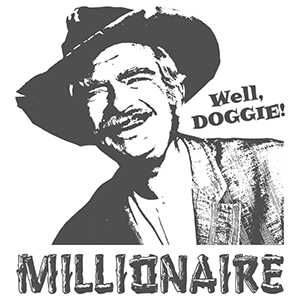
Hillbilly is a term (often derogatory) for people who dwell in rural, mountainous areas of the United States, primarily Appalachia in the east but also the Ozarks in the center of the country. Owing to its strongly stereotypical connotations, the term can be offensive to those Americans of Appalachian heritage.
Origins of the term are obscure. According to Anthony Harkins in ‘Hillbilly: A Cultural History of an American Icon,’ it first appeared in print in a 1900 ‘New York Journal’ article, with the definition: ‘a Hill-Billie is a free and untrammeled white citizen of Alabama, who lives in the hills, has no means to speak of, dresses as he can, talks as he pleases, drinks whiskey when he gets it, and fires off his revolver as the fancy takes him.’ Continue reading →
Posted in Language, Politics |
Leave a Comment »
August 7, 2013

Honky is a racial slur for white people, predominantly heard in the United States. The first recorded use of honky in this context may date back to 1946, although the use of ‘Honky Tonk’ (a type of bar common in the South) appeared in films well before that time.
The exact origins of the word are generally unknown and postulations about the subject vary. Honky may derive from the term ‘xonq nopp’ which, in the West African language Wolof, literally means ‘red-eared person’ or ‘white person.’ The term may have been brought to the US by slaves.
Continue reading →
Posted in Language, Politics |
Leave a Comment »
August 7, 2013
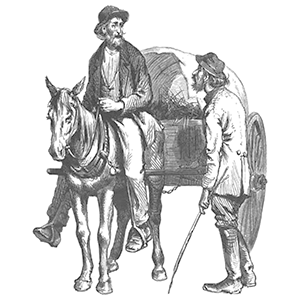
Cracker is a derogatory term for white people, especially poor rural whites in the Southern United States. In reference to a native of Florida or Georgia, however, it is sometimes used in a neutral or positive context and is sometimes used self-descriptively with pride as a form of reappropriation. There are multiple suggested etymologies for ‘cracker,’ most dating its origin to the 18th century or earlier.
One theory holds that the term derives from the ‘cracking’ of whips, either by slave foremen in the antebellum South against African slaves, or by rustics to guide their cattle. Those white foremen or rural poor who cracked their whips theoretically became known as ‘crackers.’ Another whip-derived theory is based on Florida’s ‘cracker cowboys’ of the 19th and early 20th centuries; distinct from the Spanish ‘vaquero’ and the Western ‘cowboy.’ Cracker cowboys did not use lassos to herd or capture cattle. Their primary tools were cow whips and dogs.
Continue reading →
Posted in Language, Politics |
Leave a Comment »
August 6, 2013
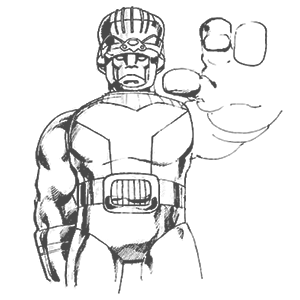
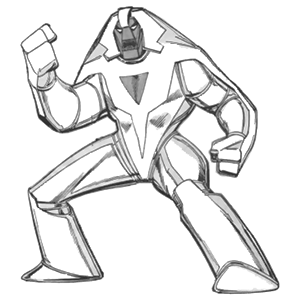
Master Mold is a fictional character, a robot supervillain in the Marvel Universe. Since his primary purpose was to act as a portable Sentinel-creating factory, and the Sentinel robots were primarily used to hunt mutants, Master Mold has almost exclusively appeared in the ‘X-Men’ and related, mutant-themed, comic books.
The Master Mold first appeared in ‘X-Men’ #15 (1965), and was created by Stan Lee and Jack Kirby. In the 1960s, out of fear of a race of superhuman mutants that could dominate the whole world and enslave normal human beings, Dr. Bolivar Trask makes Master Mold, a supercomputer, in the shape of a giant Sentinel robot, that will control and facilitate the construction of the Sentinels (mechanical warriors that are programmed to hunt and capture all superhuman mutants.) Continue reading →
Posted in Art |
Leave a Comment »
August 6, 2013

Sentinels are a fictional variety of mutant-hunting robots, appearing in the Marvel Comics Universe. Created by Stan Lee and Jack Kirby, they first appeared in ‘The X-Men’ (vol. 1) #14 (1965). Sentinels are programmed to locate mutants and capture or kill them using energy weapons and restraining devices; they are capable of flight, and can detect mutants at long range. Several groups of the robots have been created or led by a single, massive Sentinel, called Master Mold.
Because Sentinels are designed to hunt mutants (who often represent the protagonists of Marvel stories) they are usually employed as supervillains or as the tools of other villains. While many are capable of tactical thought, only a handful are self-aware. In the ‘Days of Future Past’ story, which takes place in an alternate future, the ‘Omega Sentinels’ have advanced technologically and become the de facto rulers of the United States. The most powerful among them is Nimrod.
Posted in Art |
Leave a Comment »
August 6, 2013

Bolivar Trask is a fictional character appearing in publications by Marvel Comics. He is a military scientist who is well known as the creator of the Sentinels (mutant-hunting robots). His appearance is modeled on that of Walt Disney. Bolivar Trask was an anthropologist who saw the rise of mutants as a threat to humanity. Bolivar was also the father of Larry Trask, who ironically is revealed to be a mutant precognitive. When Bolivar realized this he gave his son a medallion which suppresses his power.
Bolivar’s other child, Tanya, was also a mutant and her ability to travel through time causes her to vanish. Tanya would be rescued by Rachel Summers in a far future and become a part of the Askani under the alias Madame Sanctity. Tanya’s travels through time would result in property damage to Trask’s land. This mysterious situation would only further cement his attitudes.
Continue reading →
Posted in Art |
Leave a Comment »
August 6, 2013
‘Days of Future Past‘ is a popular storyline in the Marvel Comics comic book ‘The Uncanny X-Men’ issues #141 and #142, published in 1981. It deals with a dystopian alternative future in which mutants are incarcerated in internment camps. An adult Kate Pryde transfers her mind into her younger self, the present-day Kitty Pryde, who brings the X-Men to prevent a fatal moment in history which triggers anti-mutant hysteria.
The storyline was very popular at the time and was produced during the franchise’s rapid rise to popularity due to the writer/artist team of Chris Claremont, John Byrne and Terry Austin. As a result of the storyline’s popularity, the dark future seen in the story has been revisited numerous times. This reality in which the story occurs is designated ‘Earth-811’ in the Marvel Multiverse.
Posted in Art |
Leave a Comment »
August 6, 2013

Weapon X is a fictional clandestine government genetic research facility project in Marvel Comics. They are conducted by the Canadian Government’s Department K, which turns willing and unwilling beings into living weapons. The project often captures mutants and experiments on them to enhance their superpowers, turning them into weapons. They also mutate baseline humans. The Weapon X Project produced Wolverine, Leech, and other characters such as Deadpool and Sabretooth.
Experiment X, or the brutal adamantium-skeletal bonding process, written by Barry Windsor-Smith in his classic story ‘Weapon X’ (originally published in ‘Marvel Comics Presents’ #72-84 in 1991), was eventually revealed as part of the ‘Weapon X Project.’ Grant Morrison’s run on ‘New X-Men’ in 2002 further revealed that Weapon X was only the tenth of an entire series of such projects, collectively known as the Weapon Plus Program. The first project, Weapon I, pertained to the Super Soldier Project that created Captain America.
Continue reading →
Posted in Art |
Leave a Comment »
August 6, 2013
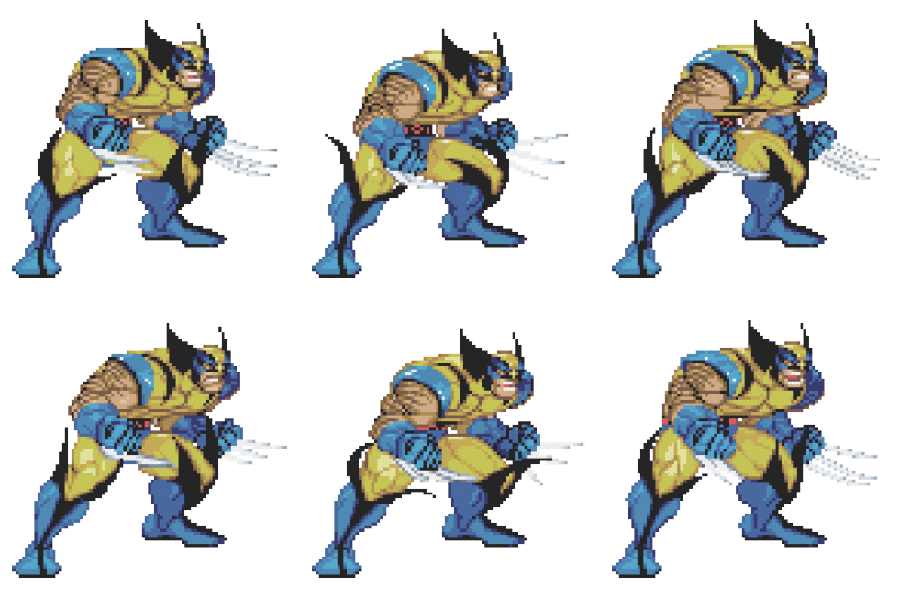
Adamantium is a fictitious indestructible metal alloy in the Marvel Comics Universe. It is best known for being the substance bonded to the character Wolverine’s skeleton and bone claws. The first use of the term adamantium in Marvel Comics was in ‘Avengers’ #66 (1969), where it refers to part of Ultron’s outer shell.
In the Marvel Universe, adamantium is a group of man-made metal alloys of varying durability, but are all nearly indestructible. Adamantium was inadvertently invented by the American metallurgist Dr. Myron MacLain in an attempt to recreate his prior discovery, a unique alloy of steel and vibranium (which required an unknown catalyst for its manufacture) that was used to create Captain America’s shield.
Continue reading →
Posted in Art |
Leave a Comment »
August 6, 2013

Blockbuster, as applied to film, theater, and sometimes also video games, denotes a very popular or successful production. The term began to appear in the American press in the early 1940s, describing the largest of aerial bombs: single bombs capable of destroying a city block, also known as ‘cookies’ during the firebombing of Hamburg. Later figurative use referred to anything making a public impact:
‘Broadway reacted to the request of War Mobilization Director Byrnes to close all places of entertainment by midnight Feb. 26 as if a blockbuster had landed on Manhattan’ (1945). Some entertainment histories cite it as originally referring to a play that is so successful that competing theaters on the block are ‘busted’ and driven out of business, but the OED cites a 1957 use which is simply as a term of ‘biggest,’ after the bombs. Continue reading →
Posted in Art, Language, Money |
Leave a Comment »



