May 31, 2013
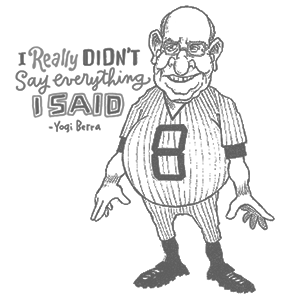
A howler is a glaring blunder, typically an amusing one. Eric Partridge’s ‘A Dictionary of Slang and Unconventional English’ (1951) defined it in part as: ‘… A glaring (and amusing) blunder: from before 1890; … also, a tremendous lie … Literally something that howls or cries for notice, or perhaps … by way of contracting howling blunder.’ Another common interpretation of this usage is that a howler is a mistake fit to make one howl with laughter.
All over the world, probably in all natural languages, there are many informal terms for blunders; the English term ‘howler’ occurs in many translating dictionaries. There are other colloquial English words for howler, in particular the mainly United States and Canadian slang term ‘boner’ which has various interpretations, including that of blunder. Like howler, boner can be used in any sense to mean an ignominious and usually laughable blunder, and also like howler, it has been used in the titles of published collections of largely schoolboy blunders since at least the 1930s.
Continue reading →
Posted in Humor, Language |
Leave a Comment »
May 31, 2013
Kathryn Schulz is an American journalist and author, and the book critic for ‘New York’ magazine. She also wrote ‘The Wrong Stuff,’ a blog on ‘Slate,’ and contributes to the ‘Freakonomics blog’ at ‘The New York Times.’ Schulz began her career in journalism writing for the now-defunct ‘Feed Magazine,’ one of the earliest online magazines. From 2001 to 2006, she was the editor of the online environmental magazine ‘Grist.’
Before that, she was a reporter and editor for ‘The Santiago Times,’ of Santiago, Chile, where she covered environmental, labor, and human rights issues. She was a 2004 recipient of the Pew Fellowship in International Journalism (now the International Reporting Project), and has reported from throughout Central and South America, Japan and the Middle East. Schulz is a graduate of Brown University. Schulz was born and raised in Shaker Heights, Ohio, and currently resides in New York state.
Posted in Language |
Leave a Comment »
May 30, 2013
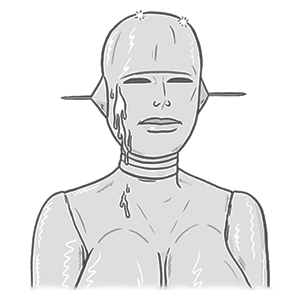
A facial is a term for the sexual activity in which a man ejaculates semen onto the face of one or more sexual partners. A facial is a form of non-penetrative sex, though it is generally performed after some other means of sexual stimulation. Facial cum shots are currently regularly portrayed in pornographic films and videos, often as a way to close a scene.
Many sex experts consider the act demeaning and do not promote it. In response to an inquiry from a reader, sex columnist Dan Savage wrote: ‘Facials are degrading—and that’s why they’re so hot.’
Continue reading →
Posted in Health, Politics, Sex |
1 Comment »
May 30, 2013
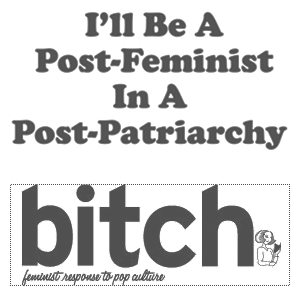
Post-feminism is a reaction against some perceived contradictions and absences of second-wave feminism (a period of feminist activity that first began in the early 1960s in the United States, and eventually spread throughout the Western world). The term post-feminism is ill-defined and is used in inconsistent ways.
However, it generally connotes the belief that feminism has succeeded in its goal of ameliorating sexism, making it fundamentally opposed to the third-wave intention of broadening feminist struggle by focusing on diversity and change.
Continue reading →
Posted in Language, Politics, Sex |
1 Comment »
May 29, 2013
Cosmetic surgery of female genitalia, known as elective genitoplasty, has become pejoratively known as ‘designer vagina.’ Labiaplasty [ley-bee-uh-plas-tee] is a plastic surgery procedure for altering the labia minora (inner labia) and the labia majora (outer labia), the folds of skin surrounding the human vulva (external female genitals).
There are two main categories of women seeking cosmetic genital surgery: those with congenital conditions such as intersex, and those with no underlying condition. The size, color, and shape of labia vary significantly, and may change as a result of childbirth, aging, and other events. In a male-to-female sexual reassignment vaginoplasty is used for the creation of a neovagina, and labiaplasty creates labia where once there were none. Continue reading →
Posted in Health, Money, Sex |
Leave a Comment »
May 29, 2013

The Labia pride movement is a feminist activist movement that attempts to raise awareness for the normal anatomical appearance of the female vulva and defy a perceived growing trend towards cosmetic genital surgery (labiaplasty, also known as ‘designer vagina’). It is supported by several independent feminist groups and based on diverse channels of communication such as cyberfeminism, protest marches and advocating boycotts against physicians and clinics that make use of deceptive advertising.
The London-based feminist group UK feminista organized a protest march through London’s Harley Street, that is known for its high density of upscale medical providers, in late 2011. More than 320 women paraded the street, with slogans like: ‘Keep your mits off our bits!’, ‘There’s nothing finer than my vagina!’, and ‘Harley Street puts my chuff in a huff.’
Continue reading →
Posted in Politics, Sex |
1 Comment »
May 29, 2013
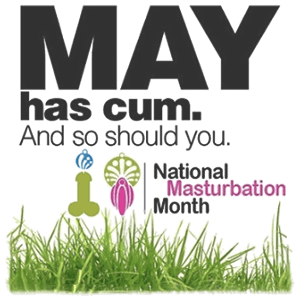
National Masturbation Day (NMD) is an annual event celebrated in May to protect the right to masturbate. The first National Masturbation Day was observed in 1995. The NMD is organized to protest against social stigma against masturbation. Sexologist Carol Queen, an organizer of the NMD, argued, although 90% of men and 65% of women in North America masturbate regularly, masturbation is viewed negatively in contemporary culture and deliberately excluded from the formal education system. According to Queen, ‘We gave our heads a shake and said it’s about time we fought back. That’s when we founded National Masturbation Day.’
The NMD in the United States was started by the San Francisco-based sex toy retail chain ‘Good Vibrations’ and its supporters. According to Cory Silverberg, one of the founders of ‘Come As You Are’ (a Toronto sex shop): ‘The message we want to spread is that masturbation promotes health and happiness- that’s what National Masturbation Day and the masturbate-athon are all about.’ The organizers of National Masturbation Day stressed the health benefits of masturbation citing examples such as stress management, healthier pelvic muscles, secretion of endorphins, decrease in chances of prostatitis among men, decrease in candidiasis among women, cardiovascular exercise, and safe sex.
Posted in Health, Sex |
Leave a Comment »
May 29, 2013

Wank Week was a controversial season of television programming that was due to be broadcast in the United Kingdom by Channel 4, expected to consist of a series of three documentary programs about masturbation. However, plans to broadcast it in 2007 came under public attack from senior television figures, and the planned broadcasts were pulled amid claims of declining editorial standards and controversy over the channel’s public service broadcasting credentials.
While ‘Wank Week’ itself has been cancelled, the films it was meant to showcase may yet be broadcast by the channel at a later date.
Continue reading →
Posted in Politics, Sex, World |
Leave a Comment »
May 29, 2013
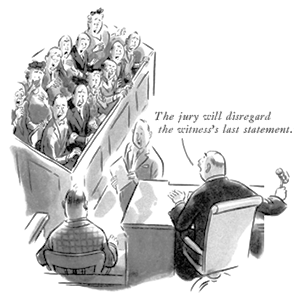
In law, unring the bell is an analogy used to suggest the difficulty of forgetting information once it is known. When discussing jury trials, the phrase is sometimes used to describe the judge’s instructions to the jury to ignore inadmissible evidence or statements they have heard. It may also be used if inadmissible evidence has been brought before a jury and the judge subsequently declares a mistrial.
Commenting on Court TV about the pre-trial release of nearly 200 pages of documents from a hearing on the sexual activities of the accuser in the Kobe Bryant sexual assault case, jury consultant Idgi D’Andrea said, ‘It’s really hard to unring the bell, once that bell has been rung, and ask people to forget what they’ve heard.’ In a more recent case, judge Reggie Walton said that he could not ‘unring the bell’ when he declared a mistrial in the Roger Clemens perjury trial.
Continue reading →
Posted in Language, Politics |
1 Comment »
May 29, 2013
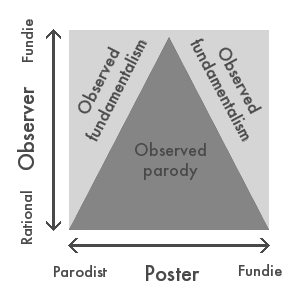
Poe’s law is an Internet adage reflecting the idea that without a clear indication of the author’s intent, it is difficult or impossible to tell the difference between an expression of sincere extremism and a parody of extremism. A corollary of Poe’s law is the reverse phenomenon: sincere fundamentalist beliefs can be mistaken for a parody of those beliefs.
The statement was formulated in 2005 by Nathan Poe on the website christianforums.com in a debate about creationism. The original sentence read: ‘Without a winking smiley or other blatant display of humor, it is utterly impossible to parody a Creationist in such a way that someone won’t mistake [it] for the genuine article.’ Continue reading →
Posted in Humor, Language, Philosophy |
Leave a Comment »
May 29, 2013
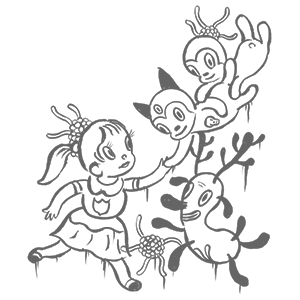
Gary Baseman (b. 1960) is a contemporary artist who works in various creative fields, including illustration, fine art, toy design, and animation. He is the creator of the Emmy-winning ABC/Disney cartoon series, ‘Teacher’s Pet,’ and the artistic designer of ‘Cranium,’ a popular board game.
Baseman’s aesthetic combines iconic pop art images, pre- and post-war vintage motifs, cross-cultural mythology and literary and psychological archetypes. He is noted for his playful, devious and cleverly named creatures, which recur throughout his body of work. Baseman’s art is frequently associated with the lowbrow pop movement, also known as pop surrealism.
Continue reading →
Posted in Art, Games, Humor |
Leave a Comment »
May 25, 2013
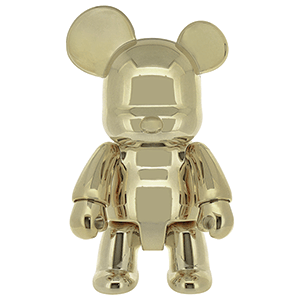
Toy2R (‘Toy to Raymond’) is a designer toy company based in Hong Kong that was founded by Raymond Choy in 1995. Choy spent 10 years as an employee of an American footwear company. After much research and planning, he opened a toy store in 1995. Four years later, Choy observed a trend in collectible toys, now known as designer toys, specifically the ‘urban vinyl’ movement of toy design. He decided to put all his funds into the development of a vinyl figure, intended more as art than as a plaything.
He called this figure the ‘Toyer’; the design, which resembles a simplified human form with a head that resembles a cartoon skull, became his first trademark. The commercial response to this figure led to support from artists and designers all over the world, and enabled his next endeavor, the ‘Qee’ figure. Continue reading →
Posted in Art, Money |
Leave a Comment »



