May 25, 2013
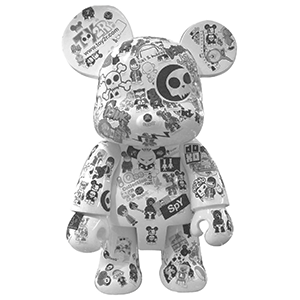
Qee [kee] are a collection of designer toys created by Hong Kong-based company Toy2R, which was founded by Raymond Choy in 1995. Qee figures vary in their design. The original Qee has a body that resembles an extremely simplified human form, somewhat similar in appearance to Playmobil or LEGO figures, though distinctively round and squat.
Depending on its theme, a figure may have the head of a bear with asymmetrical ears called a ‘BearBearQ’; a cat called ‘KitCatQ’; a dog called ‘DoggyQ’; a monkey called ‘MonQ’; or a rabbit called ‘Bunee.’ Continue reading →
Posted in Art |
Leave a Comment »
May 24, 2013
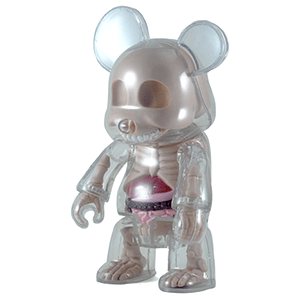
Jason Freeny (b. 1970) is a New York-based artist specialising in sculpture and computer-generated imagery. He is the owner of the Moist Production studio, which acts as the primary publisher and distributor of his works. He is best known for his anatomical art, where he produces cutaway drawings of (typically toy) inanimate objects such as a Lego man, Barbie doll, the animated fish Nemo or a balloon art dog. Jason’s sculptural and illustration work has been the basis for several mass-produced toys.
He has collaborated with Hong Kong-based Toy2R (working on the Qee figurines), Hong Kong-based Fame Master toys producing Gummy bear anatomical toys, United States-based Jailbreak Collective producing the ‘CAPSL’ collectable series and United States-based Marbles the Brain Store creating Freeny’s Brain Cube puzzle.
Posted in Art, Humor |
Leave a Comment »
May 24, 2013
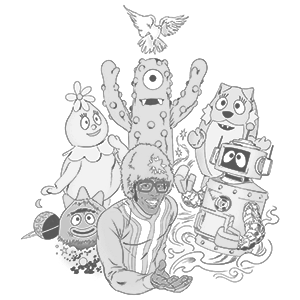
Yo Gabba Gabba! is an American children’s television show that airs on the Nick Jr. cable network. Created by Christian Jacobs (lead singer of the Aquabats) and Scott Schultz, the series premiered in 2007.
Popular artists appearing on the show include The Killers, Jimmy Eat World, Solange Knowles, Devo, Of Montreal, Chromeo, My Chemical Romance, Weezer, The Roots, MGMT, Jack Black, Tony Hawk, Elijah Wood, and The Ting Tings. Among the varied animation sequences during the show is ‘Super Martian Robot Girl,’ designed by indie cartoonists Evan Dorkin and Sarah Dyer. The toy models of the characters that appear at the beginning and end of each show were made by designer toy firm Kidrobot. Continue reading →
Posted in Art, Education, Humor |
Leave a Comment »
May 24, 2013


Star Wars, the popular science fantasy saga, and cultural touchstone, is acknowledged to have been inspired by many sources. These include Hinduism, Qigong (‘Life Energy Cultivation’), Greek philosophy, Greek mythology, Roman history, Roman mythology, parts of the Abrahamic religions, Confucianism, Shintō, and Taoism, not to mention countless cinematic precursors including Akira Kurosawa and Sergio Leone.
George Lucas has said that chivalry, knighthood, paladinism, and related institutions in feudal societies inspired some concepts in the Star Wars movies, most notably the Jedi Knights. The work of the mythologist Joseph Campbell, most notably his book ‘The Hero with a Thousand Faces,’ directly influenced Lucas, and was what drove him to create the ‘modern myth’ of ‘Star Wars.’ The supernatural flow of energy known as The Force is believed to have originated from the concept of prana, or ki/qi/chi, ‘the all-pervading vital energy of the universe.’
Continue reading →
Posted in Art, War, World |
Leave a Comment »
May 24, 2013

The Hidden Fortress is a 1958 jidai-geki (period drama) film directed by Akira Kurosawa and starring Toshiro Mifune as General Makabe Rokurōta and Misa Uehara as Princess Yuki. The film begins with two bedraggled peasants, Tahei and Matashichi (Minoru Chiaki and Kamatari Fujiwara).
Through conversation, they reveal that they had intended to fight with the Yamana clan, but turned up too late, were taken for soldiers of the defeated Akizuki clan, and forced to bury dead. After quarreling and splitting up, the two are both captured again and forced to dig for gold in the Akizuki castle with other prisoners.
Continue reading →
Posted in Art, World |
Leave a Comment »
May 24, 2013

Rear Window is a 1954 American suspense film directed by Alfred Hitchcock, written by John Michael Hayes and based on Cornell Woolrich’s 1942 short story ‘It Had to Be Murder.’ Originally released by Paramount Pictures, the film stars Jimmy Stewart and Grace Kelly. The film is considered by many filmgoers, critics and scholars to be one of Hitchcock’s best.
After breaking his leg photographing a racetrack accident, professional photographer L.B. ‘Jeff’ Jefferies (James Stewart) is confined in his Greenwich Village apartment, using a wheelchair while he recuperates. His rear window looks out onto a small courtyard and several other apartments. During a summer heat wave, he passes the time by watching his neighbors, who keep their windows open to stay cool.
Continue reading →
Posted in Art |
Leave a Comment »
May 24, 2013

‘The Ethical Slut: A Guide to Infinite Sexual Possibilities’ is a 1997 non-fiction book written by family therapist Dossie Easton and sex educator Janet Hardy (given as pseudonym Catherine A. Liszt for the book’s first edition).
The book discusses consensual non-monogamy as a lifestyle, and provides practical guidance on how such long-term relationships work and are put into practice. Continue reading →
Posted in Health, Language, Sex |
1 Comment »
May 24, 2013

There are many toilet-related injuries and some toilet-related deaths throughout history and in urban legends. In young boys, one of the most common causes of genital injury is when the toilet seat falls down while they are using the toilet. Smaller children run the risk of drowning if they fall headfirst into the toilet. Injuries to adults include bruised buttocks, tail bones, and dislocated hips from unsuspectingly sitting on the toilet bowl rim because the seat is up or loose.
Injuries can also be caused by pinching due to splits in plastic seats or by splinters from wooden seats, or if the toilet itself collapses under the weight of the user. Older high flush cast iron cisterns have been known to detach from the wall when the chain is pulled to flush, causing injuries to the user.
Continue reading →
Posted in Death, Health |
Leave a Comment »
May 24, 2013
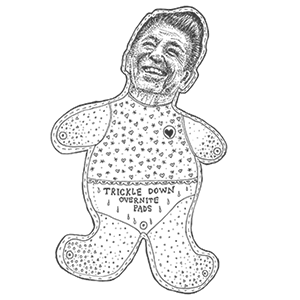
Reaganomics or ‘voodoo economics’ is a negative term which critics use to criticize supply-side economics. The term originated from George H.W. Bush, who criticized Ronald Reagan’s plan for the economy during the Republican presidential primaries in 1980. Reagan’s attitude towards the Federal Government Budget was to drastically reduce taxes – primarily for the wealthy – while greatly increasing spending – primarily for the military. Bush Sr. and others recognized that this could not possibly produce a balanced budget, and would result in great national debt.
The four pillars of Reagan’s economic policy were to reduce the growth of government spending, reduce the federal income tax and capital gains tax, reduce government regulation, and control the money supply in order to reduce inflation.
Continue reading →
Posted in Language, Money, Politics |
2 Comments »
May 24, 2013

Abenomics [ah-bey-nom-iks] refers to the economic policies advocated by Shinzō Abe, the current Prime Minister of Japan. It consists of monetary policy, fiscal policy, and economic growth strategies to encourage private investment.
The detailed policies includes inflation targeting at a 2% annual rate, correction of the excessive yen appreciation, setting negative interest rates, radical quantitative easing (printing money), expansion of public investment, buying operations of construction bonds by Bank of Japan (BOJ), and revision of the Bank of Japan Act.
Continue reading →
Posted in Money, Politics, World |
Leave a Comment »
May 23, 2013


Morphological freedom refers to a proposed civil right of a person to either maintain or modify his or her own body, on his or her own terms, through informed, consensual recourse to, or refusal of, available therapeutic or enabling medical technology.
The term may have been coined by strategic philosopher Max More in his 1993 article, ‘Technological Self-Transformation: Expanding Personal Extropy,’ where he defined it as ‘the ability to alter bodily form at will through technologies such as surgery, genetic engineering, nanotechnology, uploading.’ The term was later used by science debater Anders Sandberg as ‘an extension of one’s right to one’s body, not just self-ownership but also the right to modify oneself according to one’s desires.’ Continue reading →
Posted in Health, Politics, Technology |
Leave a Comment »
May 23, 2013
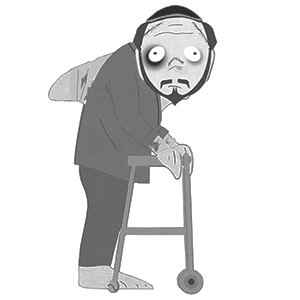
Species dysphoria [dis-fohr-ee-uh] is the experience of dysphoria (depression, discontent), sometimes including dysmorphia (excessive concern over one’s body image), associated with the feeling that one’s body is of the wrong species. Earls and Lalumière (2009) describe it as ‘the sense of being in the wrong (species) body… a desire to be an animal.’
Outside of psychological literature, the term is common within the otherkin and therian communities (people who see themselves as partially or entirely non-human). The phenomenon is sometimes experienced in the context of sexual arousal to the image of one’s self as an animal. ‘Species dysphoria’ is also used informally in psychological literature to compare the experiences of some individuals to those in the transgender community.
Continue reading →
Posted in Health, Sex |
Leave a Comment »



