May 7, 2013
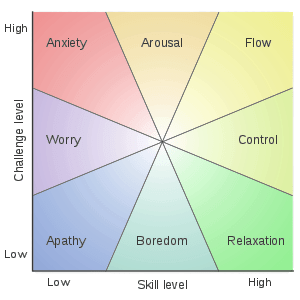
Flow is the mental state of operation in which a person performing an activity is fully immersed in a feeling of energized focus, full involvement, and enjoyment in the process of the activity. In essence, flow is characterized by complete absorption in what one does.
Proposed by Hungarian psychologist Mihály Csíkszentmihályi, the positive psychology concept has been widely referenced across a variety of fields including sports, arts, and science. Popular terms for this or similar mental states include: ‘to be in the moment,’ ‘present,’ ‘in the zone,’ ‘on a roll,’ ‘wired in,’ ‘in the groove,’ ‘on fire,’ ‘in tune,’ ‘centered,’ or ‘singularly focused.’ Continue reading →
Posted in Health, Philosophy, Science |
Leave a Comment »
May 7, 2013
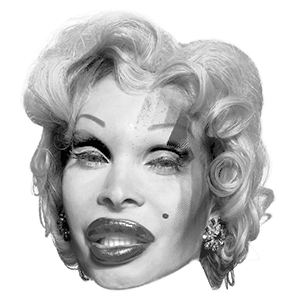
David LaChapelle (b. 1963) is an American photographer and film director. He is best known for his photography, which often references art history and sometimes conveys social messages. His style has been described as ‘hyper-real and slyly subversive’ and as ‘kitsch pop surrealism.’ One 1996 article called him the ‘Fellini of photography,’ a phrase that continues to be applied to him.
He grew up in Connecticut and North Carolina. He has said to have loved the public schools in Connecticut and thrived in their art program as a child and teenager, although he struggled with bullying growing up. He was bullied in his North Carolina school for being gay. When he was 15 years old, he ran away from home to become a busboy at Studio 54 in New York. Eventually he returned home to enroll in the North Carolina School of Arts. He would later attend the School of Visual Arts in NYC. Continue reading →
Posted in Art, Sex |
Leave a Comment »
May 6, 2013
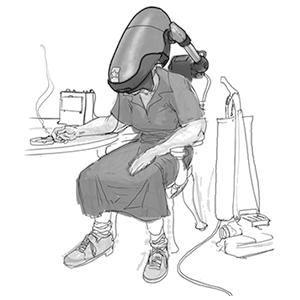
Escapism is mental diversion by means of entertainment or recreation, as an ‘escape’ from the perceived unpleasant or banal aspects of daily life. It can also be used as a term to define the actions people take to help relieve persisting feelings of depression or general sadness.
Entire industries have sprung up to foster a growing tendency for people to remove themselves from the rigors of daily life. Many activities that are normal parts of a healthy existence (e.g., eating, sleeping, exercise, sexual activity) can also become avenues of escapism when taken to extremes or out of proper context. Continue reading →
Posted in Health, Politics |
1 Comment »
May 6, 2013
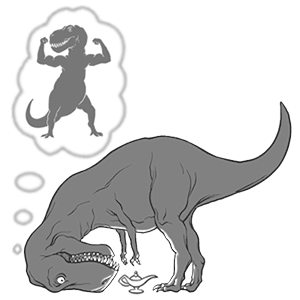
Fantasy in a psychological sense is broadly used to cover two different senses, conscious and unconscious (sometimes spelled ‘phantasy’). A conscious fantasy is a situation imagined by an individual that expresses certain desires or aims on the part of its creator. Fantasies sometimes involve situations that are highly unlikely; or they may be quite realistic. Fantasies can also be sexual in nature.
Another, more basic meaning of fantasy is something which is not ‘real,’ as in perceived explicitly by any of the senses, but exists as an imagined situation of object to subject.
Continue reading →
Posted in Health, Sex |
Leave a Comment »
May 6, 2013
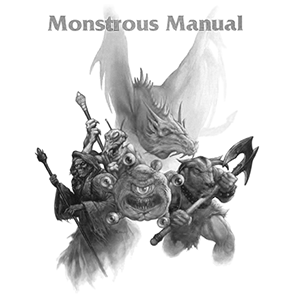
A paracosm [par-uh-kozm] is a detailed imaginary world, or fantasy world, involving humans and/or animals, or perhaps even fantasy or alien creations. Commonly having its own geography, history, and language, it is an experience that is often developed during childhood and continues over a long period of time: months or even years.
The concept was first described by a researcher for the BBC, Robert Silvey, with later research by British psychiatrist Stephen A. MacKeith, and British psychologist David Cohen. The term was coined by Ben Vincent, a participant in Silvey’s 1976 study and a self-professed ‘paracosmist.’
Continue reading →
Posted in Art, Health, Language |
Leave a Comment »
May 6, 2013

Fantasy prone personality (FPP) is a disposition or personality trait in which a person experiences a lifelong extensive and deep involvement in fantasy. This disposition is an attempt, at least in part, to better describe the popular term ‘overactive imagination,’ or ‘living in a dream world.’
An individual with this trait (termed a fantasizer) may have difficulty differentiating between fantasy and reality and may experience hallucinations, as well as self-suggested psychosomatic symptoms. Three closely related psychological constructs are daydreaming, psychological absorption (in which a person becomes absorbed in their mental imagery), and eidetic memory (photographic memory).
Continue reading →
Posted in Health |
1 Comment »
May 6, 2013

An espresso machine is used to produce a traditional Italian espresso, a concentrated coffee drink served in small portions (shots). The first machine for making espresso was built and patented by Angelo Moriondo, who demonstrated a working example at the Turin General Exposition of 1884. He patented his invention that year as a: ‘New steam machinery for the economic and instantaneous confection of coffee beverage.’
In 1901, Luigi Bezzera of Milan patented improvements to the machine; four years later, the patent was bought by Desiderio Pavoni who founded the ‘La Pavoni’ company and began to produce the machine commercially (one a day) in a small Milanese workshop. Continue reading →
Posted in Food, Technology |
Leave a Comment »
May 6, 2013
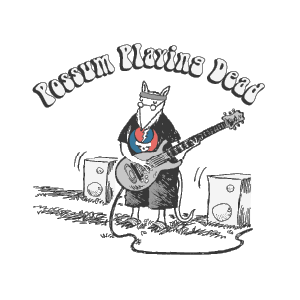
Deception in animals is the giving of information by one animal to another, of the same or different species, in a way that propagates beliefs that are not true. Deception in animals does not automatically imply conscious mind, but can occur at different levels. Mimicry and camouflage enable animals to appear to be other than they are.
Prey animals may appear as predators, or vice versa; both predators and prey may be hard to see (crypsis), or may be mistaken for other objects (mimesis). In Batesian mimicry, harmless animals may appear to be distasteful or poisonous. In automimicry, animals may have eyespots in less important parts of the body than the head, helping to distract attack and increase the chance of survival. Continue reading →
Posted in Science |
1 Comment »
May 6, 2013

A rebus [ree-buhs] is an allusional device that uses pictures to represent words or parts of words. It was a favorite form of heraldic expression used in the Middle Ages to denote surnames, for example in its basic form three salmon fish to denote the name ‘Salmon.’
A more sophisticated example was the rebus of Bishop Walter Lyhart of Norwich, consisting of a stag (or hart) lying down in a conventional representation of water. The composition alludes to the name, profession or personal characteristics of the bearer, and speaks to the beholder ‘Non verbis, sed rebus’ (Latin: ‘not by words but by things’).
Continue reading →
Posted in Games, Humor, Language |
Leave a Comment »
May 3, 2013
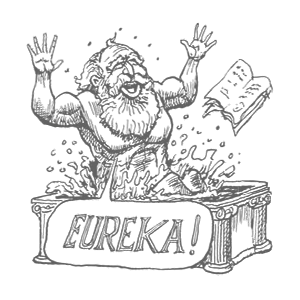
The Eureka effect, also known as the ‘aha! effect,’ refers to the common human experience of suddenly understanding a previously incomprehensible problem or concept. The Eureka effect is named after the myth that the Greek polymath Archimedes, having discovered how to measure the volume of an irregular object, leaped out of a public bath, and ran home naked shouting ‘eureka’ (‘I found it’). Archimedes was asked by the local king to detect whether a crown was pure gold, or if the goldsmith had added silver.
During his trip to the public bath, he noticed that water is displaced when his body sinks into the bath, and that the volume of water displaced equals the volume of the body immersed in the water. This means that he can measure the density of the crown, and compare it to a bar of pure gold. This story is thought to be a myth, because it was first mentioned by the Roman writer Vitruvius nearly 200 years later, and because the method described by Vitruvius would have been inaccurate. Continue reading →
Posted in Science |
2 Comments »
May 2, 2013
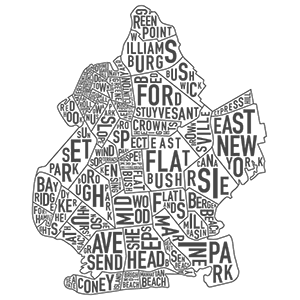
Brooklyn has played a major role in various aspects of American culture including literature, cinema and theater as well as being home to the world renowned Brooklyn Academy of Music and to the second largest public art collection in the United States which is housed in the Brooklyn Museum. Walt Whitman wrote of the Brooklyn waterfront in his classic poem ‘Crossing Brooklyn Ferry.’ Harlem Renaissance playwright Eulalie Spence taught at Eastern District High School in Brooklyn from 1927 to 1938, a time during which she wrote her critically acclaimed plays ‘Fool’s Errand,’ and ‘Her.’
In 1930, poet Hart Crane published the epic poem ‘The Bridge,’ using the Brooklyn Bridge as central symbol and poetic starting point. The novels of Henry Miller include reflections on several of the ethnic German and Jewish neighborhoods of Brooklyn during the 1890s and early 20th century; his novels ‘Tropic of Capricorn’ and ‘The Rosy Crucifixion’ include long tracts describing his childhood and young adulthood spent in the Borough. Continue reading →
Posted in Art, Language, World |
1 Comment »
May 2, 2013

The phrases ‘no homo‘ and ‘pause’ are slang terms. They parenthetically assert that the speaker of such does not have any homosexual intent and are usually used after an utterance that may have given that impression. The term originated in East Harlem slang of the early 1990s.
It was used by many to distance themselves from the stereotype of closeted gay and bisexual men. Several social commentators have criticized the use of both ‘no homo’ and ‘pause’ in hip hop and in the mainstream. It has been said that the phrases, ‘uphold an unhealthy relationship with homosexuality, a relationship based in fear.’ Fox News commentator Marc Lamont Hill encouraged the hip-hop community to stop using the terms. Continue reading →
Posted in Language, Politics, Sex |
Leave a Comment »




