March 25, 2013

A tontine [ton-teen] is an investment plan for raising capital, devised in the 17th century and relatively widespread in the 18th and 19th. It combines features of a group annuity (recurring payments) and a lottery. Each subscriber pays an agreed sum into the fund, and thereafter receives an annuity. As members die, their shares devolve to the other participants, and so the value of each annuity increases. On the death of the last member, the scheme is wound up. In a variant, which has provided the plot device for most fictional versions, on the death of the penultimate member the capital passes to the last survivor.
The investment plan is named after Neapolitan banker Lorenzo de Tonti, who is credited with inventing it in France in 1653, although it has been suggested that he merely modified existing Italian investment schemes. Tonti put his proposal to the French royal government, but after consideration it was rejected by the Parlement de Paris. The first true tontine was therefore organized in the city of Kampen in the Netherlands in 1670. The French finally established a state tontine in 1689 (though it was not described by that name because Tonti had died in disgrace, about five years earlier).
Continue reading →
Posted in Money, World |
Leave a Comment »
March 25, 2013

A number of self-balancing unicycle have been created which are self-balancing only in the forwards-backwards direction, and still need a human being to balance them from side to side.
Aleksander Polutnik’s Enicycle (2006) is probably the first two-axis balancing human-ridable unicycle. In 2009, RYNO Motors of Portland, Oregon created a one-wheeled electric motorcycle called the Micro-Cycle. According to the company, a commercial version is scheduled to go into production in mid 2013.
Posted in Technology |
Leave a Comment »
March 24, 2013

A monowheel is a one-wheeled single-track vehicle similar to a unicycle. However, instead of sitting above the wheel, the rider sits either within it or next to it. The wheel is a ring, usually driven by smaller wheels pressing against its inner rim. Most are single-passenger vehicles, though multi-passenger models have been built. Hand-cranked and pedal-powered monowheels were built in the late 19th century; most built in the 20th century have been motorized.
Some modern builders refer to these vehicles as monocycles, though that term is also sometimes used to describe motorized unicycles. Today, monowheels are generally built and used for fun and entertainment purposes, though from the 1860s through to the 1930s, they were proposed for use as serious transportation. Continue reading →
Posted in Technology |
Leave a Comment »
March 24, 2013
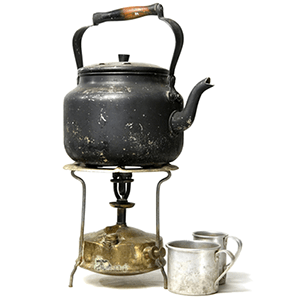
Chifir’ is a type of strong tea brewed in Russia. The etymology is uncertain but is thought to come from the word ‘chikhir” meaning a strong Caucasian wine, or a Siberian word for spoiled wine that has become sour and acidic. Chifir’ is typically prepared with either two or three tablespoons of loose tea per person poured on top of the boiled water. It is brewed for 10–15 minutes without stirring – until the leaves drop to the bottom of the cup. Chifir’ drunk without sugar is highly unpleasant; sweets can be held in the mouth before, during or after drinking to soften its bitter taste.
It is similar to Egyptian Sa’idi tea, a somewhat similar beverage (essentially a 1/9-strength recipe, but consumed in larger quantities).
Posted in Drugs, Food, World |
Leave a Comment »
March 23, 2013

Hypomania [hahy-puh-mey-nee-uh] (literally, ‘below mania’) is a milder former of mania (elevated mood) and is a state characterized by persistent and pervasive elevated (euphoric) or irritable temperament . It is most often associated with the bipolar spectrum. Many who are in a hypomanic state are extremely energetic, talkative, confident, and assertive. They may have a flight of ideas and feel creative.Many people also experience signature hypersexuality.
While hypomania often generates productivity and creativity, it can become troublesome if the subject engages in risky behaviors. Individuals in a hypomanic state have a decreased need for sleep, are extremely outgoing and competitive, and have a great deal of energy. However, unlike with full mania, those with hypomanic symptoms are often fully functioning.
Continue reading →
Posted in Health |
Leave a Comment »
March 23, 2013

Numerous studies have demonstrated correlations between creative occupations and mental illnesses, including bipolar disorder and schizophrenia. The association between bipolar disorder and creativity first appeared in literature in the 1970s, but the idea of a link between ‘madness’ and ‘genius’ is much older, dating back at least to the time of Aristotle. The Ancient Greeks believed that creativity came from the gods, and in particular the Muses, the goddesses of arts and sciences, and the nine daughters of Zeus, the king of the gods.
The idea of a complete work of art emerging without conscious thought or effort was reinforced by the views of the Romantic era. It has been proposed that there is a particular link between creativity and bipolar disorder, whereas major depressive disorder appears to be significantly more common among playwrights, novelists, biographers, and artists. Psychotic individuals are said to display a capacity to see the world in a novel and original way, literally, to see things that others cannot.
Continue reading →
Posted in Art, Health |
Leave a Comment »
March 23, 2013

The Bell Jar is American writer and poet Sylvia Plath’s only novel, which was originally published under the pseudonym ‘Victoria Lucas’ in 1963. The novel is semi-autobiographical with the names of places and people changed.
The book is often regarded as a roman à clef (real events disguised as fiction), with the protagonist’s descent into mental illness paralleling Plath’s own experiences with what may have been clinical depression. Plath committed suicide a month after its first UK publication. The novel was published under her name for the first time in 1967 and was not published in the United States until 1971, pursuant to the wishes of Plath’s mother and her husband Ted Hughes. Continue reading →
Posted in Death, Health, Language |
Leave a Comment »
March 23, 2013

Confessional poetry is a style of poetry that emerged in the United States during the 1950s and 1960s that has been describe as poetry ‘of the personal.’ The content of confessional poems is autobiographical and marked by its exploration of subject matter that was considered taboo at the time. This subject matter included topics like mental illness, sexuality, and suicide.
The school of poetry that became known as ‘Confessional Poetry’ was associated with several poets who redefined American poetry in the generation following World War II, including Robert Lowell, Sylvia Plath, John Berryman, Anne Sexton, Allen Ginsberg, and W. D. Snodgrass. Continue reading →
Posted in Art, Language |
Leave a Comment »
March 22, 2013

‘Xavier: Renegade Angel‘ is a 2007 American CGI fantasy-comedy television series created by John Lee, Vernon Chatman, Jim Tozzi and Alyson Levy. Lee and Chatman are also the creators of ‘Wonder Showzen.’ The show was produced by PFFR, with animation by Cinematico. It premiered on Adult Swim on the Cartoon Network. ‘Xavier’ features a style characterized by a nonlinear, incoherent plot following the humorous musings of an itinerant humanoid pseudo-shaman and spiritual seeker named Xavier.
The show is known for its ubiquitous use of ideologically-critical black comedy, surrealist and absurdist humor presented through a psychedelic, New Age lens. The program is also normally rated TV-MA for intense, graphic, often bloody violence (V), as well as strong sexual content, use of racially/ethnically offensive language, grotesque depictions and content that is considered ‘too morbid and too incomprehensible for young viewers.’
Continue reading →
Posted in Art, Humor, Philosophy |
Leave a Comment »
March 22, 2013
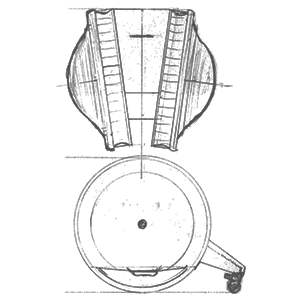
The Kugelpanzer (‘spherical tank’) was a prototype reconnaissance tank built by Nazi Germany during World War II. It was one of the most unusual armored fighting vehicles ever built.
Only one example of this Rollzeug (rolling vehicle) exists in Russia as part of the Kubinka Tank Museum’s collection of German armored vehicles. The Kugelpanzer is simply listed as Item #37 and is painted gloss gray. From fragmentary information, the drive has been removed from the vehicle and no metal samples are allowed to be taken from it. Continue reading →
Posted in Technology, War |
Leave a Comment »
March 22, 2013

Vegemite [vej-uh-mahyt] is a dark brown Australian food paste made from yeast extract. It is a spread for sandwiches and a filling for pastries. A common method of eating Vegemite is on toasted bread with one layer of butter before spreading a thin layer of Vegemite. It is similar to British, New Zealand and South African Marmite, Australian Promite, Swiss Cenovis and German Hefeextrakt. More recently, other spreads – which are Australian-owned – have come on the market to provide an alternative to the now US-owned product, such as the yeast-based AussieMite.
Vegemite is made from brewers’ yeast extract, a by-product of beer manufacturing, various vegetables, wheat and spice additives. It is salty, slightly bitter and malty, and rich in umami (savory flavor) – similar to beef bouillon. The texture is smooth and the product is a paste. It is not as intensely flavored as British Marmite and it is less sweet than the New Zealand version of Marmite. Continue reading →
Posted in Food, Health, World |
Leave a Comment »
March 22, 2013

Robert Venturi (b. 1925) is an American architect, founding principal of the firm Venturi, Scott Brown and Associates, and one of the major architectural figures in the twentieth century. Together with his wife and partner, Denise Scott Brown, he helped to shape the way that architects, planners and students experience and think about architecture and the American built environment.
Their buildings, planning, theoretical writings and teaching have contributed to the expansion of discourse about architecture. He is also known for coining the maxim ‘Less is a bore’ a postmodern antidote to Mies van der Rohe’s famous modernist dictum ‘Less is more.’
Continue reading →
Posted in Money, Technology |
Leave a Comment »



