March 18, 2013

Brian Donnelly (b. 1974), professionally known as KAWS, is a New York-based artist and designer of limited edition toys and clothing. Donnelly graduated from the School of Visual Arts in New York with a Bachelor of Fine Arts in illustration in 1996. After graduation, KAWS briefly worked for Disney as a freelance animator painting backgrounds. He also contributed to the animated series ‘101 Dalmatians,’ ‘Daria,’ and ‘Doug.’ He began his career as a graffiti artist growing up in Jersey City.
Later moving to New York City in the 1990s, KAWS started subverting imagery on billboards, bus shelters and phone booth advertisements. These reworked advertisements were at first left alone, lasting for up to several months, but as KAWS’ popularity skyrocketed, the ads became increasingly sought after. In addition to New York, KAWS has done work in Paris, London, Berlin and Tokyo. KAWS’s ‘Companion,’ a grayscale figure based on Mickey Mouse with his face obscured by both hands, was adapted into a balloon for the 2012 ‘Macy’s Thanksgiving Day Parade’ as part of the parade’s ‘Blue Sky Gallery’ feature. Continue reading →
Posted in Art, Money |
Leave a Comment »
March 18, 2013

Urban vinyl is a type of designer toy, featuring action figures in particular which are usually made of vinyl. Although the term is sometimes used interchangeably with the term designer toy, it is more accurately used as a modifier: not all designer toys can be considered urban vinyl, while urban vinyl figures are necessarily designer toys, by virtue of the way in which they are produced.
Like designer toys in general, urban vinyl figures feature original designs, small production numbers, and are marketed to collectors, predominantly adults. The urban vinyl trend was initiated by artist Michael Lau, who first created urban vinyl figures in Hong Kong in the late 1990s. Other creators of urban vinyl figures are Japanese artist and designer Takashi Murakami, Australian designer Nathan Jurevicius’s ‘Scarygirl,’ based on characters from his comic of the same name, and produced in conjunction with Hong Kong company Flyingcat, and former graffiti artist KAWS. Continue reading →
Posted in Art, Games |
Leave a Comment »
March 15, 2013


Google X Lab, sometimes known as Google X, is a secret facility run by Google thought to be located somewhere in the Bay Area of Northern California. Work at the lab is overseen by Sergey Brin, one of Google’s co-founders. Reportedly worked on at the lab is a list of 100 projects pertaining to future technologies such as a space elevator, self-driving car, augmented reality glasses, a neural network that uses semi-supervised learning, enabling speech recognition and extraction of objects from video – for instance detecting if a cat is in a frame of video, and the Web of Things (a network of objects with embedded computers).
Project Glass is a research and development program by Google to develop an augmented reality head-mounted display (HMD). The intended purpose of Project Glass products would be the hands-free displaying of information currently available to most smartphone users, and allowing for interaction with the Internet via natural language voice commands. Continue reading →
Posted in Money, Technology |
Leave a Comment »
March 15, 2013

Solve for X is a think tank project launched by Google to incite collaboration to solve global issues, ‘X’ representing a remedy. The project kicked off in 2012 at a three-day convention at CordeValle Resort in San Martin, California. ‘Solve for X’ talks were presented to 50 people, hosted by Google executives Eric Schmidt, Astro Teller, and Megan Smith.
Solve for X was initially believed to be linked to the Google X Lab working on new technology such as web-connected appliances, driverless cars, and space elevators, but ‘eWeek’ reported that Google X is wed to more realistic undertakings, not the ‘moonshot’ solutions ‘Solve for X’ was created to pursue.
Posted in Money, Technology |
Leave a Comment »
March 15, 2013

Saul Griffith is an Australian American inventor. He is best known for his inexpensive technique for making prescription eyeglasses. This method uses two flexible surfaces and a pourable resin. Saul Griffith was born into an academic family, and encouraged to question all around him, to experiment as a process of learning, and to communicate effectively.
He won a scholarship to study Material Science at the University of New South Wales where he graduated in 1997 with a Bachelor of Metallurgical Engineering. In 2000, Griffith graduated from the University of Sydney with a Master of Engineering degree. He won a scholarship to MIT Media Lab to study towards a PhD that he completed in 2004. The subject of his PhD Thesis was ‘self replicating machines.’ They were one of the first instances of artificial replication being demonstrated using real physics.
Posted in Technology |
1 Comment »
March 15, 2013

Bullet time is a special and visual effect that refers to a digitally enhanced simulation of variable-speed (i.e. slow motion, time-lapse). It is characterized both by its extreme transformation of time (slow enough to show normally imperceptible and unfilmable events, such as flying bullets) and space (by way of the ability of the camera angle—the audience’s point-of-view—to move around the scene at a normal speed while events are slowed).
This is almost impossible with conventional slow-motion, as the physical camera would have to move impossibly fast; the concept implies that only a ‘virtual camera,’ often illustrated within the confines of a computer-generated environment such as a virtual world or virtual reality, would be capable of ‘filming’ bullet-time types of moments. Technical and historical variations of this effect have been referred to as time slicing, view morphing, slow-mo, temps mort, and virtual cinematography. Continue reading →
Posted in Art, Games, Technology |
Leave a Comment »
March 15, 2013
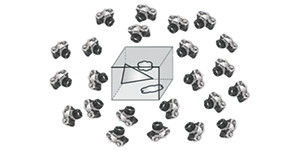

Slow motion (commonly abbreviated as slowmo) is an effect in film-making whereby time appears to be slowed down. It was invented by the Austrian priest August Musger. Typically this style is achieved when each film frame is captured at a rate much faster than it will be played back.
When replayed at normal speed, time appears to be moving more slowly. A term for creating slow motion film is ‘overcranking’ which refers to hand cranking an early camera at a faster rate than normal (i.e. faster than 24 frames per second). Slow motion can also be achieved by playing normally recorded footage at a slower speed. This technique is more often applied to video subjected to instant replay, than to film. Continue reading →
Posted in Art, Technology |
Leave a Comment »
March 15, 2013

Tachypsychia [tak-ee-sahy-kee-uh] is a neurological condition that alters the perception of time, usually induced by physical exertion, drug use, or a traumatic event. It is sometimes referred to by martial arts instructors and self defense experts as an ‘adrenaline dump.’
For someone affected by tachypsychia events appear to slow down and objects appear as moving in a speeding blur. It is believed that tachypsychia is induced by a combination of high levels of dopamine and norepinephrine, usually during periods of great physical stress and/or in violent confrontation. Tachypsychia is related to the ‘fight or flight’ response of the body to events considered life threatening.
Continue reading →
Posted in Health, War |
Leave a Comment »
March 14, 2013

Chauvinism [shoh-vuh-niz-uhm], in its original and primary meaning, is an exaggerated, bellicose patriotism and a belligerent belief in national superiority and glory. It is an eponym of a French soldier Nicolas Chauvin who was credited with many superhuman feats in the Napoleonic wars.
By extension, it has come to include an extreme and unreasoning partisanship on behalf of any group to which one belongs, especially when the partisanship includes malice and hatred towards rival groups. Jingoism is the British parallel form of this French word, when referring to nation. Continue reading →
Posted in Politics, Sex, World |
Leave a Comment »
March 14, 2013

LifeStraw is a water filter that filters a maximum of 1000 liters of water, enough for one person for one year that was designed by the Swiss-based Vestergaard Frandsen for people living in developing nations and for distribution in humanitarian crisis. LifeStraw Family filters a maximum of 18,000 liters of water, providing safe drinking water for a family of five for up to three years. The LifeStraw is a plastic tube 310 millimeters long and 30 millimeters in diameter, Water that is drawn up through the straw first passes through hollow fibers that filter water particles down to 0.2 microns across, using only physical filtration methods and no chemicals.
LifeStraw has been generally praised for its effective and instant method of bacteria and protozoa removal and consumer acceptability. Paul Hetherington, of the charity WaterAid, has criticized the LifeStraw for being too expensive for the target market. He also points to other important problems linked with accessing the water in developing countries, which wait to be solved, but are not addressed by the device itself.
Posted in Food, Health, Technology |
Leave a Comment »
March 14, 2013
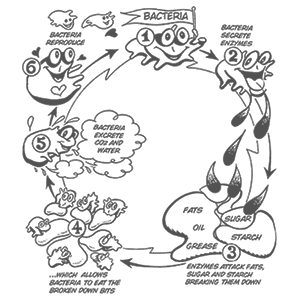
Bioremediation [bahy-oh-ri-mee-dee-ey-shuhn] is the use of micro-organism metabolism to remove pollutants. In situ bioremediation involves treating the contaminated material at the site, while ex situ involves the removal of the contaminated material to be treated elsewhere.
Some examples of bioremediation related technologies are phytoremediation (fixing environmental problems through the use of plants), bioventing (groundwater remediation), bioleaching (extracting metals from their ores through the use of living organisms), landfarming (soil remediation), bioreactors (wastewater and sewage treatment), composting, bioaugmentation (the introduction of microbial organisms to treat contaminated soil or water), rhizofiltration (filtering water through a mass of roots), and biostimulation (modification of the environment to stimulate existing bacteria capable of bioremediation). Continue reading →
Posted in Science |
Leave a Comment »
March 14, 2013

A green wall is a wall, either free-standing or part of a building, that is partially or completely covered with vegetation and, in some cases, soil or an inorganic growing medium. The concept of the green wall dates back to the Hanging Gardens of Babylon (600 BCE).
The modern green wall with integrated hydroponics was invented by Professor of Landscape Architecture Stanley Hart White at the University of Illinois Urbana-Champaign in 1931-38. White holds the first known patent for a green wall, or vertical garden, conceptualizing this new garden type as a solution to the problem of modern garden design. Continue reading →
Posted in Science, Technology |
Leave a Comment »



