March 14, 2013

A green wall is a wall, either free-standing or part of a building, that is partially or completely covered with vegetation and, in some cases, soil or an inorganic growing medium. The concept of the green wall dates back to the Hanging Gardens of Babylon (600 BCE).
The modern green wall with integrated hydroponics was invented by Professor of Landscape Architecture Stanley Hart White at the University of Illinois Urbana-Champaign in 1931-38. White holds the first known patent for a green wall, or vertical garden, conceptualizing this new garden type as a solution to the problem of modern garden design. Continue reading →
Posted in Science, Technology |
Leave a Comment »
March 14, 2013

Living Machine is a trademark and brand name for a patented form of ecological wastewater treatment designed to mimic the cleansing functions of wetlands. Also known as Solar Aquatics Systems, the latest generation of the technology is based on fixed-film ecology and the ecological processes of a natural tidal wetland, one of nature’s most productive ecosystems.
The Living Machine is an intensive bioremediation system that can also produce beneficial byproducts, such as reuse-quality water, ornamental plants and plant products—for building material, energy biomass, animal feed. Continue reading →
Posted in Money, Science, Technology |
1 Comment »
March 14, 2013
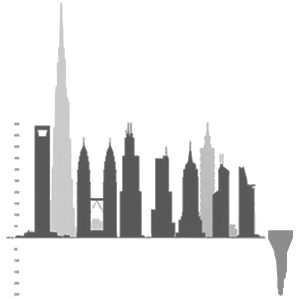
A seascraper, also known as a waterscraper, is a proposed large building which will function as a floating city. It would generate its own energy through wave, wind, current, and solar energy, and produce its own food through farming, aquaculture, and hydroponics. Architect Koen Othuis of the Netherlands specializes in ‘amphibious’ buildings, some floating and some using other systems to adapt to wet environments.
In 2010 Sarly Adre bin Sarkum of Malaysia proposed a building about the size of the Empire State Building which would float in the ocean with only the top few stories out of water. It would house thousands of people and be self-contained, growing its own food and generating its own energy. Another design concept for a mostly submerged structure is ‘The Gyre,’ which would stretch 400 meters deep and over a kilometer across. It is designed to house over 2000 people, and be completely self-sufficient, producing its own food and electricity. It was designed by the firm Zigloo, as a submission to eVolo’s Skyscraper Design Competition in 2009.
Posted in Technology |
Leave a Comment »
March 13, 2013
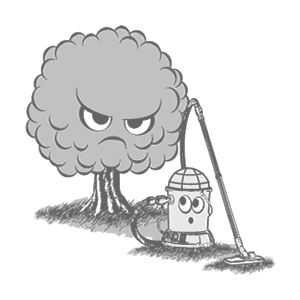
A power vacuum is, in its broadest sense, an expression for a condition that exists when someone has lost control of something and no one has replaced them. It is usually used to refer to a political situation that can occur when a government has no identifiable central authority.
The metaphor implies that, like a physical vacuum, other forces will tend to ‘rush in’ to fill the vacuum as soon as it is created, perhaps in the form of an armed militia or insurgents, military coup, warlord or dictator. Continue reading →
Posted in Language, Politics |
Leave a Comment »
March 13, 2013

A dysfunctional family is a family in which conflict, misbehavior, and often child neglect or abuse on the part of individual parents occur continually and regularly, leading other members to accommodate such actions.
Children sometimes grow up in such families with the understanding that such an arrangement is normal. Dysfunctional families are primarily a result of co-dependent adults, and may also be affected by addictions, such as substance abuse (alcohol, drugs, etc.), or sometimes an untreated mental illness. Dysfunctional parents may emulate or over-correct from their own dysfunctional parents. In some cases, a ‘child-like’ parent will allow the dominant parent to abuse their children. Continue reading →
Posted in Health |
Leave a Comment »
March 13, 2013

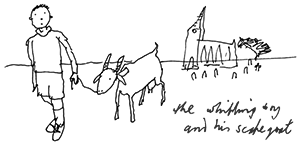
Identified patient (IP) is a form of dysfunctional parenting where one child, usually selected by the mother, is forced into going to therapy while the family’s overall dysfunction is kept hidden. The term is also used in the context of organizational management, in circumstances where an individual becomes the carrier of a group problem (also known as scapegoating).
The term emerged from the work on family homeostasis in the Bateson Project, a ground-breaking collaboration organized by English social scientist Gregory Bateson in the 1950s and early 1960s. Bateson described it as a way to identify a largely unconscious pattern of behavior whereby an excess of painful feelings in a family lead to one member being identified as the cause of all the difficulties – a scapegoating of the IP. Continue reading →
Posted in Health |
1 Comment »
March 13, 2013


Role suction is a term introduced in the USA by pyschologist Fritz Redl in the mid-twentieth century to describe the power of a social group to allocate roles willy-nilly to its members. British psychoanalyst W. R. Bion’s group dynamics further explored the ways whereby the group (unconsciously) allocates particular functions to particular individuals in order to have its covert emotional needs met; and the process has recently been highlighted anew within the ‘Systems Centered Therapy’ of Yvonne Agazarian (a form of group therapy).
Among regularly occurring group roles are those of the ‘scapegoat’ for the group’s troubles; the ‘joker’; the ‘peacemaker’; the ‘critic/spokesperson’ for group standards; the ‘idol,’ or upholder of the group ideal; and the ‘identified patient’ (the person in a dysfunctional group who has been subconsciously selected to act out the group’s inner conflicts as a diversion). In mixed gender groups, women may be disproportionately pressured by role suction into playing a nurturing/peacemaker role.
Continue reading →
Posted in Health, Language, Science |
Leave a Comment »
March 13, 2013

Coulrophobia [kool-ruh-foh-bee-uh] is a fear of clowns. The term is of recent origin, probably dating from the 1980s, and according to one analyst, ‘has been coined more on the Internet than in printed form because it does not appear in any previously published, psychiatric, unabridged, or abridged dictionary.’ However, the author later notes, ‘regardless of its less-than-verifiable etymology, coulrophobia exists in several lists.’ The prefix ‘coulro-‘ may be a neologism derived from an Ancient Greek word meaning ‘stilt-walker,’ although the concept of a clown as a figure of fun was unknown in classical Greek culture, stiltwalking was practiced.
According to a psychology professor at California State University, Northridge, young children are ‘very reactive to a familiar body type with an unfamiliar face.’ A study conducted by the University of Sheffield found that the children did not like clown décor in the hospital or physicians’ office settings. The survey was about children’s opinions on décor for an upcoming hospital redesign. Dr Penny Curtis, a researcher, stated ‘We found that clowns are universally disliked by children. Some found the clown images to be quite frightening and unknowable.’
Posted in Health, Humor, Language |
1 Comment »
March 13, 2013

A pocket universe is a concept in inflationary theory, proposed by theoretical physicist Alan Guth. It defines a realm like the one that contains the observable universe as only one of many inflationary zones. Astrophysicist Jean-Luc Lehners, of the Princeton Center for Theoretical Science, has argued that an inflationary universe produces pockets.
As he wrote in 2012, ‘Eternal inflation produces pocket universes with all physically allowed vacua and histories. Some of these pocket universes might contain a phase of slow-roll inflation, some might undergo cycles of cosmological evolution, and some might look like the Galilean genesis or other ’emergent’ universe scenarios. Which one of these types of universe we are most likely to inhabit depends on the measure we choose in order to regulate the infinities inherent in eternal inflation.’ Continue reading →
Posted in Art, Language, Science |
Leave a Comment »
March 13, 2013

An Identicon is a visual representation of a hash value, usually of an IP address, that serves to identify a user of a computer system as a form of avatar while protecting the users’ privacy.
The original Identicon was a 9-block graphic, and the representation has been extended to other graphic forms by third parties.
Continue reading →
Posted in Language, Technology |
Leave a Comment »
March 12, 2013
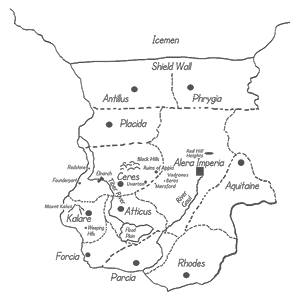
‘Codex Alera‘ is a fantasy book series by novelist Jim Butcher. The series chronicles the coming-of-age of a young man named Tavi in the realm of Alera, an empire similar to Rome, on the world of Carna. Every Aleran has some degree of command over elemental forces or spirits called furies, save for Tavi, who is considered unusual for his lack of one. As the aging First Lord struggles to maintain his hold on a realm on the brink of civil war, Tavi must use all of his intelligence to save Alera.
The inspiration for the series came from a bet Jim was challenged to by a member of the Delray Online Writer’s Workshop. The challenger bet that Jim could not write a good story based on a lame idea, and Jim countered that he could do it using two lame ideas of the challenger’s choosing. The ‘lame’ ideas given were ‘Lost Roman Legion,’ and ‘Pokémon.’
Posted in Art, Humor, Language |
Leave a Comment »
March 12, 2013

A national myth is an inspiring narrative or anecdote about a nation’s past. Such myths often serve as an important national symbol and affirm a set of national values. A national myth may sometimes take the form of a national epic. A considerable amount of related material is at civil religion. A national myth may be a legend or fictionalized narrative, which has been elevated to serious mythological, symbolical and esteemed level so as to be true to the nation.
It might simply over-dramatize true incidents, omit important historical details, or add details for which there is no evidence; or it might simply be a fictional story that no one takes to be true literally, but contains a symbolic meaning for the nation. The national folklore of many nations includes a founding myth, which may involve a struggle against colonialism or a war of independence. In some cases, the meaning of the national myth may become disputed among different parts of the population.
Continue reading →
Posted in Language, Politics, World |
Leave a Comment »



