February 26, 2013

The Mediterranean diet is a modern nutritional recommendation inspired by the traditional dietary patterns of southern Italy, Greece, and Spain. The principal aspects of this diet include proportionally high consumption of olive oil, legumes, unrefined cereals, fruits and vegetables, moderate to high consumption of fish, moderate consumption of dairy products (mostly as cheese and yogurt), moderate wine consumption, and low consumption of meat and meat products.
Despite its name, this diet is not typical of all Mediterranean cuisine. In Northern Italy, for instance, lard and butter are commonly used in cooking, and olive oil is reserved for dressing salads and cooked vegetables. In North Africa, wine is traditionally avoided by Muslims. In both North Africa and the Middle East, sheep’s tail fat and rendered butter (samna) are the traditional staple fats, with some exceptions. Continue reading →
Posted in Food, Health, World |
Leave a Comment »
February 26, 2013

The Peel P50 is a three-wheeled microcar originally manufactured from 1962 to 1965 by the Peel Engineering Company on the Isle of Man in the Irish Sea. It currently holds the record for the smallest automobile to go into production.
It has no reverse gear, but a handle at the rear allows the very lightweight car to be physically maneuvered when required. Designed as a city car, it was advertised as capable of seating ‘one adult and a shopping bag.’ The vehicle’s only door was on its left side, and equipment included a single windscreen wiper and only one headlight. Standard colors were Daytona White, Dragon Red, and Dark Blue. The 1963 model retailed for £199 when new. 50 of them were produced, and only 27 of them are known to be still in existence. Continue reading →
Posted in Humor, Technology |
Leave a Comment »
February 26, 2013

Alex Gross (b. 1968) is a visual artist currently working in Los Angeles; he specializes in oil paintings on canvas whose themes include globalization, commerce, great beauty, dark mayhem, and the remorseless passage of time. Alex graduated in 1990 from Art Center College of Design, in Pasadena, California. Since then, he has become established as an artist in the Pop Surrealism movement (e.g. lowbrow).
In 2000, he received a fellowship from the Japan Foundation; he spent two months traveling throughout Japan, researching and collecting a wide variety of Japanese Fine and Commercial art, as research for his own artwork. Part of his collection was compiled and published by Taschen under the title ‘Japanese Beauties’ in 2004. Continue reading →
Posted in Art |
Leave a Comment »
February 26, 2013

Yuko Shimizu is a Japanese illustrator based in New York City. Among comic fans, she is best known for her ongoing monthly covers for ‘The Unwritten’ and her cover art for P. Craig Russell’s comic book adaptations of Neil Gaiman’s ‘The Sandman: The Dream Hunters,’ published by Vertigo (DC Comics). Her self-titled monograph was published by Gestalten in the fall of 2011, and her children’s book, ‘Barbed Wire Baseball,’ written by Marissa Moss, is scheduled to be published by Abrams Books in the spring of 2013. She has been a faculty member at the School of Visual Arts since 2003.
She graduated from Waseda University’s School of Commerce in 1988 as valedictorian and soon began her first job in the corporate PR department of one of Tokyo’s largest sogo shoshas (trading company). Eleven years later, she resigned and moved to New York City to pursue her childhood dream of becoming an artist. She set out to earn a second bachelor’s degree, this time in illustration at the School of Visual Arts. However, after finishing her sophomore year, she was accepted into the MFA Illustration as Visual Essay program. She graduated in May 2003.
Posted in Art |
Leave a Comment »
February 25, 2013
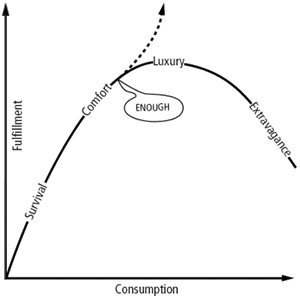
Growth Fetish is a 2003 book about economics and politics by the Australian liberal political theorist Clive Hamilton. The book argues that the policies of unfettered capitalism pursued by the west for the last 50 years has largely failed, since the underlying purpose of the creation of wealth is happiness, and Hamilton contends that people in general are no happier now than 50 years ago, despite the huge increase in personal wealth. In fact, he suggests that the reverse is true. He states that the pursuit of growth has become a fetish, in that it is seen as a universal magic cure for all of society’s ills.
Hamilton also proposes that the pursuit of growth has been at a tremendous cost in terms of the environment, erosion of democracy, and the values of society as a whole. One result is that we, as a society, have become obsessed with materialism and consumerism. Hamilton’s catchphrase ‘People buy things they don’t need, with money they don’t have, to impress people they don’t like’ neatly sums up his philosophy on consumerism. Continue reading →
Posted in Language, Money |
Leave a Comment »
February 25, 2013

‘Animal spirits‘ is the term economist John Maynard Keynes used in his 1936 book ‘The General Theory of Employment, Interest and Money’ to describe emotions which influence human behavior and can be measured in terms of consumer confidence. It has since been argued that trust is also included or produced by ‘animal spirits.’ Several articles and at least two books with a focus on “animal spirits” were published in 2008 and 2009 as a part of the Keynesian resurgence.
According to Keynes: ‘Even apart from the instability due to speculation, there is the instability due to the characteristic of human nature that a large proportion of our positive activities depend on spontaneous optimism rather than mathematical expectations, whether moral or hedonistic or economic. Most, probably, of our decisions to do something positive, the full consequences of which will be drawn out over many days to come, can only be taken as the result of animal spirits – a spontaneous urge to action rather than inaction, and not as the outcome of a weighted average of quantitative benefits multiplied by quantitative probabilities.’
Continue reading →
Posted in Language, Money |
Leave a Comment »
February 25, 2013

The Kit-Cat Klock is an art deco novelty style wall clock in the shape of a grinning black cat with cartoon eyes that roll horizontally in sync with a pendulum tail that wags beneath. The clock is traditionally colored black, but models in other colors/styles are available. It first appeared during the 1930s. The clock is an iconic symbol of kitchens in pop culture. Having changed very little in the intervening years, the first clock was made in 1932 by the California Clock Company in Portland, Oregon.
The first generation of clocks, manufactured in the 1930s, 1940s and 1950s, have two paws, while newer models have four paws and a bow tie. The words ‘Kit-Cat’ were added to the clock face in the 1980s. The original clocks were plug-in, but most models sold since the late 1980s use batteries. The manufacturer estimates that the clock has sold on average at the rate of one every three minutes for the last 50 years.
Posted in Art, Humor |
Leave a Comment »
February 25, 2013

Felix the Cat is a cartoon character created in the silent film era. His black body, white eyes, and giant grin, coupled with the surrealism of the situations in which his cartoons place him, combine to make Felix one of the most recognized cartoon characters in film history. Felix was the first character from animation to attain a level of popularity sufficient to draw movie audiences. Felix’s origins remain disputed. Australian cartoonist/film entrepreneur Pat Sullivan, owner of the Felix character, claimed during his lifetime to be its creator.
However, American animator Otto Messmer, Sullivan’s lead animator, has also been credited as such. What is certain is that Felix emerged from Sullivan’s studio in NYC, and cartoons featuring the character enjoyed success and popularity in 1920s popular culture. Aside from the animated shorts, Felix starred in a comic strip (drawn by Messmer) beginning in 1923, and his image soon adorned merchandise such as ceramics, toys and postcards. Several manufacturers made stuffed Felix toys. Jazz bands such as Paul Whiteman’s played songs about him (1923’s ‘Felix Kept On Walking’ and others).
Continue reading →
Posted in Art, Humor, Money |
Leave a Comment »
February 20, 2013

Fertility and intelligence research has indicated that in humans, fertility rate and intelligence tend to be inversely correlated, that is to say, the more intelligent, as measured by IQ tests, exhibit a lower total fertility rate than the less intelligent. Survival rates are also correlated with IQ, so the net effect on population intelligence is unclear.
It is theorized that if the inverse correlation of IQ with fertility rate is stronger than the correlation of survival rate, and if heritable factors involved in IQ are consistently expressed in populations with different fertility rates, and if this continued over a significant number of generations, it could lead to a decrease in population IQ scores. Other correlates of IQ include income and educational attainment, which are also inversely correlated with fertility rate, and are to some degree heritable.
Continue reading →
Posted in Education, Sex |
1 Comment »
February 20, 2013
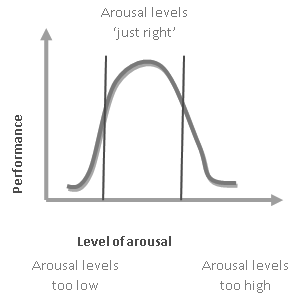
In economics, a bliss point is a quantity of consumption where any further increase would make the consumer less satisfied. It is a quantity of consumption which maximizes utility in the absence budget constraint.
In other words, it refers to the amount of consumption that would be chosen by a person so rich that money imposed no constraint on his or her decisions.
Posted in Food, Money, Science |
Leave a Comment »
February 20, 2013

Sensory-specific satiety [suh-tahy-i-tee] is a sensory hedonic phenomenon that refers to the declining satisfaction generated by the consumption of a certain type of food, and the consequent renewal in appetite resulting from the exposure to a new flavor or food. The phenomenon was first described in 1956 by French physiologist Jacques Le Magnen, and the term was coined in 1981 by food scientist Barbara J. Rolls and neuroscientist Edmund T. Rolls. Its concept illustrates the role of physical stimuli in generating appetite and, more specifically, explains the significance of taste in relation to hunger. Besides conditioned satiety and alimentary alliesthesia, it is one of the three major phenomena of satiation.
This process is most commonly illustrated by a standard buffet. People are more likely to eat a larger amount of food at a buffet because the variety of foods and flavors presented renews a sense of appetite in the individual. A study conducted by Rolls and van Duijvenvoorde in 1984 verified this process by simulating a buffet-style meal. They fed participants four meals that included sausages, bread and butter, chocolate desert, and bananas. They then fed the participants four courses of one of these foods. The results revealed a 44% increase in overall food consumption when exposed to the meals with a variety of foods.
Continue reading →
Posted in Food, Health |
Leave a Comment »
February 19, 2013


Wireless power or wireless energy transmission is the transmission of electrical energy from a power source to an electrical load without man-made conductors. Wireless transmission is useful in cases where interconnecting wires are inconvenient, hazardous, or impossible. The problem of wireless power transmission differs from that of wireless telecommunications, such as radio. In the latter, the proportion of energy received becomes critical only if it is too low for the signal to be distinguished from the background noise.
With wireless power, efficiency is the more significant parameter. A large part of the energy sent out by the generating plant must arrive at the receiver or receivers to make the system economical. The most common form of wireless power transmission is carried out using direct induction followed by resonant magnetic induction. Other methods under consideration are electromagnetic radiation in the form of microwaves or lasers and electrical conduction through natural media. Continue reading →
Posted in Technology |
Leave a Comment »



