February 19, 2013
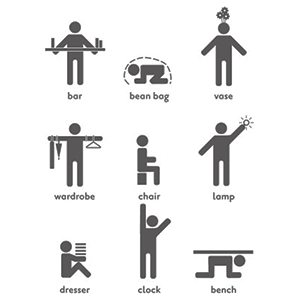
Human furniture (or forniphilia) is a form of bondage and sexual objectification in which a person’s body is incorporated into a chair, table, cabinet or other piece of furniture. The term was originally coined by bondage aficionado Jeff Gord.
Forniphilia is an extreme form of bondage because the subject usually is tightly bound and expected to stay immobile for a prolonged period. They are often gagged and/or placed in position where there is a danger of being smothered. Proper safety requires frequent checks of the submissive’s well-being.
Posted in Games, Sex |
1 Comment »
February 19, 2013
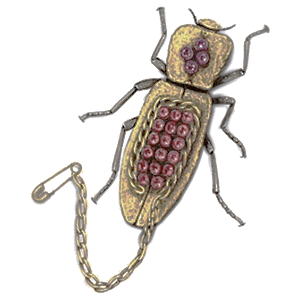
Live insect jewelry refers to jewelry, made from living creatures- usually bejeweled, large insects- which is worn as a fashion accessory. The use of insects as live jewelry has existed for many centuries, with the Egyptians believed to have been the first to have worn insects as jewelry. Ancient Egyptian soldiers commonly wore scarab beetles into battle as the beetles were considered to have supernatural powers of protection against enemies.
Although live jewelry has featured in Mayan cultural traditions for many centuries, it was not until the 1980s that the Mexican Maquech Beetle, a sub-species of the Zopherus beetle, achieved mainstream popularity as live jewelry. The Maquech Beetle is a large, docile, wingless insect which is decorated with gold and semi-precious gemstones and is attached to a decorative safety pin by a chain leash. Continue reading →
Posted in Money, Politics, World |
Leave a Comment »
February 19, 2013

Jerky is lean meat that has been trimmed of fat, cut into strips, and then dried to prevent spoilage. Normally, this drying includes the addition of salt, to prevent bacteria from developing on the meat before sufficient moisture has been removed. The word ‘jerky’ is a corruption of the Spanish ‘charqui,’ which is from the Quechua word ‘ch’arki,’ which means to burn (meat). All that is needed to produce basic ‘jerky’ is a low-temperature drying method, and salt to inhibit bacterial growth.
Modern manufactured jerky is normally marinated in a seasoned spice rub or liquid, and dried, dehydrated or smoked with low heat. Some makers still use just salt and sun-dry fresh sliced meat to make jerky. Some product manufacturers finely grind meat, mix in seasonings, and press the meat-paste into flat shapes prior to drying. Jerky is ready-to-eat and needs no additional preparation. It can be stored for months without refrigeration. When the protein to moisture content ratio is correct, the resulting meat is cured, or preserved. Continue reading →
Posted in Food, World |
Leave a Comment »
February 19, 2013

Jejemon is a pop culture phenomenon in the Philippines. According to ‘Urban Dictionary,’ a Jejemon is a person ‘who has managed to subvert the English language to the point of incomprehensibility.’ ‘The Philippine Daily Inquirer’ describes Jejemons as a ‘new breed of hipster who have developed not only their own language and written text but also their own subculture and fashion.’ Short-hand typing was first popularized by text messaging (limited to 160 characters per text). As a result, an ‘SMS language’ developed in which words were shortened in order to fit the 160-character limit.
The Jejemons are said to be the new jologs, a term used for Filipinos of the lower income class. The sociolect of the Jejemons, called Jejenese, is derived from English, Filipino and their code-switched variant, Taglish. It has its own, albeit unofficial, orthography, known as Jejebet, which uses the Filipino variant of the Roman alphabet, Arabic numerals and other special characters. Words are created by rearranging letters in a word, alternating capitalization, with an over-usage of the letters H, X or Z, and silent letters. It has similarities with Leetspeak, primarily the alphanumeric nature of its writing.
Posted in Humor, Language, World |
Leave a Comment »
February 19, 2013


Jediism is a religion based on the philosophical and spiritual ideas of the Jedi as depicted in the science fiction film ‘Star Wars.’ It has no founder or central structure, but was the most selected ‘alternative faith’ in a census of England and Wales. Jediism became accepted as a religion following the Jedi census phenomenon in 2001 and the preceding email campaign to put ‘Jedi’ in answer to the census religion classification question.
The phenomenon attracted the attention of sociologist of religion Adam Possamai who analyzed it in the framework of what he dubs ‘hyper-real religion’ (religions inspired by popular culture). Jediism believers align themselves with the moral code demonstrated by the fictional Jedi. According to the Temple of the Jedi Order website, Jediism is a syncretistic religion, incorporating beliefs from various religious philosophies including Christianity, Sufism (Islam), Stoicism, Buddhism, Taoism, and Shintoism.
Continue reading →
Posted in Humor, Philosophy |
Leave a Comment »
February 19, 2013


Phishing is the act of attempting to acquire information such as usernames, passwords, and credit card details by masquerading as a trustworthy entity in an electronic communication. Communications purporting to be from popular social web sites, auction sites, online payment processors, or IT administrators are commonly used to lure the unsuspecting public. Phishing emails may contain links to websites that are infected with malware.
Phishing is typically carried out by e-mail spoofing (altering the sender address) or instant messaging, and it often directs users to enter details at a fake website whose look and feel are almost identical to the legitimate one. Phishing is an example of social engineering (manipulating people into performing actions or divulging confidential information), and exploits the poor usability of current web security technologies. Attempts to deal with the growing number of reported phishing incidents include legislation, user training, public awareness, and technical security measures. Continue reading →
Posted in Money, Politics, Technology |
Leave a Comment »
February 19, 2013
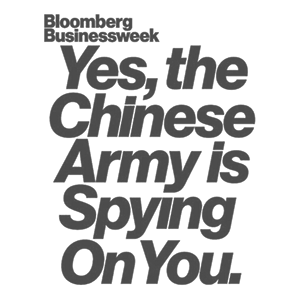
PLA Unit 61398, referred to by the US as the ‘Comment Crew’ (owing to the collective’s past pattern of embedding HTML commands in the comments section of popular websites) is an alleged cyber-warfare unit of the Chinese military. As a hacker group the entity has been known to US intelligence agencies since 2002; they gave it the codename ‘Byzantine Candor.’
The unit is reported to operate out of a 12-story building in Shanghai and the surrounding neighborhood. The story was first broken by the ‘New York Times,’ based on information from a report by the computer security firm Mandiant, who were retained by the New York Times after a compromise of their own computer systems. Mandiant’s report states that PLA Unit 61398 is believed to be under the 2nd Bureau of the People’s Liberation Army General Staff’s Department (GSD) 3rd Department and that there is evidence that it contains an entity Mandiant calls APT1, part of the Advanced Persistent Threat attacking American corporations and government entities.
Posted in Money, Technology, War |
Leave a Comment »
February 19, 2013


The Chaos Computer Club (CCC) is one of the world’s biggest hackers organizations. The CCC is based in Germany and other German-speaking countries. The CCC describes itself as ‘a galactic community of life forms, independent of age, sex, race or societal orientation, which strives across borders for freedom of information….’ In general, the CCC advocates more transparency in government, freedom of information, and the human right to communication.
Supporting the principles of the hacker ethic, the club also fights for free universal access to computers and technological infrastructure. The CCC was founded in Berlin in 1981 at a table which had previously belonged to the Kommune 1 (the first politically motivated commune in Germany) in the rooms of the newspaper ‘Die Tageszeitung’ by Wau Holland and others in anticipation of the prominent role that information technology would play in the way people live and communicate. Continue reading →
Posted in Politics, Technology, World |
Leave a Comment »
February 19, 2013


2600: The Hacker Quarterly is an American publication that specializes in publishing technical information on a variety of subjects including telephone switching systems, Internet protocols and services, as well as general news concerning the computer ‘underground’ and left wing, and sometimes (but not recently), anarchist issues.
The magazine’s name comes from the phreaker discovery in the 1960s that the transmission of a 2600 hertz tone (which could be produced perfectly with a plastic toy whistle given away free with Cap’n Crunch cereal—discovered by friends of John Draper) over a long-distance trunk connection gained access to ‘operator mode’ and allowed the user to explore aspects of the telephone system that were not otherwise accessible. Continue reading →
Posted in Language, Politics, Technology |
Leave a Comment »
February 18, 2013

The Great Recession is a marked global economic decline that began in December 2007 and took a particularly sharp downward turn in September 2008. The active phase of the crisis, which manifested as a liquidity crisis, can be dated from August 7, 2007 when BNP Paribas (one of the world’s largest global banking groups) terminated withdrawals from three hedge funds citing ‘a complete evaporation of liquidity.’
The bursting of the U.S. housing bubble, which peaked in 2006, caused the values of securities tied to U.S. real estate pricing to plummet, damaging financial institutions globally. The global recession affected the entire world economy, with higher detriment in some countries than others. As of December 2012, the economic side effects of the European sovereign debt crisis and limited prospects for global growth in 2013 and 2014 continue to provide obstacles to full recovery. Continue reading →
Posted in Money, World |
Leave a Comment »
February 18, 2013

‘Harlem Shake‘ is a song recorded by American DJ and producer Baauer. It was released as a free digital download by Mad Decent imprint label Jeffree’s in 2012. The song incorporates samples of growling-lion sounds and Plastic Little’s 2001 song ‘Miller Time,’ specifically its line ‘then do the Harlem shake.’
In 2013, a user-submitted video set to ‘Harlem Shake’ became a viral hit on YouTube. The song features an undulating synth, harsh snares, and a mechanical bassline. It is categorized by Resident Advisor’s Andrew Ryce as a hip hop and bass song, while David Wagner of ‘The Atlantic’ describes its music as trap, a sub-genre with stylistic origins in EDM and Southern hip hop. Continue reading →
Posted in Art, Games, Humor |
Leave a Comment »
February 18, 2013

The Pink Pistols are a gay gun rights organization in the United States and Canada. Their mottos are ‘Pick on someone your own caliber’ and ‘Armed gays don’t get bashed.’
Inspired by a Salon.com article written by Jonathan Rauch, Krikket (aka Doug Krick), a libertarian activist from Illinois while living in Massachusetts, founded the Pink Pistols in 2000. The organization now has 60 chapters in 33 states and three countries that are principally made up of gun-owning LGBT individuals, though neither status is mandatory for membership. Continue reading →
Posted in Politics, Sex |
Leave a Comment »



