January 31, 2013
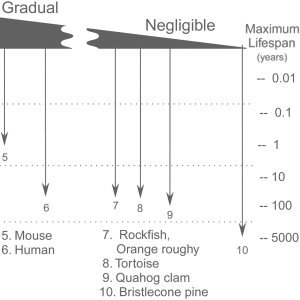
Negligible [neg-li-juh-buhl] senescence [si-nes-sens] refers to the lack of symptoms of aging in a few select animals. More specifically, negligibly senescent animals do not have measurable reductions in their reproductive capability with age, or measurable functional decline with age.
Death rates in negligibly senescent animals do not increase with age as they do in senescent organisms. Some fish, such as some varieties of sturgeon and rockfish, and some tortoises and turtles are thought to be negligibly senescent. Continue reading →
Posted in Death, Health, Science |
Leave a Comment »
January 31, 2013
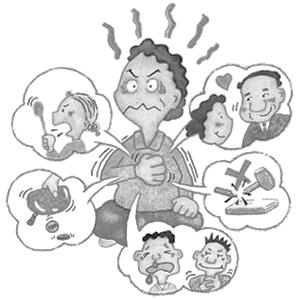
Han is a concept in Korean culture attributed as a national cultural trait. Han denotes a collective feeling of oppression and isolation in the face of overwhelming odds. It connotes aspects of lament and unavenged injustice.
The minjung theologian Suh Nam-dong describes han as a ‘feeling of unresolved resentment against injustices suffered, a sense of helplessness because of the overwhelming odds against one, a feeling of acute pain in one’s guts and bowels, making the whole body writhe and squirm, and an obstinate urge to take revenge and to right the wrong—all these combined.’ In some occasions, anthropologists have recognized han as a culture-specific medical condition whose symptoms include shortness of breath, heart palpitation, and dizziness. Someone who dies of han is said to have died of ‘hwabyeong’ (‘anger illness’ or ‘fire illness’).
Continue reading →
Posted in Health, World |
Leave a Comment »
January 31, 2013
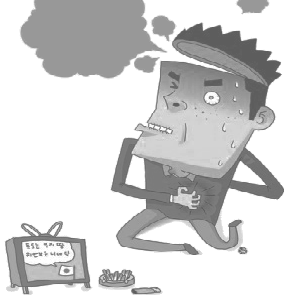
Hwabyeong, literally ‘anger illness’ or ‘fire illness,’ is a Korean culture-bound somatization disorder (e.g. panic disorder), a mental illness. It manifests as one or more of a wide range of physical symptoms, in response to emotional disturbance, such as stress from troublesome interpersonal relationships or life crises. It most often occurs in middle-aged, menopausal women with relatively low socio-economic status. The individuals typically live in traditional families, which stress the value of males while devaluing women, and in which a woman’s virtue is to quietly bear misfortune and unhappiness while maintaining harmony.
Hwabyung is believed to be caused by a build-up of unresolved anger, which disturbs the balance of the five bodily elements. The triggering cause is external events, particularly intra-familiar stressors such as spousal infidelity and conflict with in-laws. Because of the cultural emphasis on familial harmony and peace, expressing anger is not acceptable, so the anger is suppressed, and builds on itself over time. The suppressed anger, hate and despair is known as ‘han,’ or ‘everlasting woe.’ Continue reading →
Posted in Health, World |
Leave a Comment »
January 31, 2013
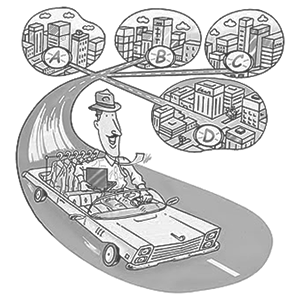
P versus NP is the name of a question that many mathematicians, scientists, and computer programmers want to answer. P and NP are two groups of mathematical problems. P problems are considered ‘easy’ for computers to solve. NP problems are easy only for a computer to check.
For example, if you have an NP problem, and someone says ‘The answer to your problem is 12345,’ a computer can quickly figure out if the answer is right or wrong, but it may take a very long time for the computer to come up with ‘12345’ on its own. All P problems are NP problems, because it is easy to check that a solution is correct by solving the problem and comparing the two solutions. However, people want to know about the opposite: Are there any NP problems that are not P problems, or are all NP problems just P problems? Continue reading →
Posted in Science, Technology |
Leave a Comment »
January 31, 2013
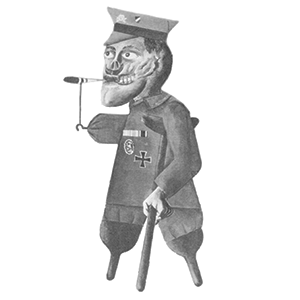
Degenerate [dih-jen-er-it] art is the English translation of the German ‘entartete Kunst,’ a term adopted by the Nazi regime in Germany to describe virtually all modern art. Such art was banned on the grounds that it was un-German or Jewish Bolshevist in nature, and those identified as degenerate artists were subjected to sanctions. These included being dismissed from teaching positions, being forbidden to exhibit or to sell their art, and in some cases being forbidden to produce art entirely.
‘Degenerate Art’ was also the title of an exhibition, mounted by the Nazis in Munich in 1937, consisting of modernist artworks chaotically hung and accompanied by text labels deriding the art. Designed to inflame public opinion against modernism, the exhibition subsequently traveled to several other cities in Germany and Austria. While modern styles of art were prohibited, the Nazis promoted paintings and sculptures that were traditional in manner and that exalted the ‘blood and soil’ values of racial purity, militarism, and obedience. Similarly, music was expected to be tonal and free of any jazz influences; films and plays were censored.
Continue reading →
Posted in Art, Politics, War |
Leave a Comment »
January 31, 2013
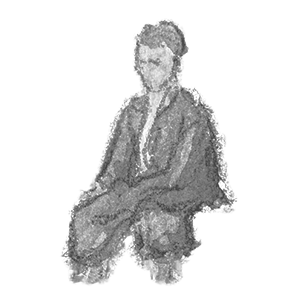
Adolf Hitler was a painter and was deeply interested in art. He produced hundreds of works and sold his paintings and postcards to earn a living during his Vienna years (1908–1913). However, he was not successful. A number of his paintings were recovered after World War II and have sold at auction for tens of thousands of dollars. Others were seized by the U.S. Army and are still held by the U.S. government.
In his autobiography Hitler described how, in his youth, he wanted to become a painter, but his aspirations were ruined because he failed the entrance exam of the Academy of Fine Arts Vienna. Hitler was rejected twice by the institute, once in 1907 and again in 1908; the institute considered that he had more talent in architecture than in painting. One of the instructors, sympathetic to his situation and believing he had some talent, suggested that he apply to Academies School of Architecture, but that would have required returning to secondary school, from which he’d dropped out of, which he was unwilling to do. Continue reading →
Posted in Art, Money, War |
Leave a Comment »
January 30, 2013

The ‘Canadian Caper‘ was the popular name given to the joint covert rescue by the Canadian government and the Central Intelligence Agency of six American diplomats who had evaded capture during the seizure of the United States embassy in Tehran, and taking of embassy personnel as hostages by Islamist students and militants on November 4, 1979.
The ‘caper’ involved CIA agents (Tony Mendez and a man known as ‘Julio’) joining the six diplomats to form a fake film crew made up of six Canadians, one Irishman and one Latin American who were finished scouting for an appropriate location to shoot a scene for the notional sci-fi film ‘Argo.’ The charade was carried off on the morning of Monday, January 28, 1980, at the Mehrabad Airport in Tehran. The eight Americans successfully boarded a Swissair flight to Zurich, Switzerland, and escaped Iran.
Continue reading →
Posted in Politics, War, World |
Leave a Comment »
January 30, 2013
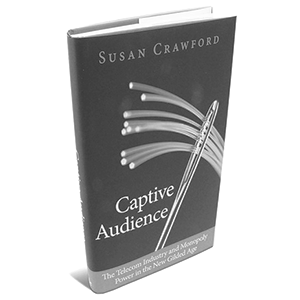
Susan P. Crawford (b. 1963) is a professor at the Benjamin N. Cardozo School of Law. She has served as President Barack Obama’s Special Assistant for Science, Technology, and Innovation Policy (2009) and is a columnist for ‘Bloomberg View.’
She is a former Board Member of ICANN (which regulates the Internet), the founder of OneWebDay (an annual day of Internet celebration and awareness held on September 22), and a legal scholar. Her research focuses on telecommunications and information law. Continue reading →
Posted in Money, Politics, Technology |
Leave a Comment »
January 29, 2013
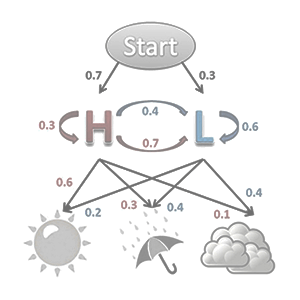
In mathematics, a Markov [mahr-kahv] chain, named after Russian mathematician Andrey Markov (1856 – 1922), is a discrete (finite or countable) random process with the Markov property (the memoryless property of a stochastic [random] process). A discrete random process means a system which can be in various states. The system also changes randomly in discrete steps. It can be helpful to think of the system as evolving through discrete steps in time, although strictly speaking the ‘step’ may have nothing to do with time.
A stochastic process has the Markov property if the conditional probability distribution of future states of the process depends only upon the present state, not on the sequence of events that preceded it. (Given two jointly distributed random variables X and Y, the conditional probability distribution of Y given X is the probability distribution of Y when X is known to be a particular value.) The term ‘Markov assumption’ is used to describe a model where the Markov property is assumed to hold, such as a hidden Markov model (in which the system being modeled is assumed to be a Markov process with unobserved [hidden] states). Continue reading →
Posted in Science |
Leave a Comment »
January 29, 2013
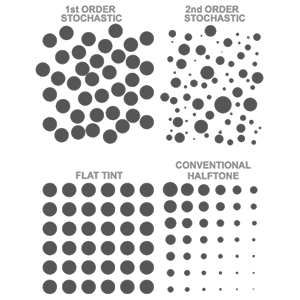
In the mathematics of probability, a stochastic [stuh-kas-tik] process is a random function, such as stock market and exchange rate fluctuations; signals such as speech, audio, and video; medical data such as a patient’s EKG, EEG, blood pressure, or temperature; and random movement such as Brownian motion (random moving of particles suspended in a fluid) or random walks (random, computer generated paths).
Other examples of random fields include static images, random topographies (landscapes), or composition variations of an inhomogeneous material. The stochastic process is the probabilistic counterpart to deterministic systems (in which no randomness is involved in the development of future states of the system). Instead of describing a process which can only evolve in one way, in a stochastic or random process there is some indeterminacy: even if the initial condition (or starting point) is known, there are several (often infinitely many) directions in which the process may evolve.
Posted in Language, Science |
Leave a Comment »
January 28, 2013

Mary Roach is an American author, specializing in popular science. She currently resides in Oakland, California. To date, she has published four books: ‘Stiff: The Curious Lives of Human Cadavers’ (2003), ‘Spook: Science Tackles the Afterlife’ (2005), ‘Bonk: The Curious Coupling of Science and Sex’ (2008) and ‘Packing for Mars: The Curious Science of Life in the Void’ (2010). Roach was raised in Etna, New Hampshire.
She received a bachelor’s degree in psychology from Wesleyan University in 1981. After college, Roach moved to San Francisco and spent a few years working as a freelance copy editor. She worked as a columnist, and also worked in public relations for a brief time. Her writing career began while working part-time at the San Francisco Zoological Society, producing press releases on topics such as elephant wart surgery.
Continue reading →
Posted in Humor, Language, Science |
Leave a Comment »
January 28, 2013
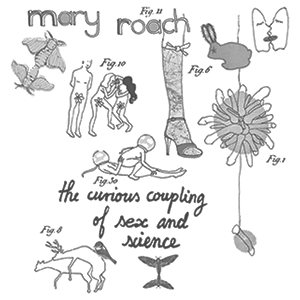
Bonk: The Curious Coupling of Science and Sex was written by Mary Roach in 2008. The book follows the winding history of science and its exploration of human sexuality, going back as far as Aristotle and finally ending with recent discoveries about the origination and anatomy of the female orgasm. Throughout, Mary Roach provides a humorous and often very personal view—both as a participant and observer—of humans, scientists, animals, and sex machines.
Of the book’s numerous accounts, Roach discusses artificial insemination of sows in Denmark, the notorious history of sex machines, as well as much discussion and commentary on Kinsey’s notorious attic sex experiments. Her footnotes provide additional humor; as in a sentence which includes several DSM diagnoses listed as acronyms she adds ‘And from HAFD (hyperactive acronym formation disorder).’ In the book, Mary Roach describes a session in which she and her husband Ed volunteer to have sex in a 20-inch-diameter (510 mm) MRI tube in the interests of science. During the experiment, a doctor looks on, making suggestions, and finally telling Ed that he ‘may ejaculate now.’
Posted in Humor, Language, Sex |
Leave a Comment »


 The Daily Omnivore