November 1, 2021
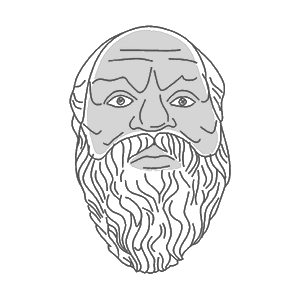
‘Kids these days‘ is the belief that the present generation of young people is inferior or deficient compared to previous generations.
Such beliefs have been reported since 624 BCE. Ancient philosopher Socrates complained, ‘The children now love luxury; they have bad manners, contempt for authority; they show disrespect for elders and love chatter in place of exercise.’
Posted in Language, Philosophy |
Leave a Comment »
October 28, 2021
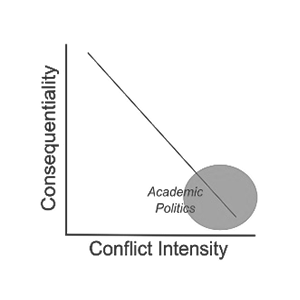
Sayre’s law states, in a formulation quoted by academic economist and historian Charles Philip Issawi: ‘In any dispute the intensity of feeling is inversely proportional to the value of the issues at stake.’
By way of corollary, it adds: ‘That is why academic politics are so bitter.’ Sayre’s law is named after Wallace Stanley Sayre (1905–1972), U.S. political scientist and professor at Columbia University. Continue reading →
Posted in Education, Language |
Leave a Comment »
October 22, 2021

Locksport is the sport or recreation of defeating locking systems. Its enthusiasts learn including lock picking, lock bumping, and a variety of other skills traditionally known only to locksmiths and other security professionals.
Lock picking has existed for as long as locks have, and recreational lock picking has as well. King Louis XVI of France (1754–1793) was a keen designer, picker and manipulator of locks. Continue reading →
Posted in Games, Politics, Technology |
Leave a Comment »
October 19, 2021
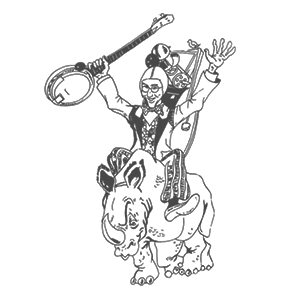
The Rhinoceros Party is a Canadian federal-level satirical political party founded by Canadian political figure and entertainer François ‘Yo’ Gourd and led by Sébastien Côrriveau.
It was a registered political party in Canada from the 1960s. Operating within the tradition of political satire, the Rhinoceros Party’s basic credo, their so-called primal promise, was ‘a promise to keep none of our promises.’ They then promised outlandishly impossible schemes designed to amuse and entertain the voting public. Continue reading →
Posted in Humor, Politics, World |
Leave a Comment »
September 28, 2021
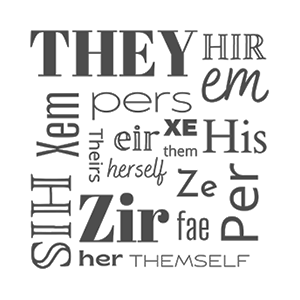
Neopronouns are a category of neologistic English third-person personal pronouns beyond she, he, they, one, and it. Neopronouns are preferred by some non-binary individuals who feel that they reflect their gender identity more accurately than any conventional pronoun.
Neopronouns may be words created to serve as pronouns such as ‘ze/hir’ or ‘noun-self’ pronouns where existing words are turned into personal pronouns such as fae/faeself.’ Some neopronouns allude to they/them, such as ‘ey/em’, a form of Spivak pronoun. Continue reading →
Posted in Language, Politics, Sex |
Leave a Comment »
September 16, 2021

A fixer is a person who is skillful at solving problems for others. In American usage, to describe a person as a fixer implies that their methods may be of questionable legality. In sports, a fixer is someone who makes (usually illegal) arrangements to fix, i.e., manipulate or pre-arrange the outcome of a sporting contest.
In British usage the term is neutral, meaning ‘the sort of person who solves problems and gets things done.’ In journalism, a fixer is a local person who expedites the work of a correspondent working in a foreign country. Continue reading →
Posted in Money, Politics, World |
Leave a Comment »
September 9, 2021
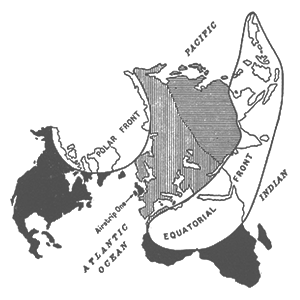
In the dystopian novel ‘Nineteen Eighty-Four’ (1949), by George Orwell, the Two Minutes Hate is the daily, public period during which members of the Outer Party of Oceania must watch a film depicting the enemies of the state, specifically Emmanuel Goldstein and his followers, to openly and loudly express hatred for them.
The political purpose of the Two Minutes Hate is to allow the citizens of Oceania to vent their existential anguish and personal hatreds towards politically expedient enemies: Goldstein and the rival superstate of the moment. In re-directing the members’ subconscious feelings away from the Party’s government of Oceania, and towards non-existent external enemies, the Party minimizes thoughtcrime (politically unorthodox thoughts). Continue reading →
Posted in Language, Politics |
Leave a Comment »
August 22, 2021
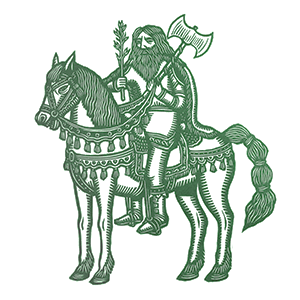
The Green Knight is a character from Arthurian literature. He is a formidable judge and tester of knights, and as such the other characters consider him as friendly but terrifying and somewhat mysterious.
In ‘Sir Gawain, the Green Knight,’ a 14th century alliterative poem by an anonymous poet, he is so called because his skin and clothes are green. The meaning of his greenness has puzzled scholars since the discovery of the poem, who identify him variously as the ‘Green Man,’ a vegetation being of medieval art; a recollection of a figure from Celtic mythology; a pagan Christian symbol — the personified Devil. Continue reading →
Posted in Art, Language |
1 Comment »
August 20, 2021
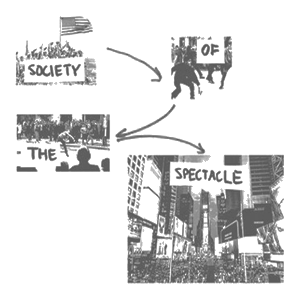
The avant-garde (French: ‘advance guard’ or ‘vanguard’) are people or works that are experimental, radical, or unorthodox with respect to art, culture, or society. It is frequently characterized by aesthetic innovation and initial unacceptability.
The avant-garde pushes the boundaries of what is accepted as the norm or the status quo, primarily in the cultural realm. The avant-garde is considered by some to be a hallmark of modernism, as distinct from postmodernism. Many artists have aligned themselves with the avant-garde movement, and still continue to do so, tracing their history from Dada through the Situationists and to postmodern artists such as the Language poets of the 1980s. Continue reading →
Posted in Art, Language, Politics |
Leave a Comment »
August 17, 2021

Graveyard of Empires is a sobriquet associated with Afghanistan. It originates from the alleged historical tendency for foreign powers to fail in their invasions of the country. It is unclear who coined the phrase, and its historical accuracy has been disputed.
Several superpowers have attempted to invade Afghanistan without maintaining a stable, permanent rule. Modern examples included the British Empire during the first and Third Anglo-Afghan Wars (1839-1842, 1919), the Soviet Union in the Soviet–Afghan War (1979-1989) and the United States in the War in Afghanistan (2001-2021). Continue reading →
Posted in Politics, War, World |
Leave a Comment »
August 16, 2021
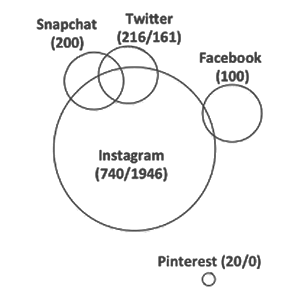
Context collapse or ‘the flattening of multiple audiences into a single context’ is a term arising out of the study of human interaction on the internet, especially within social media.
It ‘generally occurs when a surfeit of different audiences occupy the same space, and a piece of information intended for one audience finds its way to another’ with that new audience or audiences’ understanding being all the stronger for failing to understand the original context. Continue reading →
Posted in Science, Technology |
2 Comments »
August 15, 2021


A submarine sandwich, commonly known as a sub, or a hoagie (Mid-Atlantic and Western Pennsylvania), hero (New York City), Italian sandwich (Maine), or grinder (New England), is a type of cold or hot sandwich made from a cylindrical bread roll split lengthwise and filled with meats, cheeses, vegetables, and condiments.
The Italian sandwich originated in several different Italian American communities in the Northeast from the late 19th to mid-20th centuries. The popularity of this Italian-American cuisine has grown from its origins in Connecticut, Pennsylvania, Delaware, Maryland, New York, New Jersey, Massachusetts, and Rhode Island to most parts of the U.S. and Canada, and with the advent of chain restaurants, is now available in many parts of the world. Continue reading →
Posted in Food, Language |
2 Comments »


 The Daily Omnivore