April 27, 2022

Edge sorting is a technique used in advantage gambling where a player determines whether a face-down playing card is likely to be low or high at casino table games by observing, learning, and exploiting subtle unintentional differences on the backs of the cards being dealt.
Applied by poker player Phil Ivey and subsequently challenged in court by the casino in which he did so, the UK High Court, Court of Appeal and Supreme Court ruled that the technique, which requires the player to trick the dealer into rotating specific, high-value cards, is cheating in civil law, and that a casino was justified in refusing payment of winnings. This ruling would not be applicable if the player simply took advantage of an observed error or anomaly in the deck for which he was not responsible. Continue reading →
Posted in Games, Money, Politics |
Leave a Comment »
April 26, 2022

Ramen is a Japanese adaptation of Chinese wheat noodles. One theory says that ramen was introduced to Japan during the 1660s by the Chinese neo-Confucian scholar Zhu Shunsui who served as an advisor to Tokugawa Mitsukuni after he became a refugee in Japan to escape Manchu rule and Mitsukuni became the first Japanese person to eat ramen. Most historians reject this theory as a myth created by the Japanese to embellish the origins of ramen.
According to historians, the more plausible theory is that ramen was introduced to Japan in the late 19th or early 20th century by Chinese immigrants living in the Yokohama Chinatown. According to the record of the Yokohama Ramen Museum, ramen originated in China and made its way to Japan in 1859. Early versions were wheat noodles in broth topped with Chinese-style roast pork. There are many related, Chinese-influenced noodle dishes in Japan. Continue reading →
Posted in Food, World |
1 Comment »
April 20, 2022
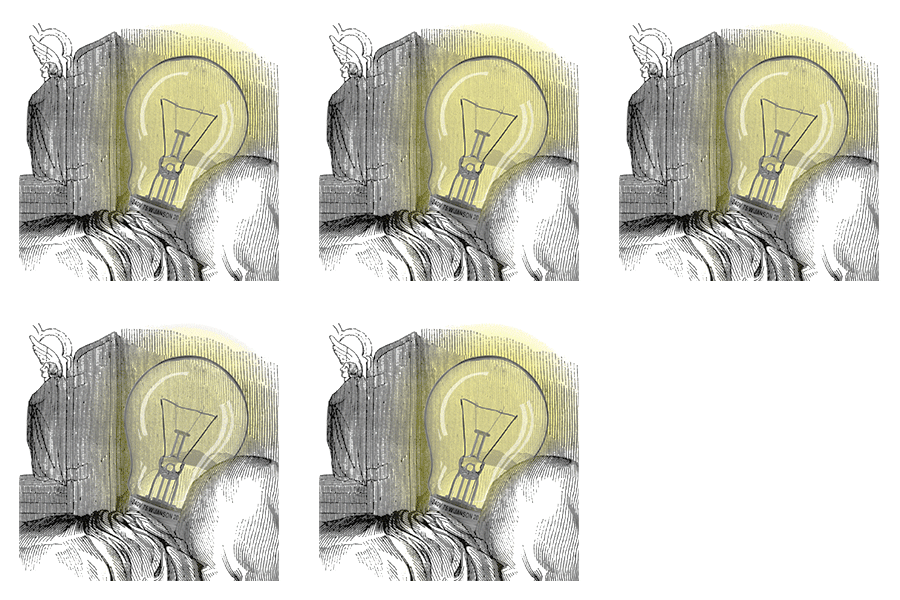
Terminal lucidity, also known as ‘rallying’ or ‘the rally,’ is an unexpected return of mental clarity and memory, or suddenly regained consciousness that occurs in the time shortly before death in patients suffering from severe psychiatric or neurological disorders. This condition has been reported by physicians since the 19th century.
Several case reports in the 19th century described the unusual condition of an improvement and recovery of the mental state in patients days or weeks before death. English physician William Munk, for instance, in 1887 called the phenomenon ‘lucidity before death.’ Continue reading →
Posted in Death, Health |
Leave a Comment »
March 27, 2022

Hyperpop is a loosely-defined music movement and microgenre, characterized by a maximalist or exaggerated take on popular music. Artists tagged with the label typically integrate pop and avant-garde sensibilities, drawing on tropes from electronic, hip hop, and dance music.
The microgenre reflects an exaggerated, eclectic, and self-referential approach to pop music and typically employs elements such as brash synth melodies, Auto-Tuned ‘earworm’ vocals, and excessive compression and distortion, as well as surrealist or nostalgic references to 2000s Internet culture and the Web 2.0 era. Continue reading →
Posted in Art |
Leave a Comment »
March 21, 2022
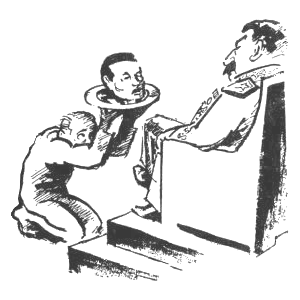
A show trial is a public trial in which the judicial authorities have already determined the guilt or innocence of the defendant. The actual trial has as its only goal the presentation of both the accusation and the verdict to the public so they will serve as both an impressive example and a warning to other would-be dissidents or transgressors.
Show trials tend to be retributive rather than corrective and they are also conducted for propagandistic purposes. When aimed at individuals on the basis of protected classes or characteristics, such trials are examples of political persecution. The term was first recorded in 1928. Continue reading →
Posted in Politics, World |
Leave a Comment »
March 13, 2022

Geek shows were an act in traveling carnivals and circuses of early America and were often part of a larger sideshow. The billed performer’s act consisted of a single geek, who stood in center ring to chase live chickens. It ended with the performer biting the chickens’ heads off and swallowing them.
The geek shows were often used as openers for what are commonly known as freak shows. It was a matter of pride among circus and carnival professionals not to have traveled with a troupe that included geeks. Geeks were often alcoholics or drug addicts, and paid with liquor – especially during Prohibition – or with narcotics. Continue reading →
Posted in Money |
Leave a Comment »
March 6, 2022
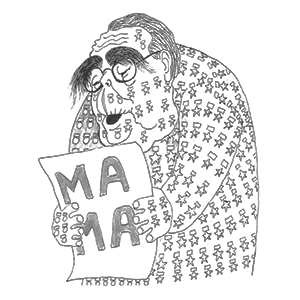
Kremlinology is the study and analysis of the politics and policies of the Soviet Union while Sovietology is the study of politics and policies of both the Soviet Union and former Communist states more generally. These two terms were synonymous until the dissolution of the Soviet Union. In popular culture, the term is sometimes used to mean any attempt to understand a secretive organization or process, such as plans for upcoming products or events, by interpreting indirect clues.
During the Cold War, lack of reliable information about the country forced Western analysts to ‘read between the lines’ and to use the tiniest tidbits, such as the removal of portraits, the rearranging of chairs, positions at the reviewing stand for parades in Red Square, the choice of capital or small initial letters in phrases such as ‘First Secretary,’ the arrangement of articles on the pages of the party newspaper Pravda and other subtle signs to try to understand what was happening in internal Soviet politics. Continue reading →
Posted in Politics, World |
Leave a Comment »
February 14, 2022

The Dixie Mafia is a criminal organization composed mainly of white Southerners and based in Biloxi, Mississippi, operating primarily throughout the Southern United States since at least the 1970s. The group used each member’s talents in various crime categories to help move stolen merchandise, illegal alcohol, and illegal drugs.
Unlike members of the American Mafia, the members of the Dixie Mafia were not connected by family or country of origin. They were loosely connected individuals of many nationalities with a common goal – to make money and wield control over illegal moneymaking operations by any means, including influence peddling, bribery of public officials, and murder. Continue reading →
Posted in Drugs, Money, Politics |
Leave a Comment »
February 6, 2022
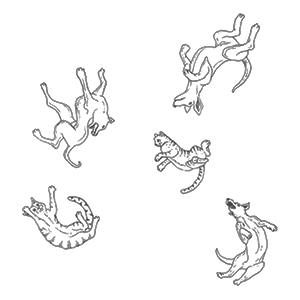
The English-language idiom raining cats and dogs is used to describe particularly heavy rain. It is of unknown etymology. One possible explanation involves the drainage systems on buildings in 17th-century Europe, which were poor and may have disgorged their contents, including the corpses of any animals that had accumulated in them, during heavy showers.
This occurrence is documented in Jonathan Swift’s 1710 poem ‘Description of a City Shower,’ in which he describes: ‘Drowned puppies, stinking sprats, all drenched in mud, Dead cats and turnip-tops come tumbling down the flood.’ Continue reading →
Posted in Language, World |
1 Comment »
January 25, 2022
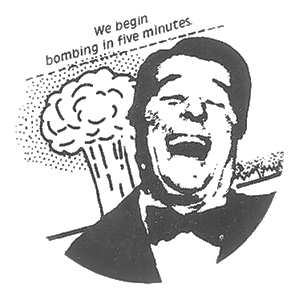
A hot mic is an error in which a microphone is switched on or remains on, especially without the speaker realizing, allowing unintended listeners to hear parts of conversations not intended for public consumption.
Such errors usually involve live broadcasting in radio or television, and sometimes material is recorded and played back via media outlets. Hot mic events can cause embarrassment for the person or organization involved, sometimes resulting in serious confrontations and employment termination. Continue reading →
Posted in Humor, Technology |
Leave a Comment »
January 16, 2022

In the stock market, a short squeeze is a rapid increase in the price of a stock owing primarily to an excess of short selling of a stock rather than underlying fundamentals. A short squeeze occurs when there is a lack of supply and an excess of demand for the stock due to short sellers having to buy stocks to cover their short positions.
Shorting means to bet that an asset will lose value. This can be done by borrowing the asset, selling it at a higher price, and then returning the asset once you can buy it back at a lower price.
Continue reading →
Posted in Money |
Leave a Comment »
January 11, 2022

‘The High and the Mighty‘ is a 1954 American aviation disaster film, directed by William A. Wellman, and written by Ernest K. Gann, who also wrote the 1953 novel on which his screenplay was based. John Wayne stars as a veteran airline first officer, Dan Roman, whose airliner has a catastrophic engine failure while crossing the Pacific Ocean.
The film was produced nearly two decades before ‘Airport’ and its sequels (along with the ‘Airplane!’ parodies, the first of which featured Robert Stack lampooning himself). The ‘High and the Mighty’ served as a template for later disaster-themed films such as the ‘Airport’ series (1970–79), ‘The Poseidon Adventure’ (1972), ‘The Towering Inferno’ (1974), ‘The Hindenburg’ (1975), and ‘Titanic’ (1997).
Continue reading →
Posted in Art |
Leave a Comment »



