November 20, 2012
A fetish (from Latin ‘facticius,’ ‘artificial’ and ‘facere,’ ‘to make’) is an object believed to have supernatural powers, or in particular, a man-made object that has power over others. Essentially, fetishism is the emic (intracultural) attribution of inherent value or powers to an object. Initially, the Portuguese developed the concept of fetishism to refer to the objects used in religious cults by West African natives.
The concept was popularized in Europe circa 1757, when French scholar Charles de Brosses used it in comparing West African religion to the magical aspects of ancient Egyptian religion. Later, French philosopher Auguste Comte employed the concept in his theory of the evolution of religion, wherein he posited fetishism as the earliest (most primitive) stage, followed by polytheism and monotheism. Continue reading →
Posted in Philosophy, Sex |
Leave a Comment »
November 20, 2012
A cargo cult is a religious practice that has appeared in many traditional pre-industrial tribal societies in the wake of interaction with technologically advanced cultures. The cults focus on obtaining the material wealth (the ‘cargo’) of the advanced culture through magic and religious rituals and practices.
Cult members believe that the wealth was intended for them by their deities and ancestors. Cargo cults developed primarily in remote parts of New Guinea and other Melanesian and Micronesian societies in the southwest Pacific Ocean, beginning with the first significant arrivals of Westerners in the 19th century. Continue reading →
Posted in Philosophy, Technology, World |
Leave a Comment »
November 19, 2012
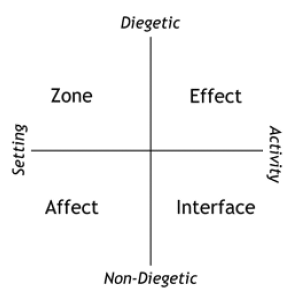
Diegesis [dahy-uh-jee-sis] is a style of storytelling in fiction which presents an interior view of a world and is: that world itself experienced by the characters in situations and events of the narrative; telling, recounting, as opposed to showing, enacting. In diegesis the narrator tells the story. The narrator presents to the audience or the implied readers the actions, and perhaps thoughts, of the characters.
Diegesis (‘narration’) and ‘mimesis’ (‘imitation’) have been contrasted since Plato’s and Aristotle’s times. Mimesis shows rather than tells, by means of action that is enacted. Diegesis, however, is the telling of the story by a narrator. The narrator may speak as a particular character or may be the invisible narrator or even the all-knowing narrator who speaks from above in the form of commenting on the action or the characters. Continue reading →
Posted in Art, Language, Philosophy |
1 Comment »
November 19, 2012
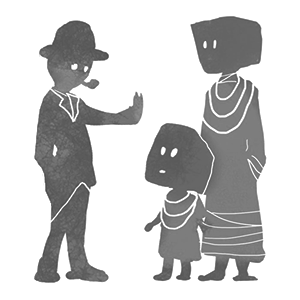
Alterity [all-ter-eh-tee] is a philosophical term meaning ‘otherness,’ strictly being in the sense of the other of two. In the phenomenological tradition it is usually understood as the entity in contrast to which an identity is constructed, and it implies the ability to distinguish between self and not-self, and consequently to assume the existence of an alternative viewpoint. The concept was established by French philosopher Emmanuel Lévinas in a series of essays, collected under the title ‘Alterity and Transcendence.’
The term is also deployed outside of philosophy, notably in anthropology by scholars such as Nicholas Dirks, Johannes Fabian, Michael Taussig, and Pauline Turner Strong to refer to the construction of ‘cultural others.’ The term has gained further use in seemingly somewhat remote disciplines, e.g. historical musicology where it is effectively employed by John Michael Cooper in a study of Goethe and Mendelssohn.
Posted in Language, Philosophy, World |
1 Comment »
November 19, 2012
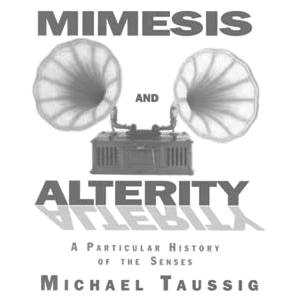
Mimesis [my-mee-sis] (‘to immitate’) is a critical and philosophical term that carries a wide range of meanings, which include imitation, representation, mimicry, Dionysian imitatio (an influential literary method of imitation, receptivity, nonsensuous similarity, the act of resembling, the act of expression, and the presentation of the self.
In ancient Greece, mimesis was an idea that governed the creation of works of art, in particular, with correspondence to the physical world understood as a model for beauty, truth, and the good. Plato contrasted ‘mimesis,’ or ‘imitation,’ with ‘diegesis,’ or ‘narrative.’ After Plato, the meaning of mimesis eventually shifted toward a specifically literary function in ancient Greek society, and its use has changed and been reinterpreted many times since then. Continue reading →
Posted in Art, Philosophy |
Leave a Comment »
November 19, 2012
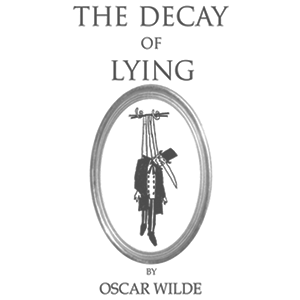
Anti-mimesis [my-mee-sis] is a philosophical position that holds the direct opposite of mimesis (the belief that art imitates life). Its most notable proponent is Oscar Wilde, who held in his 1889 essay ‘The Decay of Lying’ that ‘Life imitates Art far more than Art imitates Life.’
In the essay, written as a Platonic dialogue, Wilde holds that such anti-mimesis ‘results not merely from Life’s imitative instinct, but from the fact that the self-conscious aim of Life is to find expression, and that Art offers it certain beautiful forms through which it may realize that energy.’ Continue reading →
Posted in Art, Philosophy |
Leave a Comment »
November 19, 2012

Long drive is a competitive sport where success is derived by hitting a golf ball the farthest by driving. A small but dedicated talent base of golfers populate the world of Long-Drive, with the top talent competing professionally in various events and exhibitions. Professional long drivers can average over 350 yards in competition, compared with 300 yard averages from the top PGA Tour drivers and 200 yards for an average amateur.
Some shots in competitions surpass 400 yards. The world record recognized by Guinness Records as the longest drive in a competition is 515 yards by 64 year old Mike Austin in 2002 at the US National Open Qualifier with a 43.5″ steel shafted persimmon wood driver. The current all-time record holder is Mike Dobbyn with 551 yards. Continue reading →
Posted in Games, Money |
Leave a Comment »
November 19, 2012
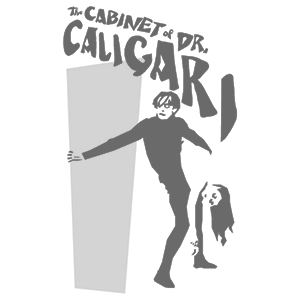
Mise-en-scène [meez-awn-sen] (‘placing on stage’) is an expression used to describe the design aspects of a theater or film production, which essentially means ‘visual theme’ or ‘telling a story’—both in visually artful ways through storyboarding, cinematography, and stage design, and in poetically artful ways through direction.
Mise-en-scène has been called film criticism’s ‘grand undefined term.’ When applied to the cinema, mise-en-scène refers to everything that appears before the camera and its arrangement—composition, sets, props, actors, costumes, and lighting. Mise-en-scène also includes the positioning and movement of actors on the set (‘blocking’). Continue reading →
Posted in Art, Language |
Leave a Comment »
November 18, 2012

The Comedy is a 2012 black comedy film directed and co-written by Rick Alverson, and starring Tim Heidecker. Supporting actors include Eric Wareheim (Tim and Eric), James Murphy (LCD Soundsystem), and Gregg Turkington (better known as Neil Hamburger).
Despite the title and use of comedians as actors, Sundance festival chief programmer Trevor Groth says that the film is not a comedy, but instead ‘a provocation, a critique of a culture based at its core around irony and sarcasm and about ultimately how hollow that is.’ Indifferent even to the prospects of inheriting his father’s estate, Swanson (Heidecker) whittles away his days with a group of aging Brooklyn hipsters, engaging in acts of recreational cruelty and pacified boredom. Desensitized and disenchanted, he strays into a series of reckless situations that may offer the promise of redemption or the threat of retribution.
Posted in Art, Humor |
Leave a Comment »
November 18, 2012
Metafiction [met-uh-fik-shuhn], also known as Romantic irony in the context of Romantic works of literature, is a type of fiction that self-consciously addresses the devices of fiction, exposing the fictional illusion. Metafiction uses techniques to draw attention to itself as a work of art, while exposing the ‘truth’ of a story.
It is the literary term describing fictional writing that self-consciously and systematically draws attention to its status as an artifact in posing questions about the relationship between fiction and reality, usually using irony and self-reflection. It can be compared to ‘presentational theater’ which does not let the audience forget it is viewing a play; metafiction does not let the reader forget he or she is reading a fictional work. Continue reading →
Posted in Art, Language |
Leave a Comment »
November 18, 2012
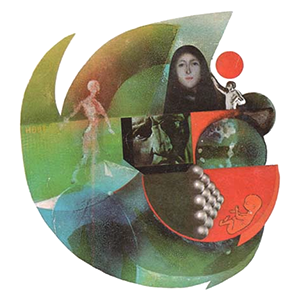
Reverse chronology is a method of story-telling whereby the plot is revealed in reverse order. In a story employing this technique, the first scene shown is actually the conclusion to the plot. Once that scene ends, the penultimate scene is shown, and so on, so that the final scene the viewer sees is the first chronologically. Many stories employ flashback, showing prior events, but whereas the scene order of most conventional films is chronological. The unusual nature of this method means it is only used in stories of a specific nature.
For example, ‘Memento’ features a man with anterograde amnesia, meaning he is unable to form new memories. The film parallels the protagonist’s perspective by unfolding in reverse chronological order, leaving the audience as ignorant of the events that occurred prior to each scene (which, played in reverse chronological order, will not be revealed until later) as the protagonist is. Continue reading →
Posted in Art, Language |
Leave a Comment »
November 17, 2012

‘In medias res‘ (‘into the middle of things’) is a Latin phrase denoting the literary and artistic narrative technique wherein the relation of a story begins either at the midpoint or at the conclusion, rather than at the beginning (‘ab ovo,’ ‘ab initio’), establishing setting, character, and conflict via flashback or expository conversations relating the pertinent past.
The main advantage of in medias res is to open the story with dramatic action rather than exposition which sets up the characters and situation. Because it is a feature of the style in which a story is structured and is independent of the story’s content, it can be employed in any narrative genre, epic poetry, novels, plays, or film. Continue reading →
Posted in Art, Language |
Leave a Comment »



