October 16, 2012
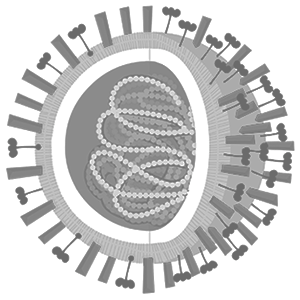
Opinions differ on whether viruses are a form of life, or organic structures that interact with living organisms. They have been described as ‘organisms at the edge of life,’ since they resemble organisms in that they possess genes and evolve by natural selection, and reproduce by creating multiple copies of themselves through self-assembly. Although they have genes, they do not have a cellular structure, which is often seen as the basic unit of life.
Viruses do not have their own metabolism, and require a host cell to make new products. They therefore cannot naturally reproduce outside a host cell (although bacterial species such as chlamydia are considered living organisms despite the same limitation). Accepted forms of life use cell division to reproduce, whereas viruses spontaneously assemble within cells. They differ from autonomous growth of crystals as they inherit genetic mutations while being subject to natural selection. Virus self-assembly within host cells has implications for the study of the origin of life, as it lends further credence to the hypothesis that life could have started as self-assembling organic molecules.
Posted in Health, Philosophy, Science |
Leave a Comment »
October 16, 2012


Anti-nationalism denotes the sentiments associated with the opposition to nationalism, arguing that it is undesirable or dangerous. Some anti-nationalists are humanitarians or humanists who pursue an idealist form of world community, and self-identify as world citizens.
They reject chauvinism, jingoism, and militarism, and want humans to live in peace rather than perpetual conflict. They do not necessarily oppose the concepts of countries, nation states, national boundaries, cultural preservation or identity politics. Continue reading →
Posted in Money, Politics, World |
Leave a Comment »
October 16, 2012
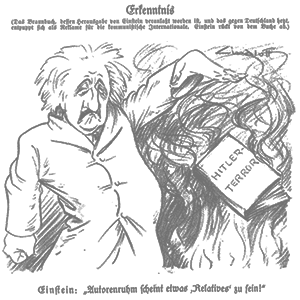
Deutsche Physik (literally: ‘German Physics’) or ‘Aryan Physics’ was a nationalist movement in the German physics community in the early 1930s against the work of Albert Einstein and other modern theoretically based physics, labeled ‘Jewish Physics’ (German: ‘Jüdische Physik’). The term was taken from the title of a 4-volume physics textbook by Philipp Lenard in the 1930s.
This movement began as an extension of a German nationalistic movement in the physics community which went back as far as World War I. In 1915, during fighting between the German army and Belgian resistance fighters after the German invasion in Belgium, the library of the Katholieke Universiteit in Leuven caught fire when German troops looted and set fire to the town. The loss of the library led to a protest note by British scientists, which was signed also by eight distinguished British scientists, namely William Bragg, William Crookes, Alexander Fleming, Horace Lamb, Oliver Lodge, William Ramsay, Baron Rayleigh, and J.J. Thomson, and in which it was assumed that the war propaganda mentioned corresponded to real behavior of German soldiers. Continue reading →
Posted in Education, Politics, Science |
Leave a Comment »
October 16, 2012

‘Uranprojekt,’ informally known as the ‘Uranverein’ (‘Uranium Club‘), was an attempted clandestine scientific effort led by Germany to develop and produce atomic weapons during World War II.
This program started in April 1939, just months after the discovery of nuclear fission in January of that year, but ended quickly, due to German invasion of Poland, where many notable physicists were drafted into the Wehrmacht (Nazi military). However, the second effort began under the administrative auspices of the Wehrmacht’s Heereswaffenamt (HWA, ‘Army Ordnance Office’) on the day WWII began (September 1, 1939). Continue reading →
Posted in Technology, War |
1 Comment »
October 15, 2012

The Eastern Front was a theater of WWII between the European Axis powers and co-belligerent Finland against the Soviet Union, Poland, and some other Allies (though never engaged in military action in the Eastern Front, the UK and the US both provided substantial material aid to the Soviet Union).
It was known by many different names depending on the nation, notably the ‘Great Patriotic War’ in the former Soviet Union. The conflict began in the summer of 1941 with the ‘Operation Barbarossa Offensive,’ when Axis forces crossed the borders described in the 1939 ‘German-Soviet Nonaggression Pact,’ thereby invading the Soviet Union. The war ended in the spring of 1945, when Germany’s armed forces surrendered unconditionally following the ‘Battle of Berlin,’ a strategic operation executed by the Red Army. Continue reading →
Posted in Death, War, World |
Leave a Comment »
October 14, 2012

The Kill A Watt is an electricity usage monitor marketed by P3 International. It features a large LCD display and it enables cost forecasting.
It measures the energy used by individual appliances plugged into the meter, as opposed to in-home energy use displays, which display the energy used by an entire household. The name is a play on the word kilowatt. The device can give an indication of the standby power used by appliances.
Posted in Money, Technology |
Leave a Comment »
October 13, 2012

The music for Law & Order is composed by veteran composer Mike Post. The music is deliberately designed to be minimalist to match the abbreviated style of the series. Post wrote the theme song using electric piano, guitar, and clarinet. In addition, scene changes are accompanied by a tone generated by Post. He refers to the tone as ‘The Clang,’ while ‘Entertainment Weekly’ critic Ken Tucker has referred to the sound as the ‘ominous chung CHUNG,’ actor Dann Florek (in a promo) as the ‘doink doink,’ and Richard Belzer as ‘the Dick Wolf Cash Register Sound.’
The tone moves the viewer from scene to scene, jumping forward in time with all the importance and immediacy of a judge’s gavel – which is exactly what composer Mike Post was aiming for when he created it. ‘The Clang’ is an amalgamation of nearly a dozen sounds, including an actual gavel, a jail door slamming, and five hundred Japanese monks walking across a hardwood floor. The sound has become so associated with the ‘Law & Order’ brand that it was also carried over to other series of the franchise.
Posted in Art |
Leave a Comment »
October 13, 2012

Fallibilism [fal-uh-buhl-iz-uhm] (‘liable to err’) is the philosophical principle that human beings could be wrong about their beliefs, expectations, or their understanding of the world. In the most commonly used sense of the term, this consists in being open to new evidence that would disprove some previously held position or belief, and in the recognition that ‘any claim justified today may need to be revised or withdrawn in light of new evidence, new arguments, and new experiences.’
This position is taken for granted in the natural sciences. In another sense, it refers to the consciousness of ‘the degree to which our interpretations, valuations, our practices, and traditions are temporally indexed’ and subject to (possibly arbitrary) historical flux and change. Such ‘time-responsive’ fallibilism consists in an openness to the confirmation of a possibility that one anticipates or expects in the future.
Continue reading →
Posted in Philosophy, Science |
1 Comment »
October 12, 2012

Perfecto is a brand of ‘lancer fronted’ leather motorcycle jackets designed by Irving Schott and manufactured by American clothing company Schott NYC. The company was founded in 1913, and was the first company to put a zipper on a jacket. In 1928 Irving Schott designed and produced the first ever leather motorcycle jacket, he named it the ‘Perfecto’ after his favorite cigar.
The jackets were made out of horsehide, had a belted front, D-pocket, flap change pocket, zippered sleeve cuffs and shoulder epaulets This classic motorcycle jacket was a double riders jacket design which meant that one part of the front zipper was located a couple of inches in. When zipped up this created a seal where no air would pass through when riding a motorcycle. Continue reading →
Posted in Money |
Leave a Comment »
October 11, 2012
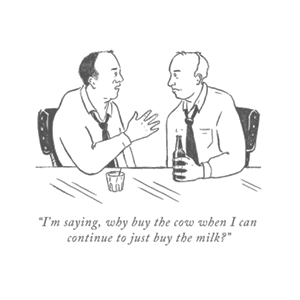
Sexual economy refers to the resources men offer to women in order to acquire sex. In this sense the heterosexual community is considered as a marketplace where sex is bought and sold. The marketplace is defined by gender roles, and in the sex economy men are the buyers, and women are the sellers.
Couples and their sexual activities are loosely interrelated by a marketplace; the decisions made regarding sex by each couple may be influenced by conditions in the market. As with all economic principles, price is determined by supply and demand, product variety, complicity among sellers, competition between sellers, as well as other factors. The price of sex is not limited to money, it has a wide conception of resources including, respect, love, time, gifts, affection, or commitment. Continue reading →
Posted in Love, Money, Sex |
1 Comment »
October 11, 2012

In Marxist theory, human society consists of two parts: the base and superstructure; the base comprehends the forces and relations of production — employer-employee work conditions, the technical division of labor and property relations — into which people enter to produce the necessities and amenities of life.
These relations determine society’s other relationships and ideas, which are described as its superstructure: its culture, institutions, political power structures, roles, rituals, and state. The base determines (conditions) the superstructure, yet their relation is not strictly causal, because the superstructure often influences the base; the influence of the base, however, predominates. In Orthodox Marxism, the base determines the superstructure in a one-way relationship. However, in more advanced forms and variations of Marxist thought their relationship is not strictly one-way, as some theories claim that just as the base influences the superstructure, the superstructure also influences the base.
Continue reading →
Posted in Money, Politics |
Leave a Comment »
October 11, 2012

In sociology, articulation labels the process by which particular classes appropriate cultural forms and practices for their own use. The term appears to have originated from the work of Italian political theorist Antonio Gramsci, specifically from his conception of ‘superstructure’ (culture, institutions, political power structures, roles, rituals, and state, which are supported by the ‘base,’ the forces and relations of production). In this theory, cultural forms and practices have relative autonomy; socio-economic structures of power do not determine them, but rather they relate to them.
‘The theory of articulation recognizes the complexity of cultural fields. It preserves a relative autonomy for cultural and ideological elements (…) but also insists that those combinatory patterns that are actually constructed do mediate deep, objective patterns in the socio-economic formation, and that the mediation takes place in struggle: the classes fight to articulate together constituents of the cultural repe[r]toire in particular ways so that they are organized in terms of principles or sets of values determined by the position and interests of the class in the prevailing mode of production.’
Continue reading →
Posted in Politics, Science, World |
1 Comment »



