
Profanity is language that is strongly impolite or offensive in many situations. It can show a desecration or debasement of someone or something, or show strong or intense emotion. Profanity can take the form of words, expressions, gestures (such as flipping the middle finger), or other social behaviors that are construed or interpreted as insulting, rude, vulgar, obscene, obnoxious, foul, desecrating, or other forms. The original meaning of the adjective ‘profane’ referred to items not belonging to the church, e.g., ‘The fort is the oldest profane building in the town, but the local monastery is older, and is the oldest building.’
The meaning has changed over time. Analyses of recorded conversations reveal that roughly 80–90 spoken words each day – 0.5% to 0.7% of all words – are swear words, with usage varying from between 0% to 3.4%. The term ‘profane’ originates from classical Latin ‘profanus,’ literally ‘before (outside) the temple.’ It carried the meaning of either ‘desecrating what is holy’ or ‘with a secular purpose’ as early as the 1450s. Profanity represented secular indifference to religion or religious figures, while blasphemy was a more offensive attack on religion and religious figures, considered sinful, and a direct violation of The Ten Commandments. Continue reading
Profanity
Y: The Last Man

Y: The Last Man is a dystopian science fiction comic book series by Brian K. Vaughan and Pia Guerra published by Vertigo (a DC subsidiary) beginning in 2002. The series is about the only man to survive the apparent simultaneous death of every male mammal (barring the same man’s pet monkey) on Earth.
The premise is noticeably similar to ‘Consider Her Ways,’ a 1964 episode of Alfred Hitchcock Presents where the world adopts a matriarchal society after a disease kills every man on Earth. Continue reading
Religiosity and Intelligence

The relationship between religiosity and intelligence is the subject of much research and controversy. Although IQ is a clearly operationalized measure, some professionals believe that IQ is given too much attention over other measures of human ability. Also, religiosity studies can be too broadly defined, and must be careful to identify relationships between beliefs, sentiments, and practices. Studies have begun to explore the link between religiosity and issues related to intelligence, such as educational level.
Research shows that the poorest countries are consistently the most religious, and experts have proposed that religions may play more functional roles there. Various studies further suggest that intuitive thinking styles (as opposed to reflective, questioning, analytical thinking styles) tend to increase belief in gods, and decrease the likelihood of changing views held in childhood. Intuitive thinking styles may also lead to more convicted beliefs in general. In other words, IQ could correlate with atheism, not simply because of raw cognitive ability, but because higher IQs lead to more critical analysis.
Freethought

Freethought is a philosophical viewpoint that holds opinions should be formed on the basis of logic, reason, and empiricism and not authority, tradition, or other dogmas.
The pansy is the long-established and enduring symbol of freethought, its usage inaugurated in the literature of the American Secular Union in the late 1800s. The reasoning lies in both the flower’s name and appearance. The pansy derives its name from the French word ‘pensée,’ which means ‘thought;’ it was so named because the flower resembles a human face, and in mid to late summer it nods forward as if deep in thought. Continue reading
Secular Morality


Secular morality is the aspect of philosophy that deals with morality outside of religious traditions. Modern examples include humanism, freethinking, and most versions of consequentialism. Additional philosophies with ancient roots include those such as Skepticism, which professes that ‘man is the measure of all things.’
Harvard Humanist Chaplain Greg M. Epstein also states that, ‘much of ancient Far Eastern thought is deeply concerned with human goodness without placing much if any stock in the importance of gods or spirits.’ Other philosophers have proposed various ideas about how to determine right and wrong actions. An example is Immanuel Kant’s categorical imperative: ‘The idea that actions can only be considered moral if they could be imitated by anyone else and produce good results.’
Atheist Bus Campaign

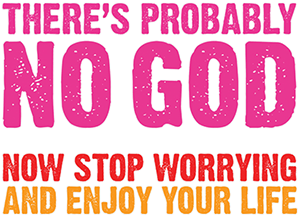
The Atheist Bus Campaign aims to place ‘peaceful and upbeat’ messages about atheism on transport media in Britain, in response to evangelical Christian advertising. It was created by comedy writer Ariane Sherine and launched in 2008, with official support from the British Humanist Association and Richard Dawkins. The campaign’s original goal was to raise £5,500 to run 30 buses across London for four weeks early in 2009 with the slogan: ‘There’s probably no God. Now stop worrying and enjoy your life.’
Richard Dawkins, author of ‘The God Delusion,’ agreed to match all donations up to a maximum of £5,500, providing a total of £11,000 if the full amount were to be raised. The campaign closed in April 2009, having raised a total of £153,516.51. The first buses started running on in January 2009 – 800 are running around the whole of the UK and it is also planned to place 1,000 adverts on the London Underground featuring quotations from famous atheists. Subsequently, two large LCD screens were placed on Oxford Street, central London.
Misotheism
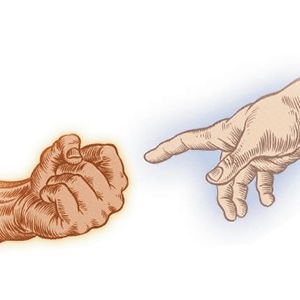
Misotheism [miss-oh-thee-iz-uhm] is the ‘hatred of God(s).’ In some varieties of polytheism, it was considered possible to inflict punishment on gods by ceasing to worship them. Thus, Hrafnkell, protagonist of the eponymous Icelandic saga set in the 10th century, as his temple to Freyr is burnt and he is enslaved states that ‘I think it is folly to have faith in gods,’ never performing another sacrifice.
German mythologist Jacob Grimm in his ‘Teutonic Mythology’ observes that: ‘It is remarkable that Old Norse legend occasionally mentions certain men who, turning away in utter disgust and doubt from the heathen faith, placed their reliance on their own strength and virtue.’ ‘…in themselves they trusted.” In monotheism, the sentiment arises in the context of ‘theodicy’ (the problem of evil, the Euthyphro dilemma). A famous literary expression of misotheistic sentiment is Goethe’s ‘Prometheus,’ composed in the 1770s. Continue reading
New Atheism

New Atheism is the name given to the ideas promoted by a collection of 21st-century atheist writers who have advocated the view that ‘religion should not simply be tolerated but should be countered, criticized, and exposed by rational argument wherever its influence arises.’
The term is commonly associated with individuals such as Richard Dawkins, Daniel Dennett, Sam Harris, and Christopher Hitchens (together called ‘the Four Horsemen of New Atheism’ in a 2007 debate they held on their criticisms of religion, a name that has stuck) and Victor J. Stenger. Several best-selling books by these authors, published between 2004 and 2007, form the basis for much of the discussion of New Atheism. Continue reading
Frugal Innovation

Frugal innovation is the process of reducing the complexity and cost of a good and its production. Usually this refers to removing nonessential features from a durable good, such as a car or phone, in order to sell it in developing countries. Designing products for such countries may also call for an increase in durability, and unconventional distributions channels. Sold to so-called ‘overlooked consumers,’ firms hope volume will offset razor-thin profit margins.
Rising incomes in developing countries may also drive frugal innovation. Many terms are used to refer to the concept. ‘Frugal engineering’ was coined by Carlos Ghosn, the joint chief of Renault and Nissan, who stated, ‘frugal engineering is achieving more with fewer resources.’ Frugal innovation isn’t solely the domain of large multinational corporations. While General Electric may win plaudits for its $800 EKG machines, cheap cell phones made by local, no-name companies and no-frills wire frame eyeglasses are equally good examples of frugal innovation.
Dudeism
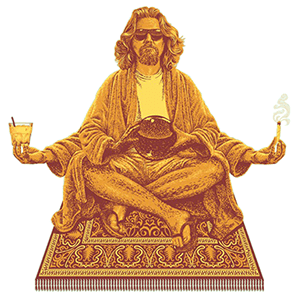
Dudeism has sometimes been referred to as a ‘mock religion,’ though its founder and many adherents regard it as ‘real.’ Its stated primary objective is to promote a philosophy and lifestyle consistent with the original form of Chinese Taoism, outlined in ‘Tao and Laozi’ (6th century BCE), blended with concepts by the Ancient Greek philosopher Epicurus (341-270 BCE), and personified by the modern day character ‘The Dude’ (Jeff Bridges) in the Coen Brothers’ 1998 film ‘The Big Lebowski.’
Founded in 2005 by Oliver Benjamin, a journalist based in Thailand, Dudeism’s official organizational name is ‘The Church of the Latter-Day Dude.’ At least 160,000 ‘Dudeist Priests’ have been ordained. Continue reading
Happiness Economics

Happiness economics is the quantitative study of happiness, positive and negative affect, well-being, quality of life, life satisfaction, and related concepts, typically combining economics with other fields such as psychology and sociology. It typically treats such happiness-related measures, rather than wealth, income or profit, as something to be maximized.
The field has grown substantially since the late 20th century, for example by the development of methods, surveys and indices to measure happiness and related concepts. Given its very nature, reported happiness is subjective. It is difficult to compare one person’s happiness with another. It can be especially difficult to compare happiness across cultures. However, many happiness economists believe they have solved this comparison problem. Cross-sections of large data samples across nations and time demonstrate consistent patterns in the determinants of happiness. Continue reading
Positive Psychology
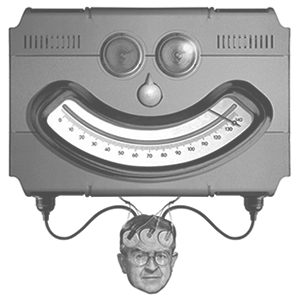
Positive psychology is a recent branch of psychology whose purpose was summed up in 1998 by psychologists Martin Seligman and Mihaly Csikszentmihalyi: ‘We believe that a psychology of positive human functioning will arise, which achieves a scientific understanding and effective interventions to build thriving individuals, families, and communities.’ Positive psychologists seek ‘to find and nurture genius and talent’, and ‘to make normal life more fulfilling,’ not simply to treat mental illness.
The field is intended to complement, not to replace traditional psychology. It does not seek to deny the importance of studying how things go wrong, but rather to emphasize the importance of using the scientific method to determine how things go right. This field brings attention to the possibility that focusing only on the disorder itself would result in a partial concept of the patient’s condition.



