September 27, 2012
Yojimbo (Japanese: ‘bodyguard’) is a 1961 period drama directed by Akira Kurosawa. It tells the story of a ronin (a samurai without a master), portrayed by Toshirō Mifune (star of several of Kurosawa’s films), who arrives in a small town where competing crime lords vie for supremacy. The two bosses each try to hire the deadly newcomer for protection. The film’s look and themes were in part inspired by the western film genre, in particular the films of John Ford (e.g. ‘The Searchers’).
The characters—the taciturn loner and the helpless townsfolk needing a protector—are western archetypes and are reminiscent of Kurosawa’s own ‘Seven Samurai’ (1954). The cinematography also mimics conventional shots in western films, such as that of the lone hero in a wide shot, facing an enemy or enemies from a distance while the wind kicks up dust between the two.
Continue reading →
Posted in Art, World |
Leave a Comment »
September 27, 2012

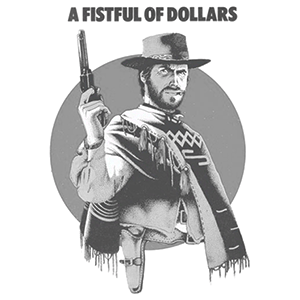
The man with no name (Italian: ‘Uomo senza nome’) is a stock character in Western films, but the term usually applies specifically to the character played by Clint Eastwood in Sergio Leone’s ‘Dollars Trilogy’ (‘A Fistful of Dollars,’ ‘For a Few Dollars More,’ and ‘The Good, the Bad and the Ugly.’ A ‘Fistful of Dollars’ was directly adapted from Akira Kurosawa’s ‘Yojimbo.’ It was the subject of a successful lawsuit by Yojimbo’s producers.
The film’s protagonist, an unconventional ronin played by Toshirō Mifune, bears a striking resemblance to Eastwood’s character: both are quiet, gruff, eccentric strangers with a strong but unorthodox sense of justice and extraordinary proficiency with a particular weapon (in Mifune’s case, a katana; for Eastwood, a revolver). Like Eastwood’s character, Mifune’s ronin is nameless. When pressed, he gives the pseudonym ‘Sanjuro Kuwabatake’ (meaning ‘thirty-year-old mulberry field’), a reference to his age and something he sees through a window (although, regarding the age he jokes ‘Closer to forty actually’). Continue reading →
Posted in Art, World |
Leave a Comment »
September 27, 2012

Most heated clothing is designed for cold-weather sports and activities, such as motorcycle riding, downhill skiing, winter biking, and snowmobiling, trekking and for outdoor workers such as construction workers and carpenters. Normal insulation works by trapping body heat, so if it gets wet from sweat or rain, or if a person stops exercising, the insulation may not keep them warm.
With heated garments, a person can keep warm even if they are resting and not producing heat, or if their coat is damp from sweat. The most widely-available types of heated clothing are products for the extremities- the hands and feet. These body parts are the most likely to suffer frostbite or frostnip in severe cold. As such, many manufacturers make heated gloves, mittens, socks, and boot liners, and they can be purchased at workers’ supply stores (serving construction workers) and motor sports stores. Heated torso coverings (vests or jackets) or leggings are available from specialty retailers that cater to motorcyclists and downhill skiers.
Continue reading →
Posted in Games, Money, Technology |
Leave a Comment »
September 27, 2012

Home automation (also called domotics) is the residential extension of ‘building automation’ (electronic which monitor and control the mechanical, electronics, and lighting systems in a building). ‘Building Automation Systems’ (BAS) keep the building climate within a specified range, provides lighting based on an occupancy schedule, and monitors system performance and device failures and provides email and/or text notifications to building staff.
Home automation may include centralized control of lighting, HVAC (heating, ventilation and air conditioning), appliances, and other systems, to provide improved convenience, comfort, energy efficiency, and security. Home automation for the elderly and disabled can provide increased quality of life for persons who might otherwise require caregivers or institutional care. Continue reading →
Posted in Money, Technology |
Leave a Comment »
September 27, 2012

An Internet kill switch is the cybercrime and countermeasures concept of activating a single shut off mechanism for all Internet traffic. The theory behind a kill switch is creation of a single point of control for one authority or another to control in order to ‘shut down the internet to protect it’ from unspecified assailants. The prospect of cyberwarfare over the 2000s has prompted the drafting of legislation by US officials, but worldwide the implications of actually of ‘killing’ the Internet has prompted criticism of the idea in the United States.
During the 2010–2011 Middle East and North Africa protests in Tunisia, Egypt, and Libya access to the Internet was denied in an effort to limit peer networking to facilitate organization. The Communications Act of 1934 established the United States’ Federal regulation of electronic communications. In this act, created by the Franklin D. Roosevelt Administration enabled the president powers of control over the media under certain circumstances such as during wartime or a national emergency. Continue reading →
Posted in Politics, Technology, War |
Leave a Comment »
September 27, 2012

Cyberwarfare refers to politically motivated hacking to conduct sabotage and espionage. It is a form of information warfare sometimes seen as analogous to conventional warfare although this analogy is controversial for both its accuracy and its political motivation. U.S. government security expert Richard A. Clarke, in his book ‘Cyber War’ (2010), defines ‘cyberwarfare’ as ‘actions by a nation-state to penetrate another nation’s computers or networks for the purposes of causing damage or disruption.’
‘The Economist’ describes cyberspace as ‘the fifth domain of warfare,’ and William J. Lynn, U.S. Deputy Secretary of Defense, states that ‘as a doctrinal matter, the Pentagon has formally recognized cyberspace as a new domain in warfare . . . [which] has become just as critical to military operations as land, sea, air, and space.’ Continue reading →
Posted in Technology, War, World |
1 Comment »
September 27, 2012

The Master is a 2012 film written, directed, and co-produced by Paul Thomas Anderson. The film stars Joaquin Phoenix, Philip Seymour Hoffman, Amy Adams, and Laura Dern. The film depicts alcoholic Freddie Quell, a World War II veteran suffering from post-traumatic stress disorder and struggling to adjust to a post-war society. He is taken under the wing of a charismatic mystic Lancaster Dodd, progenitor of a new religious movement.
It was first reported in 2009 that Anderson had been working on a script about the founder of a new religious organization (described as being similar to Scientology) played by Phillip Seymour Hoffman. In 2011 it was reported that Megan Ellison, daughter of billionaire Larry Ellison, would finance ‘The Master’ and Anderson’s adaptation of the Thomas Pynchon novel ‘Inherent Vice’ under her new production company Annapurna Pictures. Harvey Weinstein later picked up the worldwide rights to the film. Continue reading →
Posted in Art, Philosophy |
Leave a Comment »
September 26, 2012
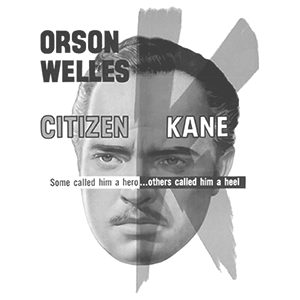
A film à clef [fil ma kle] (French for ‘film with a key’), is a film describing real life, behind a façade of fiction. ‘Key’ in this context means a table one can use to swap out the names. It is the film equivalent of the roman à clef (‘novel with a key’). Notable films à clef’s include ‘8½,’ based on Federico Fellini’s experience suffering from ‘director’s block.’ ‘Annie Hall,’ is believed to be a version of Woody Allen’s own relationship with Diane Keaton. Allen has denied this in interviews, however. ‘Citizen Kane,’ is a thinly disguised biographical film about publishing magnate William Randolph Hearst. ‘Dreamgirls,’ the musical film based on the career of The Supremes.
‘Magnolia’ is loosely inspired by Paul Thomas Anderson’s experience in dealing with his father’s death from cancer. ‘Adaptation’ is partially adapted from Susan Orlean’s non-fiction book ‘The Orchid Thief,’ but most of the film is a heavily fictionalized account of Charlie Kaufman’s difficulty in adapting the book into a screenplay. In ‘Lost in Translation’ Charlotte and John are believed to be based loosely on writer-director Sofia Coppola and her ex-husband, Spike Jonze. ‘The Life Aquatic with Steve Zissou’ features a protagonist based loosely on Jacques Cousteau.
Posted in Art |
Leave a Comment »
September 26, 2012

Roman à clef [raw-mah na kle] (French for ‘novel with a key’) is a phrase used to describe a novel about real life, overlaid with a facade of fiction. The fictitious names in the novel represent real people, and the ‘key’ is the relationship between the nonfiction and the fiction. This ‘key’ may be produced separately by the author, or implied through the use of epigraphs (a phrase, quotation, or poem that is set at the beginning of a document) or other literary devices.
Created by French writer Madeleine de Scudery in the 17th century to provide a forum for her thinly veiled fiction featuring political and public figures, roman à clef has since been used by writers as diverse as Victor Hugo, Phillip K. Dick, and Bret Easton Ellis.
Continue reading →
Posted in Art, Language |
Leave a Comment »
September 26, 2012

Lafayette Ronald Hubbard (1911 – 1986), better known as L. Ron Hubbard and often referred to by his initials, LRH, was an American pulp fiction author and the founder of the Church of Scientology. After establishing a career as a writer, becoming best known for his science fiction and fantasy stories, he developed a self-help system called ‘Dianetics’ which was first published in 1950. He subsequently developed his ideas into a wide-ranging set of doctrines and rituals as part of a new religious movement that he called Scientology. His writings became the guiding texts for the Church of Scientology and a number of affiliated organizations that address such diverse topics as business administration, literacy, and drug rehabilitation.
The Church of Scientology describes Hubbard in hagiographic terms, and he portrayed himself as a pioneering explorer, world traveler, and nuclear physicist, with expertise in a wide range of disciplines, including photography, art, poetry, and philosophy. His critics have characterized him as a liar, a charlatan, and mentally unstable. Though many of his autobiographical statements have been proven to be fictitious, the Church rejects any suggestion that its account of Hubbard’s life is not historical fact.
Continue reading →
Posted in Philosophy, Politics, World |
Leave a Comment »
September 25, 2012


Deaf culture describes the communities that are affected by deafness and which use sign languages as the main means of communication. When used as a cultural label, the word deaf is often written with a capital ‘D,’ and referred to as ‘big D Deaf’ in speech and sign. When used as a label for the audiological condition, it is written with a lower case ‘d.’ Members of the Deaf community tend to view deafness as a difference in human experience rather than a disability, preferring to be called ‘Deaf’ or ‘Hard of Hearing’ than ‘Hearing Impaired,’ which most people think is the most acceptable term today.
The community may include family members of deaf people and sign-language interpreters who identify with Deaf culture and does not automatically include all people who are hard of hearing. According to sign-language interpreter Anna Mindess, ‘it is not the extent of hearing loss that defines a member of the Deaf community but the individual’s own sense of identity and resultant actions.’ As with all social groups that a person chooses to belong to, a person is a member of the Deaf community if he or she ‘identifies him/herself as a member of the Deaf community, and other members accept that person as a part of the community.’ Continue reading →
Posted in Health, Language, Politics |
Leave a Comment »
September 25, 2012

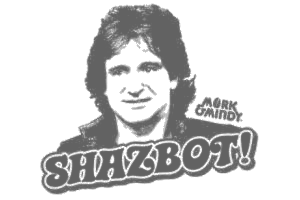
Profanity in science fiction (SF) shares all of the issues of profanity in fiction in general, but has several unique aspects of its own, including the use of alien profanities (such as the alien expletive ‘shazbot!’ from ‘Mork & Mindy,’ a word that briefly enjoyed popular usage outside of that television show).
In his advice to other SF writers, Orson Scott Card states that there are no hard-and-fast rules for the use of profanity in SF stories, despite what may have been expected of writers in the past. The onus is squarely on the writer to determine how much profanity to use, to enquire as to each magazine publisher’s individual limits, and to think about the effect that the use of profanity will have on the reader, both in terms of how the reader will perceive the characters and in terms of how the reader will be offended by the story as a whole. Continue reading →
Posted in Art, Humor, Language |
Leave a Comment »



