September 16, 2012

Artistic license is a colloquial term, sometimes euphemism, used to denote the distortion of fact, alteration of the conventions of grammar or language, or rewording of pre-existing text made by an artist to improve a piece of art. The artistic license may also refer to the ability of an artist to apply smaller distortions, such as a poet ignoring some of the minor requirements of grammar for poetic effect.
For example, Mark Antony’s ‘Friends, Romans, Countrymen, lend me your ears’ from Shakespeare’s ‘Julius Caesar’ would technically require the word ‘and’ before ‘countrymen,’ but the conjunction ‘and’ is omitted to preserve the rhythm of iambic pentameter (syllabic pattern). Conversely, on the next line, the end of ‘I come to bury Caesar, not to praise him’ has an extra syllable because omitting the word ‘him’ would make the sentence unclear, but adding a syllable at the end would not disrupt the meter. Both of these are examples of artistic license. Continue reading →
Posted in Art, Language |
Leave a Comment »
September 16, 2012
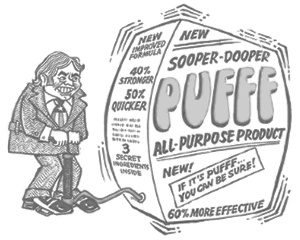

Puffery [puhf-uh-ree] as a legal term refers to promotional statements and claims that express subjective rather than objective views, which no ‘reasonable person’ would take literally. Puffery serves to ‘puff up’ an exaggerated image of what is being described and is especially featured in testimonials. In a legal context, the term originated in the English Court of Appeal case, which centered on whether a monetary reimbursement should be paid when an influenza preventive device failed to work.
The manufacturers had paid for advertising stating that £100 would be paid in such circumstances then failed to follow through. Part of their defense was that such a statement was ‘mere puff’ and not meant to be taken seriously. While the defense ultimately lost the case the principle was confirmed that certain statements made by advertisers, that were obviously not made in a serious manner, could be exempt from usual rules relating to promises in open contracts. Continue reading →
Posted in Language, Money, Politics |
Leave a Comment »
September 15, 2012

Yahoo! Answers (formerly known as ‘Yahoo! Q & A’) is a community-driven question-and-answer (Q&A) site or a knowledge market launched by Yahoo! in 2005 that allows users to both submit questions to be answered and answer questions asked by other users.
The site gives members the chance to earn points as a way to encourage participation and is based on a service developed by Naver (a popular search portal in South Korea). Continue reading →
Posted in Humor, Technology, World |
Leave a Comment »
September 15, 2012


A knowledge market is a mechanism for distributing knowledge resources. There are two views on knowledge and how knowledge markets can function. One view uses a legal construct of intellectual property to make knowledge a typical scarce resource, so the traditional commodity market mechanism can be applied directly to distribute it.
An alternative model is based on treating knowledge as a public good and hence encouraging free sharing of knowledge. This is often referred to as attention economy. Currently there is no consensus among researchers on relative merits of these two approaches. Continue reading →
Posted in Money, Politics, Technology |
Leave a Comment »
September 15, 2012

Innocence of Muslims is an anti-Muslim amateur 2012 film produced by Nakoula Basseley Nakoula. Months after it was shown one time in a Hollywood theater, two film trailers were released on YouTube, in 2012. The trailers were dubbed into Arabic, and then spread by Egyptian American blogger and Coptic Christian Morris Sadek.
A two-minute excerpt from the film was broadcast an Egyptian Islamist television station. Violent protests against the film broke out on September 11. The protests spread to Libya, Yemen, and other Arab and Muslim nations over the following days, included the 2012 diplomatic missions attacks, incorporating an attack on the U.S. consulate in Libya, that resulted the deaths of U.S. Ambassador Christopher Stevens and three other Americans. Continue reading →
Posted in Philosophy, Politics, World |
1 Comment »
September 15, 2012

Blasphemy Day International is a holiday in which individuals and groups are encouraged to openly express their criticism of, or even disdain for, religion.
It was founded in 2009 by the Center for Inquiry (CFI, a US non-profit educational organization whose primary mission is to encourage evidence-based inquiry into paranormal and fringe science claims, alternative medicine and mental health practices, religion, secular ethics, and society). Continue reading →
Posted in Philosophy, Politics, World |
Leave a Comment »
September 15, 2012

Limerence [lim-rens] is a term coined in 1977 by American psychologist Dorothy Tennov to describe an involuntary state of mind which seems to result from a romantic attraction to another person combined with an overwhelming, obsessive need to have one’s feelings reciprocated. The concept grew out of Tennov’s mid-1960s work, when she interviewed over 500 people on the topic of love, and was first published in her 1979 book ‘Love and Limerence: The Experience of Being in Love.’
Though there are no established preconditions for limerence, there is a high rate of coincidence between limerence, depersonalization/derealization disorders, and dysfunctional attachment environments in childhood. This might suggest that sustained exposure to a psychologically unstable environment in childhood, or unhealthy/incomplete attachment between a child and their caretakers in early life, may make an individual more susceptible to limerence. There is also a statistically significant correlation between limerence and post traumatic stress disorder. Continue reading →
Posted in Health, Love, Sex |
1 Comment »
September 15, 2012

Erotomania [ih-roh-tuh-mey-nee-uh] is a type of delusion in which the affected person believes that another person, usually a stranger, high-status or famous person, is in love with him or her. The illness often occurs during psychosis, especially in patients with schizophrenia, delusional disorder, or bipolar mania.
During an erotomanic episode, the patient believes that a ‘secret admirer’ is declaring his or her affection to the patient, often by special glances, signals, telepathy, or messages through the media. Usually the patient then returns the perceived affection by means of letters, phone calls, gifts, and visits to the unwitting recipient. Even though these advances are unexpected and unwanted, any denial of affection by the object of this delusional love is dismissed by the patient as a ploy to conceal the forbidden love from the rest of the world. Continue reading →
Posted in Health, Love, Sex |
Leave a Comment »
September 15, 2012

Unrequited love is love that is not openly reciprocated or understood as such. The beloved may or may not be aware of the admirer’s deep and strong romantic affections. ‘Some say that one-sided love is better than none, but like half a loaf of bread, it is likely to grow hard and moldy sooner.’
Others, however, like Nietzsche, considered that ‘indispensable…to the lover is his unrequited love, which he would at no price relinquish for a state of indifference.’ The inability of the unrequited lover to express and fulfill emotional needs may lead to feelings such as depression, low self-esteem, anxiety, and rapid mood swings between depression and euphoria. Continue reading →
Posted in Art, Love, Philosophy |
Leave a Comment »
September 15, 2012
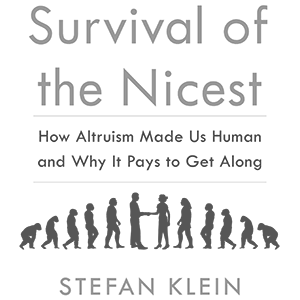
Nice guy is a term in the general public discourse and in popular culture describing an adult or teenage male with friendly yet unassertive personality traits in the context of a relationship with a woman. A typical nice guy believes in putting the needs of others before his own, avoids confrontations, does favors, gives emotional support, tries to get out of trouble, and generally acts nicely towards women.
There is an active debate about whether the nice guy personality profile may actually make a man less desirable to women romantically or sexually. Part of this debate includes speculation about hypocrisy among women in the dating world: that women may say they want a nice guy but won’t date him or have sex with him, and rather subconsciously prefer men who are more confident and assertive but less considerate. Continue reading →
Posted in Humor, Love, Sex |
Leave a Comment »
September 15, 2012

In popular culture, the ‘friend zone‘ refers to a platonic relationship where one person wishes to enter into a romantic relationship while the other does not. The most typical friend zone situation involves a man that is romantically interested in a woman who does not reciprocate or is unaware of his interest. It is generally considered to be an undesirable situation by the lovelorn person.
Once the friend zone is established, it is said to be difficult to move beyond that point in a relationship. There are differing explanations about what causes a person to be placed in the friend zone by another. One report suggests that some women don’t see their male friends as potential love interests because they fear that deepening their relationship might cause a loss of the romance and mystery or lead to rejection later.
Continue reading →
Posted in Humor, Love, Sex |
2 Comments »
September 15, 2012

Involuntary celibacy (colloquially ‘incel’) is chronic near-total or total absence in a person’s sexuality of intimate relationships or sexual intercourse that is occurring for reasons other than voluntary celibacy, asexuality, antisexualism, or sexual abstinence. It is the psycho-social opposite of having a sex life.
Incel people, despite being open to sexual intimacy and potential romance with another person and also making active, repeated efforts towards such an end, cannot cause any such end(s) to occur with any significant degree of regularity—or even at all. Continue reading →
Posted in Health, Love, Sex |
1 Comment »





