September 14, 2012

Afrofuturism is an emergent literary and cultural aesthetic that combines elements of science fiction, historical fiction, fantasy, Afrocentricity, and magic realism with non-Western cosmologies in order to critique not only the present-day dilemmas of people of color, but also to revise, interrogate, and re-examine the historical events of the past.
Examples of seminal afrofuturistic works include the novels of Samuel R. Delany and Octavia Butler; the canvases of Jean-Michel Basquiat and the photography of Renée Cox; as well as the extraterrestrial mythos of Parliament-Funkadelic and Sun Ra, and the music of DJ Spooky. Continue reading →
Posted in Art, Language, World |
1 Comment »
September 14, 2012

A Millwall brick is an improvised weapon made of a manipulated newspaper. It was named for supporters of Millwall F.C., who had a stereotyped reputation for football hooliganism.
The Millwall brick was allegedly used as a stealth weapon at football matches in England during the 1960s and 1970s. Continue reading →
Posted in Games, Politics, World |
Leave a Comment »
September 14, 2012

Mike the Headless Chicken also known as Miracle Mike, was a Wyandotte chicken that lived for 18 months after his head had been mostly cut off. Thought by many to be a hoax, the bird’s owner took him to the University of Utah in Salt Lake City to establish the facts of the story.
In 1945, farmer Lloyd Olsen of Fruita, Colorado had his mother-in-law around for supper and was sent out to the yard by his wife to bring back a chicken. Olsen chose a five-and-a-half-month-old cockerel named Mike. The axe missed the jugular vein, leaving one ear and most of the brain stem intact. Despite Olsen’s botched handiwork, Mike was still able to balance on a perch and walk clumsily; he even attempted to preen and crow, although he could do neither. Continue reading →
Posted in Death, Food, Science |
1 Comment »
September 14, 2012

In linguistics, an eggcorn is an idiosyncratic substitution of a word or phrase for a word or words that sound similar or identical in the speaker’s dialect. The new phrase introduces a meaning that is different from the original, but plausible in the same context, such as ‘old-timers’ disease’ for ‘Alzheimer’s disease.’ This is as opposed to a malapropism, where the substitution creates a nonsensical phrase. Classical malapropisms generally derive their comic effect from the fault of the user, while eggcorns are errors that exhibit creativity or logic. Eggcorns often involve replacing an unfamiliar, archaic, or obscure word with a more common or modern word (‘baited breath’ for ‘bated breath’).
The term eggcorn was coined by professor of linguistics Geoffrey Pullum in 2003, in response to an article by Mark Liberman on ‘Language Log,’ a blog for linguists. Liberman discussed the case of a woman who substitutes the phrase ‘egg corn’ for the word ‘acorn,’ arguing that the precise phenomenon lacked a name; Pullum suggested using ‘eggcorn’ itself. The phenomenon is very similar to the form of wordplay known as the pun, except that, by definition, the speaker (or writer) intends the pun to have some effect on the recipient, whereas one who speaks or writes an eggcorn is unaware of the mistake.
Posted in Humor, Language |
Leave a Comment »
September 14, 2012

Metonymy [mi-ton-uh-mee] is a figure of speech used in rhetoric (the art of discourse) in which a thing or concept is not called by its own name, but by the name of something intimately associated with that thing or concept.
Metonyms can be either real or fictional concepts representing other concepts real or fictional, but they must serve as an effective and widely understood second name for what they represent. For instance, ‘Hollywood’ is used as a metonym (an instance of metonymy) for the US cinema industry, because of the fame and cultural identity of Hollywood, a district of the city of Los Angeles, as the historical center of film studios and film stars. Continue reading →
Posted in Language |
Leave a Comment »
September 14, 2012
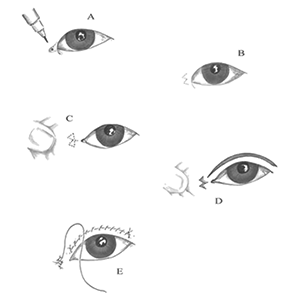
Asian blepharoplasty [blef-er-uh-plas-tee], also known as ‘double eyelid surgery,’ is a type of cosmetic surgery where the skin around the eye is reshaped. The purpose of the procedure is to create an upper eyelid with a crease (‘double eyelid’) from an eyelid that is naturally without a crease. The procedure has been a subject of controversy, and was described by opponents, such as author David Mura, as being ‘indoctrinated by white standards of beauty.’ New York based cosmetic surgeon Dr. Edward Kwak states that many patients who get the procedure done are ‘not trying to look white,’ but look like the many north and eastern Asians who naturally have an eyelid fold.
While there are some Asians with a double eyelid and some without, there is also a large variation in the crease position (double eyelid size) of the East Asian upper eyelid. The upper lid fold can range from 1 mm above the eyelash line to about 10 mm. Asian blepharoplasties have been reported to be the most common aesthetic procedure in Taiwan, South Korea, and other parts of East Asia. The procedure has been reported to have some risk of complications, but is generally quite safe if done by an expert plastic surgeon. A procedure to remove the epicanthal fold (near the tear duct) (i.e. an epicanthoplasty) is often performed in conjunction.
Posted in Health, Politics, World |
Leave a Comment »
September 14, 2012

Aesthetic relativism is the philosophical view that the judgement of beauty is relative to different individuals and/or cultures and that there are no universal criteria of beauty.
For example, in historical terms, the female form as depicted in the Venus of Willendorf (prehistoric figurines) and the women in the paintings of Rubens would today be regarded as over-weight, while the slim models on the covers of contemporary fashion magazines would no doubt be regarded in a negative light by our predecessors. In contemporary (cross-cultural) terms, body modification among ‘primitive’ peoples is sometimes regarded as grotesque by Western society. Continue reading →
Posted in Art, Philosophy, Sex |
1 Comment »
September 14, 2012
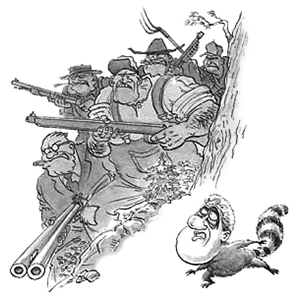
‘Vast right-wing conspiracy‘ was a theory advanced by then First Lady of the United States Hillary Rodham Clinton in 1998 in defense of her husband, President Bill Clinton, and his administration during the Lewinsky scandal, characterizing the Lewinsky charges as the latest in a long, organized, collaborative series of charges by Clinton’s political enemies. While popularized by Mrs. Clinton in her 1998 interview, the phrase did not originate with her.
In 1991 the ‘Detroit News’ wrote: ‘Thatcher-era Britain produced its own crop of paranoid left-liberal films. … All posited a vast right-wing conspiracy propping up a reactionary government ruthlessly crushing all efforts at opposition under the guise of parliamentary democracy.’ An AP story in 1995 also used the phrase, relating an official’s guess that the Oklahoma City bombing was the work of ‘maybe five malcontents’ and not ‘some kind of vast right-wing conspiracy.’
Continue reading →
Posted in Language, Politics |
2 Comments »
September 14, 2012

A gyroscopic exercise tool is a device used to exercise the wrist as part of physical therapy or in order to build palm, forearm, and finger strength. It can also be used as a unique demonstration of some aspects of rotational dynamics. The non impact nature of the products combined with the soothing resistance of the spinning rotor have made them good rehabilitation devices for persons suffering from carpal tunnel syndrome, arthritis, RSI, bone breakage etc.
The device consists of a tennis ball-sized plastic or metal shell around a free-spinning mass, which is started with a short rip string. Once the gyroscope inside is going fast enough, a person holding the device can accelerate the spinning mass to high revolution rates by moving the wrist in a circular motion. The shell almost completely covers the mass inside, with only a small round opening allowing the gyroscope to be manually started.
Posted in Games, Health |
Leave a Comment »
September 14, 2012
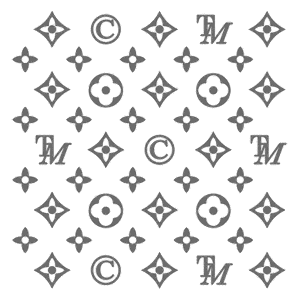
Trademark dilution is a legal concept giving the owner of a famous trademark standing to forbid others from using that mark in a way that would lessen its uniqueness.
In most cases, trademark dilution involves an unauthorized use of another’s trademark on products that do not compete with, and have little connection with, those of the trademark owner. For example, a famous trademark used by one company to refer to hair care products might be diluted if another company began using a similar mark to refer to breakfast cereals. Continue reading →
Posted in Money, Politics |
Leave a Comment »
September 13, 2012


‘A moron in a hurry‘ is a hypothetical person against whom a claimant’s concern might be judged in an English law civil action for passing off or trademark infringement.
The expression is used to reject a claim that two items could reasonably be confused by a passer-by (i.e. that even a moron in a hurry would notice the difference), on the grounds that the items are so different that the goodwill and brand of the claimant’s item cannot genuinely be affected by the existence of the other. Continue reading →
Posted in Language, Money, Politics |
Leave a Comment »
September 13, 2012

Social intuitionism is a movement in moral psychology that arose in contrast to more heavily rationalist theories of morality, like that of Lawrence Kohlberg. Kohlberg developed a stage theory of moral reasoning that he claimed accounts for people’s moral behavior. More sophisticated reasoning, he asserted, should lead one to more consistent moral action, because one realizes that moral principles are prescriptive in nature and so demand action from the self. NYU psychologist Jonathan Haidt greatly de-emphasizes the role of reasoning in reaching moral conclusions.
Haidt asserts that moral judgment is primarily given rise to by intuition with reasoning playing a very marginalized role in most of our moral decision-making. Conscious thought-processes serves as a kind of post hoc justification of our decisions. His main evidence comes from studies of ‘moral dumbfounding’ where people have strong moral reactions but fail to establish any kind of rational principle to explain their reaction. He suggests that we have affective heuristics (mental shortcuts) which are unconscious that generate our reactions to morally charged situations and our moral behavior. He suggests that if people reason about morality, it is independent of or at least processes causing moral decisions to be made.
Posted in Health, Philosophy, Science |
2 Comments »



